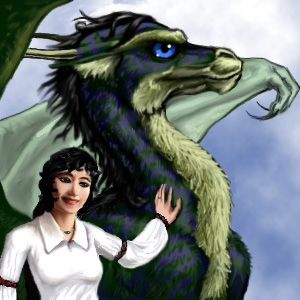
Vestigial Disadvantage: Diet: Sangivore (-15 Bio-E, blood only) and Nocturnal (-10 Bio-E) required, can
also take: Colorblind (-5 Bio-E), Ears (-5 Bio-E, some vampires have the ears of a bat), Reptile Brain:
Predator (-10 Bio-E), and Wings (-10 Bio-E).
WOLPERTINGER
Description: The wolpertinger is a creature from European and North African mythology that looked like a
rabbit with the horns deer, fangs of a wolf, and the wings of a bird. Though similar to the jackalope of
American myth, wolpertingers were much more powerful and were said to be witches in disguise. The
noble wolpertingers are a chimera of hare, grouse, and deer DNA that, like their namesakes, tend to be
gifted sorcerers.
Size Level: 4
Build: Medium
Mutant Changes & Cost Total BIO-E: 30
Attribute bonus: Spd: + 2d6 +15
Human Features:
Hands: Extra Limbs with Full hands (automatic)
Biped: none (automatic), 5 Bio-E for Partial, 10 Bio-E for
Full
Speech: None (automatic), 5 Bio-E for partial, 10 for Full
Looks: none (automatic): all wolpertingers look like rabbits
with the wings of a bird, antlers and saber-toothed tusks of a
musk deer.
Natural Weapons: 1d4 tusks and 1d6 small horns (Bio-E
cost of 5 each)
Automatic Mutant Animal Powers: Wings and Basic
Flight, Extraordinary Speed (10 Bio-E already added into the attribute bonuses above).
Optional Mutant Animal Powers: 5 Bio-E for Extra Speed (3d6 +30), 5 Bio-E for Advanced Smell, 5
Bio-E for Advanced Hearing, 5 Bio-E for Leaping Ability (Standard), 10 Bio-E for Leaping ability
(rodent),15 Bio-E for Extra Physical Prowess.
Vestigial Disadvantage: none required, can also take: Colorblind (-5 Bio-E), Diet: Herbivore (-5 Bio-E),
Diet: Ruminant (-10 Bio-E), Horn (-5 Bio-E), Ears (-5 Bio-E), Prey Eyes -10 Bio-E), Reptile Brain: Prey (-
10 Bio-E), and Wings (-10 Bio-E)
YALE
Description: a yale was an animal from Africa that was said to
look like a bull with horns that pointed both forwards and back.
Though the mythical yale was inspired by domestic cattle that had
had their horn buds molded by man, the chimerical yale is a mix of
blackbuck and wild boar with some genes added just to mimic its
mythical namesake.
Size Level: 17
Build: medium
Mutant Changes & Cost Total BIO-E: 0
Attribute bonus: P.S: + 2
Human Features:
101
Hands: none (automatic), 5 Bio-E for Partial, 10 Bio-E for Full
Biped: none (automatic), 5 Bio-E for Partial, 10 Bio-E for Full
Speech: None (automatic), 5 Bio-E for partial, 10 for Full
Looks: none (automatic): Yale look like tawny antelope spotted with black. Boar-like tusks protrude from
the lower jaw and it has two long horns on the head. Male yales can easily be told from the females by their
goat-like beards.
Natural Weapons: 1d6 hooves on feet (used with kick attacks), 2d8 horns, and 1d6 small Tusks (Bio-E
cost of 5 each)
Automatic Mutant Animal Powers: Swiveling horns (5 Bio-E): a yale’s horns are movable at will. With
this power, the yale has perfect control over his horns and gets a +2 bonus (+1 per horn) to strike and can
strike two different targets at one time as long as the targets are both standing within two yards of the yale.
Optional Mutant Animal Powers: 10 Bio-E for Extra Speed (2d6 +15), 5 Bio-E for Advanced Smell, 5
Bio-E for Advanced Hearing, 5 bio-E for Brute Strength, 10 Bio-E for Beastly Strength, 15 Bio-E for
Crushing Strength, 5 Bio-E for Leaping Ability (Standard), 15 Bio-E for Extra Physical Endurance
Vestigial Disadvantage: Diet: Herbivore (-5 Bio-E) and Hooves (-5 Bio-E) required, can also take:
Colorblind (-5 Bio-E), Diet: Ruminant (-10 Bio-E), Horn (-10 lacks swiveling horns as well), Ears (-5 Bio-
E), Prey Eyes -10 Bio-E), Reptile Brain: Prey (-10 Bio-E), and Tail (-5 Bio-E).
YETI
Description: The Yeti was a creature of Tibetan myth that was said to resemble a giant man covered in hair
like an ape. Genetic engineers created their own yeti for Dreamland that was a hybrid of Gorilla and Polar
bear. This yeti looks like a white furred gorilla with claws. Yetis are known for their large feet and strong
body odor.
Size Level: 13
Build: medium
Mutant Changes & Cost Total BIO-E: 0
Attribute bonus: P.S: +6, P.E: +4, I.Q: +6
Human Features:
Hands: Partial (automatic), 5 Bio-E for Full
Biped: Partial (automatic), 5 Bio-E for Full
Speech: None (automatic), 5 Bio-E for partial, 10 for Full
Looks: Partial (automatic): A has a face that resembles that of a
gorilla but the feet are human-like and the hands end in short
claws. Long, shaggy white hair covers an ape-like body and
hides two bearlike ears.
Natural Weapons: 1d8 Claws (5 Bio-E)
Automatic Mutant Animal Powers: Brute Strength (10 Bio-E), 15 Bio-E for Insulating Fur: Cold does ½
damage; +10 S.D.C.
Optional Mutant Animal Powers: 5 Bio-E for Advanced Smell, 5 Bio-E for Crushing Strength, 5 Bio-E
for Night vision (60’), 15 Bio-E for Extra Physical Prowess , 15 Bio-E for Extra Physical Endurance, and
15 Bio-E for Predator Burst
Vestigial Disadvantage: Ears (-5 Bio-E), Musk Glands (-10) and Nearsighted (-5 Bio-E) required, can also
take: Diet: carnivore (-10 Bio-E) and Nocturnal (-10 Bio-E).
102
BESTIARY
In this chapter I am going to list some monsters and animals that a Mutants in Xanadu character is likely to
meet when traveling through the wilderness. Some of these beasts should be familiar to After the Bomb™
players while others are unique to this setting. Creatures from other After the Bomb® products that would
be appropriate for Xanadu are:
After the Bomb® 2nd edition Page # Mutants in Avalon™ Page #
191 21
Giant Ant Lion 190 Giant Ant (often kept as a pet) 21
Giant Beetle 190 Giant Bee 22
Giant Dragonfly (monster sized) 190 Giant Butterfly 22
Giant Fly 190 Giant Caterpillar 23
Giant Grasshopper 191 Giant Dragonfly (pet sized) 23
Giant Locust 190 Giant Ladybird 19
Giant Mosquito 190 Giant Snail (wild only) 19
Giant Praying mantis 189 Giant Slug
Giant Spider 190
Giant Wasps
Asia differs from most After the Bomb ® settings in that its vast territory has allowed vertebrate animals to
mutate in directions beyond the usual humanoid form. These new animals are unintelligent and share the
ecosystem with the giant insects found in the rest of the world. Herbivorous mammals descended from
rabbits and rodents are the most common but some odd reptiles and pigs have also evolved. Carnivorous
mammals include giant short faced weasels that have taken the place of the big cats and monstrous packs of
giant rats that have the niche formerly held by members of the dog family. In addition to these mammals
the explorer can also meet such horrors as giant worms, moths, snakes, and the hideously mutated humans
known as bakemono. Creatures unique to this setting are:
AHOOL
The ahool (named after its call) is a giant species of bat that has taken over the niche originally held by
seagulls and predatory birds. Ahool have elongated heads with strong jaws, narrow wings to allow for
faster flight and a bipedal gait when on the ground. Most ahool are harmless animals but predatory species
may attack small mutants and nobles tame some species for a sport similar to the ancient art of falconry.
The statistics below are for a carnivorous species about the size of a large hawk.
103
Attributes: I.Q.: 1d6+1 P.S.: 1d6+1 P.P.: 3d6+3 P.E.: 2d6 Spd: 2d6 (land)
Size level: 4
Weight: 15 lbs.
Length: 5 foot wingspan
A.R.: 6
S.D.C.: 20
Hit Points: Equal to P.E.
Natural Weapons: 1d6 claws and 1d8 bite
Attacks per melee: 2
Special Abilities: Advanced hearing, Night vision, Wings,
Soaring Flight
Breeding modifications: there are many species of ahool ranging
from those barely larger than a songbird (size level 2, S.D.C:10,
damage: 1d2/1d4) which only attack in defense of the nest to
eagle-sized predators (size-level 5, S.D.C: 25, damage 1d8/1d6)
that will attack mutants up to their own size level for food. The
most prized hunting bat is The Spotted Shriek, a size level 3
species (S.D.C: 15 and 1d4/1d6 damage) with reddish brown fur,
blue-grey wings and a white underside spotted with white. This
species is prized for its ability to dive at a speed that gives it a +1 bonus to hit.
BAKEMONO (HUMAN MUTANT)
Description: In Asia and surrounding countries those human mutants who are part of one of the civilized
kingdoms are known as the Hsien. There are, however, feral tribes of mutant humans who do not belong to
any civilized society. These barbarian mutants are collectively known as Bakemono. No two bakemono are
alike and most live as scavengers and thieves in abandoned pre-crash cities or in the toxic wastelands.
Bakemono are not considered members of the Kamuii or nobility. Most bakemono are uneducated savages
who roam the waste in small bands or tribes, living in caves or abandoned buildings, and not hesitating to
kill any mutant animal they see. To create a bakemono use the normal mutant human rules in the 2nd edition
of After the Bomb®. Human Mutants with other Backgrounds or from other settings may be mistaken for
bakemono if they look inhuman enough. Below are the stats for a typical brutish bakemono cannibal.
Size Level: 10
Build: Medium
Mutant Changes & Cost Total BIO-E: 0
Attribute bonus: +2 I.Q., +2 M.E., and +2 P.B.
Human Features:
Hands: partial (automatic)
Biped: partial: human (automatic)
Speech: Full (automatic)
Looks: partial (automatic): the typical bakemono is brutish and
ape-like with warty skin covered in wiry hair on the back and
arms. The hair on the head is a tangled, greasy mess and the
pointed ears and crooked fang-like teeth make for a fierce
visage. Add details such as running sores, extra (but useless)
arms, worm-like tentacles, or other disfiguring deformity as you
wish. Clothing is simple animal skins (including the skins of
mutant animals) and they carry simple spears and clubs for
weapons. Few have a P.B. higher than 5.
Natural Weapons: 2d4 teeth
Automatic Mutant Animal Powers: Brute Strength.
104
Optional Mutant Animal Powers: see the core rulebook.
Required Vestigial Disadvantages: Large pointed ears (-5), Diet: Carnivore (-5 Bio-E), Reptile Brain:
Predator (-5 bio-E). All included in the Bio-E above.
BAKENEKO
The bakeneko is the most typical of the cat-like giant “weasels” of Asia. It is a leopard sized animal
descended from a civet-like ancestor. Like its ecological counterpart from the age of man, the bakeneko is a
good climber and will leap down upon its prey. There are many species of bakeneko, most of which have a
dark brown coat marked with black.
Attributes: I.Q.: 1d4+1 P.S.: 4d6+1 P.P.: 3d6+2 P.E.: 5d6 Spd: 5d6
Size level: 13
Weight: 350 lbs.
Length: 5-6 ½ feet long
A.R.: 7
S.D.C.: 45
Hit Points: Equal to P.E.
Natural Weapons: 2d6 claws and 2d8 bite
Attacks per melee: 3
Special Abilities: Advanced hearing, Night vision
Breeding modifications: there are many species of
giant cat-like civets, in addition to the leopard-like
form of the forests, there is also a snow leopard
like species (1d6 claws and 1d8 bite) of the
mountains, and the and plains are home to a
species that has a solid brown coat and a lion-like
mane (2d10 claws and 3d8 bite).
BEHEMOTHS
The largest mammalian herbivore in Xanadu is the behemoth, a huge decedent of the babyrusa that has
taken on the niche once held by the elephants. There are many species of behemoth ranging from the
hairless inhabitants of the tropical forests to shaggy haired tundra dwellers, species with skin covered
“antlers”, and hippo-like shovel-tuskers. All are characterized by their huge size, four to six tusks, and
elongated trunks. The statistics below are for the typical jungle behemoth.
Attributes: I.Q.: 1d6+1 P.S.: 5d6 P.P.: 2d6 P.E.: 11d8 Spd: 2d6
Size level: 19-20
Weight: 1000-2000 lbs.
Length: 8-10 feet long
A.R.: 11
S.D.C.: 60
Hit Points: Equal to P.E.
Natural Weapons: 2d8 tusks, 2d6 trample, 1d6 trunk
Attacks per melee: 2
Special Abilities: Advanced hearing, Advanced Smell
Breeding modifications: the flat tooth is a semi-aquatic
porcine shovel tusker whose short trunk is useless for
combat and whose tusks only do 1d8 points of damage. It
uses its odd snout to feed on lotus blossoms and lily pads.
BOUNDERS
105
The most common domesticated mammalian herbivore to be encountered in any Asian City would
defiantly be the domestic bounder. Bounders (not to be confused with the American purebred Dog mutant)
are herbivorous running rodents that resemble kangaroos but are actually descended from jerboas.
Bounders can be found running wild in large herds across the arid plains and deserts; however they are
more common in captivity. Indeed the bounder is the main system of transportation in Asia where they are
ridden like pre-crash horses. As riding animals, bounders are preferred by nobles and Highborn as they are
faster and more spirited than dray.
Attributes: I.Q.: 1d6+1 P.S.: 3d6+6 P.P.: 3d6
P.E.: 2d6+6 Spd: 4d6+6
Size level: 18
Weight: 1000 lbs.
Length: 6 ½-8 feet long
A.R.: 5
S.D.C.: 70
Hit Points: Equal to P.E.
Natural Weapons: 1d4 bite
Attacks per melee: 2
Special Abilities: Advanced hearing, Jump
Breeding modifications: Racing Bounders are 1d6 faster but minus 1d6
from P.S. war bounders
add 1d6 to P.S. and P.E. but minus 1d6 from P.P. and Speed.
CENTIPEDE, MUTANT
One of the most feared mutant insects in Asia is the mukade or giant centipede. This is a huge animal,
nearly 30 feet long and weighing as much as a small elephant that resembles a huge armor plated worm
with hundreds of legs and clacking mandibles in a bug-eyed face. Centipedes are purely carnivorous and
will attack anything they encounter. Worse, these horrors carry a virulent toxin in their bite that burns flesh
on contact and causes a slow lingering death.
Attributes: I.Q.: 1d4 P.S.: 8d6 P.P.: 3d6 P.E.: 6d6 Spd: 3d6
Size level: 19
Weight: 3-5 tons.
Length: 20-30 feet long
A.R.: 15
S.D.C.: 90
Hit Points: Equal to P.E.
Natural Weapons: 2d6 poisonous bite (victim suffers an additional 2d4 points of damage if they succeed on
a save against poison if the save fails then they will immediately lose all remaining S.D.C. and will begin to
lose 1d4 hit points per day until they die or are cured). Certain herbs will cure centipede poison allowing
the victim to regain hit points and S.D.C. as normal.
Attacks per melee: 2
Special Abilities: Advanced hearing, 90% to Prowl checks (if hiding under leaves, cloth, or papers), can
walk upside down on ceilings or on walls.
Breeding modifications: none significant, centipedes cannot be tamed.
DRAY
The dray is a giant agamid lizard that resembles a giant iguana. Dray are dim-witted herbivorous
quadrupeds used for riding, pulling carts, and as beasts of burden by domestiques and those highborn who
prefer a more sturdy and placid steed than a bounder.
Attributes: I.Q.: 1d4 P.S.: 4d6+6 P.P.: 2d6 P.E.: 5d6 Spd: 3d6
Size level: 18
106
Weight: 1000 lbs.
Length: 5-6 ½ feet long
A.R.: 9
S.D.C.: 70
Hit Points: Equal to P.E.
Natural Weapons: 1d8 bite, 1d6 horn
Attacks per melee: 2
Special Abilities: Night vision
Breeding modifications: Dray can be bred for speed (+6), for heavy draft
work (Size level 19, P.S. and P.E. +1d6 but minus 1d6 from P.P. and speed),
or for war (A.R.: 12).
HORNHEADS
In the coniferous woodlands yet another herbivore lives, an antelope that has evolved to eat conifer needles.
The most common type is a buffalo sized species that inhabits the vast forested taiga. It has developed
horns that cover its entire upper jaw then fuse to the lip and take the place of the (long lost in antelope)
incisor teeth. This arrangement allows the hornhead to gnaw off even the toughest plants, even snapping off
twigs and small branches with a single bite. The common buffalo sized variety can amplify its calls through
this horny helmet as well as use its horns to fight. Interestingly, in ecology and anatomy the hornheads are
amazingly like the duckbilled dinosaurs of the Cretaceous. The statistics here are for the most common
forest species. It roams the coniferous forest in small herds of 1d10.
Attributes: I.Q.: 1d4 P.S.: 3d6+6 P.P.: 3d6 P.E.: 5d6 Spd: 6d6
Size level: 16
Weight: 600 lbs.
Length: 5-6 ½ feet long
A.R.: 16
S.D.C.: 60
Hit Points: Equal to P.E.
Natural Weapons: 1d8 horns
Attacks per melee: 2
Special Abilities: Advanced hearing, Advanced Smell
Breeding modifications: there are many other species of hornhead
found in the coniferous woodlands including the pronged horned
hornhead (2d6 horns), the moose like water hornhead (size level:
17, add +5 to P.S. and S.D.C.) and the small mountain hornhead
(Size Level: 10, S.D.C.: 35,1d6 horns, P.S.: 3d6, and P.E.: 3d6).
Jackalope
The most common herbivorous mammal in Asia is the jackalope, a hoofed
descendant of the hares. Most of these animals resemble long eared deer and can be
found in both forests and plains. Unlike its mythical namesake jackalopes do not
have horns. The jackalope seems to be a naturally occurring species that has` taken
over the niche previously held by deer and antelopes. Two species are domesticated
a small goat like form and a large shaggy species used much as pre Crash llama and
yaks were. The statistics below are for the common wild jackalope.
Attributes: I.Q.: 1d4 P.S.: 2d6 P.P.: 3d6 P.E.: 3d6
Spd: 7d6
Size level: 13
Weight: 350 lbs.
Length: 3-5 feet long
A.R.: 5
107
S.D.C.: 45
Hit Points: Equal to P.E.
Natural Weapons: 1d4 hooves, 1d6 horns
Attacks per melee: 2
Special Abilities: Advanced hearing
Breeding modifications: the llama-like jackayak is much larger than the typical jackalope (Size Level 18,
S.D.C.: 70) but tends to be more placid and less agile (P.E.: 2d6). They can be bred for softer or coarser
wool, richer milk, and for stronger cart oxen (add 1d6 to P.E. and P.S.).
NEZUMI
The nezumi are a type of giant predatory rat. It is a large dog-sized rodent that hunts in packs, as the wolves
of long ago did. Nezumi live in temperate forests, where they single out weaker prey animals and hound
them to exhaustion while keeping in contact with high pitched howls. This behavior is not new, before the
Crash there were at least two species of howling pack-hunting rodents (the so-called grasshopper mice of
North America) that fed on small mammals and insects. The nezumi seem to have evolved from these, or a
similar species, to feed on the giant insects that evolved after the Crash (indeed it seems likely that they are
also found in the North American wilderness). Nezumi have no fear of mutant animals (in fact they will
readily add them to their diet) and are as dangerous to travelers as wolves were during the middle ages.
Attributes: I.Q.: 1d4+3 P.S.: 3d6+3 P.P.: 3d6+5 P.E.: 2d8 Spd: 3d6 +2
Size level: 6
Weight: 30-60 lbs.
Length: 4-5 feet long
A.R.: 6
S.D.C.: 30
Hit Points: Equal to P.E.
Natural Weapons: 2d4 bite
Attacks per melee: 1
Special Abilities: Advanced hearing,
Advanced Smell, Night vision
Breeding modifications: Nezumi can be
tamed much as dogs used to be and various
breeds have been developed. Racing nezumi
are used for hunting in open areas and is
clearly built for speed. Its long legs, sleek
physique, and highly flexible spine enable it to reach speeds of up to 45 mph in sprints. Racing nezumi
though are weaker in attack (damage 1d6), and are generally either solitary or found in mated pairs if they
have escaped into the wild. The ravager is a terrier-like breed about the size of a fox (size level 3, P.S.: 2d6
+3, 15 S.D.C. 1d6 claws and 1d4 bite) and the wasset is an even smaller long bodied dachshund-like form
(size level 2, P.S.: 1d6 +3, 10 S.D.C. and 1d4 bite) used to hunt burrowing insects.
ONYCHOPHORAN, MUTANT
Onychophorans are a group of many-legged nocturnal invertebrates that look somewhat like centipedes.
Also known as velvet worms or peripatuses, onychophorians live in most tropical habitats and inhabit
burrows during the heat of the day. Their thin, flexible outer skin, bears many small, scaly, wart like
tubercles and sensory hairs, which produces a velvety appearance. The animals also have 14 to 43 pairs of
stubby, claw-tipped legs called lobopods that contain no muscles but are instead moved due to hydrostatic
pressure changes within the body cavity that lift and lower their legs in waves, giving a slug-like motion.
Coloring may be blue, orange, green, or black in color. Some lay eggs but most give live birth to live
young.
108
Before the Crash onychophorians grew no larger than 6 inches and preyed only on small invertebrates
which they captured using a sticky slime that they shot out of wart like bumps on either side of the mouth.
They could shoot the slime up to 20 inches away and the stuff hardened almost immediately after striking
the prey immobilizing it. The worm could than inject a powerful poison that liquefied the captured prey so
that the meal can be sucked up. The slime was also shot out at predators to delay them while the velvet
worm escaped.
After the Crash several giant Onychophorans have grown to stupendous sizes and adapted to habitats
outside their traditional haunts. Many slither through the leaf litter of the forest using their slime to trap
animals and are a distinct danger to people traveling at night. The most notorious giant onychophoran
however is the “bookworm”. Bookworms are not the moth larvae once called by that name but are instead
huge velvet worms that lair in the bomb blasted cities of tropical Asia, feeding on bakemono and any other
creature that they encounter. Bookworms are especially known for burrowing under piles of books,
decaying papers, or moldering carpets then leaping out to ambush treasure hunters.
Bookworm (Typical Giant Onychophoran)
Attributes: I.Q.: 1d4 P.S.: 5d6 P.P.: 1d6 P.E.: 5d6 Spd: 2d6
Size level: 12
Weight: 450 lbs.
Length: 10 feet long
A.R.: 12
S.D.C.: 45
Hit Points: Equal to P.E.
Natural Weapons: 2d4 poisonous bite (victim suffers an
additional 2d4 points of damage if they fail a save against
poison)
Attacks per melee: 2
Special Abilities: Advanced hearing, 90% to Prowl checks
(if hiding under leaves, cloth, or papers), and Slime Net: an
onychophoran can shoot out a stream of slime up to three
times its body length away (or 30 feet in a 10 foot
bookworm). Anyone being spat at must make a P.P. roll to
avoid the slime. If the P.P. roll fails than the character is
trapped and cannot move for 1d6 melee rounds. At the end
of this time the slime turns brittle and the character may
break it with a successful strength roll. Anyone with
crushing strength may break the slime bonds immediately
with no roll needed.
Breeding modifications: none significant.
PA SNAKE
The Pa snake is a huge python up to 50 feet long. It is the largest snake to ever evolve and can live for
hundreds of years. Like the anaconda of South America, pa snakes are semi-aquatic, living in abandoned
sewers, lakes, rivers, or flooded jungles and rice paddies. The pa snake normally feeds on fish, hornheads,
and behemoths but it especially loves the taste of elephants and will attack them at every opportunity.
Attributes: I.Q.: 1d4 P.S.: 10d6 (average 35) P.P.: 3d6 P.E.: 10d6
Spd: 2d6
Size level: 20
Weight: 5-10 tons.
Length: 30-60 feet long
A.R.: 11
S.D.C.: 90
Hit Points: Equal to P.E.
109
Natural Weapons: 3d6 fangs.
Attacks per melee: 2
Special Abilities: Constrictive Body Muscles (on a successful hit the snake grabs the victim in its coils and
squeezes for 1d6 +14 points of damage per round, see Mutants of the Yucatan’s Boa Constrictor for more
information on this attack).
SEA SERPENT
The Ocean depths house a gigantic aquatic reptile that can reach a hundred feet in length and mass enough
to sink a large ship. These creatures resemble elongated wingless dragons, and like true dragons may be a
creation of Dreamland, but are not intelligent and in fact are fearsome predators. Sea Serpents cruse the
even seas in search of prey: usually dolphins, small whales, and the occasional ship which it enfolds in its
coils and crushes like a monstrous python.
Attributes: I.Q.: 1d4 P.S.: 20d6
(average 70) P.P.: 3d6 P.E.: 10d6
Spd: 3d6
Size level: 26
Weight: 100 tons.
Length: 60-100 feet long
A.R.: 15
S.D.C.: 100
Hit Points: Equal to P.E.
Natural Weapons: 3d6+4 fangs.
Attacks per melee: 2
Special Abilities: Constrictive Body Muscles (on a
successful hit the snake grabs the victim in its coils
and squeezes for 1d6 +14 points of damage per
round, see Mutants of the Yucatan’s Boa
Constrictor for more information on this attack).
Sea serpents are notorious for crushing ships then
swallowing the drowned sailors
110
SILK MOTH, MUTANT
Silk moths have been raised in the orient for thousands of years and the Crash has made this industry much
easer than it once was. Before the crash silk moths lived for only a few days and bred only once before
dying. Even worse, the silk farmers had to kill most of the caterpillars in order to harvest the silk; as a result
silk was one of the most expensive fabrics on earth.
Today silk moths have mutated extensively, the adult moth is as large as a horse and just as strong. The
wings span over 30 feet and the silk moth is the only flying giant insect used for riding. Adult silk moths
usually wear wing clamps to keep them from flying away; these clamps are removed once a rider is in the
saddle. More importantly a silk moth can eat any kind of overripe fruit and has a lifespan of about twelve
years. The moths can reproduce twice per year and each mating produces 2d6 eggs that hatch one month
later into silk worms.
The modern silk worm is still dependant on mulberry leaves but unlike their ancestors they build a cocoon
of silk every night to sleep in. This cocoon hammock is then abandoned in the morning and the silk farmer
merely has to harvest it. As a result silk is much more common and less expensive than it was before the
crash and is the most common textile worn by nobles and other high castes. In addition the pony sized
caterpillar is slow and docile making it an ideal children’s mount.
Despite their ease to keep silk moths are fragile. Their wings are easily torn and both bounders and dray are
much more sturdy and intelligent. As a result silk moths (and worms) are kept mainly by silk farmers or the
nobility who show them off much like human royalty did their fancy show horses before the Crash. Due to
the interest in fine show quality silk moths the animals come in many more colors than their plain white
ancestors, having fur of pale blue, green, pink, and yellow and wings to rival any butterfly.
Silk Moth (Adult)
Attributes: I.Q: 1d6 P.S: 3d6+4 P.P: 3d6 P.E: 2d6 Spd: 1d6 (land)
Size level: 18
Weight: 1,000 lbs.
Length: 9-12 feet long
A.R: 6 (the delicate wings are A.R:4)
S.D.C.: 12
Hit Points: Equal to P.E.
Natural Weapons: none
Attacks per melee: 1 action, no attack
Special Abilities: Basic Flight (up to 40 mph and +2 to
dodge)
Breeding modifications: Racing Moths are 1d4 faster
and have soaring flight at 60 mph but are minus 1d6
from P.S.
Silk Worm (Juvenile)
Attributes: I.Q: 1d4 P.S.: 3d6 P.P: 1d6 P.E: 2d6+3 Spd: 2d6
Size level: 11
Weight: 400 lbs.
Length: 7-8 feet long
A.R.: 4
S.D.C.: 40
Hit Points: Equal to P.E.
Natural Weapons: 2d4 bite or 2d6 body slam
Attacks per melee: 1
Special Abilities: The same as in a caterpillar, that is Sticky suction pad feet (insect can cling to any surface
with 98% efficiency), terrible vision (-3 to strike and -6 to dodge), and Limited Diet (can only eat mulberry
leaves). However they are much smarter than a typical caterpillar so will move and react the same as any
other animal. All silk worms have the Silk Web generation breeding modification given in Mutants in
Avalon™ on page 22.
111
THE SETTING
When the Age of Man went down in flames, Asia received an extra dose of destruction. In addition to the
radiation, disease, and electromagnetic pulses that affected America and Europe, the Orient also had to
contend with the Anti-Metal virus and the Oil Plague. One destroyed most usable metal and the other
wiped out all oil deposits and sources of petroleum. Civilization collapsed and only those people who had
lived the lives of traditional farmers or nomads escaped unscratched.
Asia is isolated from the countries that border it in the West by extensive nuclear wastelands. In most cases
these radioactive deserts (which glow a pale blue at night) are uninhabited by all but bakemono and the
most horrible of mutants. In the far North (and on the northwestern border) the Northern Barbarians
(similar to those in North America) roam before the advancing glaciers of the Arctic. To the South are the
countries of Jakata (detailed in Mutants Down Under™) and mysterious Ganesh. This book will focus on
four major countries, The Empire of Xanadu (Central Asia), The Empire of Zhongguo (China), Nihon
(Japan) and Ganesh (India). These lands were not described in the core rulebook, being mysteries to the
people of North America. Let them be mysteries no longer!
112
History
Many of the surviving humans of China and Japan were those who lived in remote villages where the
destruction and radiation of the bomb had little impact compared to the big cities. Even well into the 21st
century the many people in the orient lived on family farms, raising rice with the help of water buffalo and
iron plow instead of tractor and pesticides. Among these farming communities the traditions of their
ancestors was still common knowledge, passed on from grandparent to grandchild through the generations.
These common folk had always revered creatures of the spirit world. These spirit beasts were called the
kami and as the mutant animals came into dominance the similarity between some of the kami and the new
mutants caused the surviving humans to view them with superstitious awe. Thus when a young phoenix
declared to the people of Japan that she was a deity most people believed her.
The phoenix, Akako Tori, claimed to be the reincarnation of Zhuqiao: the Red Phoenix of the South, sent to
reunite and heal the land under the old ways before human technology had offended the old gods.
Passionately she called for a new land to be built over the old, a land where the wicked technologies of the
past would be forgotten and a new order of peace would be born. She gave Japan back its original name of
Nihon and declared herself Empress of the Sun. In addition to a new government Akako created a new
religion based on a mingling of the old gods of China and Japan, a religion that magnified the dangers of
the old land’s callous and polluting treatment of nature and stressed the sacred nature of the nobles and how
they were divinely given the right to rule.
It was surprisingly easy for Akako to instate her new order. She claimed that the creatures of Dreamland
not only looked like the spirits but were their physical avatars. The people of the devastated land of Japan
were only too eager for assistance and quickly accepted their new Queens proposals. Thus the chimera
became the nobility ruling the land and using the influence of their very existence to keep order. Those
animals mutated from those that were very influential to Eurasian culture became the Freeborn. The
Freeborn were given the duties of assisting the Nobles. The least caste in this new society was the
Domestiques, these mutant animals descended from domesticated animals or those animals traditionally
regarded as being of ill omen or evil. In this way Akako united the humans, mutants and the chimera into a
new nation. In time the chimera moved to the west into the war torn lands that had once been the countries
of China and the Far East and brought Akako’s new social system with them.
Adventure awaits a character in any After the Bomb™ game set in Asia. It has been approximately 150
years since the Crash and Akako’s caste system has not yet been accepted by all people. In particular many
Domestiques resent their place and a civil rights movement is slowly growing among the underclass.
Worse, fierce barbarian raiders from the north and west seek to carve out kingdoms of their own from
Imperial land and do not care whom they hurt to get it. To the South danger also looms as human
supremacist scheme to reestablish man’s dominion over the world. This is the World of Asia after the
Crash and these are your lands and people.
113
Xanadu
National Symbol:
A crescent moon
The national flag is a yellow crescent moon with a yellow sun between
its horns on a field of forest green.
Position:
Xanadu incorporates the counties previously called Kazakhstan,
Uzbekistan, Turkmenistan, Kyrgyzstan, Tajikistan, Afghanistan, and Pakistan. It is isolated from the West
by fierce nomadic barbarian tribes in the northwest and by the radioactive deserts of Iran in the southwest.
To the south of Asia it borders Ganesh and to the east Zhongguo. It has good relations with Zhongguo but
travel and trade with Ganesh is slowed down by trade embargoes set by Ganesh to prevent the spread of the
north’s religion and culture.
Provinces:
Xanadu is divided into seven provinces Kazak, Uzbek, Turkmen, Kyrgyz, Tajiki, Bathsheba, and Persia.
The majority of these provinces are short grass steppe, as the extensive deserts that once covered this part
of the world have retreated markedly due to glacial runoff from the north which has increased the number
of rivers and lakes in the area.
Kazak is the largest province with an area of 1,049,155 square miles. This country, under the name of
Kazakhstan was the second largest republic of the former Soviet Union, after Russia. Today it borders the
territory of both the Northern and Western Barbarians to the north and west, while Zhongguo shares a
mountainous border to the east. The southern part of the province borders the provinces of Turkmen and
Kyrgyz. Kazak is a land of grass dotted with temperate woodland in the north and badlands dotted with
deserts and saltpans in the south. The Sunless Sea (the combined Caspian and Aral seas) fills most of the
southwest of the country while Lake Balkhash lies in the mountains to the east.
Uzbek is bordered on the west by the Sunless Sea, to the north by Kazak, on the east by Kyrgyz, on the
southeast by Tajiki, and on the south by both Bathsheba and Turkmen. It is a medium-sized province but
one covered by scrub, desert or nuclear waste, only about 10 % of the land in Uzbek is arable, the richest
farmland in the province being found in the river valleys and the alluvial plains at mountain bases.
Turkmen is bordered on the north by Uzbek and on the south by Bathsheba, on the west is the radioactive
sea of sand which was once Iran. Much of Turkmen has been blasted by the fallout from the bombing of
Iran and very little of the land is usable. The only people in this land of desert and badlands can be found
around the Sunless Sea and along the River Alph (the river called the Amu Darya during the Age of Man)
near the borders with the other provinces.
Kyrgyz is bordered on the north by Kazak, on the east by Zhongguo, and on the south by Tajik, and on the
west by Uzbek. This small province is almost completely mountainous with glaciers and permanent
snowfields covering more than 3 % of the land. Most of the rest of the mountains are covered with
evergreen forests of prime timber which is in high demand by the other provinces.
Tajik is the smallest province in Xanadu and is sandwiched between Kyrgyz and Uzbek. Like Kyrgyz,
Tajik is extremely mountainous (almost half of the country lies above an elevation of 9,843 ft) and
earthquakes are common.
Bathsheba (once called Afghanistan) is a large province bounded on the north by Turkmen, Uzbek, and
Tajik; on the east by Zhongguo; on the south by Persia; and on the west by the Iranian Blast Zone.
Bathsheba lies across an ancient trade route from Central Asia into India. This position has been the
114
greatest influence on its history because many invaders from the west settled there during the Age of Man
so that the population included many different ethnic groups. This hasn’t changed much as mutants fleeing
the destruction of Iran and the Middle East have settled mainly in this province. As a result clothing,
culture, and building styles have a distinct Arabian appearance. Most of Bathsheba is mountainous or desert
scrub. Summers are hot and winters bitterly cold with much snow. Summer temperatures as high as 120°F
have been recorded while winter temperatures can get as low as 15°F. Worse temperatures often range
greatly within a single day, ranging from freezing conditions at dawn to the upper 90°s F at noon! In
addition to heat and cold Bathsheba is noted for its sandstorms and large localized whirlwinds.
Persia (once called Pakistan) is bordered on the west by the Iranian Blast Zone, on the north by Bathsheba,
and on the east by Zhongguo. Persia has the widest variety of climate of all Xanadu with huge earthquake
prone mountains in the north, scorching deserts in the west, and hot humid tropical jungles and mangrove
swamps in the southeast. The Indus River flows the length of Persia from north to south, forming fertile
plains perfect for farming.
115
Geography:
Xanadu is very variable in climate. Most of the northwest is temperate forest gradually changing to
coniferous taiga in the north and to short grass steppe as one goes south. The vast deserts that once covered
central Asia during the age of man have declined due to the increase in glacial runoff from the north and
today are found only south of the Sunless Sea. Mountains and foothills can be found on the eastern border
with Zhongguo and many of these are very large, indeed parts of the Himalayas can be found in northern
Bengali. In all but the lowlands of Persia (where it is hot humid tropical forest or wetlands), winter in
Xanadu is bitterly cold, windy and snowy, even the deserts will experience light snowfalls and the
mountains may contain deep winter snow or even glaciers.
Resources:
The territories claimed by Xanadu were once renowned for oil and natural gas production but today the
people lack the means to refine such items due to the anti metal virus and oil eating bacterium. As a result
of this lack of petrol the people have gone back to their more traditional lifestyles of farming (mostly
cotton, various fruits, corn and wheat), herding and mining. On the steppes vast flocks of jackalope are
herded by bounder riding nomadic tribes and herds of Dray are common in the south.
The providence of Bathsheba in Xanadu is also the world’s only source of high-grade lapis lazuli and the
country also has major diamond deposits to the north. Xanadu is also well endowed with most of the
nonferrous metals. Aluminum can be found in the northwest central regions and gold and copper is
abundant throughout the country. Other common metals are lead, silver and tin. Large asbestos deposits
also exist in the central and southern mountainous areas. Timber especially that of poplar and fir trees is
also an abundant natural resource.
Despite the large size of the Sunless sea fish are not very abundant. During the Age of Man much of the
water from the Aral Sea was drained away for irrigation. Even worse, Russia’s blasé attitude towards
pesticides and nuclear waste made the Caspian one of the most polluted lakes in the world. The increase in
glacial runoff has refilled the Arial Sea and even caused it to overflow its banks and join with the Caspian
but the waters are still to polluted and brackish to drink. What sea life that still survives is horribly mutated
from generations of pesticides and nuclear waste and tales tell of hideous monsters that lurk in the black
depths of the sea.
Population:
The entire population of Xanadu is approximately 140 million but it must be remembered that these people
are scattered over a vast area. Xanadu is a huge country and most of its population only has a density of
between 1 and 25 persons per square mile. Xanadu’s people are of all species with about 70% being
Domestiques, 20 % of the being Freeborn, 2 % being Human and 8 % being Nobles.
Capital:
Xanadu City is located where the old town of Zhangaqazaly used to be on the Syr Darya River (now called
the River Alph) off the Aral branch of the Sunless Sea. It is a city of perhaps 14,000 inhabitants dominated
by the royal palace of Xanadu. The parts of the city, near the palace are well kept with an architecture that
is similar to that of ancient Russia. This part of the city is dominated by freeborn and nobles with most
Domestiques living either in the surrounding farmlands and steppe or in the slums of the Wallows, a village
known for its thieves, drug dealers, and outlaws located in the swampy deltas to the west of the city.
History:
The majority of the countries that make up modern day Xanadu were once inhabited by yurt dwelling
nomads who roamed the vast deserts on the back of specially bred horses with Bactrian camels in tow.
When the Union of Soviet Socialist Republics (USSR) formed they conquered and took control of every
116
country in Central Asia with the exception of Afghanistan and Pakistan. Indeed the USSR’s attempts to
invade Afghanistan continued until 1996 when the Taliban seized control of the country. Terrorists hired by
the Taliban attacked the United States on September 11, 2001, causing a war between the Middle East and
the USA. Resentment and anger towards the USA by the Middle East (especially Iran) fueled World War
Three resulting in the Crash. For several decades various tribes of barbarians and Noble would-be
conquerors from the east were the only inhabitants of this once grand country.
Xanadu was formed out of the chaos of WWIII when the unicorn Sying Zhi united the various warring
tribes of Kazakhstan under his banner. Under Sying’s leadership the various tribes ceased fighting and
came together forming minor regional dukedoms that at last brought peace to the war torn land. Gradually
more and more tribes joined this peaceful kingdom until most of Central Asia was under the Unicorn
King’s banner.
The great Empire of Zhongguo to the east however feared the growing might of the unicorn king. Thus
Zhongguo declared war on Xanadu, a war that finally came to an honor bound duel between Jin-Long,
King of the Dragons, and Sying Zhi himself. By using the water from his unicorn pool to make the
ceremonial tea drank before the battle Sying managed to quench Jin-Long’s breath weapon making them
even in battle. In this way Sying defeated the Dragon King but instead of conquering his empire the unicorn
proposed a trading partnership. Both countries would rule the mountains on the border between their two
countries and would send armies to help each other whenever requested.
The most immediate result of the pact between Xanadu and Zhongguo was a vast increase in the Noble
population as nobles from the east migrated west. The caste system, already ingrained in Zhongguo became
established in Xanadu and now is the main form of social system throughout the country despite some
resentment and opposition from the Domestiques and lesser Freeborn.
Court/Government:
The Empire is ruled by a hereditary monarchy in which the closest relative, male or female, takes the
throne. The current Emperor is the unicorn Ariel, the daughter of Sying Zhi.
Though the unicorns rule the Empire the various provinces are ruled by other species. Auberon, the current
king of Kazak is an elf, Uzbek’s Queen is a Senmurv, Turkmen’s king is a Pegasus, Kyrgyz is ruled by
Griffins, Tajiki is a land of Dragons, Bathsheba’s Queen is a Sphinx, and Persia’s Lord is a Manticore.
Other noble houses consist of counts or barons ruling major areas of land beholden to the kings and
Empire.
Economy:
The main coin of the realm is the golden crown. The golden crown is a gold coin roughly equal in value to
one American Buck. Other coins used are brass (1 cent), copper (5 cent), bronze (10 cent), silver (20 cents),
and electrum (50 cents). Crown notes are issued in denominations of 5, 10, 20, 50, 100, 200, and 500
crowns. Although bills are identical in all countries, each country issues its own coins, which have a
unicorn on one side and a national design or emblem from the country of issue on the other.
Current ruler: Empress Ariel (see Characters below)
Technology:
The people of Xanadu are prepared to use pre-crash technology when they can find it but lack the ability to
manufacture most items. Weapons are limited to swords, clubs, bows, and slings made of nonferrous
metals. Crossbows and blunderbuss-type firearms and admantium weapons exist but are rare and expensive
so are usually owned only by nobles. Most people use bounders and drays for transportation. There is no
electricity and radio is limited to the dragon knights. Kazak is however, the location of a major bio-plastic
117
manufacturing plant and is the location of Baykonur, the space center for the former USSR. Baykonur is in
ruins and explorers (mainly Gremlins) often enter the site looking for working pre-crash machinery.
Education:
Most of the people of Xanadu can read and write Russian (though there are many regional languages as
well), and most are trained in some form of hand-to-hand combat and use of a weapon. Most of the people
of Xanadu do not go to school but all but the poorest receive an education due to an apprenticeship system.
Law:
Strict but fair, the law of the land is maintained by the local militia (who take the role of police) and
criminals are usually tied by a jury of twelve peers. Capital punishment is reserved for murder and betrayal
of the empire.
Diplomatic Relations:
Xanadu has had a close relationship with the Zhongguo ever since Sying Zhi defeated Jin-Long. Every
three years the Zhongguo sends a representative to Xanadu to renew their pact and each country will send
an army to help the other if requested. Due to this close relationship, many of the wealthy have fine oriental
silk clothing and porcelain plates and urns imported from the east.
Relationships with other countries are not as close. Ganesh and Xanadu are in conflict over the land of
Kashmir (located on the border of Ganesh and Bengali) and the barbarian tribes and growing bakemono
population in the west have caused many mutants to flee their countries of origin and become citizens of
Xanadu. Thus, it is not uncommon to find mutants with Egyptian or south European accents in Xanadu.
Army:
Xanadu has two main armies. The main army is composed of most mutant animals and has a cavalry unit
mounted on bounders. The other army is an air force made up of winged mutants and nobles. The typical
soldier will be armed with chain mail, a shield, and a sword. Dragon Knights have yet to be established in
Xanadu but some remain at the palace for emergency protection and to fly important messages to the
outlaying provinces or to Zhongguo.
118
Zhongguo
National Symbol:
A yin/yang symbol
The national flag is a golden dragon clutching a
glowing yin/yang on an azure field.
Position:
The Zhongguo is an Empire that incorporates the
lands once known as China, Mongolia, Korea,
Malaya, and Bhutan. It shares a border with its ally
Xanadu to the west and with the Jakartans to the
south. On the East, across the Diamond Sea is the
Island Kingdom of Nihon while barbarians roam the
north.
Provinces and Geography:
The country is divided into seven large natural regions: the forested northeast, the farmlands to the north,
the subtropical east, the tropical south, the desert scrubland, the rugged northwest, and the snowy
mountains of Tibet. Each of these regions is an independent province under the rule of Empress Jun-Long.
Jilonging is the region once known as Northeast China. During the previous age, it contained the Chinese
provinces of Heilongjiang, Jilin, Korea, and Liaoning. This region lies to the far northeast and consists
mainly of forested mountains surrounding broad fertile plains.
Beijinsu comprises what was once known as North China. It lies between the Mongolian Steppe on the
north (the Great Wall is its traditional northern border) and the Yangtze River Basin on the south and
stretches from the Bo Hai gulf in the west to the Tibetan Plateau. In the previous age, it included Beijing,
Tianjin, Shandong, Shanxi, Hebei, Henan, Shaanxi, Jiangsu, Anhui, and Gansu provinces. It has always
been the most agriculturally rich region of China and it is extensively terraced and cultivated. Its terrain is
composed mainly of rolling hills, heavily eroded mountains, and open plains.
Shangkong in the subtropical east central woods and floodplains is the realm’s largest and most populous
region. It encompasses the Yangtze Valley and stretches west from the Yellow Sea to the southeastern edge
of the Tibetan Plateau. The region includes what was once known as the Shanghai and Chongqing
municipalities; Hunan, Hubei, Jiangxi, Zhejiang, Sichuan, and Guizhou provinces; Hong Kong Special
Administrative Region; the majority of Guangxi Zhuang Autonomous Region; the southern parts of
Jiangsu, Anhui, and Henan provinces; and the northern sections of Fujian, Guangdong, and Yunnan
provinces. Many of the Great Cities of this region, such as Hong Kong and Macao were destroyed during
the Crash.
Haiyun is the Zhonggou’s smallest region. A humid tropical jungle extends west along the realm’s border
with Jakata. The region included Hainan Province and the far southern portions of Guangdong Province,
Guangxi Zhuang Autonomous Region, and Yunnan Province during the Age of Man.
Mongala is an area of arid grassland and stony, nearly lifeless, desert. It includes what used to be called
Mongolia in the far north of the realm and stretches east to the Great Wall bordering Jilonging. In addition
to Mongolia, the region once contained the Ningxia Hui Autonomous Region, the majority of Inner
Mongolia Autonomous Region, and the far northern portion of Hebei Province. The region is most famous
for its huge reserves of coal and for the Gobi desert.
119
Xinnan is a beautiful country to the northwest of the realm that features tall mountains, glaciers, deserts,
broad basins, and streams with no outlet to the sea. From east to west, Xinnan extends from Mongala to the
country’s northwestern border. The region’s southern boundary is the northern edge of the Tibetan Plateau.
During the Age of Man, the region included the vast majority of the Xinjiang Uygur Autonomous Region,
and small portions of Gansu Province and Inner Mongolia Autonomous Region.
Qing is found in the southwestern portion of Zhongguo. It is a snow-covered land of high mountains and it
includes the famous Tibetan Plateau (Qing Zang Gaoyuan). In addition to Tibet, this land also includes
Malaya, Bhutan, the Qinghai Province, and parts of Sichuan Province, Yunnan Province, Gansu Province,
and the Xinjiang Uygur Autonomous Region during the Age of Man.
Resources:
The Dragon Realm has many mineral resources, including large deposits of coal and such gemstones as
sapphires and rubies. The major manufacturing centers of Asia, such as Singapore, and Hong Kong, were
completely destroyed by the change and have few or no significant resources. The most important crops are
rice (grown in the summer) and wheat (grown in the winter), while sugarcane, silk, and Tung oil are also
important. The dray is the most important form of livestock in the southern jungles (where they originated)
while bounders are more common in the north.
Population:
During the Age of Man more than 1.3 billion people lived in China. Most (about 90%) of the people were
ethnic Han Chinese, but China also recognized 55 national minorities, including Tibetans, Mongols,
120
Uighurs, Zhuang, Miao, and Yi. In addition many Caucasian people dwelled in China due to the British
ports of Macao and Hong Kong.
Today about 120 million people live in the Zhongguo of which at least 5 % are Dragons. Another 10 % are
other Nobles, 20 % are Freeborn, 5 % Human and the remaining population is composed of Domestiques.
There is an average of 1-10 people per square mile in the north and west but this rises to 50-100 people in
the eastern countries.
Capital:
The Imperil palace of the realm is located in Beijinsu province in the city of Beijing. By some miracle
Beijing was spared the bombing that destroyed most of the world’s capital cities, instead being subjected to
chemical weapons that killed off the residents while sparing the buildings. Even so the anti-metal virus
made sure that any building less than a hundred years in age became simple scraps of concrete and drywall.
Luckily the truly ancient stone landmarks were untouched. In particular the “Forbidden City” once again
became the royal palace of China. Since the “Forbidden City” was turned into a museum when the
communists took over China it was easily restored to its former glory when the mutants rebuilt the city.
History:
In ancient times, China was East Asia’s dominant civilization and other Asian societies shared the same
cultural features including food, philosophy, government, technology, and written language. From the 7th
through the 14th centuries, China had the world’s most advanced civilization.
China’s political strength only became threatened when European empires expanded into East Asia. Macao,
a small territory on China’s southeastern coast, came under Portuguese control in the mid-16th century, and
Hong Kong, nearby, became a British dependency in the 1840s. In the 19th century China’s last dynasty
was overthrown by Chinese Nationalists and the country was torn apart by warlords, Japanese invasion, and
a civil war between the Communists and the Nationalist regime. By 1949 the Communist won and China
became a communist country.
The communist government failed during the Crash and China became filled with despondent survivors
forced to go till the land for subsidence while fending off savaging gangs and barbaric invaders from other
areas. This changed when a flight of dragons settled in Beijing with several boatloads of Freeborn and
Domestique assistants. The nobles cleared away the rubbish, repaired those buildings they could, and
rebuilt those they couldn’t. The dragons then went out into the countryside and helped the people by
bringing seeds and livestock (especially silkworms) from the east. Eventually the surviving humans and
mutants joined the draconic society and civilization was restored to China.
While originally a colony of Nihon the Dragons and other Nobles who had journeyed to China quickly
made their new country an independent kingdom once more. They named this country Zhongguo, an
ancient name for China which meant the Middle Kingdom, so called because it was between Nihon and the
lands of the western barbarians.
When Sying Zhi began to combine the warring western kingdoms into an empire, the dragon king, feared
his country would be attacked and declared war. After Jin-Long was defeated (see the Empire of Xanadu,
above) Jin-Long became an ally of Sying and the two countries have remained allies for over 60 years.
Government:
The Emperorship goes to the oldest male heir. If no male (drake) of the bloodline exist then the closest
female relative is married to an available draconic noble (preferably of the same breed) elected by the
provincial rulers in council. .
121
No matter who is Emperor the government is literally draconian, with every province being ruled by one of
seven dragon clans and the Imperial throne being ruled by the eighth clan. The various clans are named
after the elements and contain all dragon breeds, though certain clans are noted for their scale color. The
Imperial clan is the fire clan with the current breed being that of the Guivre family (though in Zhongguo
guivres are called Ying-lungs). The royal bloodline is easily identified by their five fingered hands all other
dragons have only four or three fingers.
Each clan, the predominant coloration of the scales of its members, and the provinces under its care are:
Clan Province Color
Earth Beijinsu Bronze or Brown
Fire Empire
Ice Jilonging Red or Gold
Metal White or Silver
Storm Qing Copper or Grey
Thunder Xinnan Black or Purple
Water Mongala Yellow or Brass
Wood Haiyun Blue or Aqua
Shangkong Green or Brown
Dragons hold all the important positions in the realm including the ruling of provinces and the making of
laws and tax increases. All other Noble races are subservient to dragon kind and have junior government
duties such as tax collecting or ruling over cities.
Economy:
The dollar (often called the “Hong Kong Dollar” in Jakata) is the main coin of the realm. It is worth the
same amount of money as an American Buck (or Xanadu Crown) and is made out of a nearly indestructible
(fire will destroy it however) type of bio-plastic. Dollar bills are minted in denominations of 1, 5, 10, 20,
50, 100, and 500 dollars. Hong Kong dollars are colorful and have a flying dragon printed on the back.
The dollar is also divided into special coins called Yuan that are rounded with a hole in the center. This
hole is used to string coins onto a cord or chain that is worn around the neck in those mutants who do not
have hands. Yuan are made of precious metal and are divided into amounts equal to 1cent (copper), 5cents
(brass), 10 cents (silver), and 25 cents (gold).
Current ruler:
The current Imperial ruler is still Jin-Long, but as that warrior king is quickly succumbing to his advanced
age more and more of the everyday ruling of the land is being performed by his niece Princess Lien-Long.
Jin Long is desperately looking to find her a worthy husband. This lucky dragon will become Emperor
upon the death of the ancient dragon lord.
Technology:
Inventions such as paper, printing, gunpowder, porcelain, silk, the spyglass, and the compass originated in
China and then spread to other parts of the world. All of these things are still present in Zhongguo though
most high tech or iron/steel items are either useless or worth their weight in gold.
For the most of the citizens of Zhongguo the available technology is not much different from that of
Xanadu, though minor high tech items like record players, radios and bicycles are more common. The most
high tech item in the realm are the steam trains that carry goods and passengers all across the vast land at
speeds far exceeding those on bounder-back. All in all the technology is an interesting blend of the
Renaissance and the wild west of the early 1800s. In all cases any metal will be copper, brass, or bronze
instead of iron or steel.
122
Education:
Although a common language called Putonghua is taught in schools and used by the mass media, local
spoken languages are often mutually incomprehensible. However, the logographic writing system, which
uses characters that represent words rather than pronunciation, makes it possible for all Chinese dialects to
be written in the same way; this greatly aids communication across the Realm. The main spoken language
is Mandarin Chinese.
Law:
The laws are set by the ruling dragon clan of an area and are enforced by noble police who take offenders
before their dragon lord to be judged. Punishment is often swift and harsh to non-nobles.
Diplomatic Relations:
Zhongguo is a great ally of Xanadu and it trades extensively with Nihon and Ganesh. Its main exports are
silk, tealeaves and rice. The realm has been invaded several times by Jakata but the slow airships of that
human nation have been no match for the elite dragon knights that guard Zhonggou’s borders.
Army:
Most military men in the Zhongguo are nobles and companies of air, land and water warriors are available
to the dragon lords. The most spectacular unit though is the Dragon Knights, a group of non-humanoid fire-
breathing dragons and their freeborn riders who protect the borders from invasion. The average Zhongguo
soldier is armed with hide armor and a pike.
The Great Wall of China is perhaps the most remarkable fortification used by the armies. The Wall follows
the mountainous contours of the realm’s northern frontier and the wall has many watchtowers from which
alarm signals can be passed in case of attack. The top of the wall is also wide enough for marching soldiers
to move along or for the largest dragon to roost. Indeed the rulers are considering building a similar
fortification along the border with Jakata for the knights to inhabit.
123
Nihon
National Symbol:
The Sun
The national flag is a golden sun on a red field.
Position:
The Nihon is the country east of Zhongguo that was once known as
Japan. The realm comprises four main islands (Honshū, Hokkaidō,
Kyūshū, and Shikoku) and several smaller islands. The portion of
the mainland closest to the Zhongguo is Jilonging (the Korean
Peninsula) which is 100 miles away at its nearest point. Travel
from this area is dangerous however due to an infestation of
pirates. As a result of this danger a longer route (beset with
treacherous currants) is taken instead.
Provinces:
A long mountain chain divides the archipelago of the Nihon into two distinct areas. High, steep mountains
scored by deep valleys and gorges mark the eastern side bordering the Pacific Ocean, while low mountains
and plateaus distinguish the western side closest to the Diamond Sea (the old Sea of Japan). The country is
divided into ten major areas: Karafuto, Hokkaidō, the five provinces that make up the island of Honshū,
Shikoku, Kyūshū and Ryukyu.
Karafuto was originally owned by Japan but as the USSR expanded into Siberia it claimed Karafuto for its
own while giving Japan the Kuril Islands. Renamed Sakhalin by the socialists the Island remained part of
Russia until the Crash. Now that eastern Russia has been buried under the ice the island has been reclaimed
by Nihon and restored to its original name. Being an island in far north Karafuto is mostly mountainous
taiga and tundra. Industries include coal mining, fishing, and lumbering. It is important to Nihon in being
one of the few areas where oil is still abundant, as cold seems to inhibit the oil eating bacterium that
destroyed deposits in warmer climes. Even so any oil mined must be done so very carefully to avoid
contaminating the deposits.
Hokkaidō is a large island just south of Karafuto. Most of Hokkaidō is mountainous (with a number of
volcanoes) and heavily forested. The island also holds one of the countries largest alluvial plains, the
Ishikari Plain. The fertile soil of this plain supports agriculture and provides the vast majority of the
Nihon's crops. In addition, Hokkaidō contains coal deposits, and the cold currents off its shores are full of
edible fish. Despite this abundance the winters of Hokkaidō are long and harsh, so the land houses only 5%
percent of the Isles population. Most of these people are humans of the ancient Ainu tribes. These tribes are
more closely related to the Celts of Europe than to modern Asians and have a society similar to that of the
Native Americans a continent away. The few mutant animals that live here include reindeer, moose,
wolves, wild boars, leopards, and bears. The only common nobles are yeti, dragons, and elves.
Honshū Island is the largest island in the Nihon and is divided into five regions Tōhoku, Kantō, Chūbu,
Kinki, and Chūgoku. As each of these districts is large and distinct they will all get their own description.
The northern part of Honshū is the district of Tōhoku, meaning “the northeast.” Tōhoku is mountainous,
forested, and generally lightly settled. Tōhoku’s most important area is the Sendai Plain, located on the
Pacific Ocean side of the region. Despite a short growing season, these plains are an important agricultural
area.
124
South of Tōhoku is the Kantō district. This was once the political, cultural, and economic heart of Japan as
it contained the capital city of Tokyo. This area was heavily hit by the bomb and is now a monster filled
nightmare of crumbling buildings and glowing radioactive soil. No one lives in Kantō except the poorest
and most desperate of scavengers or foolish treasure hunters willing to brave death and disfigurement from
the horrors of this blasted region.
Chūbu, meaning “central region,” encompasses central Honshū southwest of Kantō. This district is now the
capital province of Nihon and is famed for its alpine climate containing the country’s longest rivers, highest
mountains, and numerous volcanoes. The Alps run through the center of Chūbu, dividing the region into
three districts.
The central district of Tōsan contains the three parallel mountain ranges that make up the Alps and most of
its inhabitants live in elevated basins and narrow valleys scattered among the mountains. Silk is the product
produced in these valleys and the industry has increased markedly since the crash thanks to the breeding of
Giant Silk moths.
West of the Alps lies the Hokuriku district. It receives heavy winter snowfalls, and its rapidly flowing
rivers provide bountiful hydroelectric power. Extensive rice fields cover Hokuriku’s plains, while its main
cities are important manufacturing centers.
Tōkai, the district east of the Alps is sunnier and warmer. Most of the land’s tea is produced there and the
country’s capital Nagoya is located in this province. This, the lands largest city is surrounded by the Nōbi
Plain, a densely populated agricultural region. Nearby is the country’s crowning glory, Mount Fuji. Mt.
Fuji is a remarkably symmetrical volcanic cone that rises to 12,387 feet. This, the country’s largest
mountain is beloved by the people of the isles and appears often in art and poetry.
The Kinki district lies west of Chūbu in west central Nihon. Kinki spans Nihon from the Sea to Sea, and
occupies the Kii Peninsula, a large thumb of land with heavily indented coasts jutting south into the Pacific
Ocean. Coastal plains edge Kinki’s mountainous interior. The largest of these grasslands contains Osaka,
the region’s largest city. Ōsaka is the second-most populous region in the Isles and was noted for being an
area of heavy industry and chemical manufacturing before the Crash.
Chūgoku, which means “middle country,” is another sea to sea district of Honshū. This province is notable
for the Chūgoku Mountains that run from east to west through the center of the region. The zone south of
the mountains is called San’yō or “the sunny side.” The “sunny side” has a mild climate filled with warm
coastal plains that support rice fields, citrus orchards, vineyards, and major shipping ports. The west coast,
called San’in or “the shady side,” is colder, lacks natural harbors, and is less populous.
Shikoku is the smallest of Nihon’s five main islands and it is covered by low steep mountains and
subtropical forest. Shikoku’s mountainous terrain limits settlement primarily to the coastal plains but the
mild winters support the growing of citrus fruits and various vegetables that are impossible to grow in the
other provinces. Three separate bridge systems built before the Crash run between Shikoku and Honshū.
These bridges have been rebuilt and are one of the wonders of the island chain.
Kyūshū is the third largest of the Nihon’s four major islands and it is located south of Shikoku. Kyūshū’s
interior is mountainous jungle with numerous active volcanoes. Kyūshū’s is most famed for its thermal hot
springs and coal deposits. These features have made it an important industrial center for the production of
weapons and machinery. In addition to metals, Kyūshū’s people grow rice, vegetables, and citrus fruits and
raise jackalope and drey. The island is connected to the Shikoku by a bridge and several tunnels, including
one originally used for Japan’s high-speed train, the Shinkansen.
The Ryūkyū province is a chain of numerous small islands that are scattered across the ocean from Kyūshū
to Jakata. Some of the larger islands are inhabited. These islands, including Okinawa (the largest of the
chain) are volcanic and used to farm sugarcane and pineapples. In contrast most of the smaller islands are
mere uninhabited coral formations frequented by pirates and exiled criminals.
125
Geography:
Nihon is an Island Chain with a total area of 145,884 sq miles. Honshū is the largest of island in the chain,
followed by Hokkaidō, Kyūshū, and Shikoku. Together the four main islands make up 95 % of the land’s
territory. Karafuto and more than 3,000 smaller islands constitute the remaining 5% of the land.
The island chain is characterized by a mixture of high mountains in the north and tropical rainforest in the
south. As a result the climate is rainy and humid. In the north there are cool summers and harsh snowy
winters. Average mountain temperatures are 25-68°F in the summer and 24-38°F in the winter. The
subtropical southern island in contrast has a short, mild winter and hot, humid summer with average
temperatures of 45°F in January and 79°F in July. Farther south, the Ryukyu Islands are warmer still, with
frost-free winters.
126
Mountains dominate the landscape of the Nihon, covering nearly 80 percent of the country. Tunnels and
bridges keep most of these lofty peaks from being formidable barriers, and flying creatures are (of course)
unhindered. The Japanese long celebrated the beauty of their mountains in art and literature, and during the
age of man many were preserved as national parks. This means that most of Nihon’s mountains are not
only free of radiation and pollution but are unscarred by the Bomb.
Nihon is notable for lying in a zone of extreme geological instability. Four tectonic plates come together at
these islands and cause violent earthquakes and volcanic eruptions. As many as 1,500 earthquakes occur in
the isles each year. Occasionally these earthquakes are severe enough to cause widespread property damage
and create tsunamis. Earthquakes are so common that the islands have disaster preparedness taught to the
general public as part of their basic education.
Resources:
Fossil fuels such as petroleum and natural gas have always been rare in the Japanese Islands. Before the
Crash the oil fields of northern Honshū and Hokkaidō supplied less than 1 % of the country’s demand.
After the Crash the oil eating bacterium destroyed these minimal deposits and now only the subarctic island
of Karafuto has surviving oil fields. As the bacterium fills the seas and land of the north any oil imported
south must be stored in airtight antiseptic containers until use which limits its usefulness.
Coal deposits are more abundant but are generally low grade, costly to mine, and inconveniently located
with respect to major cities or areas of highest demand. The Islands do have abundant water and
hydroelectric potential, however, and as a result the country had developed one of the world’s largest
hydroelectric industries before the Crash. Repairing these dams are now the major industry in the Golden
Isles and many cities in the capital province now have electricity and running water as a result.
The Japanese islands were once a leading producer of copper, but its great mines in central Honshu and
Shikoku were depleted before the Crash and are now being used to house those mutant animals that prefer
to live in caves. Reserves of other ores such as iron, lead, zinc, bauxite are negligible so that Nihon depend
on their trade with Zhongguo to make the swords and other weapons once the specialty of the country. On
the other hand Limestone and Volcanic stone is abundant and used for making many items including
houses and surgical equipment (even before the crash scalpels made of obsidian were common).
Although arable land is limited, agricultural resources are significant in the Nihon. Thanks to its volcanic
soil the crop yields of Nihon are among the highest in the world, and the country produces more than 60%
of its food by farming. Ranched animals include dray, jackalope, giant beetles, and bounders. The country
was logged excessively before the Crash but most of this timber has re-grown in the 150 years since the
Crash so wood and bamboo plentiful. As an island chain Nihon is blessed with bountiful coastal waters that
provide the nation with fish and other marine foods.
Population:
Today about 120 million people live in Nihon of which at least 10% are nobles, 25 % are freeborn, 5 %
human and the remaining 60% are domestiques. Most of the people live on the plains and lowlands found
along the lower courses of the country’s major rivers, on the lowest slopes of mountain ranges, or along the
sea coast.
Capital:
With the destruction of Tokyo the capital of Nihon was moved to Nagoya in the Tōkai, province. Located
on the southern coast of Honshu Island, on Ise Bay, Nagoya is the Nihon’s leading seaport and industrial
center. Manufactures include nonferrous metals, paint and other chemicals, cart and livestock equipment,
and textiles. The development of Nagoya dates from the early 17th century, when Nagoya Castle was built
by the Japanese general and statesman Ieyasu, the founder of the Tokugawa shogunate. The city grew
127
rapidly but was badly damaged in World War II. Luckily the bombing that resulted in the Crash targeted
nearby Tokyo instead and Nagoya survived with relatively minimal damage.
Cleaned up and restored by the lands new mutant animal people Nagoya is once more a thriving city with
many of its ancient buildings restored or rebuilt. Three famous landmarks, Nagoya Castle (now the royal
palace), Atsuta Shrine and Ise Shrine (both Shinto shrines), date back hundreds of years before the Crash.
Like most 20th Century buildings the major educational facilities of Nagoya (including Nagoya University)
were destroyed by the mix of bombing and anti-metal virus but many of the books were salvageable and
now fill the Royal University which was built near the castle.
History:
Japan was first settled by the Ainu tribes of Siberia during the Ice Age. By the late Iron Age Asians from
China and Korea had settled the islands and mostly replaced the Stone Age indigenous culture. By the 7th
Century the Japanese Empire was founded and military rulers, known as shoguns, arose in the 12th century,
sharing power with the emperors for more than 600 years. In the 17th century the Shoguns took over and
closed the country’s borders to almost foreigners and Japan entered the 19th century far behind Western
nations in technology and military power. When Western nations, eager to trade with Japan, forced the
country to open its borders in the mid-19th century, Japan’s shogun was ousted and the emperor was
restored to power. Under the rule of the Meiji Emperor (1868-1912), Japan began a crash program of
modernization and industrialization.
Japan chose to fight on the side of the Axis powers in World War II (1939-1945) and by the time that war
ended with Japan’s defeat, most of the country’s industrial facilities, transportation networks, and urban
infrastructure had been destroyed. The United States then occupied Japan until 1952 and under a revised
constitution, the emperor assumed a primarily symbolic role as the head of state. After the WWII Japan
rapidly rebuilt its economy and society and was considered the most technologically advanced country in
the world
Unfortunately, as an ally of the United States, Japan was heavily hit by the Crash. By the 21st Century over
45% of the country’s population inhabited the urban corridor between Tokyo and Kōbe. With almost half
of its population squeezed into a mere 17% of the country’s land area the people of Japan were especially
vulnerable to the bombing and chemical warfare used in the Crash. The loss of so many people and the
radioactive ruins of what had been one of the most heavily occupied regions on the planet caused many of
the Japanese people to fall into savagery, fighting one another over scarce resources.
The Dreamland complex had lay in ruins for several years, the chimera within gradually forming their own
society until 20 years after the Crash when the phoenix Akako Tori was ready to travel throughout Japan
with a message. Akako claimed that she was Zhuqiao, the messenger of the Great Goddess Amaterasu and
had been sent by the Sun Goddess to bring a massage to the people of Japan. The people, human and
mutant alike must return to the ancient ways of the old Shinto religion. According to her human technology
had offended the old gods and a new land must be built over the old, a land where the wickedness of the
past would be forgotten and a new order of peace would be born. She gave Japan back its original name of
Nihon and declared herself Empress of the Sun.
In addition Akako stressed the sacred nature of the nobles and how they were divinely given the right to
rule. As most of the surviving people were farmers unfamiliar with the technology that had created the
Dreamworld chimera they accepted the nobles as being the physical embodiment of the Kami, or Shinto
spirits. In this way the nobles took over the government of Japan, now called by its original name of Nihon,
and established the caste system now so ingrained in Asian culture.
Government:
The Empire is ruled by a non-hereditary monarchy in which the Imperial Advisors search the land for a
young female phoenix who they believe is the next incarnation of the Sun Bird. Their choice is determined
128
by certain characteristics (a single red feather on her head, the ability to sing certain songs, intelligence
when asked questions, etc.) set by the sacred scrolls written when the Empire was first formed.
By tradition the body of the old empress is cremated and the new empress rises from her ashes (aka: flies
above the funeral pyre) in a public ceremony. Until she has totally memorized the royal duties of Empress
the new ruler is assigned a royal teacher (of any noble race) who educates and aids the new monarch.
The Empress in return relies on other nobles, of any race to manage local Freeborn and Domestique
populations. Each noble house controls its own territory in the form of various dukedoms and noble manors
scattered throughout the islands. There is no particular species sent to rule over each province, instead the
new provincial minister is chosen by a vote among the various nobles within the province in question. The
newly appointed minister then must swear fealty and get the blessing of the Empress.
The state religion is Shinto. Shinto is a mixture of religious beliefs and practices, which is unique to Japan
and dates back the year 720 where it was mentioned in the Nihon Shoki, Japan’s earliest historical
chronicle. Unlike most major world religions, Shinto has no organized body of teachings, no recognized
historical founder, and no moral code. Instead, it focuses on worship of ancestors and a pantheon of kami or
sacred spirits that personify aspects of the natural world.
The Imperial Advisors are another relict of ancient myth, this one predating Shinto and dating back to the
Chinese Ancestors of the Japanese. The Advisors are a group of four mutant animals. Two of these mutants
are noble (a dragon and a unicorn) and two (a white tiger and a turtle) are Freeborn. The species is based on
the five sacred animals of the Elements in Oriental Lore. The Phoenix is the Empress representing the sun,
fire, and the south. The Dragon represents the element of air (wood in Chinese lore) and the East. The
Unicorn represents the element of Earth and the center. The white tiger is the element of metal (Spirit in
western mysticism) and the West. The last adviser is the turtle, symbol of the element of water and the
north. The duties of the advisors is to advise the Empress on the affairs of state, control the minor functions
of government, and choose a new Empress when the old one dies.
Economy:
The yen is the main coin of the realm. It is divided into 100 sen and into 1,000 rin. One yen is equivalent to
10 golden crowns or bucks. Coins are minted in denominations of 1, 5, 10, 50, 100, and 500 yen, along
with bio-plastic banknotes of 1,000, 5,000, and 10,000 yen.
Current ruler:
The current Imperial Mother is Murasaki Cho, third reincarnation of the Phoenix, Mother of Fire. She is
new to the throne and still getting her bearings since her coronation less than a year ago.
Technology:
Japan was once the most technologically advanced country in the world. The Crash however ended that
since the areas of high tech were also those areas most heavily hit by the bomb. Very few people with high
engineering skills survived the chaos that followed and the new religion/ government created by the
Empress suppressed the redevelopment of pre-crash technology. As a result Nihon seems barely out of the
16th Century until one runs across some incongruous item like a printed book or telephone.
The Empress has declared that any technological item found by any Freeborn or Domestique must be
turned over to the Nobles. As a result only nobles tend to have such items. The majority of pre-crash
artifacts are kept in museums but a very few, deemed useful or not dangerous to the people (such as radios,
suspension bridges, and printing presses) are used by government officials. Firearms are outlawed but
swords, numchucku, and similar weapons are allowed.
Education:
129
Japan was an ethnically and culturally homogeneous nation before the Crash with only a few small
minority groups. There was only one major language: Japanese. The Japanese language is still the main
tongue of Nihon, though Mandarin/Putonghua (the main language of Zhongguo) is spoken as well. Most
people are literate as schooling is mandatory for all children until adolescence. While some people in the
far regions (such as the Ainu) may use a simple apprenticeship program more than 99% of the people have
attended school.
Schooling was always important to the Japanese, before the Crash there were at least 604 four-year
universities in Japan and 588 two-year junior colleges. Important and prestigious universities included the
University of Tokyo, Kyōto University, and Keio University in Tokyo. These Universities were, of course,
destroyed but the Empress has declared that every village must have at least one schoolhouse. Students
attend classes five full weekdays in addition to half days on Saturdays. The school year runs from April
until March.
Law:
The laws are set by the ruling noble of an area and are enforced by noble or Freeborn police who take
offenders before their lord to be judged. On request a criminal may request a pardon by the Empress but
she usually sends one of her advisors instead. In any case the decision of the Empress or her advisors is
final. Punishment is usually some sort of community service unless the crime was particularly heinous
(such as deliberate, premeditated murder) in which case banishment on a small island, imprisonment or
death may be sentenced.
Diplomatic Relations:
Nihon depends on Zhongguo for most of its metals and the dragons are its only trading partner. Nihon’s
main exports are silk, tea leaves and tropical fruits. Nihon has been invaded several times by Jakatan boats
but all have been captured and neutralized by the Nihon navy. Jakata has yet to use airships on Nihon,
probably because they have no idea of its exact location.
Army:
Nihon has three armies, a land force made up of most species, an Air Force made up of flying mutants, and
a Navy made up of wooden, double masted, ships armed with copper cannons. The typical Nihon solder is
armed with Daisho or with a Naginata.
130
Ganesh
National Symbol:
The wheel of fate
Ganesh’s Flag is the same as it was before the Crash,
the wheel of fate upon a field striped horizontally
with orange, white, and green.
Position:
Ganesh consists of the lands previously known as
India and Nepal. It thus borders both Xanadu and
Zhongguo in the north and Jakarta in the east. The
country is guarded in the north by the world’s highest
mountains, the Himalayas, and on the east, south, and
west by oceans.
Provinces:
Ganesh consists of over 1 million square miles of land divided into seven major territories. Two of these
territories are located in the rugged northern mountains, one in the southern sea, and the rest are in
peninsular India.
The Himalayan mountain system is 200 miles wide and extends for over 1,500 miles along the northern and
eastern borders of Ganesh. It includes the largest mountains in the world including Kānchenjunga (28,209
feet) and Mount Everest (29,035 feet). It is divided into four topographical zones: the Great Himalayas, the
Middle Himalayas, the Outer Himalayas, and the Tarāi. The Himalayas region, including the foothills, is
sparsely settled. Agriculture and animal herding are the main economic activities. The highest zone is the
Great Himalayas; in the far north Eight of the ten highest mountains in the world are located in this area.
This is an area of snow-covered highlands noted for its religious temples and monks.
To the south of the Great Himalayas are the Middle Himalayas, dominated by peaks that average less than
9,900 feet. Several rivers run through the Middle Himalayas many forming deep gorges that make
navigation difficult.
South of the Middle Himalayas lies the Outer Himalayas, with an average elevation of 3,300 to 6,600 feet
and several broad valleys, this area is the only part of the mountain chain that is well suited to agriculture.
The Tarāi is an area of relatively flat, fertile lowland, in the southernmost mountainous zone of what used
to be called Nepal. Much of this area comprises the most northern extension of the Gangetic Plain of
Ganesh. Rivers rising in the Himalayas emerge in the Tarāi and continue southward, some of them
becoming tributaries of the Ganges, Ganesh’s most prominent river. The Ganges is susceptible to flooding
during the summer monsoons creating fertile soil that make the Tarāi one of the major agricultural areas of
Ganesh. The northeastern province is so fertile that it is where nearly a third of the country’s population
lives.
On the South west bordering Xanadu is Punjab. Punjab is a belt of flat, alluvial lowlands some 250 miles
wide that stretches from the Xanadu border through the Gangetic Plain, to the Assam Valley (now part of
Jakata) in the east. This area is the most agriculturally productive land in Ganesh as it includes the Indus
River and its tributaries.
South of the Punjab plains lies Catshangar (a corruption of the old states Chhattisgarh and Jharkhand) that
takes up most of western peninsular Ganesh. This area features a series of mountain ranges and plateaus
and the Thar Desert. In the center of this area are a series of low hills. The main river is the Narmada. This
131
area of rocky and uneven land is sparsely populated and the major occupation is herding and farming
coarse millet grain.
East of Catshangar is Bengali, an area of temperate woodland changing to tropical forest and mangrove
swamps to the north east. Once the last stronghold of the Indian Elephant and Bengal Tiger it is a wild area
with few villages or agricultural areas. The main occupations in Bengali is forestry and watching the border
in case of Jakatan attacks.
The Deccan is the name given to southern central Ganesh. The Deccan consist mostly of a vast rocky
plateau bordered by three mountain ranges, the Sātpura, the Western Ghats, and the Eastern Ghats.
Elevations in the plateau region average 2,000 feet. The Western Ghats are very steep and vary in height
from 3,000 to 8,000 feet while the gentle slopes of the Eastern Ghats average only 2,000 feet. The Deccan
supports a sparse agricultural population and is also home to Bengali’s few remaining industrial enterprises.
The small Island of Ceylon is the final province of Ganesh. This island was known as Ceylon until 1972
when it was named it Sri Lanka. After the Crash it has become part of Ganesh and given back its original
name. Ceylon is a country of mountainous rein forest and mangrove swamps with only a major sugarcane
and tropical fruit growing industry.
132
Geography:
The topography of Ganesh varies from the barren dunes of the Thar Desert to the highest mountains in the
world. Tropical jungles cover the south eastern coastlines and mangrove swamps infest the northeast but
most of the country consists of fertile river plains, temperate forests and high plateaus.
Resources:
Most of Ganesh is dedicated to herding, cotton plantations and farming tealeaves and rice. Ganesh also has
vast coal reserves and major deposits of bauxite, copper, gold, silver, manganese, lead and chromite. There
are also ample reserves of the phosphate rock apatite (called “firestone” and used to make fertilizer and as a
aid to maintaining a dragon‘s fire), gypsum, limestone, and mica. Apatite is a major import to Zhongguo
and the other northern countries and fetches a high price on the open market.
Ganesh is especially famed for its timber. It’s most famed tree species are teak, deodar (a type of cedar),
and satin wood. Products such as figs, mangos, perfume (ylang-ylang); nuts, poison (the upas tree) fibers,
oils, gums, and resins are among the most valuable commodities from Ganesh’s forests.
Population:
During the age of man there were more than 1 billion inhabitants in India. Today its population has been
reduced to only about 22 million. Most of this population consists of elephants, cattle, nilgai, blackbuck,
deer, wolves, jackals, dholes, peacocks, bears, tigers, leopards, lions, and porcupines. A few dogs, cats,
chickens, horses, pigs, birds, and nobles round out the population. While the northern caste system is not
used in Ganesh one can assume that in general 50% of the population is elephants, 25% are other freeborn,
15 % domestiques, 6% are human and only 4% are nobles.
Capital:
N’delhi (New Delhi) is the country’s capital. It is located in the center of Punjab on the Ganges river. It is a
huge city that survived the Crash relatively intact.
History:
India’s long history stretches back to the Indus Valley civilization of about 2500 BC. For several centuries
India was ruled by countless regional kingdoms and empires until the British began ruling India in the
1700s. India won its independence from Britain 1947.
After the Crash the people once more fell into several regional kingdoms. One kingdom became dominated
by a race of (possibly chimerical) mutant elephants born with unbelievably potent psychic powers. Seen as
the reincarnation of the Indian God Ganesha these elephants soon became the nobility of India.
Ganesh was attacked about 30 years ago by the people of Jakata who wanted mutant animal slaves. The
high technology and encouragement of both magic and psychic powers of Ganesh helped route their foes
but Jakata still occasionally sends a small unit to attack Ganesh hoping guerrilla warfare will weaken the
country.
Government:
The rulership of the country is by a council of twelve Brahmin (high priest) elders elected by the Rajas
(kings) of the various provinces. This council advises and aids the Maharaja (or high king) of Ganesh. The
Brahmin may be of any species but the rajas and maharajas are always mutant elephants with the Maharaja
being a pureblood Ganesha. If no men of the bloodline exist then the closest female relative is married to a
133
more distant relative elected by the Rajas and Brahmins in council. The Maharaja directly addresses the
minds of his subjects three times a day to distribute news and information.
Economy:
The copper paise is the most basic monetary unit of Ganesh. One paise is equal to about half an American
buck (or 50 cents). 100 paise equals one rupee, which is the standard gold coin of the land.
Current ruler:
Maharaja Vivek Ganesha is the current Maharaja of Ganesh. Like his entire breed Vivek is a mutant Indian
elephant with three eyes. He is regarded as a very wise ruler who has little quam in interfering with other
nations if they seem to be endangering the world. As Palladium is planning a sourcebook on Ganesh I am
not going to include statistics for Vivek at this time.
The Brahmins elected by the Rajas are all of different species. The current roster of advisers includes two
cows, a kite (a type of hawk), a yeti, a baku, a tiger, and a dhole.
Technology:
Ganesh is much more technical minded than its neighbors to the north. This is mainly because India was
spared heavy bombing so that most of the countries power stations survived and as a result much of Ganesh
has electricity (the creation of which they keep a well-guarded secret) and hot running water. Pre-crash
artifacts (including plastic guns) are fairly common and those that did not contain iron or steel may even be
usable. Though the anti-metal virus destroyed almost all automobiles, copper, bronze, and admantium
steam powered or electric cars (created using old auto engineering plans from before the change) are used
by the richest people of high caste. Bounders and drays are still the mount of choice for low caste people
and those who live in the mountains or jungles where cars cannot travel and many of these poor people
have no electricity.
Education:
Ganesh ensures compulsory education for all up to age 14. A lack of money and effort put into primary
education, however, has hampers the achievement of this goal and only 68% of males and 41% of females
(and all elephants) are literate, most learning using religious texts.
Law:
Justice in Bengali is determined by the local highest-ranking elephant and a group or 4-10 Brahmins.
Soldiers hired by the local nobles patrol the area in lieu of police officers. Punishments vary from
community service to banishment.
Diplomatic Relations:
Ganesh is on good terms with the Zhongguo to which they trade firestone, tea, perfume, mangos and
sugarcane in return for silk and porcelain. Xanadu however is looked upon with suspicion as the two
countries have a border dispute over the Kashmir valley in the northwest. Ganesh will not allow either
country to send missionaries as Ganesh has its own religion and caste system and wants nothing to do with
that of the north. Nevertheless as far a technology is concerned Ganesh dominates its neighbors.
Ganesh’s main trouble is with Jakata with who they are at war. The Jakatans air ships and advanced
weaponry has caused Ganesh much grief and they are currently in a battle to retake their eastern border
from the invaders. Vivek is considering asking Zhongguo for help but has put it off to save the pride of the
other rajas.
134
Army:
There are between 10,000 and 20,000 soldiers in the army of the Maharaja, most of which are horses,
elephants, wolves and tigers. The army has a reputation for ferocity and strength but lacks an extensive air
force, which has made it vulnerable to Jakata’s forces. The average soldier is armed with a sword, shield,
and handgun. Behemoths are tamed to carry howdahs full of spear and bow carrying soldiers, as did the
war elephants of old India.
Special Feature:
The caste system is still pervasive in India even today and it is very different from the relationship between
nobles, freeborn and domestiques. A caste (jati in the Ganesh language) is an unchangeable social class to
which a person belongs at birth and which is ranked against other castes on a continuum of perceived purity
and pollution.
There are five major castes called varnas. These varnas are the Brahmans (priests and scholars), the
Kshatriyas (warriors and rulers), the Vaisyas (merchants, farmers, and traders), the Sudras (laborers,
including artisans, servants, and serfs), and the Harijans (“untouchables”: who traditionally perform tasks
considered “polluting,” such as slaughtering animals or leatherworking). Physical contact with Untouchable
people is viewed as defiling to the higher castes.
The Caste system is very important to the People of Ganesh for it determines where people live, what jobs
they can honorably hold, and whom they marry as one is supposed to marry within one’s own caste. Even
language depends on caste for each caste has its own unique accent and people who use a low caste dialect
are identified as lower class and may suffer discrimination. In general elephants, cattle, tigers, peacocks and
nobles are of the Brahmin or Kshatriya castes, most other freeborn and domestiques are Kshatriyas or
Vaisayas, and such animals as rats, pigs, and dogs are limited to Sudra or Harijan status. Any mutant with
psychic powers will be of higher caste than the rest of his kind and will be adopted into a higher caste
family.
Another issue that divides the people of Ganesh is religion. About 83% of the people are of the official
Hindu religion but 12% are Muslims, and the rest are Christians, Sikhs, Buddhists, or Jains. Non Hindus
are looked down upon by the majority of people. The basic clothing worn in this country is a sari (for
women) and a dhoti (for men) but Muslims wear brightly colored clothes while Hindus wear white.
135
Other lands and Cultures
Long-Ku Island
Long-Ku island (literally Dinosaur Island) is the country once known as Taiwan. It is a land of tropical
jungle and high mountains that was the location of a theme park that featured genetically cloned dinosaurs
before the Crash and after the bombing ceased Taiwan’s people had to deal with marauding dinosaurs on
top all the other ravages of the Crash. As a result the humans of Long-Ku were driven into savagery.
Of course the dinosaurs did not remain animals long, the same virus that mutated the animals of the other
lands also affected the animals of Long-Ku and now the lowlands are filled with an intelligent mutant
dinosaur civilization that contrast with the savage cave men of the interior mountains.
The dinosaurs of Long-Ku have a simple medieval culture in which the majority of the people live in
villages in which dray are the only livestock. It is considered unworthy to hunt or kill any best using tools,
only the claws and teeth given to one by nature being used to hunt behemoths and jackalopes. Tools
(mainly nets, spears and clubs) can only be used in war or when fishing. The immense wooden ships built
by the long-ku dinosaurs lack a mast or sails, being pulled along by mutant plesiosaurs. These plesiosaurs
are sentient and an indispensible part of the ship’s crew. Even so these dragon ships rarely are found more
than 200 miles from Long-Ku’s coast.
Long-Ku does not allow any non native to land upon their island. Any person from elsewhere is Asia who
sails to the island is kept from leaving by the destruction of their ship or possible imprisonment. Some of
the current chiefs however are considering trading with the north after hearing about (and seeing) some of
the products made on the mainland. They are especially impressed with Zhongguo after having a dragon
from that land survive a shipwreck of the coast. Still the pirates and occasional raider from Jakata has made
the Long-Ku leery of relations with foreigners so any trading arrangement will not be soon.
136
Jakata
Jakata is a human dominated kingdom that takes up most of southern Asia including Bangladesh,
Myanmar, Thailand, Cambodia, Vietnam, Laos, Malaysia, the Philippines, and Indonesia. Jakata keeps
mutant animals as slaves and uses them to man their huge sky-ships, massive dirigibles that use helium to
fly. Jakata has already tried attacking both Zhongguo and Ganesh and failed miserably. Not about to give
up Jakata is currently attacking Australia hoping to use the island continent’s resources and slaves to aid
further attacks to the north to retake Asia for humanity. Jakata is detailed in the book Mutants Down Under
™ so will not be described here.
The Barbarian Tribes
The Northern barbarians are a collection of warlike tribes of wolves, bears, seals, and reindeer that live in
the far northern taiga and tundra. The territory of this group is not as extensive as it seems on the map
because most of the far north has become glaciers in recent years; this has steadily pushed the tribes south
and into conflict with the empires. The northern barbarians of Asia are very similar to the ones described in
the core rules.
Another group of barbarians can be found in the west. These are the Horse Nomads, a group of horses,
donkeys, cattle, and other herbivores that live a nomadic existence similar to that of the Beduins of ancient
Arabia. In many ways this group is similar to the people of the Plains of Free Cattle detailed in the core
rulebook and the stats for that culture may be used. The Horse Nomads are often in conflict with the
Northern Barbarians as well as with the cultures of Europe and Xanadu.
137
Pirates
The government of Nihon has made a practice of exiling their worse criminals on islands. The result
unfortunately has been a rise in piracy in the eastern Asian Seas. These pirates build ships out of driftwood,
bone, and the remains of the captured ships of other cultures and sail about looking for ships or helpless
coastal villages to pillage and steal from. Even worse, rumors abound of cannibal ships that eat those
captives who fail to join the pirate’s crew. Whether these cannibals are real or just rumor remains to be
seen but pirates are defiantly becoming a big problem in the Diamond Sea between Zhongguo and Nihon.
Pirate ships may be sailed by any species of mutant animal from Domestique to Noble and the majority of
these pirates make their homes in the caves and jungles of the Korean peninsula and Zhongguo has had a
hard time trying to destroy them.
138
TECHNOLOGY
The Crash affected the technology of Eurasia in three distinct ways. First almost all electronics were
destroyed by electromagnetic pulses. Second, a man made virus caused all ferrous metals it encountered to
dissolve into rust. Third, an oil eating bacterium introduced into the sea to clean up oil pollution has
destroyed most off shore oil refineries. Today only those oil deposits isolated in the most arid deserts are
still viable, even the refineries that once filled the Caspian Sea are now unproductive and many fear that the
current scarcity of oil may be due to the bacterium mutating to live on land.
As in Britain, an electromagnetic pulse destroyed almost all communications networks in Eurasia. Only the
most remote regions in the arctic north, Southeast Asia (mostly in Jakata), and Western Europe have
retained any electronics and most of these are so rare they automatically belong to the government.
The Asian continent used to be the oil capital of the world but today the Oil-eating bacterium and the
weather has changed all that. Only a few isolated fields remain, all others either have been made barren by
the bacterium or have been destroyed by natural disasters. The glaciers of the far north, once retreating due
to global warming, are once again spreading to cover the tundra. Because of these glaciations, the Arctic oil
fields are now buried under tons of ice and the melt water has caused the old Caspian and Arial Seas to
merge forming a single vast body of water that has completely submerged the oil platforms that once dotted
their shores.
The electromagnetic pulse and oil eating bacterium was bad enough but the anti metal virus was the most
destructive force to hit Asia. Not a virus at all, the AM virus was actually a self-replicating nano-
technological machine the size of a bacterium that was developed by the military to destroy enemy
weapons. During the Crash this weapon was released and spread widely across Eurasia, only being stopped
by water, arctic cold and deep deserts. The result of this “virus” is that anything made of ferrous metal
(iron, aluminum, steel and titanium) will rust into slag within days of being infected. Nonferrous metals
(such as copper, brass, gold and silver) are unaffected very soft so have a reduced S.D.C.
Generally the S.D.C. of all metal items not made of admantium will be different than what can be found on
page 147 of the AtB Core rulebook (or page 61 of TMNT). In general the S.D.C. of gold and silver items
will be reduced by 50% while bronze, brass, and copper will be reduced by 25%. In this way a typical
Dead Bolt Lock (100 S.D.C.) will have 50 S.D.C. if made of silver and 75 S.D.C. if made out of brass.
Only an admantium lock will have 100 S.D.C.
Due to these changes, Eurasia’s technological standards are equal to the late middle ages and early
renaissance eras with the exception, that plastic is common and all metal items are made on non-ferrous
metals. Bio-plastic is made using the same equipment that used to make petroleum based plastic with the
exception that the main ingredient is keratin provided by shed feathers and hair. Bio-plastic is just as
malleable and strong as typical plastics but is biodegradable after several years.
The most useful substance known in Asia is admantium. Admantium is an alloy combining diamond dust,
silver, and some other elements whose exact composition is a secret known only to the eldest dwarves in
Xanadu. The result is a silvery metal, as hard as steel but immune to the anti-metal virus. The creation and
forging of admantium items is a very expensive endeavor so admantium items (as well as items made of
gold or silver) cost double the price listed in the core rulebook. Under no circumstance will a dwarf elder
give up the secret of admantium and a dwarf character must have a Blacksmith proficiency of 90% or
higher and prove himself many times over before he may be allowed to forge admantium items.
Most items given in the core rulebooks are available but most items will be useless due to the anti-metal
virus, A.M. pulse, and lack of petroleum. Ganesh (India) is the only land with electricity and electric cars,
all others must use animal transportation.
139
Equipment & Weapons
Below is a list of new weapons (or at least new to the 2nd edition of After the Bomb®) appropriate for
Mutants in Xanadu. Most of these weapons can be found illustrated and fully described in the first edition,
Hero’s Unlimited™, and many other Palladium games. Note that many oriental weapons have a blade (or
club) attached to a chain or rope, all of these weapons require a separate W.P. Chain as explained in the core
rules for Nunchucks. Prices will be given in American Bucks for easy conversion to your country of choice.
Ancient Weapons
Aikuchi or Tanto: These are curved Japanese daggers
made for throwing. The Tanto has a hilt and the Aikuchi
does not, otherwise they share the same statistics. Cost:
varies according to quality, material and beauty, from a
mere $20 for a copper knife to $1,000 for an ornate gold
ceremonial dagger. Damage: 1d4.
Bagh Nakh: This Indian weapon is common in modern
anime and comic books. Also known as “Tiger Claws”
the Bagh Nakh is a set of metal claws worn on the
hands. Cost: $200. Damage: 2d4.
Bullova: A pole arm from India shaped like a spear with
an axe blade attached under the point. Cost: $ 800.
Damage: 2d6 for a spear thrust or 3d6 for a chop.
Bisento: This is a Japanese polearm with a broad curved
blade for chopping that ends in two up-curved prongs for
catching the armor of an enemy and pulling him off of
his riding beast. Cost: $ 600. Damage: 2d6.
Bow, Ninja: This is a very small bow that can be easily
disassembled and hidden. Effective range for the Ninja
Bow is 400 feet. Cost: $500. Damage: 1d8.
Bow, Daikyu: This is one of the most powerful bows
ever created. It is to large to hide effectively (being at
least seven feet long) and has an affective range of 800
feet. Cost: $ 1000 and up. Damage: 2d6.
Chakram: An Indian weapon shaped like a metal ring with razor sharp edges. Thrown like a Frisbee the
chakram can cut through an inch of bamboo or even severing the fingers from an enemy’s hand. Cost:
$5.00 each. Damage: 1d4+1.
Eggshell Bomb: This is a hollowed out eggshell filled with pepper, metal shavings, and other irritating
substances. When tossed it breaks open and releases a cloud of irritating smoke that causes all who breathe
it to save against poison gas or be affected. It does no permanent damage but those affected are blinded (-6
to Strike, Parry, and Dodge) until their next turn.
Katana: The Japanese long sword and the primary weapon of the Samurai warrior. Up to three feet long
these swords range from cheap everyday swords to swords made with special metals and techniques so that
it is more resistant to damage. An everyday katana cost around $300 and does 2d6 points of damage. A
high quality one cost at least $5,000, does 3d6 points of damage, and is +20 S.D.C. When a katana is
paired with a Wakizashi (see below) the character is said to be armed with Daisho. Using both weapons
together counts as a separate skill.
140
Kawanga: This is a rope with a metal grappling hook on one end. While normally used as a climbing aid
(adds +25% to climb skill) it can be used as an emergency weapon. Cost: $50. Damage: 1d8.
Kris: This famous short sword from Indonesia has a wavy blade that makes a larger wound than a typical
sword. The number of waves varies from three to twenty nine and is always an odd number in order to
allow for a pointed tip. Deliberately forged in a crude fashion the number and shape of any cracks in the
blade is believed to predict whither the sword is cursed or fated to bring good fortune to its user. Cost:
$700. Damage: 2d8.
Kusari-Gama: This weapon is a combination of a sickle with a weighted chain attached. The blade is used
for striking while the chain entangles a foe. This weapon cannot be used unless the character has hand to
Hand Assassin or Martial Arts. Cost: $300. Damage: 1d10.
Kyoketsu-Shogi: This weapon is a rope with a metal ring attached to one end and a double blade on the
other. Though primarily meant for climbing (adds 25% to climb skill) it can be used to entangle or strike a
foe. Like the Kusari-Gama this weapon can only be used by those who have Hand to Hand Martial Arts of
Assassin. Cost: $100. Damage: 1d8.
Manriki-Gusari: A chain with a weight on either end, this simple weapon is easy to make, disassemble,
and hide. It can be used to entangle with one end while striking with the other. Cost $30. Damage: 1d8.
Metsubishi: This Japanese weapon is the ancient ancestor of the modern Pepper Spray. While used by
ninjas, the metsubishi was most popular among law enforcement officials as it allowed them to take
criminals alive. In shape this weapon looked like a small wooden box (either round or square) with a
mouthpiece on one end and a tube on the other. By blowing on the mouthpiece the user could spray a
pepper mixture into an opponent’s eyes, blinding him long enough to restrain him. Naturally this weapon is
useful only at short range (2 yards) and causes no wounds. Cost: $ 50. Damage: See Eggshell Bomb above.
Naginata or Yari: These weapons are a type of oriental spear. The Naginata has a curved blade and the
Yari has a straight blade but otherwise they are alike. Cost: $150. Damage: 1d8.
No-Dachi: The classic Anime Sword, the No-Dachi is 5 to 6 feet long and is carried on the back. To use
this sword the user must pull it from the scabbard over the shoulder. Cost: $750 and up. Damage: 3d6.
Nunchaku: This is the same item called “Nunchucks” in America. The features, cost, and damage are the
same as in the core rulebook.
Sang Kauw: This Chinese weapon is like a very short spear (about 2 feet long) with a point at each end
and a half-moon shaped blade (positioned points up) in the center. Held on the knuckles the Sang Kauw is
used to stab sideways with the points while using the moon blade to parry. A special Weapon proficiency is
needed to use the Sang Kauw effectively and it gives a +2 bonus to parry. Cost: $200. Damage: 2d4.
Sai: Three pronged daggers designed to be used as a pair, one in each hand. A skilled user can use one sai
to entangle an opponent’s sword while striking with the other. Cost: $50 per pair. Damage: 1d6.
Sa Tjat Koen: This Malaysian weapon looks like a Nunchaku with an extra chain and handle attached.
Like Nunchaku it can be used to both entangle and strike and counts as two W.P. skills. Unlike Nunchaku
the Sai Tjat Koen cannot be used as a paired weapon. Cost: $ 150. Damage: 1d10.
Shikomi-Zue: This is a special cane sword with a spring loaded concealed blade that pops out of the end at
the push of a button. It can be used to stab or club someone but the S.D.C. of the cane handle is only 50
S.D.C. Cost: $ 150. Damage: 1d8.
141
Shuriken: Shuriken are the famous “Ninja throwing Stars” of Japan. They are razor sharp metal discs or
stars thrown at an opponent to discourage him from fighting. Shuriken require a different technique than
throwing knives so this weapon counts as a separate skill. Cost: $5.00 each. Damage: 1d4.
Tail Blade: This is a weapon wielded by dragons, crocodilians, and other mutants with long tails. It is a
sharp blade that attaches to the end of the tail. This blade is swung at enemies behind the wielder and can
sever the limbs of an attacker. Cost: $5000. Damage: 3d6.
Tail Mace: This is a weapon wielded by dragons, crocodilians, and other mutants with long tails. It is a
heavy spiked ball that attaches to the end of the tail. This ball is swung at enemies behind the wielder and
can crush the bones of opponents. Cost: $3000. Damage: 2d6.
Tetsubishi: Oriental caltrops that come in a variety of shapes and stiles. All are designed so that the sharp
metal points point upward no mater how they land on the floor. Anyone stepping on a caltrop must
immediately stop and pull it out before they can move on. Cost: $1.00 each. Damage: 1 point.
Wakizashi: The Japanese short sword and the primary weapon of the Samurai warrior. About two feet long
these swords range from cheap everyday swords to expert quality weapons just like katanas. Cheap
Wakizashi cost around $300 and does 1d8 points of damage. A high quality one cost at least $5,000 and
does 2d6 points of damage. When paired with a Katana (see above) the character is said to be armed with
Daisho. Using both weapons together counts as a separate skill.
War Fan: Folding fans are carried by most women in Asia both to wave in order to keep cool and for
making social gestures. Most are made of bamboo and silk but a few have an edge reinforced with metal. In
the war fan this metal has been sharpened to a razor edge that can be used to cut a victim. The war fan is
usually carried by highborn or noble ladies as a fragile but easily concealed weapon whose shape makes it
hard for an opponent to counterattack or parry. Anyone attempting to attack someone wielding a war fan is
at -1 to strike or parry due to the distracting movement and colors of the fan. A war fan has only 10 S.D.C.
so is usually only used in an emergency. Using a war fan is a separate weapon proficiency.
Cost: $300. Damage: 1d4.
Wing Blades: These are sharp dagger-like blades that are attached to the wings of flying creatures. They
can be used to scratch people struck by the wings in combat or to rip the wings of other flying creatures.
They are also useful for puncturing Jakatan dirigibles. Cost: $ 5,000. Damage: 1d6.
Modern Weapons
Even before the Crash firearms made of ceramic and plastic were being
made so it is no surprise that such items are still in existence. Basically any
gun found in the basic rulebook can be found in Asia, just assume it is made
of ceramic and plastic. Bullets are made out of plain lead (or a ceramic and
lead alloy for those bullets that cause shrapnel damage) so are poisonous if
eaten. Some firearms unique to this setting are found below.
Aerosol AMV Spray: This is a spray bottle filled with a variant of the Anti
Metal Virus. Unlike most weapons the Aerosol AMV Spray does not
directly harm anyone it is sprayed upon. Instead the nanobots within the
spray infest any metal objects carried by an opponent. Unlike the natural
AMV the virus in these cans is very virulent and will dissolve any metal
object it is sprayed upon (including gold, copper, silver, and admantium) in
mere rounds. Once the item is destroyed the virus becomes inert as the
nanobots are devoured by the “wild” AM virus. This weapon is most often
carried by Border Guards and Army Officers.
Cartridge: None, but is refillable. Feed: 15 sprays per bottle at a rate of fire
of 1 squirt per melee. Weight: 1 pound. Effective Range: 20 feet. Cost: $
142
75. Damage: 2d6 S.D.C. damage per round for 2d4 rounds to anything made of metal. One squirt will cover
everything in a 10 foot radius but it will have no effect on non metallic objects.
Behemoth Rifle: This is a huge gun designed to bring down giant sized creatures such as behemoths or
giant centipedes. It is also an effective weapon against dragons and other characters of size level 19 or
higher. A small cannon, this gun cannot be concealed and requires two hands to use. It also has a nasty
kick, make a successful P.P. roll after firing or take 1 point of hit point damage from the impact.
Cartridge: .50 mm. Feed: 2 round magazine. Weight: 20 pounds. Effective Range: 100 feet. Cost: $3,000.
Damage: 4d10/round.
Cricket Derringer: This tiny gun is specially made for sprites and other tiny characters. It is only a few
inches long and fires ceramic lead alloy bullets. Its tiny size means it is easy to carry but characters over
size level 4 will be unable to activate the trigger because their fingers will be too wide.
Cartridge: .2 mm armor piercing rounds. Feed: 6 round detachable magazine. Weight: 1 pound. Effective
Range: 50 feet. Cost: $100. Damage: 1d8/round.
Squirt Gun: A typical plastic squirt gun of the sort used as toys for generations. It is basically a
lightweight plastic pistol, powered by compressed air. It squirts a narrow stream of liquid and while
normally assumed to be filled with plain water it can actually hold any liquid such as pepper spray or the
musk of a Bonnocon. A squirt gun can only attack a single target at a time. Instead of storing the liquid in a
magazine inside the gun, most modern squirt guns have a bottle mounted on top, just above the trigger that
allows the user to reload by snapping a new bottle into place, taking only a single melee to do so.
Cartridge: ½ liter bottle, refillable or spare reservoir (1/10 pound, $5 plus cost of filling agent). Feed: 20
sprays per bottle at a rate of fire of 1 squirt per round. Weight: 1/2 pound. Effective Range: 60 feet. Cost: $
25. Damage: depends on what it is filled with, water usually is harmless, pepper spray causes blindness (see
eggshell bomb above), Bonnocon musk has the same affect as being sprayed by a skunk, and insect spray is
a caustic poison that does 2d6 points of damage to mutant insects only.
Ling-Po Automatic Ceramic Pistol: This is a common gun from Zhongguo that combines a light weight
with powerful armor piercing bullets. It is prized for its quiet discharge and great range.
Cartridge: .7 mm. Feed: 15 round detachable magazine. Weight: 2 pounds. Effective Range: 150 feet. Cost:
$1,000. Damage: 1d10/round.
Ganesh Garuda Machine Pistol: A handheld machinegun the size of a pistol. The Garuda does away with
a bulky ammo belt (which is placed in the stock) and tripod, instead having a gyrostabilizer inside its
thickened barrel. It uses blocks of caseless ammo and keeps track of ammunition using a small counter on
the side. This is the primary weapon of the Ganesh military.
Cartridge: .5 mm. Feed: 100 round magazine. Weight: 4 pounds. Effective Range: 200 feet. Cost: $3,000.
Damage: 2d6/round.
Banshee Sonic Blaster: A pistol-like plastic weapon whose barrel expands into a cone shape, the Banshee
does not shoot bullets but rather beams of concentrated sound. This sound can shatter an opponent’s ear
drums. The victim takes damage and must make a saving throw of 10 or higher (15 or higher to characters
with advanced hearing) or be deafened. Those who roll a natural one are particularly unfortunate and are
permanently deafened. Treat the effects of deafness the same as in the psionic power Bio-Manipulation:
Deafness. This weapon does not affect targets that have no sense of hearing or which are deaf.
Cartridge: Energy Cell (½ pound, cost $100). Feed: 10 round magazine. Weight: 3 pounds. Effective
Range: 20 foot cone. Cost: $4,000. Damage: 2d6 plus -3 to Strike, loss of Initiative, and -6 to Parry and
Dodge attacks from behind.
Other Equipment
Adventurers Kit: This kit is basically a variety of useful items. It is a cloth bag filled a bunch of stuff.
Included is a Dagger (or weapon of up to $100 in price), an 100 foot hemp rope, 12 Tetsubishi, a 3 foot
towel, a small cooking pot, paper, pencils, matches, first aid kit (bandages, ointment, small scissors, and
143
painkiller), lock picks, spare clothing, silverware (knife, chopsticks, spoon) and enough food for seven days
of tight rations. Note: This item is a variation of the Ninja Emergency Kit of 1st Edition. So many of my
players bought the Ninja Kit because it was a cheap source or basic equipment that I started to use a
variation of it as a sort of introductory package. If you want to use the original Ninja version just change
the dagger to a Kyoketsu-Shogi, the rope to 6 Shiriken, and the silverware to a single eggshell bomb. Cost:
a real bargain at $120.
Climbing Claws: called Tekagi or Shuko this is a leather band with metal spikes on the palm that add +
15% to climbing skills if climbing wood or stone surfaces. Cost: $85 a pair.
Climbing Spikes: As above but worn on the feet. Wearing these also adds 15% to climb skills for the
same surfaces as Climbing Claws. Cost: $ 45 a pair.
Ippon-Sugi Nobori: A special spiked belt-like tool used for climbing trees, poles, or similar cylindrical
items. It adds +24% to climb skills. Cost: $20.
144
MAGIC
Magic in Mutants in Xanadu can be simulated by using the Druid rules from Mutants in Avalon ™ and the
Wizard Magic rules from Transdimensional Teenage Mutant Ninja Turtles®. Because this last book is out
of print one can also use spells from Heroes Unlimited ®, Rifts ®, Palladium Fantasy ®, or any other
Palladium game that used Wizard Magic. Due to legal as well as space saving reasons I will not reprint the
magic rules or spells here but simply give an overview and some new spells for the Xanadu setting.
Experience Progression for Shamans & Sorcerers
As explained in the Avalon rulebook magic using mutant animals grow in experience much more slowly
than other mutant animals. Use the following chart instead of that in the core rulebook to determine the
experience points that a shaman or sorcerer needs to advance in level.
Level Experience Points
1 0 – 2,950
2 2,951 – 4,900
3 4,901 – 8,800
4 8.801 – 16,600
5 16,601 - 24,200
6 24,201 – 35,400
7 35,400 – 50,800
8 50,801 – 70,900
9 70,901 – 96,000
10 96,001 – 126,100
11 126,101 – 184,200
12 184,2001 – 234,300
13 234,3001 – 284,400
14 284,401 – 344,500
15 344,501 – 404,600
Optional Rule: Somatic Spell Components
Instead of a triggering word some (or even most) spells have gestures that must be made with the hands to
activate the spell when casting it. Mutant Animals cannot effectively cast spells if they have hands at the
end of the wings while flying as the hands are effectively being used as limbs. If a mutant needs to cast a
spell in flight and has this restriction than reduce their casting roll by a -2 penalty.
Shamanistic Magic
The Shaman’s magic works with the same rules and spells given for the Druid Profession in Mutants in
Avalon ®. Shamans generally have a long (20 years is not uncommon) apprenticeship during which they
are taught tribal lore, the names of the spirits, the uses and lore of herbs and various animal signs, the
location and purpose of various sacred spots, and of course how to focus their Qi (inner energy in Chinese
lore) to cast magic spells. Shamans don’t write down spells in books or scrolls, it is all taught verbally and
retained in the shaman’s memory. Shamans are also tested at each level by a council of elders to see if they
are worthy to be taught the greater mysteries (and spells) of their faith. These tests vary from recounting
what the young shaman has learned in his wandering to quests to find some sacred artifact so will not be
detailed here.
Shamanistic Earth magic is cast at 45% + 5% per every level above eighth level. Magic that mimics
psionics follows the same rules as the animal psionic power it mimics. A basic list of the magic powers
gained by a shaman per level can be found below as can a new spell.
145
Level 1 List of Shamanistic Powers by Level
Level 2
Mind Block and See Aura (as the animal psionic power)
Level 3
Level 4 Bio-Manipulation: Tissue manipulation (as the animal psionic power)
Level 5 Healing Touch (heals 2d6 points of damage once per day per level)
Level 6:
Sixth Sense and Telepathic Transmission (same as the animal psionic powers)
Level 7:
Level 8: Prophesy (see Mutants in Avalon ® for description)
Level 9 – 15:
Detect Psionics and Bio-Manipulation: Deafness and Mute (as the psionic powers)
Levitation (his own weight plus 15 pounds per point of M.E.) and Shape-changing (see
Mutants in Avalon ® for details)
Bio-Manipulation: Paralysis and Stun (as the animal psionics)
Two Earth Magic Spells (see Mutants in Avalon® page 54-55)
One Earth Magic Spell per level (see above).
New Earth Magic Spell: Summon Spirit
The Shaman can summon the guardian spirit (totem, genus loci, or kami depending on culture) of a place.
The Shaman can not control the spirit other than by requesting it to appear but the spirit will listen to and
respect the summoner. The spirit may agree to perform a certain task (or not) depending on how persuasive
the shaman is. Common requests are for the shaman to ask the spirit to bless a sacred item or event, to ask
about something that has occurred near the spirit’s location, and to beg for fertile crops, rain, or another
boon for the community. The type of spell this is depends on the type of spirit being summoned, a dolphin
spirit will not be found in the mountains or a snow leopard spirit in the sea.
Typical Guardian Spirit (Totem, Genus Loci, or Kami)
The statistics given here are for a materialized guardian spirit of the
land. Such a spirit may be assigned by the gods to look after a hill,
mountain, lake, farm, tree, or even a tribe of men. Its purpose is to
protect its charge and make sure it thrives. If the thing a spirit
protects becomes impure or polluted the spirit may become evil or
insane, materializing to attack anyone that comes near. If its
protectorate is destroyed the spirit may die. A guardian spirit, even
an insane one, will respond to the requests of a shaman who knows
the proper rite. When materialized the spirit may look like an animal,
a plant, or a mythical creature and may even change its form. The
dingo spirit Mamu in Mutants Down Under™ is a spirit of this sort
as the Aborigines also practiced shamanism. Statistics are given
below to create your own spirits.
Alignment: Unprincipled or Miscreant
Size Level: 11 (height and weight varies)
Hit Points: 5d8, S.D.C: 40 + 4d6 (in Rifts® combine H.P. and S.D.C. and change it to mega damage).
Disposition: aloft but polite to the summoning shaman but utterly ruthless and cruel towards anything it
sees as threatening to its territory.
Human Features: it can change its shape to any it chooses.
146
Powers: Mega Damage Creature - Impervious to normal weapons, poisons, toxins, drugs, gases, fire,
energy, or explosives (though they may knock down and stun it for 1d6 melee rounds), it is vulnerable only
to magic, psionics, or magic (and mega damage) weapons. Prowl (80%), Advanced Senses (The exact type:
Smell, Hearing or Vision depending on the type of spirit, an eagle spirit will have Advanced Vision while a
wolf spirit will have Advanced Smell), Nightvision (300 feet or 9 meters), Bio-Regeneration ( total
recovery every 24 hours), .Summon and Control Brood (can only summon and control physical aspects of
its own type, so a fox spirit can summon a fox while a peach tree spirit can summon a cloud of peach
blossoms), Tongues (can speak any language), Self-Metamorphosis (can take the shape of their animal or
plant analog, a completely human form, or anything in between changing Looks, hands, Biped, or Speech
at will).
Psionic Powers: Mind Block, See the Invisible, and Sixth Sense.
Natural Weapons: as animal type, plant spirits will club with their branches or strangle with their vines or
roots for 2d6.
Attacks per Melee: 4
Bonuses: +2 to strike, +2 to parry, +3 to dodge, +6 to damage, +2 to Saves vs. Magic, +6 to Saves vs.
Horror Factor.
Sorcery (Wizard Magic)
This is an optional magic system for After the Bomb ®
based on the rules given in the 1st edition supplement
Transdimensional Teenage Mutant Ninja Turtles®. I
personally prefer it to the P.P.E. or Chi optional rules
given in core rulebook but you can use whatever system
you prefer.
The magic of a sorcerer is the same as that of a Wizard in
other Palladium Games. The sorcerer studies as an
apprentice for many years, learning the necessary skills to
memorize spells and create the tools of his trade. By the
time he graduates he will have accumulated a total of 14
spells in his spell book and can cast up to eight spell slots
per day. As he rises in experience the number of spells he
can cast improves.
In the Orient it is said that the body is made up of an
energy called qi. Qi (sometimes spelled Ki or Chi) is kind
of like the Force™ in the Star Wars movies, it is the life
energy of the universe and a person may use it to create
magic. Casting spells drains the body of qi leaving the
sorcerer mentally as well as physically exhausted. As the
sorcerer practices his art he gradually builds up a tolerance
to this qi drain (or perhaps exercising one’s qi makes it
stronger) and can cast more spells. This resistance is
reflected by the character rising in levels.
The sorcerer can memorize his entire spell book and select the one to cast depending on the circumstances.
Because the spells are committed to memory, there are no restrictions as to how many times the same spell
is cast. The only limit is the amount of qi his body can expend before total exhaustion. A first level sorcerer
has fourteen spells memorized but after casting eight qi points he is too exhausted to cast any more and
must rest for at least 24 hours before casting another spell. During this time of rest his body recharges its qi
and the sorcerer is fresh and ready to cast more spells. The sorcerer can add two more Qi Points at levels 3,
6, 9, 12, and 15.
147
Sorcerer’s Level Total Qi Points
1-2 8
3-5 10
6-8 12
9-11 14
16
12-14 18
15
Qi Points: Some spells are a lot more difficult to learn than others. For example the spell Anti-Magic
Cloud takes a lot more qi to cast than does a simple Wind Rush spell. In most games this is reflected in the
spells level. In After the Bomb® ones level does not determine what spells you cast so I have found that
changing the words spell level to qi points reduces confusion among my players. When using sources other
than Transdimensional Teenage Mutant Ninja Turtles® for spells assume the spell’s level is the amount of
qi needed to cast that spell. In other words first level spells (like Wind Rush) take up one qi point while a
third level spell (like Anti-Magic Cloud) spends three qi points.
List of Sorcery Powers by Level
Level 1 14 spells, 8 Qi Points, can cast two spells per melee, Save vs. Magic: 12
Level 2 +1 to Save vs. Magic
Level 3 +2 Qi Points, +1 spell cast per melee
Level 4 +2 to sorcerers spell strength (increases the requirement to save vs. the sorcerer’s spells)
Level 5 +1 to Save vs. Magic
Level 6: +2 Qi Points, +1 spell cast per melee
Level 7: +1 to spell strength
Level 8: Astral Projection (as the psionic power)*
Level 9: +2 Qi Points, +1 spell cast per melee
Level 10: +1 to Save vs. Psionics
Level 11: +1 to spell strength
Level 12: +2 Qi Points, +1 spell cast per Melee
Level 13: +1 to Save vs. Magic
Level 14: +1 to Spell Strength
Level 15: +2 Qi Points, Shapechange (as the Shaman power)*
* I do not use Circle magic in my After the Bomb® games so I replace it with the powers given here. If
circle magic is used in your game replace these powers with +2 to Save Vs Circle Magic at level 8 and +1
t0 save vs. Circle Magic at level 15.
The casting of a spell counts as one action/melee attack and will take the place of any natural of Hand-to-
Hand attack. The sorcerer may have more magic attacks than melee attacks but to use them all the sorcerer
148
can not use physical attacks that melee. The sorcerer can otherwise mix physical and magic attacks as he
wills.
New Wizard Magic Spell: Spectral Guardian
Level/Qi points: 2
Range: one object and a 50 foot radius around that object
Duration: one year per level of the spell caster
Saving Throw: None
Spectral Guardian is a spell that is similar to the spell Mystic Alarm except that instead of making a sound it
summons a creature made of magic. This creature is the size of a large cat or small dog and usually takes
the shape of an animal or mythical beast. Common spectral guardians are dragons, gargoyles, wildcats and
dogs, but any animal may be summoned from the caster’s subconscious. The creature looks just like a
member of its proper species except that it is made up entirely of glowing energy. Its sole purpose is to
protect the object that the spell was cast upon and it will emerge from the object and attack anyone who
disturbs the item. The only people it will not attack are the caster who enchanted the item and number of
people equal to half the casters level can who were named during the casting of the spell.
A spectral guardian has the following statistics:
I.Q.: 7, M.E.: 7, M.A.: 7, P.S.: 10, P.P.: 16, P.E.: 18, Spd: 24, Hit Points: 40, Attacks per Melee: 3,
Damage: 1d6 claw or hooves, 1d8 bite or horn, 2d6 breath weapon (energy blast). Dodge bonus: +5, Strike
bonus: + 5.
149
CHARACTERS
Ariel Empress of Xanadu
Real Name: Zhi Ariel
Species: Unicorn (Chimera) Social Rating: a
Alignment: Scrupulous
Attributes: I.Q: 13, M.E: 18, M.A: 17, P.S: 20, P.P: 15, P.E: 15, P.B.: 22,
Spd: 37
Age: 20 Sex: Female
Size level: 8 Build: long Height: 5 foot 3 inches Weight: 145
lbs.
Hit Points: 20 S.D.C: 55
Disposition: In public Ariel is courteous, hospitable, and a flirt towards
unmarried males of all species. This is an act and in the privacy of her inner
chambers Ariel turns into a conniving and arrogant woman who will use any
means at his disposal ensure the safety of her empire
Human Features: Hands –Full, Biped – Full, Speech – Full, Looks – None
Powers: Antidote Horn, Beastly Strength, Extra Physical Beauty,
Extraordinary Speed, and Unicorn Pool
Psionics: +2 to Save vs. Psionics
Level of Experience: 3rd
Profession: Royalty
Occupation: Empress of Xanadu
Primary Skills: Antiquarian (75%), Art (82%), Artistic Fabrication (97%), Blacksmith (75%), Carpentry
(65%), Dance (75%), General Repair and Maintenance (70%), Intelligence (54%), Languages: Japanese,
Mandarin and Russian, (65%), Leadership (52%), Literacy (85%), Masonry (65%), Mathematics: Basic
(99%), Musical Instrument (60%), Sculpting & Whittling (65%), Sewing ( 75%), Recognize Weapon
Quality (65%), Ride Bounder (50%), Ride Dray (55%), Ride Flying Beast (50%) and Writing (60%).
Secondary Skills: Identify Plants and Fruits (50%), Heraldry (65%), First Aid (70%), History (62%),
Swimming (75%), Tactics (39%), and Use and Recognize Poison (38%)
Physical Skills: Fencing, Hand-to-Hand: Expert
Weapon Proficiencies: Sword, Targeting, and Revolver
Natural Weapons: 1d6 hooves and 2d6 horn
Attacks per Melee: 4
Non Combat Bonuses: 50% bonus to invoke trust or intimidate others and a 70% chance to charm and
impress others.
Combat bonuses: +7 to damage, +8 to dodge, +1 to strike, +3 to parry, +2 to roll with punch/fall
Other Abilities: none
Disadvantages: Diet: Ruminant, Ears, and Hooves,
Personal Profile:
The daughter of the Emperor Sying Zhi, Ariel’s mother died of a fever when she was only a child. Raised
as a princess of the realm, Ariel grew up in a time of peace and was taught the arts from the best master
Zhongguo could produce. By the time she was fifteen years old her watercolors and sculptures were highly
prized among collectors.
This peaceful existence shattered when a gang of bandits led by a sphinx sorcerer began slaughtering
villages in the north. When Emperor Sying rode forth to battle he was slain by the criminals and Arial
abruptly became Empress. Until then Arial had had no experience with the harshness of war but she rallied
the troops and sent the scout Black Tom to spy on the bandits. Using the intelligence he brought back she
donned armor and sword, and went into battle where she proved that she could wield a sword just as well as
she could a paintbrush.
150