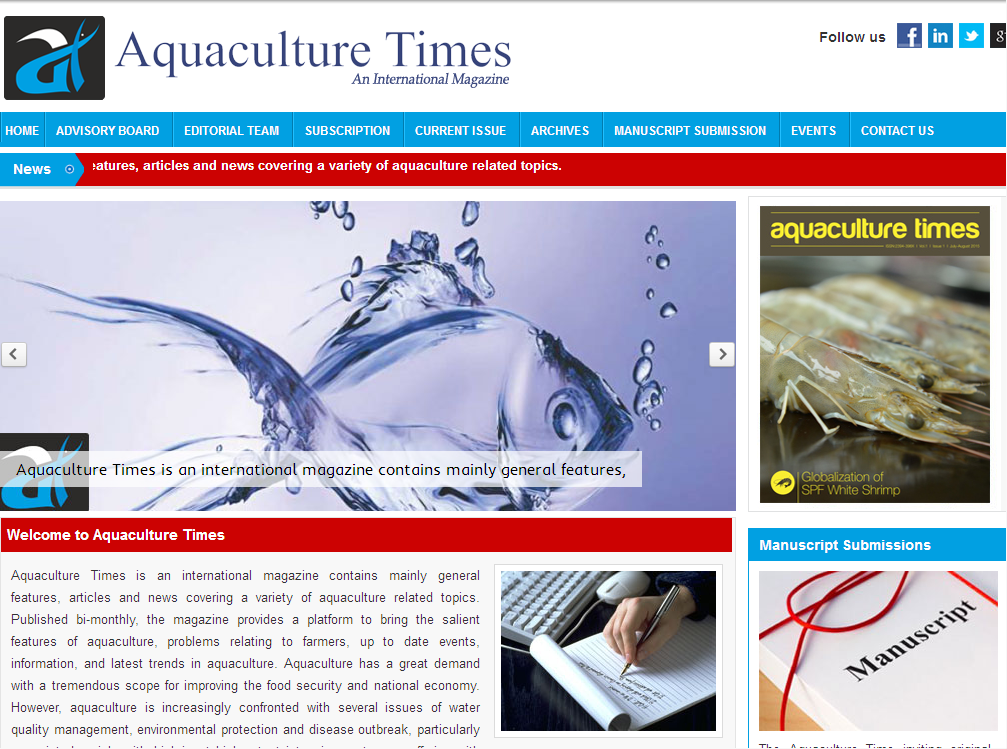
Globalization of
SPF White Shrimp
ADVISORY AND EDITORIAL
EDITORIAL BOARD TEAM
HONORARY ADVISOR Prof. K.R.S.Sambasiva Rao
Editor-in-Chief
Dr.S.Ayyappan Mr. V.Siva Prasad
Director-General Managing Editor
Indian Council of Agricultural Research Dr. P.Jaganmohan Rao
New Delhi India Executive Editor
Dr.A.Devivaraprasad Reddy
ADVISORY BOARD Assistant Editor
Dr.Jim Wyban Prof.S.V.Sharma Vijayawada
Consultant at H2A2 Prawns Ltd, USA Dr.K.Veeraiah Guntur
Dr.P.V.Krishna Guntur
Dr. W.S.Lakra Dr.K.Sumanth Kumar Guntur
Director Dr.V.Venkata Ratnamma Guntur
Central Institute of Fisheries Education Dr.N.Gopala Rao Guntur
Mumbai India Prof.P.Hari Babu Nellore
Dr.P.Padmavathi Guntur
Dr. P. Jayasankar Dr.G.Simhachalam Guntur
Director Dr.K.Sunita Guntur
Central Institute of Freshwater Aquaculture Dr.M.Jagadesh Naik Guntur
Bhubaneswar India
Dr. Iddya Karunasagar
Senior Fishery Industry Officer
Food and Agricultural Organisation
Rome Italy
Dr. J. K. Jena
Director
National Bureau of Fish Genetic Resources
Lucknow India
Dr. A. K .Singh
Director
Directorate of Coldwater Fisheries Research
Nainital India
Dr.K.K.Vijayan
Director
Central Institute of Brackish Water Aquaculture
Chennai India
ISSN: 2394-398X
Vol. 1
Issue 1
JULY - AUGUST 2015
SCIENTIFIC ARTICLES 32 EVENTS
06 Globalization of SPF White Shrimp - POPULAR ARTICLES
Jim Wyban
35 Husbandry Practices in Trout
10 Aquaculture and Marine Culture
Biotechnology: A Future for India Salman Rauoof Chalkoo
Arun S. Ninawe
37 Cautions in using Organic Raw
14 Cold water Fisheries in India : Manures in Fresh water Fish
Issues and challenges Culture: Effective and Cost
A.K.Singh and S.Ali Effective usage of Mature
Organic Manures in Aquaculture
19 Diversification of Freshwater Jalagum Krishna Prasad
Aquaculture- Propagation of Tilapia
Culture in Andhra Pradesh 39 Feeds and Feeding in
P.Ram Mohan and T.V. Bharathi Aquaculture
P.V. Rangacharyulu and Ramesh
21 Ornamental Fish Farming for Rathod
Entrepreneurship Development
P.Jayasankar and S.K.Swain 41 Probiotics -
A Boon for Aquaculture
24 Multidimensional Role and the Way A. Balasubramanian and
Forward for Aquaculture in National T. Suguna
Development
S.Felix and P.Antony Jesu Prabhu 44 Ammonia in Culture Pond water
its Formation and Impact on
27 Potential Anti-Viral Properties of Culture Organisms
Phytochemicals against Shrimp S.V. Sharma
Diseases
DSD Suman Joshi and A Krishna 45 Career in Aquaculture
Satya
48 News
28 Sudden Drop in Ground water
Levels Leading to increased Calcium 57 Expert Reviews
P. Jaganmohan rao, Aruna Kumari
and Latha kumari
30 Farmers Guide
Aquaculture plays an important role in providing food Aquaculture developments can have profound influence
and income to many developing countries, either as a on human health due to the increased prevalence new
stand-alone activity or as an integrated farming activity. diseases. Aquaculture can make efficient use of scarce
Aquaculture going to face many challenges over the next resources, however conflicts may arise between different
decade, notably, combating diseases and epizootics, brood- water users. It is consequently important to balance the
stock improvement and domestication, development of positive and negative effects when establishing new
appropriate feeds and feeding mechanisms, hatchery technology and aquaculture systems. The main objective of
and grow-out technology, as well as water-quality Aquaculture Times magazine, is to address the problems
management. Biotechnology encompass a wide range of of aqua farmers globally and disseminate the scientific and
approaches that can improve subsistence and commercial farm based knowledge.
aquaculture production and management.
K.R.S.Sambasiva Rao
Present day aquaculture is being eroded each day due to
unending anthropogenic stress. Thus there is a dire need
for proper investigation and documentation of imprint
genes with an innovative scientific molecular biology
based techniques for the development of aquaculture.
Aquaculture genetics shows immense potential for
enhancing the production in a way that meets aquaculture
development goals for the new millennium. In present
scenario, apart from the morphological studies, novel
genetic and molecular studies have gained immense value
in identifying the aquatic animal diseases and also protect
the genomic imprints of the aquatic animals.
Molecular techniques can create a pioneering focus
on the cultivation of high-yield and stress-resistant
varieties, detecting and preventing diseases as well as
the development of new types of breeding for embryonic
development and epigenetic modifications of DNA occur
through various processes and are assumed to facilitate
differentiation into specific cell types. Once widespread,
this system will revolutionize as biological information to
get familiarized with the species diversity. Aquatic species
that are endangered, need identification for evolving a
strategy for their conservation. This imprint technology
may help the farmers and traders to improve the quality
of aquatic animals with free of diseases with native genes.
SCIENTIFIC ARTICLE AQUACULTURE TIMES I Vol. 1(1) - 2015 I 06
Globalization
of SPF
White Shrimp
Jim Wyban
H2A2 Prawns Ltd., Introduction shrimp that were certifiably free of “listed
Hong Kong and Hawaii pathogens” which are disease-causing
Development of SPF White Shrimp in the microbes that can be diagnosed and can
US in the early 1990s resulted in a doubling be physically excluded from a facility. The
of US industry production. Subsequent listed pathogens used in SPF certification
introduction of SPF White Shrimp to Asia in are shown in Table 1. It is interesting that
the late 1990s, produced dramatic increase the listed shrimp pathogens in 1990 were
in shrimp production and rapid spread limited and didn’t include White Spot,
through Asia. White Shrimp’s widespread Yellow Head, Taura or IMN viruses. At that
adoption in Asia tripled global shrimp time, there were no PCR systems available
production between 2000 and 2010. By for shrimp diagnostics. All diagnostics to
2010, White Shrimp production accounted establish the first SPF stocks were done by
for 80% of total world production and was histopathology.
the dominant species farmed in China,
Thailand, and Indonesia – the world’s three Impact of SPF White Shrimp in the U.S.
leading production countries at that time. Industry
Recently, India has adopted White Shrimp
for farming that has resulted in a boom in Commercial production trials comparing
production. SPF and non-SPF stocks were undertaken
by the US industry. In 1991, 2000 SPF
Domestication of SPF White Shrimp broodstock were shipped from Hawaii to
shrimp hatcheries in Hawaii, Florida, Texas
In the late 1980s, US shrimp farmers and South Carolina. Biosecurity protocols
were suffering a variety of serious disease were developed to prevent disease
problems. Our research group at Oceanic introduction and produce SPF postlarvae.
Institute set out to develop a disease-free More than 50 million SPF postlarvae were
shrimp to alleviate these problems. Our produced and stocked into commercial U.S.
SPF program was based on developing
Table 1. SPF Listed Pathogens – then and now. Pathogens used to establish the first SPF
shrimp stock are marked (•) under column 1990. Listed SPF pathogens used in 2010 are
marked under column 2010.
CATEG PATHOGEN PATHOGEN ACRONYM - NAME 1990 2010
ORY TYPE
C-1 IHHNV - Infectious Hematopoietic Necrosis • •
Protozoa Virus
C-2 Protozoa WSSV – White Spot Syndrome Virus • •
C-2 Metazoan YHV, GAV, LOV – Yellow Head Virus • •
C-3 Parasites TSV – Taura Syndrome Virus •
C-3 HPV, BPV •
MBV, MBR, BMN, IMNV •
Microsporidians, Haplosporidians
Gregarines
Larval nematodes, trematodes, cestodes
SCIENTIFIC ARTICLE AQUACULTURE TIMES I Vol. 1(1) - 2015 I 07
ponds for field trials of the SPF shrimp. SPF ponds were run In addition to increased production, use of SPF shrimp
side by side with non-SPF ponds in all three farming regions. reduced incidence of shrimp disease. There was unanimous
opinion among U.S. farmers that the tremendous profitability
Production results in SPF ponds were significantly better experienced in 1992 was due to use of SPF stocks!
than in non-SPF ponds in all three regions. A typical result is
illustrated by data in Table 2 comparing SPF and non-SPF Globalization of SPF White Shrimp
Fig1. L.vannamei broodstock SPF White Shrimp broodstock were first shipped to Taiwan
in 1996. By 1997, the hatchery was producing substantial
quantities of PL and distributing them throughout Taiwan.
By August, farmers who stocked White ShrimpPL had great
harvests – they made lots of money and news of the White
Shrimp jackpot reached the front page of the national
newspaper. Urgent demands for White Shrimp broodstock
deluged Hawaii shrimp farmers. The Taiwan White Shrimp
craze continued at a fevered pitch through the winter and
spring of ‘98. It was widely agreed that introduction and
success with SPF White Shrimp was the most exciting news in
Taiwan shrimp farming since the collapse of their P. monodon
industry in 1989 (Liao, pers. com.).
shrimp in an intensive commercial pond in Hawaii. Harvest Thailand’s Shrimp Revolution
weight, size uniformity (CV), feed conversion (FCR), total
crop and crop value were all greater in from crop value in Thailand starting farming shrimp in the 1970s, using locally
both trials, the SPF crop was more than twice as profitable as available P. monodon broodstock captured from the sea to
the non-SPF crop. produce PL in land-based hatcheries for pond stocking. By
the early 1990s, Thailand emerged as the world’s leading
Based on the excellent results of pond trials in 1991, more farmed shrimp producer and exporter based on P. monodon
than 5000 SPF broodstock were produced in Kona Hawaii in production.
1992 and supplied to US hatcheries. More than 200 million
SPF postlarvae were produced from the SPF broodstock and In the 1990s, disease problems increased risks and slowed
stocked into commercial ponds in the three shrimp culture industry expansion. Yellow head and white spot viruses
regions of the U.S. Virtually all shrimp ponds in the US were severely impacted production. Government-sponsored
stocked with SPF PL in 1992. Total production of the US research and extension helped the industry adjust and
industry doubled as a direct result of this innovation. manage around these diseases. These viruses were most
often introduced through the wild broodstock supply.
Stocking Density (PL/m2) NON-SPF SPF Despite these problems, the Thai industry maintained its
97 90 position as the number 1 shrimp producer. In 2001, Thailand’s
P. monodon production peaked at 280,000 MT.
Duration (days) 101 104
Survival (%) 86 90
Mean Weight(g) 8.5 11.8
CV (%) 38 9
FCR 3.37:1 2.1:1
Total Crop (kg) 1,424 1,937
Crop Value $12,507 $20,326
Crop less feed costs $7,228 $15,852
Table 2. Comparison of SPF vs non-SPF shrimp in a commercial Fig.2 Annual shrimp production in Thailand comparing Black
intensive system in Hawaii (1991). Tiger and White Shrimp.
These dramatic gains in production from use of SPF shrimp By 2001, Thai farmers faced a new disease called Monodon
were experienced in all three shrimp production regions of Slow Growth Syndrome (MSGS), characterized by slow
the U.S. in many different environments and using a variety growth leading to smaller harvest size and lower prices.
of technologies and stocking densities. Use of SPF shrimp The cause of MSGS is still unknown. This slow growth
in commercial farms increased production and survival, problem with P. monodon set the stage for SPF White Shrimp
improved FCR and narrowed harvest size distribution. Each introduction. Farmers were looking for a lower risk, more
of these improvements contributed to increased profitability. reliable way to make money farming shrimp.
SCIENTIFIC ARTICLE AQUACULTURE TIMES I Vol. 1(1) - 2015 I 08
White Shrimp Advantages
A key issue in understanding the rapid spread of White Shrimp
through Asia is to understand the specific advantages White
Shrimp enjoys compared to Black Tiger in shrimp farming.
Several important factors of biology that strongly favor
White Shrimp for farming include: White Shrimp nutritional
requirements are less expensive to satisfy. Lower protein feed
can be used with White Shrimp. Further, White Shrimp greatly
benefits from pond ecosystem- generated food. While not
well understood, White Shrimp’s feeding behavior and waste
metabolism generates a healthy “nutritious” ecosystem that
actually supplements White Shrimp growth. A second key
factor is White Shrimp is amenable to high stocking densities.
This is some what dependent on the ecosystem factor but is
also a result of White Shrimp’s behavior. Domestication has
played an important role in this behavior. Recent trials in
super-intensive culture in the US have successfully reared
White Shrimp at stocking densities over 800 PL/m2.
Shrimp Farming Eras
Limited SPF White Shrimp broodstock imports were Shrimp farming’s long and colorful history can be divided into
first tested in 2001. Results were impressive with stable, three distinct eras (Table 4 and Figure 5). During the “Wild PL
consistent results; high survivals and fast growth to 20 g in Era” nearly all stocking material was wild PL gathered from
100 days with uniform size distribution at harvest (2-3 size the sea. In each hemisphere, shrimp farming was based on
classes). The SPF shrimp were tolerant to higher densities use of native species. In Asia, the industry was dominated
than P. monodon – up to 2.5 kg/m2 and there were lower by Black Tiger while in the West, the industry used White
incidences of mass mortalities. The industry lobbied to allow Shrimp. During this era, annual production increased rapidly
more broodstock imports in 2002. More farm trials followed (~100%/year). Growth was driven by very strong market
and 2002 also saw tests of “homegrown” or “F1 broodstock”. acceptance and demand for farmed shrimp product and
Farmers soon found that most growth and production a relative absence of disease which allowed simple pond
advantages of true SPF White Shrimp were lost using “home culture methods to succeed.
grown or F1” broodstock. Slower growth and large size
variation and more disease events were typically experienced The second Era in shrimp farming is the “Hatchery PL Era”
with F1 stocks. White Shrimp production in 2002 jumped to (1988-96). In this phase, post larvae were produced in land-
20,000 MT. Figure 4 illustrates the rapid increase in White based hatcheries. While cultured, these PL were genetically
Shrimp production (white bars) between 2002 and 2006
while P. monodon production (black bars) rapidly declined.
By 2009, White Shrimp represented over 98% of total
production and total production reached 600,000 MT more
than double the previous peak in Black Tiger production.
Progressive Thai farmers were producing 20-30 MT/Ha/ Fig.4 Annual production of L.vannamei (in MT)
crop using SPF White Shrimp. Table 3 compares the relative
production numbers and profits between species in Thai wild animals because the parents were wildcaught brood
shrimp farms. These data clearly show the driving force of stock gathered from the sea. During this era, shrimp farming
Thailand’s change from farming Black Tiger to White Shrimp in each hemisphere continued to use native species. The
is the superior production economics with White Shrimp. West was dominated by White Shrimp while Asian shrimp
Crop value and profits ($/ha) with White Shrimp are 2-3 farming was based on Black Tigers. Asian shrimp production
times greater than with Black Tiger. Reliability of production was at least five times greater than Western production
(avoidance of disease) is also higher with SPF White Shrimp. throughout this era so global production statistics in this
era were dominated by P. monodon. During the Hatchery
PL Era, total world production only increased from 604 to
SCIENTIFIC ARTICLE AQUACULTURE TIMES I Vol. 1(1) - 2015 I 9
Table 3. Shrimp Farming Eras
ANNUAL GROWTH
PRODUCTION RATE
(%/yr)
(000 MT) 103%
2%
Era Years Start Finish Gain 20%
Name 520
89 -7%
Wild PL 1982- 84 604 2807
88
-800
Hatchery 1988- 604 693
PL 96
SPF 1996- 693 3500
White 2010
Shrimp
EMS 2010-?? 3500 2700
Fig.5 L.vannamei Larvae The fourth Era is “EMS Era”. This vibrio-caused disease has
reeked havoc throughout the Asian industry with heavy
693 thousand MT resulting in an average annual gain of just losses in Vietnam, China and Thailand. While SPF stocks are
2%/yr. Thus there was very little industry growth during part of the solution to the EMS problem, system biosecurity
this era compared to the Start-up Era. The main obstacle to and husbandry systems need to be upgraded to overcome
growth in this era was widespread shrimp disease. These this problem.
diseases were largely spread through the industry with the
hatchery- produced PL because the hatcheries paid little or Economic Impact and the Future
no attention to animal biosecurity. Diseases carried by wild
sourced broodstock were passed to the PL offspring in the Widespread adoption of SPF White Shrimp has significantly
hatcheries and then transferred to the farms with the PL. improved the economics and reliability of shrimp farming.
The driving force in Asia’s switch to White Shrimp was based
The other obstacle to growth in this era was the continued on the much higher profit achieved with White Shrimp
use of wild animals. Shrimp farming production during the compared to Black Tigers (Table 3).
Hatchery PL Era reached a “carrying capacity” for use of wild,
non-domesticated, non-SPF animals. While farmers tried Domestication, breeding and globalization of White Shrimp
increasing stocking densities to increase yields and profits, added tremendous value to the world shrimp industry. In
their use of wild animals precluded these attempts and the mid-90s, annual shrimp production was 700,000 MT per
prevented industry growth. year with a total crop value of about $3.5 billion based on an
average price of $5/kg. Current crop value is worth more than
The third era of shrimp farming is the “SPF White Shrimp $12 billion with 3.5 MMT at $3.50/kg. This is more than 3-fold
Era”. From 1996 to 2010, industry production grew from increase in industry value resulting from the domestication,
about 700,000 MT to 3.5 MMT with sustained annual breeding and widespread use of White Shrimp. This industry
growth of more than 20% per year. This rapid growth was transformation is driven by White Shrimp’s lower production
primarily driven by the domestication, breeding and rapid costs which derive from advancing domestication coupled
adoption of White Shrimp in Asia. China, Indonesia, Vietnam with White Shrimp’s natural growth traits. White Shrimp
and India are the four leading shrimp farming nations of the profitability and reliability advantages will bring more and
world. Thailand’s dramatic shift from Black Tigers to White more farmers to use it with a goal of lowering production
Shrimp may best illustrate this Asian transformation. It is costs and increasing reliability. The biggest opportunity to
characterized by the use of domesticated White Shrimp bred lower costs in shrimp farming is through the use of top quality,
for faster growth and disease resistance. As domesticated disease free (SPF) postlarvae carrying high performance
animals they are far more accommodated to culture systems. genetics cultured under optimum conditions to maximize
The single biggest factor contributing to the rapid increase in their growth potential.
production is the domestication, breeding and widespread
use of White Shrimp as species of choice for farming.
SCIENTIFIC ARTICLE AQUACULTURE TIMES I Vol. 1(1) - 2015 I 10
Aquaculture which comprises oceanography, marine biology, fisheries
and Marine and aquaculture, microbiology, cell and molecular biology,
Bio-Technology: genetics, recombinant technology, immunology, chemistry,
A Future for bioinformatics and engineering. Marine biotechnology
India adopts techniques in all these disciplines for the faster
growth as an emerging area of science.
Arun S. Ninawe
Department of Biotechnology, Aquaculture Breed Improvement
Ministry of Science and Technology,
New Delhi-110003, India With the intensification of population density the land based
protein resources are getting depleted. The next focus will
It is considered that life has originated from the sea and be on aquatic resources. The demand for fishery resources
almost 70% of our planet Earth is covered with oceanic water and products also will increase in future. As a result it leads
body. Ocean is a unique and diverse ecosystem offering to the decline of capture fisheries. Many major fish stocks are
almost all living phylogenic groups comprising most ancient showing declining trend in productivity due to over fishing.
and diverse life creatures. This extreme biological diversity This situation needs technologies to increase productions
is the result of highly variable ocean ecosystems comprising as well as replenishing or increase the wiled fish stocks. To
wide thermal range (hot hydrothermal vents and cold attain this it is necessary to develop technologies to increase
Antarctica), pressure ranges (1-1000 atm), nutrient variation, fish production. In this context aquaculture can contribute
light availability, varying degrees of depth, bottom sediment much to the increased production of fish protein. During
texture variability, wave actions etc. These extremities offer last decades aquaculture has grown from traditional pond
possible presence of novel organisms which can be used for based farming into a large industry contributing to world
developing new processes and products to meet demanding wide production of fisheries products. To meet efficient
needs in the sectors such as, food, medicine, energy. Recent aquaculture production modern aquaculture need of efficient
developments in the Marine biology and oceanography aquaculture production systems with high yielding and
reveals that there is immense potential for marine living disease resistant varieties of fishes, high health brood stock,
resources to be used as a source for food protein, energy better disease management, and diagnostics for aquatic
source and source of new drugs. As the human population pathogens, water quality management, diversification of
increases and the land resources diminish, our next focus will cultured species, efficient aquaculture nutrition. In these
be on these unexplored marine treasures. In future ocean will directions aquaculture biotechnology can contribute a lot to
be the source for food, energy and drugs. the industry.
Marine biotechnology is a recent area of science which is Towards increasing production and productivity availability
gaining momentum in Europe, Asia and America. However of high health and high yielding varieties of fishes are
marine biotechnology is still in the infant stage when required. This can be achieved through new biotechnologies
compared to other fields of biotechnology. The unutilized such as transgenics, chromosome engineering (sex reversal
and unexplored marine resources are the important and polyploidy) and breeding. The generation of transgenic
biological sources which beneficial for industrial sectors. fishes has been successfully done from 1980 onwards. In
In Europe, bio-economy was established which utilize a many countries by using recombinant technology researches
biological resource and it estimates around 22 million are underway to develop genetically modified organisms
employee yields a market size of over €1.5 trillion. To having useful traits such as fast growth, better feed
enhance the visualization of India as a knowledge-based conversion ability, resistance to pathogen and temperature
economy in the sectors of marine-foods and products over salinity tolerance etc. Growth hormone transgenic has
the innovation driven culture demands supports from the been successfully developed for many cold water fish
state of encouragement and expands research activity. The species. Recently there are more attention on marker
focus of marine biotechnology was diversified with different assisted selection and breeding to develop superior traits.
funding agencies such as ICAR, MOES, DRDO etc., whereas Molecular markers such as QTL (Quantitative trait loci),
the Department of Biotechnology is promoting this sector SNP’s (Single Nucleotide Polymorphism), RFLP (Restriction
encompasses a sustainable food production system and fragment length polymorphism), Mitochondrial DNA
also to develop new products and processes from marine (mtDNA) Randomly Amplified Polymorphic DNA (RAPD),
living resources. It is an interdisciplinary area of science Micro satellite markers and (ESTs) Expressed Sequence
Tags have been developed for many traits in both fishes and
shellfishes. Chromosome sex manipulation techniques to
induce polyploidy (triploidy and tetraploidy) and uniparental
chromosome inheritance (gynogenesis and androgenesis)
have been applied extensively in cultured fish species. There
were many success stories on sex manipulation from culture
species of fishes. Fore induced breeding of fish gonadotropin
releasing hormone and its structural analogues are widely
used.
SCIENTIFIC ARTICLE AQUACULTURE TIMES I Vol. 1(1) - 2015 I 11
Health Management Water Quality Management
Disease is the major constraint to intensive aquaculture. Water quality is the key to the success of any aquaculture
Aquaculture continues to grow with the problems of production system. To enhance the production and
disease out-breaks. Day by day the number of diseases that productivity high stocking in aquaculture is adopted which
casing serious threat to both cultivated species of fin fishes results in deterioration of water quality and production of
and shell fishes are increasing. Major diseases of finfishes organic matter. Toxic substances such are ammonia, nitrite,
and shellfishes are of viral, bacterial, fungal, parasitic and H2S and CO2 are produced. For effective water quality
environmental etiology. This situation requires effective management, technologies such as recirculation aquaculture
disease management strategies that include use of precise system and bio remediation are adopted. Recently bio-
diagnostic techniques. Biotechnological tools are effectively remediators for ammonia and nitrite reduction and organic
used in molecular diagnostics, development of vaccines, matter reduction in aquaculture have been developed.
immunostimulants and therapeutics and these are gaining The Department of Biotechnology has supported the R&D
popularity for improving the disease resistance in fish and innovation at Cochin University of Science and Technology,
shellfish species world over. Presently molecular diagnostic Cochin, for the development of Bioreactor: A technology
techniques such as Gene Probes, PCR (Polymerase chain of nitrifying bioreactor for the aquaculture system which
reaction), LAMP (Loop mediated Isothermal Amplification) reduces the metabolite load. The bioreactors for nitrifying
and immunodiagnostic techniques have developed for water in closed system hatcheries of penaeids and non-
major species of finfishes and shellfishes. For finfishes penaeid prawns is being commercially used as a novel
subunit vaccines and DNA vaccines were developed for re-circulation system for organic shrimp and prawn seed
major diseases. However vaccine development for shell production. The technology facilitates conversion of the
fish diseases is still remaining unachieved. Recently various conventional open systems to closed ones with re-circulation
immunostimulants such as beta glucans, levamisole and and has been transferred to industry for commercialization.
other herbal products have developed for evoking non
specific immunity in fishes and shellfishes. Use of antibiotics Fish Nutrition and Feeding
in aquaculture is restricted in aquaculture in many countries.
This has lead to use of probiotics for disease management Nutrition and feeding play an essential role in the sustained
in aquaculture. Recently probiotics are widely used for development of aquaculture and, therefore, fertilizers and
health management and environment management. Marine feed resources continue to dominate aquaculture needs.
ecosystem is a potential source of beneficial micro organisms Further large expansion of semi-intensive, small-scale
which can be used as probiotics. pond aquaculture and industrial farming required quality
feed as per the feed preference of fish species. Aquatic
SCIENTIFIC ARTICLE AQUACULTURE TIMES I Vol. 1(1) - 2015 I 12
animal nutrition and feeding are critical issues and mitigation needs to be addressed. Research issues on
for sustainable aquaculture production in both water budgeting is critically being looked in to and open sea
industrialized and developing countries, e.g. nutrient cage farming of fishes and lobsters, hatchery production
requirements of fish and their supply under practical and pond production of shrimp and Asian Seabass are being
farming conditions, availability and supply of feed demonstrated at several centres of East and West Coasts
resources and their implication on development of India. The feed challenges are again being examined
of aqua feeds, forecasting of demand and supply of for different life stages of carps, shrimp and seabass and
marine resources, and maintenance of environmental transferred to private entrepreneurs for commercial
quality and sustainability of aquaculture systems. production. Introducing new species of fishes for culture is
It is also important to understand the contribution therefore a challenge in aquaculture. For this biotechnology
of naturally available food in semi-intensive tools to develop wild species of fishes into cultivable species
aquaculture and its role on the development of on- is high priority. In this context the genetic management and
farm feed management strategy in addition to the conservation of natural fish stocks and gene pools through
studies on nutritional effects on immune competence biotechnological tools will be of great importance.
and disease resistance of fish, understanding of
brood-stock and larval nutrition, role of nutrition on Pharmaceuticals, Nutraceuticals & Cosmetics
fish quality, and development of regional nutritional
databases for aquaculture development. Fish Over half of the pharmaceuticals which are being used today
nutrition being an important area of biotechnological are derived from natural products or its derivatives. More
importance, need to be addressed for understanding than 2000 years ago the extracts from marine organisms
larval feeding and nutrition of the larval fishes. Development were used as medicines. The genetic diversity of marine
of new live feed organisms and improving its nutritional value ecosystems is unmatchable and could be used for benefit
and other qualities for larval rearing is also important. of humans. The diversity of chemicals produced by marine
organisms is large and is yet to be explored. These chemicals
Diversification of Species are naturally produced by organisms and are used to defend
against predators, communicate with their neighbors, or
Aquaculture is the fastest growing primary production prevent algae and other encrusting species from growing
sector. Asia dominates aquaculture production of the world, on top of them. Presently marine biotechnology is greatly
and currently contributes 87% to the global cultured finfish focusing on natural products identification, and around more
production. India is a major maritime state and an important than 30000 compounds has been identified during last 40
aquaculture country in the world. Being home for more than years and this number is still increasing. Many compounds
10% of global fish biodiversity, India is ranking third in the having anti cancer, antiviral, anti parasitic, anti malarial,
world in total fish production. While marine sector is almost Anti inflammatory properties were isolated from marine
constituted by capture fisheries, aquaculture has been biota. Most of these precious bio molecules are obtained
the principal contributor in inland fisheries sector, with a from either micro organisms or marine invertebrates
share of 77%. With the increase in demand for aquaculture and plants. Marine invertebrates such as corals, sponges,
foods, there is need for more efficient production systems. echinoderms, mollusks, bryozoans, tunicates are found to
Though the country is rich in aquatic resources, the index of be excellent source of biologically important molecules.
biodiversity utilized for aquaculture is of the order of 0.13 Some commercially available drugs derived from marine
(~85% from Indian major carps; ~ 5% air-breathing fishes; organisms include antibiotic cephalosporine and cytostatic
~10% rest all species together). Hence, for the sustainability
of aquaculture, more species need to be brought into the
culture system.
Mariculture can greatly supplement marine fisheries
and given the wide spectrum of cultivable species and
technologies available, the long coastline and the favorable
climate, mariculture is likely to generate considerable interest
amongst the coastal population. One of the milestones in the
seed production of marine finfishes was the development
of hatchery technology for commercial seed production of
sea bass (Lates calcarifer). Protocols for captive brood-stock
development, induced maturation, breeding and larval
rearing have been standardized. Technologies for a couple of
another species are presently available in the country. There
is an urgent need for developing a package of practices for
several more commercially important species (e.g. grouper,
cobia, sea bream and pearl spot).
The challenges aspects like changing climatic conditions
and sustainability of fishery due to vulnerability, adaptation
SCIENTIFIC ARTICLE AQUACULTURE TIMES I Vol. 1(1) - 2015 I 13
cytarabine from sponges, kanic acid an insecticide from red compound Biopterin glucose a pigment isolated from a
algae, analgesic zincototide etc. Ara-A (Anti Herpes virus) marine planktonic cyanobacterium protects the skin from
and Ara-C (Anti tumor) are two commercial products from the adverse effects of the UV-A radiation. This compound is
sponges which are being used as pharmaceuticals. Many used in the formulation of sun screen cosmetics. Tocopherol,
products such as anticancer Yondelis from sea squirt, pain a lipid-soluble compound, is an effective component for skin
killer Zinconotide from conus snail, anti cancer Dolastatin protection. Fucoidan isolated from marine algae shown to
from sea slug, anti cancer Bryostatin from Bryozoa, and anti have anti aging, skin protecting and anti oxidant activities.
cancer Squalamine from shark are various under clinical These evidences show that marine organisms provide an
phases. The list is being growing and new products are added excellent source for pharmasuitical, neutracuitical and
every year. This shows the potential of marine organisms as a cosmetic products. However, it needs to be explored further
source of pharmaceutical products. to find new and promising compounds from marine organisms.
Marine organisms are unique source of novel nutraceuiticals. Development of HRD in Interdisciplinary Science
Various polysachrides, poly unsaturated fatty acids, anti
oxidants, vitamins, and sterols are the main compounds One of the major reasons associated with slow growth
used as nutraceuiticals derived from marine organisms. The of marine biotechnology sector is the availability of the
marine poly sachrides which are used as nutracuiticals include marine organisms and also the difficulties in maintaining
glycans (Cellulose, starch, glycogen, dextran, laminaren etc), them under laboratory condition. Unlike other areas of
fructans (inulin, levans, mannans and xylans), galectonurans biotechnology Marine biotechnology is a subject of highly
(pectin), alginates and chitin. Instead of nutracuitical interdisciplinary nature. Marine systems offer highly
potential compounds such as sulfated polysachrides and diverse and tough environments such as high pressure Deep
chitin shows anticoagulant, anti tumor and blood purifying Ocean, super cool Antarctic and Artic regions, and highly
activities. In addition Sulfated polysachrides provide immune hot hydrothermal vents. To collect and maintain organisms
enhancement and some poses anti HIV property also. from these environments there requires a good knowledge
Marine algae and microbes are the majour source of these in oceanography and requires special equipments. Good
marine polysachrides. Poly unsaturated fatty acids (PUFA) knowledge in engineering science is required to develop
in n-3 and n-6 series such as icosapentaenoic acid (EPA), culture systems and to develop exploration equipments for
docosahexaenoic acid (DHA), and arachidonic acid (AA) are field studies. To explore marine systems to collect samples
some poly unsaturated fatty acids with parasitical as well as and to conduct experiments an understanding on the
nutraceuitical significance. These compounds have positive oceanographic and meteorological parameters is necessary.
effects on cardiac diseases, hypertension. They are also been This will help in planning when, where, and how to collect
used to treat skin diseases and chronic inflammation. Marine samples and conduct experiments in marine environment This
fishes are rich source of these compounds. Other than marine will also help in locating the sampling site and also to make
fishes algae and microbes also can produce these compounds. future studies much easier. A good knowledge on biology
Marine organisms are rich source of anti oxidants and several and culturing of marine organisms are therefore required for
anti oxidants have been isolated from marine organisms. conducting laboratory experiments using marine organisms.
These are carotenoids, astaxanthines, mycosporins and The area needs promotion for the development of HRD
dimethyle sulfoniopropionate (DMSP) and other phenolic through inter-disciplinary science to boost the aquaculture
substances. Marine organisms contain other nutrceuiticaly and marine biotechnology sector.
important compounds such as vitamins (vitamin B12), sterols
(clionasterol, fucosterol). These marine derived nutracuticals Conclusion
also show hypocholesteromic, cardiovascular protective,
adipogenisis inhibitory, and inhibitor of fat absorption, Aquaculture & Marine Biotechnology is modern and fast
anti cancer, anti viral, anti bacterial and anti inflammatory growing area of science in recent years. Major part of the
properties. globe is ocean which offers highly diverse environment,
rich in biodiversity that is still remaining unexplored. It
Marine ecosystems provide varieties of compounds with offers a huge opportunity for developing new products and
cosmetic application. These compounds show anti aging, skin processes. Marine biotechnologists explore ocean for finding
protecting, anti oxidant and anti bacterial properties that new drugs, new source of energy, biomaterials, industrial
make them to be used in cosmetics. Products from marine products etc. Recently many promising results are coming
macro and micro algae and marine minerals were widely from this field in the form of new candidate drugs, industrial
used in cosmetics. Algae are richest source of vitamins and products, source of new food, energy and other products. The
minerals having anti aging property. Group of compounds sector need to be considered a high priority area addressing
from a gorgonian sponge with anti-inflammatory property basic knowledge in the areas such as oceanography, marine
known as pseudopterosins is used as an additive to prevent biology, ecology, fisheries and aquaculture, microbiology, cell
irritation caused by exposure to the sun. these compounds and molecular biology, genetics, recombinant technology,
are included in an anti wrinkling cream. UV protecting immunology, chemistry, bioinformatics and engineering and
compounds such as mycosporin isolated from mycosporeans need to be promoted as an inter disciplinary science through
could be used against erythema. Another UV protecting development of trained skilled manpower.
SCIENTIFIC ARTICLE AQUACULTURE TIMES I Vol. 1(1) - 2015 I 14
Coldwater of upland waters, comparatively slow growth rate in almost
Fisheries in all fish species, low fecundity in fishes and poor landing and
India: marketing facility. The Directorate of Coldwater Fisheries
Issues and Research (DCFR) being a nodal agency is working since last
Challenges three decades to overcome many such problems and have
achieved manifold success in the management of fish genetic
A.K.Singh and S.Ali diversity and establishment of aquaculture in the hill regions
Directorate of Coldwater Fisheries Research, of India.
Bhimtal-236136 (Nainital), India
Himalayan Ecology
Abstract
The Indian Himalayan region spreading between 210
The diverse natural resource-base, wide climatic diversity 57’ – 370 5’ N latitudes and 720 40’ – 970 25’ E longitudes
of the cold water sector harbour plentiful gene pool which with 250-300 km across stretches over 2,500 km from
are conducive to conservation and rearing for developing Jammu & Kashmir in the west to Arunachal Pradesh in the
domestic market, aquaculture and growing interest of east. These mountainous region covering partially or fully
people in eco-tourism including angling. However, emerging twelve states of India, viz., Jammu and Kashmir, Himachal
anthropogenic pressure and climate change are affecting Pradesh, Uttaranchal, Sikkim, Arunachal Pradesh, Nagaland,
Coldwater resources and their fisheries adversely on Manipur, Mizoram, Tripura, Meghalaya and hills of Assam
flow regimes of streams, aquatic temperature of water & West Bengal. The region has a total geographical area of
bodies, food chain, micro habitats and overall productivity. about 5,33,604 km2 being inhabited by 3,96,28,311 people,
Nevertheless, technology developed for the culture, breeding representing about 16.2% of total area and 3.86% of total
and management of the economically viable cold water fish population of India, respectively. The region is vast, uneven
species has a positive impact on the employment generation and versatile inhabiting rich biological floral and faunal
and sustainable management of the aquatic resources and diversity. These areas are broadly divided into eastern
their piscine fauna. Himalaya, central Himalaya and western Himalaya, each of
these having different physiography and faunal diversity.
Keywords: Coldwater, resources, ecology, fish diversity, Topographically from South to North Himalayas is divided
management into four parallel & longitudinal mountain belts (Table 1).
Introduction Aquatic Resources
The country has significant Coldwater/ hill fishery resources The agro-climatic zones in the Indian Himalayan region is
in terms of gene pool and some of them being suitable for food, based on the altitudinal gradient, which are broadly classified
sport and ornamental value extending from north western to as warm sub-tropical (<800m) to arctic zone (> 3,600m).
north-eastern Himalayan region and some parts of Western
Ghats, encompassing about ten states. The Coldwater natural Table: 1. Major division of the Himalayan region
resources includes around 8,243 km long streams and rivers,
20,500 ha natural lakes, 50,000 ha of reservoirs both natural The Greater Longest and continuous, mostly
and man made and 2,500 ha brackish water lakes at high Himalayas (Himadri) north part of Nepal and parts of
altitude. This diverse natural resource-base, wide climatic Sikkim. Average altitude of about
diversity vis-à-vis altitude are conducive to conserve and Lesser Himalayas 6100 m (20,000 ft) asl.
rear different fish species, developing domestic market for (Himanchal)
high value fish and growing interest of people in eco-tourism In the south and north of Siwalik.
including angling within and outside the country. Siwalik Average altitude ranging from
(Outer Himalaya) 3700m (12,000) - 4500m (15,000
The present exploitation of fishery resources in upland ft) asl.
regions comes mainly from capture fisheries, though fish Trans-Himalayas
production through culture practices is gaining momentum. Siwalik is the lowest and
At present the total fish production from upland areas narrowest section of Himalaya.
contributes about 3% of total inland fish production of Average altitude about 900m
India. The low contribution to the total fish production is (3000ft) to 1200m (4000 feet) asl.
attributable to several constraints such as low productivity
Stretches across Himalaya from
West to East for about 1,000 km.
Average altitude varies from 4500
to 6600 m asl.
The Indian Himalayan region has vast fresh water resources
primarily in its streams, rivers, lakes and glaciers. The
region yields about 500 cm3 water every year. Fluctuations
in snow and ice cover are responsible for climate and
hydrological variation to a great extent. The Himalayan
SCIENTIFIC ARTICLE AQUACULTURE TIMES I Vol. 1(1) - 2015 I 15
region is drained by 19 major rivers. The main river systems Mountain Fisheries
draining the Himalayan region are the Indus, the Ganges,
and the Brahmaputra. The Indus and the Brahmaputra are On a global level, mountains are the world’s largest
the longest, each having a mountain catchment of about repositories of biological diversity. Mountain regions are
160,000 km2. Five belong to the Indus system, of which the characterized by the presence of cold waters, many of which
Beas and the Sutlej have a total catchment area of 80,000 harbour fish and support largely subsistence fisheries. The
km2;Nine (Ganga, Yamuna, Ram Ganga, Kali-Sharda, Karnali, farming or husbandry of trout has a relatively long history
Rapti, Gandak, Bhagmati, Kosi) belong to the Ganga system, in Europe and North America. In the Indian Sub-continent
draining nearly 150,000 km2; and three (Tista, Raidak, Manas) two main types of trouts viz. brown trout (Salmo trutta fario)
belong to the Brahmaputra system, draining another 110,000 and rainbow trout (Oncorhynchus mykiss (Walbaum)) were
km2. Most of these rivers flow in deep valleys until they exit transplanted from Europe by British settlers around the
the mountains (Sehgal, 1999). beginning of the last century primarily to meet their needs
for sport fishing or recreational angling. The transplantation
There are numbers of lakes situated in the mid and high of brown and rainbow trout was attempted independently
altitudes of Himalayan regions. These lakes have diverse in the Himalayan and in the non-Himalayan States. In
origin such as retreat of glaciers, landslides and tectonic the Himalayan States the brown trout (Salmo trutta fario
movements. The sizes of these lakes also vary as some are of
large area while others have small. In the Great Himalayan Important Coldwater Fishes
and Trans-Himalayan region lakes are present at high altitude,
with the highest lake situated at 5297m a.s.l. Jana (1998) Snow trout Exotic trouts Barils/
lists 13 lakes situated from 3400m to 5297 m, some of them Minnows/
being brackish or saline. Freshwater lakes in Kashmir Valley Schizothorax Onchorhynchus Catfishes/
are believed to have originated as oxbow lakes of the Jhelum richardsonni mykiss Loaches
River (Raina, 1999). Large lakes having 15,300 ha of surface Schizothoraichthys Salmo trutta fario
area are located at middle altitude (1537 to 1587 m) in the curvifrons Salvelinus fontinalis Barilius
State of Jammu and Kashmir while Kumaon lakes situated S. longipinnis bendelisis
(1237 to 1930m asl) in the state of Uttarakhand are much S. esocinus Other Exotics B. bakeri
smaller, with the largest only 72 ha. In Himachal Pradesh S. niger B. vagra
Coldwater lakes are situated between 1306 and 4815 m asl. S. plannifrons Cyprinus carpio var. B. barila
All these lakes inhabit diverse fish fauna. S. micropogon specularis Raimas bola
S. progastus C. carpio var. Danio divario
Fish Biodiversity S. nasus communis Botia birdi
S. hugelli C. Carpio Var. nudus Glyptothorax
The water bodies of the Himalayan region inhabit diverse Lepidopygopsis Tinca tinca pectinopterus
kind of fish fauna. Out of total fish fauna available in India typus Carrasius carrasius G. conirostre
17% fishes were documented from the mountain ecosystem Mahseer Minor carps conirostre
establishing the status of the area as a center of origin and
evolution of biotic forms (Ghosh, 1997). About 36 species of Tor putitora Labeo dyocheilus
freshwater fishes (out of 1,300) are endemic to the Himalayan T. tor Labeo dero
region (Ghosh, 1997). For the whole Himalayas, 218 species T. khudree Crossocheilus latius
are listed (Menon, 1962).The distribution of fish species in T. malabaricus latius
the Himalayan streams depends on the flow rate, nature of Neolissochilus Gara gotyla
substratum, water temperature and the availability of food. hexagonolepis G. hughi
The species distribution in the upper reaches of the stream/ Puntius ophicephalus
river where water has a torrential flow is different from the
mid and lower reaches of the stream where flow is moderate Linnaeus) was first brought in Kashmir through the private
and water current is soft. A number of fish species such as efforts of F.J. Mitchell in 1899. These introductions in the
Noemacheilus gracilis, N. stoliczkae, Glyptosternum reticulatum, hill states could be considered as the formal beginning of
Diptychus maculates, Noemacheilus spp., Schizothoraichthys Coldwater fisheries or mountain fisheries development in
esocinus, S. progastus, Schizothorax richardsonii, Schizopygopsis India. For many decades the mere intention remained to
stoliczkae, Schizothorax longipinnis, S. planifrons, S. micropogon, develop recreational fisheries to satisfy the needs of anglers
Garra gotyla, Crossocheilus diplochilus, Labeo dero and L. for sports. Later on, these species were started being cultured
dyocheilus are found distributed in the different reaches of for food and hatcheries were setup for the production of seed.
the river. The eastern Himalaya drained by the Brahmaputra The development of hill fisheries thus started in the selected
has a greater diversity of Coldwater fish than the western locations particularly in the Kashmir valley and some parts of
Himalayan drainage. Among all these species a few supports the peninsular India. The breeding and culture techniques for
the capture fishery while some are being cultivated in the farm the rainbow and brown trouts were standardized and now
condition at different altitudes based on their temperature being practiced with greater success and accuracy.
tolerances.
SCIENTIFIC ARTICLE AQUACULTURE TIMES I Vol. 1(1) - 2015 I 16
Scope Issues
There is a vast scope and potential in improving fish The vast mountain fishery resources of India inhabits around
production in hills by bringing natural Himalayan lakes 258 fish species distributed in the Himalayan and peninsular
located at different altitudes, under scientific management region of the country of which indigenous mahseer, snow
for fishery enhancement. This would actually reduce the trout, exotic trout and common carp are commercially
gap between actual fish yield and production potentials. important. The present exploitation of fishery resources
Through application of modern techniques, significant scope in upland regions comes mainly from capture fisheries,
exists for promoting trout farming, which in long run, will though fish production through culture practices is gaining
have both domestic and export demand. There is also a great momentum.
potential for sport fishery development and ecotourism in
hill regions. Use of modern techniques such as molecular Several constraints such as low productivity of upland waters,
and biotechnological intervention, selective breeding comparatively slow growth rate in almost all fish species, low
programme for improvement of strains both of exotic and fecundity in fishes and poor landing and marketing facility
indigenous species, coldwater fish health management for have been seen as major obstacles in the rapid development
the containment of diseases have now become imperative.
Providing decision support system using GIS and remote and expansion of coldwater fish production. The major issues
sensing would be helpful not only for resource assessment concerning the development of coldwater sector in India are:
but also for aquaculture development in the hills. Ornamental
fish culture for small scale enterprises in the hills can provide • Low level of production
an alternative source of employment. Presently DCFR has
different available technologies for the hill aquaculture, • Lack of infrastructure for aquaculture
resource management and conservation. Three ponged fish
farming has been standardized and also disseminated to the • Availability of seed for production
farmers of different hill states of the country. Chinese carp
based polyculture technology has been popularized and • Introduction of new candidate species for aquaculture
also adopted by farmers in Arunachal Pradesh, Manipur and
Uttarakhand. Trout farming and seed production technology • Habitat destruction • Wanton destruction
has also been introduced in the state of Sikkim and Arunachal
Pradesh. Aquaculture diversification is the key of fish • Aquatic pollution • Conservation policy
production enhancement in the hill states and also one of the
most important needs of the hour. DCFR has already initiated • Management policy • Climate change
programmes in this direction with the culture and breeding
of Semiplotus semiplotus and Neolissochilus hexagonolepis.
To augment fish production from hilly areas two improved
strains of Common carp from Hungary has been imported
and introduced into the culture system. Aquaculture
potential site selection using geoinformatics has been
developed for sustainable utilization of available resources.
For the rehabilitation and stock enhancement of Himalayan
mahseer, conservation programme such as breeding and
subsequent ranching of seed has already been taken up.
Climate Change
The climate change is a worldwide phenomenon. It refers to
any significant change in climate through temperature and
rainfall pattern etc. for an extended period of decades or
longer, as a result of natural processes and anthropogenic
activities. As global warming continues to increase the
atmospheric temperature, it will lead to a continuous shift of
zero temperature line (snow line) towards higher altitudes.
Climate change is affecting Coldwater resources and their
fisheries through its impact on flow regimes of streams,
aquatic temperature of water bodies, food chain, micro
habitats and overall productivity. The changed eco-climatic
conditions would deteriorate the pristine feeding and
breeding grounds of the native coldwater fish species their
population, maturity condition and spawning and related
vital life cycle phenomenon. Thus, it would lead to migration
SCIENTIFIC ARTICLE AQUACULTURE TIMES I Vol. 1(1) - 2015 I 17
and death of stenothermal and ecologically sensitive fish by themselves or to sell on cheaper prices at far. Being
species. a perishable item transportation of the fresh fish is very
difficult. There is a need of introduction of value addition
Management Strategies techniques to their catches/ production in order to get higher
returns. These would not only preserve their products but
Major occupation in the mountain region of the country is also would increase the net profit.
agriculture based activities. The land holding in the hill area
is smaller (700-900m2) as compared to the national average In the upland waters, the Indian major carps do not grow
(1370 m2). The farmers in the hill region have integrated type well, due to the low thermal regime. Therefore, Chinese
of farming pattern. Fish can serve as an additional source carps found suitable for the Mid-Himalayan region as the
of income if integrated with the water conservation and candidate species for polyculture. The culture of Chinese
harvesting programme. Keeping in view the squeezing land carps were introduced in the Poly/Irrigation Tanks in the
and burgeoning human ratio, mountain fish resource base is mid altitude regions. The technology provides opportunities
of great relevance and development of such areas. Keeping for conservation of water for irrigation and fish culture. The
in view these facts different technological approach and use of polytanks has shown enhanced growth of fish. Around
support services are needed for the fishery development of 50 farmers in the Champawat district of Uttarakhand have
mountain areas. already adopted the technology.
There is a need of introduction of large scale farming to bring Common carp is a major candidate species for polyculture
the country on international scenario. Coldwater fisheries in mid hills. The common carp presently grown in India
for livelihood and industry are the two modern concepts. The originated from two introductions, in 1939 (German strain)
aim of these is to provide protein locally at cheaper price and and 1957 (Bangkok strain). These have become mixed over
to export the fish and fishery products to gain the foreign many generations to give the current stock. This stock of
currency. The aim is very honest and clear to the researchers, common carp is characterized by early sexual maturation and
extension workers and development authorities to make the slow growth rate. This is considered as a serious problem in
strategies accordingly in order to achieve the target within the culture of this species in uplands. For faster growth and
the time frame. The linkage of public and private sector is successful aquaculture of this species in coldwater system,
mandatory in order to develop the coldwater fisheries. it is required to replace the stock with improved strain. Two
improved strains Ropsha scaly and Felsosomogy mirror carp
Resource assessment in the hill region is a challenge due to were imported from Hungary, at DCFR, Bhimtal. The strains
its kaleidoscopic topography. Information available on water were reared and successfully bred at Champawat farm of
resources are old and are based on the maps prepared by DCFR. Hungarian strain gave 47% more growth rate over the
Survey of India. For effective planning of the resources, there existing strain in polyculture system. The improved strains of
is a need of updating the information on fisheries resources Hungarian scale carp and mirror carp are released as Champa
in the hills is expected through Geoinformatics. This database 1 and Champa 2 respectively by DCFR. The parent stock is
will be repository for the country and will be very much maintained at Champawat field Centre of DCFR. The strains
needed to develop scientific management action plan for were supplied to different hill states particularly Dept. of
fishery development. Fisheries of Himachal Pradesh, Arunachal Pradesh, Sikkim
and ICAR Research Complex for NE region, Barapani for
Technology developed for the culture, breeding and culture mainly to evaluate the performance in different eco-
management of the economically viable fishes suitable for mid climatic condition for later dissemination to fish farmers.
Himalayan region has a positive impact on the employment
generation in these regions since the technology was taken as Conclusion
hot cake among the farmers in some areas of the hills. There
is great scope for disseminating these promising technologies The aquatic resources in hills are quite valuable for the
in sub to mid Himalayan belt in order to upgrade the socio- development of fishery both for food, sport, recreation and
economic conditions of the inhabitants. employment but scientific management of these resources
is necessary to achieve the objectives. In order to manage
To replenish the fish diversity, the directorate has taken these ecosystems, so that they can contribute to fishery
programmes on priority by ranching seed in the selected development in remote hilly regions on a sustainable basis,
water bodies. Artificial propagation & seed production from the following issues need attention:
the stocks raised in the farm conditions are standardized.
But the current level of aquaculture technology needs to Resource mapping of the fishery resources in mountain/
be refined for raising commercial stocks of indigenous fish hill region needs to be taken up on priority basis for the
species in hills. Sustained efforts are required in the areas integrated development of the coldwater sector.
of nutrition, growth enhancement and genetic improvement
using modern biotechnology tools. In order to develop the riverine and lacustrine fisheries it is
necessary to go for stock enhancement programme through
Fish sale in the fresh condition is also a bottleneck in ranching.
development of coldwater fisheries, since the many ponds
are not approachable to the market. In these circumstances A legal framework should be formulated to stop all types of
the farmers either forced to consume the production destructive fishing method.
SCIENTIFIC ARTICLE AQUACULTURE TIMES I Vol. 1(1) - 2015 I 18
The breeding grounds of the fish need special protection by References
declaring them as ‘No-fishing Zone’ or ‘Protected Area’.
FAO (2003). Mountain Fisheries in Developing Countries. Ed.
A balanced strategy for lakes, for tourism and fishery Petr, T. Food and Agriculture Organization, Rome. 74 p.
development is required.
Ghosh, A.K. (1997). Himalayan fauna with special reference to
Development of sport/recreational fishery for tourism and endangered and endemic species. In: Himalayan Biodiversity:
employment generation. Action plan (ed. U. Dhar). GB Pant Institute of Himalayan
Environment & Development, Kosi- Katarmal, Almora, pp.
Education, training and extension support to the hill 53-59.
communities for resource conservation and utilization.
Hasnain, S.I. (1999). Himalayan glaciers – Hydrology and
Promotion of mountain-specific policy formulation and hydrochemistry. Allied Publishers, New Delhi, pp 234.
legislation.
Jana, B.B. (1998). State-of-the-art of lakes in India: an
Promoting sustainable use of mountain natural resources overview. Arch. Hydrobiol. Suppl. 121/1, Monogr. Stud.,
and conservation of biological diversity and mountain p.1-89.
ecosystems.
Jhingran, V.G. and Sehgal K.L., (1978). Coldwater fisheries of
The mountain fish resources are of great relevance and India. Inland Fish. Soc. India., 239 pp
development of such area has become subject of national
concern which needs different technological approach and Joshi, C.B., (1988). Induced breeding of golden mahseer, Tor
support services. Such resources have to be properly utilized putitora (Ham). J. Inland Fish. Soc. India., 20(1): 66-67.
for increasing fish production for national basket and rural
development in hills. For the sustainable development of Menon, A.G.K. (1962). A distributional list of fishes of the
this sector, impact assessment and mitigation options of Himalayas. J. Zool. Soc. India, 14(1 and 2): 23-32.
environmental stress is required at certain levels:
Nandy, S.N, Dhyani, P.P and Samal, P.K. (2006). Resource
The rapid overall development and ever-increasing population information database of the Indian Himalayas. ENVIS
lead to anthropogenic activities resulted in disturbing the Monograph 3, G.B. Pant Institute of Himalayan Environment
fragile aquatic ecosystems and fish fauna. Impact assessment and Development, Kosi-Katarmal, Almorah. 123 p.
is required to know the effect of these activities on the fish
biodiversity and wild stock. Raina, H.S and Petr,T. (1999). Coldwater fish and fisheries
in the Indian Himalayas: lakes and reservoirs. In: Fish and
Effect of climate change should be studied as a pilot project fisheries at higher altitudes: Asia. FAO Fisheries technical
to determine its adverse effects on the fish biodiversity. paper no. 385 (Ed. Petr, T.) FAO, Rome. pp 64-88.
Coldwater Fish species are very sensitive to changes in water
temperature and other water qualities. They are important Sehgal K.L. (1999). Coldwater fish and fisheries in the Indian
ecological indicators for impact assessment of climate Himalayas: rivers and streams. In: Fish and fisheries at higher
change. altitudes: Asia. FAO Fisheries technical paper no. 385 (Ed.
Petr, T.) FAO, Rome. pp 41-63.
There is great scope for disseminating promising technologies Singh, B.N. (2002). Status of coldwater fisheries development
in sub to mid Himalayan belt in order to upgrade the socio- in India. In: Highland fisheries & aquatic resource management
economic conditions of the inhabitants. Positive impact may (ed. Vass, K.K and Raina, H.S.) NRCCWF. 57-66 pp.
be assessed to know the improvement in their livelihood.
SCIENTIFIC ARTICLE AQUACULTURE TIMES I Vol. 1(1) - 2015 I 19
Diversification of Freshwater
Aquaculture - Propagation of
Tilapia Culture in Andhra Pradesh
P.Ram Mohn Rao and T.V.Bharathi
State Institute of Fisheries Technology, Kakinada, Andhra Pradesh, India
The new state of Andhra Pradesh has about 78 reservoirs in export potential. The developments in tilapia farming taking
an extent of 2 lakh ha, 2.80 lakh ha of seasonal and perennial place in neighbouring countries because of the introduction
tanks and about 1 lakh ha freshwater aquaculture area . Carp of GIFT tilapia and as no adverse effect on indigenous fish
culture is the dominant activity in the state where most of species and on the environment is noticed, it is desirable
the inland ponds are almost reached full utilization. Yet, many that this species can be promoted as an alternate species
of the inland open water bodies are still left under-utilised to augment fish production from derelict water bodies as
and un-utilized. There is vast scope to utilize these water well as reservoirs. This species has its advantages due to its
bodies by promoting culture fish in cages that will definitely suitability for farming in a wide array of culture environments
help in boosting up production, livelihood, food security and and culture systems, ranging from extensive pond culture to
employment to teeming rural people. intensive recirculating systems.
The fisheries sector in Andhra Pradesh has been identified Nile Tilapia/GIFT is considered as an economically viable
as ‘growth engine’ for economic development based on an species. In case of Tilapia, males grow faster and more
evaluation of potentials of sectors to build on accumulated uniform in sizes than females. Generally mono sex culture of
strength to make significant impact on Gross State Domestic tilapia is more advantageous because of faster growth and
Product. The total fish production of 7.69 lakh tones during uniform size of males. The farm ing of monosex populations of
the year 2004-05 in Andhra Pradesh has been increased tilapias which is achieved by manual sexing or direct hormonal
to 17.68 lakh tones in 2013- 14, which is about 2.30 times sex reversal or hybridization or genetic manipulation has
increase within a span of 10 years. been reported as solutions to the problem of early sexual
maturation and unwanted reproduction. Monosex population
Aquaculture in Andhra Pradesh has been the mainstay for (all male) can be produced with 17α Methyl testosterone
many aqua farmers and the state has become the “Aqua being given through feed for about one month.
Capital” of the country. With the increasing demand for
fish, diversification of species in fresh water aquaculture for Tilapia culture can be taken up both for rural subsistence and
increasing production has become imminent. Introduction for commercial scale intensive venture. Culture of tilapia in
of tilapia in ponds/tanks/reservoir systems is definitely ponds is more economical. If monosex fish are stocked with
advantageous. As tilapia is gaining popularity in other regular manuring and supplementary feeding, yields are
countries because of its white muscle and no intra-muscular economically viable and successful. Tilapia is an omnivore/
bones, it can as well be tried in our state by enthusiastic herbivore and feeds on algae, bacteria, and detritus. It also
famers and also as part of developing large water bodies consumes artificial feeds that are prepared with agriculture
such as reservoirs. Tilapia is a good source of protein and by products. Polyculture of tilapia with other native fishes
is also known as “Aquatic Chicken” or “Everybody’s fish”. It in freshwater ponds is also widely integrated with shrimp,
is (Oreochromis niloticus) native to Africa and it is one of the poultry and cattle rearing as well as agriculture.
most productive and internationally traded food fish in the
world. It is the second most important farmed fish globally Of late, cage culture of tilapia is being propagated as a most
after carps. As per FAO reports, Tilapia is being farmed in successful option as it not only prevents excessive breeding,
about 85 countries worldwide and about 98% of tilapia but also management of cages is easier than management
produced in these countries are grown outside their original of ponds. This will help in opening up options for large scale
habitats. It is suitable for culture due to its faster growth rate, use of reservoirs that are under utilized in the state. Beyond
amenable for culture in ponds, cages, pens, and wide market doubt, Cage farming needs expansion throughout the state.
acceptance. Since Tilapia is an exotic species, Government of But it is important to ponder over certain issues in introducing
India has given permission to culture Nile Tilapia (Oreochromis tilapia cages viz.
niloticus) in Indian waters.
Time is ripe to develop and standardize technology for all-
Tilapia mossambica that was long back introduced into Indian male Tilapia seed production and grow out farming of GIFT
waters has been proved to be a weed fish because of its prolific Tilapia on commercial scale as the diversification of fresh
breeding activity and its rapid widespread in Indian waters. water aquaculture is the need of the hour. Rajiv Gandhi
But compared to T. mossambica, the GIFT tilapia, O.niloticus Centre for Aquaculture (RGCA), the R & D arm of the Marine
is proved to be a superior strain with good growth and good Products Export Development Authority (MPEDA) is making
all efforts to streamline the hatchery technology of tilapia
SCIENTIFIC ARTICLE AQUACULTURE TIMES I Vol. 1(1) - 2015 I 20
and to pave way for the commercial production of tilapia the importance and potential for cage culture and making
for the sustained supply of genetically improved stocks for efforts to promote cage culture to increase the production
farming. The development of Genetically Improved Farmed of tilapia in coming years with utilization of large water-
Tilapia (GIFT) technology (Super Tilapia) is based on selective bodies. Government is taking steps to formulate a pilot
breeding to improve commercially important traits of farmed project and setting up of a few GIFT hatcheries at selected
fish and RGCA deserves full appreciation for standardisation points for supply of monosex seed to the farmers, for its
of technology for seed production and farming and for farming. Establishment and operation of commercial tilapia
production of all male GIFT tilapia seeds. hatcheries need substantial investment, and hence public-
private partnerships will be encouraged. It is high time that
Several Asian countries like China, Vietnam, Malaysia all government institutes/organizations and interested Non-
Thailand and Taiwan have increased their national fish Government Organizations (NGOs) need to join in hands to
production by resorting to cage culture. Yet, cage culture in make tilapia farming a success.
India is in its nascent stage. Now Government has recognized
Biological Role of Minerals
TRACE BIOLOGICAL FUNCTION DIETARY SOURCES TRACE BIOLOGICAL FUNCTION DIETARY SOURCES
MINERALS MINERALS
Rich dietary sources of
Iron Iron is essential for the iron include; blood meal, Cobalt Red blood cell formation and Copra meal, linseed meal,
production of haemoglobin, kelp meal, coconut meal, the maintenance of nerve dried brewer’s yeast, fish
myoglobin, cytochromes and meat and bone meal, tissue, and activating agent meal, meat meal, cotton-
many other enzyme systems. sunflower seed meal, for various enzyme systerms. seed meal and soybean
Iron is one of the primary dried distiller soluble synthesis of vitamin B12 meal etc.,
metals involved in lipid alfalfa meal, crab meal etc. Recommended Doses :
oxidatation. Recommended 0.9mg/kg of feed
Doses : 70mg/kg of feed
Iodine lodine is an essential compo- All food stuffs of marine
chick hatchery meal, dried nent of thyroid hormones im- origin and in particular
Zinc Metabolism of lipid, protein candida yeast, dehydrated portant in regulating the meta- seaweed meal, marine fish
and carbohydrate. Actives in fish soluble, dried distill- bolic rate of all body processes. and crustacean meal etc.,
the synthesis and metabolism ers grains with soluble etc It has roles in thermoregulation, Recommended
of nucleic acids (RNA) and Recommended Intermediary metabolism, Doses : 4.5mg/kg of feed
proteins. Action of hormones Doses : 90mg/kg of feed reproduction, growth and de-
and in wound healing. Reduced velopment, hematopoiesis and
viral penetration inhabits Kelp meal, rice bran, circulation and neuromuscular
proteases involved in viral dehydrated poultry functioning
capsid formation and increases manure, palm kernel
antibody production. meal, crab meal, wheat Selenium Protects cells from deleterious Dehydrated fish soluble,
bran etc., effects of peroxides. Selenium fish meal, dried brewer’s
Manganese Manganese functions as Recommended acts along with vitamin E to fuc- yeast, corn gluten meal,
an enzyme activator; The Doses: 45mg/kg of feed tion as a biological antioxidant dried torula yeast, rape-
manganeses is essential for to protect polyunsaturated seed meal etc.,
bone formation, regeneration Fish soluble, corn distillers phospholipids in cellular and Recommended
of red blood cells, carbohydrate dried soluble, dehydrated subcellular membranes from Doses:0.19mg/kg of feed
metabolism, and the sugar cane molasses corn peroxidative damage. Zinc func-
reproductive cycle. It repair gluten meal, linseed meal, tions as a cofactor in several
and maintenance of epithelial soybean meal, dried brew- enzyme, make stress free
tissues, bone formation, in ers grains, wheat mill run,
urea synthesis, amino acid millet, etc., Chromium Chromium is associated Chick shell meal, shrimp
metabolism and glucose Recommended with the glucose tolerance tail meat, Artemia salina,
oxidation. Doses: 9mg/kg of feed factor, and organometallic dried brewer’s yeast,
molecule that potentiates the shelfish, liver etc.,
Copper Copper participates in action of insulin, important in Recommended
hematopoiesis, copper carbohydrate metabolism. Doses : 0.7mg/kg of feed
dependent metalloenzymes
responsible for oxidation
reduction and in the absorption
and metabolism of iron.
Formation of the pigment
melanin and skin pigmentation,
bone formation nerve fiver
SCIENTIFIC ARTICLE AQUACULTURE TIMES I Vol. 1(1) - 2015 I 21
Ornamental
Fish Farming for
Entrepreneurship
There is ample scope for development of entrepreneurial
activities for creation of income and employment by proper Development
utilization of resources in Odisha. Low productivity of the
resources like land and water can be enhanced through P. Jayasankar and S.K. Swain
adoption of suitable technologies for augmenting production, Central Institute of Freshwater Aquaculture
employment and income generation for the farmers. With
the advancement of research achievements, various suitable Kausalyagangar, Bhubaneswar –751 002, India
technologies have been developed which is suitable for need
based farming in different climatic conditions. Farmers in the development of the breeding technology is indentified as
rural villages having limited resources are getting the benefit the critical and priority for sustainable development of the
by adopting various scientific aquaculture practices in their sector. However the domestic trade depends on breeding
ponds and backyards. Apart from livelihood generation this and farming of several commercial ornamental fishes starting
has created scope for development of entrepreneurship and from cheaper guppies to high priced Flower horn species
commercialization of production in large scale generating where large number of traders, hobbyist and farmers are
profit for the traders. involved in the process for income generation. Important
The ornamental fish is a promising sector within aquaculture, groups of egg-layers are barbs, rasboras, goldfish, tetras,
which envisaged being full of opportunities in terms of danios, bettas and gouramis and the major livebearers are
the growth, for generating income and employment to the guppies, platies, mollies and swordtails.
large number of the skilled educated unemployed across Essential aspects of the Ornamental Fish Breeding
the country side. At present a fraction of the domestic and Technology
international potential is harvested. But, in the recent times,
the sector has shown a faster growth upon concentrated The breeding technology involves both science and art with
efforts of the farmers and entrepreneurs to take up the high degree of skill for successful operations. The technology
ornamental fish as means of their business and livelihoods. gets refined at the entrepreneurs level with experience and
A large number of the stakeholders’ i.e fishers, farmers, expertise as fines skills are learned by doing. The research
breeders, traders, vendors, transporters and exporters are institutes have committed to give attentions to develop
involved in the sector. The whole business of the ornamental these technologies. Below are few essential aspects of
fish is based on the supply of the fishes from two primary the ornamental fish breeding as tips to the entrepreneurs
sources i.e. wild collection and captive breeding. There is a interested in the breeding.
wide apprehension on the environmental impact of the wild Sexing the Fish
collection and it has a damaging effect on the threatened fish
biodiversity in the country. Therefore, the captive breeding Determining the sex of a fish is an important aspect. Like all
is the foundation of the sustainable development of the other animals of animal kingdom males are more colorful,
enterprises. The breeding not only reduces the pressure from larger, and have more elaborate finnage. Often, the only way
the nature to a considerable degree but, provide in-vivo means to distinguish between the sexes is the shape of the genital
of germplasm conservation through culture. Therefore, papilla, which is only visible during spawning period. In some
isomorphic species, the males are slightly larger and the
SCIENTIFIC ARTICLE AQUACULTURE TIMES I Vol. 1(1) - 2015 I 22
females are slightly oval in the belly should select a cool environment for the culture and
breeding.
Selection of correct brooder Once the sexes have been
distinguished, a suitable pair or spawning group can be • Breeding and rearing unit should be made near a constant
selected. There are several important traits to seek in supply of water and electricity.
choosing the brood fish. The fish that shows good markings
and colour that would produce attractive young should be • The selection of candidate species depends on the water
selected. It is better to use mature, healthy fish for spawning quality of that area. Therefore, water quality can be
because unhealthy fish, if they spawn, may produce unhealthy checked in any nearby water testing laboratory.
or deformed hatchlings.
• Biofiltration unit is a prerequisite for smooth functioning of
Conditioning the Brooders an ornamental fish culture and breeding unit.
Before placing the parent fish together for spawning, they • The brood stock selected for breeding should be of superior
should be conditioned through best feeding strategies with quality, so that good quality fish seed could be produced.
a variety of live foods to get them in excellent matured
condition for spawning. The live foods such as tubifex, blood • Brood stocks can be allowed to breed for not more than two
worm, mosquito larvae, zooplanktons etc. which not only years. Fresh stocks from different source may be added in
gives the good growth but also triggers the spawning process. every two years to the selected parent stocks to improve
the breeding efficiency and produce healthy offspring.
Breeding Types
• The fish breeder should concentrate preferably on one
Some of the ornamental fish species readily spawn in the species so that it helps the breeder to develop expertise on
aquarium or cement tanks, the eggs or hatchlings often do the particular species and a good variety of fishes can be
not survive because of predatory nature of the parents. produced as per the market demand.
Sometimes the mortality occurs due to unfavorable, polluted
water conditions. It is always better to breed the fish in a • Constant availability of agro-based byproducts will
separate spawning tank. facilitate preparation of pelleted diet for the fish. For
preparing a pelleted diet a mini pelletiser can be installed.
a) Oviparous (Egg Layers): Most of the aquarium fishes
are egg-layers with external fertilization. Egg-layers can be • The breeding and rearing unit may be established
divided into five groups’ viz., egg-scatterers, egg-depositors, preferably nearer to airport/railway station, bus stand etc.
egg-burriers, mouth-brooders, and nest-builders. for easy transportation for export and domestic market
b) Ovo-Viviparous (Live Bearers): Livebearers are fish • The breeders should develop market relations with pet/
that bear live young. They are ovoviviparous in nature, retail shops, potential farmers, vendors dealing with
where the eggs form and hatch within the female before ornamental fish, marketing network, etc. to facilitate the
birth. Livebearers are often prolific, easily bred species. They process of selling/ procuring new brood stocks.
are mostly molly, platy, swordtail and platy. Development
of young ones takes place inside the female body and they • A committed entrepreneur should always ensure regular
released after about four weeks. contact with the recent research developments in the field
and attend training and exposure visits.
Salient aspects of Successful Production of
Ornamental Fish • All new incoming fishes should be quarantined from
resident stock. Movement of fishes should be restricted
The success of any entrepreneurs depends upon the project from a suspected or unknown disease status area.
planning, siteselection and successful layout, design of the
breeding or rearing unit. Once the unit is established in any Ornamental Fish Units in Orissa
site and later on found uneconomical due to unavailability of
certain important facilities like water, power etc. cannot be Over 100 units have developed as a backyard activity,
rectified in latter stage. At present the variety of commercial with an investment of Rs. 10,000-Rs. 80,000/-. As many as
enterprises producing ornamental fishes are as wide as the eight varieties of ornamental fishes are bred by the units
species produced. The degree of intensification and species managed by individual families, with a monthly income of Rs.
farmed depends on following aspects. 2,000-5,000/-. Under NAIP livelihood programme, CIFA has
established 30 ornamental fish production units under public
• Training on the subject is a prerequisite before starting an private partnership mode (PPP) at Keonjhar, Sambalpur and
ornamental fish unit. Mayurbhanj districts with on-farm demonstration among
the tribal women SHGs. The Income has already generated
• The minimum land requirement is 500-1000 square feet and the women have initially getting an income of Rs 50,000-
area for a small scale farming practice, whereas 1 acre and 60,000/unit/year from those units. As horizontal expansions
more for large scale farming in which few earthen ponds of NAIP, there are three “ornamental fish villages” are being
are to be excavated for some species like koi carps, gourami, developed at Landijhari, Saruali and Nuagaon in Barkot block,
barbs etc. Deogarah district of Orissa by the cooperation from State
Fisheries Department and ATMA, Deogarah. About 76 small-
• Site selection is one of the main criteria where the farmer scale backyard units have been developed by the farmers
with the culture and breeding of livebearers besides making
SCIENTIFIC ARTICLE AQUACULTURE TIMES I Vol. 1(1) - 2015 I 23
of glass aquarium for livelihood enhancement. The marketing a commercial scale, entrepreneurs have invested up to Rs. 10
of the produce has been tied up with the local traders at lakhs, with a monthly return of Rs 10,000 to 30,000.
Keonjhar, Deogarah and Rourkela. Many of them have earned
an amount of Rs 10,000-15, 000/- in a year by investing Rs The practice is often a family enterprise, with the members
4,000-6,000 only. More and more numbers of farmers are joining hands in different activities of breeding, tank
constructing their infrastructure day by day. fabrication and maintenance, feed preparation, transport
and sale, etc. A successful economic enterprise requires lot
Ornamental Fish Farming for Livelihood and Trade of dedication, hard work, sincerity and timely marketing of
the produce. So also in ornamental fish, the success depends
The economic viability is the foundation of the any popular on the investment, habitat management, species selection,
and successful enterprises. There is great scope for demand, and proper marketing. Considering the proven
developing small scale units with an investment of about Rs. 2 success of involvement of women in development of backyard
lakhs for cement cisterns, fish seed, feed and other material. enterprise in farming of ornamental fish in West Bengal,
With backyard units comprising a few cement tanks with Kerala and Odisha it is necessary that due encouragement is
water facility, men as well as women farmers, unemployed given for creation of women SHGs for such enterprise. More
youth, ex-servicemen, self-help groups (men and women) can government support in marketing of such fishes along with
adopt ornamental fish culture individually or in groups. In a financial support from the bank may lead to strengthen the
limited area of 500-1,000 sq. feet, they can earn Rs 2,000 to farming and trade.
5,000 per month with an investment of about Rs. 1 lakh. On
Chronic Loose Shell Syndrome in L.vannamei Fisheries Polytechnic College Funding
from NABARD
Incidences of chronic loose shell syndrome and white gut
syndrome has been reported some of the vannamei farms of The National Bank for Agriculture and Rural Development
Nellore(Dt.), A.P., CLSSwasobservedin30daysafterstocking (NABARD) has released Rs. One crore from the Rural
the seed in the ponds. Due to this problem, survival rate is Infrastructure Development Fund to M.V.K.R. Fisheries
decreasing in culture ponds. It is due to the presence of high
amount of bluegreen algae in culture ponds.This bluegreen
algae releasing the toxins by which this problem could
arises in culture ponds. Using of microminarals and medicins
increases the growth of algae and it increases the intensity
of the disease. White gut or White feces is also a problem in
vannamei culture. Due to this, the infected shrimp gut tissue
spoiled and becomes white in colour. This condition is known
as white gut disease and later stage, is called white feces. In
this stage the affected shrimp hepatopancreas damaged and
becomes white in colour, releases whitish fluide.
Polytechnic College at Bhavadevarapalli in Krishna district.
India’s first fisheries polytechnic college is affiliated to Sri
Venkateswara Veterinary University (SVVU). The fund, which
was released in December 2014, will be spent on developing
an information centre, soil and water testing labs apart from
sea water treatment plant on the college premises, Principal
Dr. K. S. Krishna Prasad said.
The information centre would help aqua farmers understand
changes in aquaculture. Central institutes such as Central
Institute of Brackish Water Aquaculture, Central Institute
of Marine Fisheries Research Institute would be allowed to
use the information centre to share their knowledge with the
farmers and conduct of various programmes. A proposal to set
up boarding facility for farmers was sent to SVVU. The facility
will attract farmers from across the State to participate in
various field activities planned by the college, Mr. Prasad
said, adding that work on the project would begin by March
2015. It will be utilised for developing an information centre,
soil and water testing labs and a sea water treatment plant
SCIENTIFIC ARTICLE AQUACULTURE TIMES I Vol. 1(1) - 2015 I 24
Multidimensional Role and the
Way Forward for Aquaculture in
National Development
S. Felix and P. Antony Jesu Prabhu
Institute of Fisheries Technology, Tamil Nadu Fisheries University, Ponneri, Tamil Nadu, India
Introduction aquaculture and allied activates have proven to be suitable
livelihood options, especially for women. Activities like
Aquaculture is the husbandry and culture of aquatic animals backyard ornamental fish farming, seaweed farming, carp
or plants, under controlled or semi-controlled conditions. culture in community tanks and production of value added
Aquaculture is the fastest growing animal food production fishery products through self-help groups (SHGs) are a few
sector and India stands second on the global scale in fish proven initiatives to mention in this regard. In general rural
production next to China. Despite being one of the leading development has various dimensions but it is particularly the
nations in fish production, it should be admitted that a large development of the agricultural sector, which provides the
majority of our people lack awareness on the importance of main impetus not only for reducing poverty and hunger but
aquaculture and its multidimensional role in the development also for ensuring food security for all.
of our nation. This article was aimed at summarising the
importance of aquaculture in the overall development of Nutritional Security and Health through Aquaculture
India to non-expert audience and the actions required for
a sustainable future development for those involved in India is recognized as a rapidly developing world power
aquaculture activity at different levels. with recent advancements in science and technology.
Economic Development through Aquaculture
Aquaculture, although an agricultural activity, in most cases Nevertheless, hunger and malnutrition prevail to be major
is considered and taxed as a commercial entity, this has public concern to the development of the nation. Besides the
started to change off-late. The history and evolution of fish revolutionary achievements in crop production, aquaculture
farming activities in the districts of Krishna and Godavari in also holds the key to fight malnutrition of certain vital
the Andhra Pradesh and the shrimp farming activities in the nutrients critical in enhancing public health and nutritional
coastal states of the country stand evidence to the economic status. It is well known and widely recognized that fish are
benefits of aquaculture. The gross domestic production the most efficient and cost effective sources of animal protein
(GDP) from fisheries and aquaculture has been increasing available for human consumption.
with an average annual growth rate of 13.9% over the period
of five years from 2007-2012, accounting for about 0.8% Algae and fish are the only natural food sources of long chain
and 4.5% to the total and agricultural GDP of the country, polyunsaturated fatty acids (EPA and DHA) that contribute
respectively. While the bulk of the country’s aquaculture towards health benefits of humans such as cardiac health,
production is consumed in the domestic market, outputs fetal brain development, vision etc. In this scenario, meeting
from the shrimp farming sector generates revenue through the demand of EPA and DHA for a billion people is therefore
foreign exchange. According to FAO, the total fish production possible only through fish. Eating small indigenous fish
of the country valued to about 9 billion US dollars during entirely improved contributed vitamin A, calcium and iron
2010. The area under aquaculture has been growing steadily intakes of the low-income communities in Bangladesh. In
over the past couple of decades and this expansion of culture
area in itself is an indication of the economic benefits realised
through aquaculture.
Social Development through Aquaculture
Besides economic development through commercial large-
scale activities, rural development, women empowerment
and poverty alleviation are other aspects of high social value
in aquaculture. Aquaculture has demonstrated its potential
to empower the rural communities and women in India
through livelihood and income generating activities. Tribal
communities and rural women are encouraged to build their
management, leadership and entrepreneurial skills through
small-scale aquaculture and allied activities. Small-scale
SCIENTIFIC ARTICLE AQUACULTURE TIMES I Vol. 1(1) - 2015 I 25
adequate supply and malnutrition of the aforesaid nutrients intensify and hence restriction in the allocation and utlisation
are commonly prevailing concerns in public health and of available resources is expected to stiffen in the future due
nutrition in India, as well. Thereby, fish resources and farm- to the growing population and associated anthropogenic
raised fish in particular need to be tapped to their utmost activities. Traditionally, the pond based fish production
potential to improve the health and nutritional status of the systems use more land and water, less feed and energy
low-income population. resources when compared to the modern intensive fish
Aquaculture - Challenges and Way Forward culture systems. However, the scenario is slowly changing
According to FAO (2012), fish production in India has and the need to produce more fish from the limited resources
increased at an average annual growth rate of 7.49% over available “more from less” is being recognized. This requires
the past decade. Aquaculture production of India during intensifying the production process to obtain maximum
2010 stood at 4.65 million tonnes with the contribution benefits per unit of resource being utilized, with due respect
of carps being 4.2 million tonnes and shrimps being 0.11 to environmental protection and long term sustainability.
million tonnes FAO (2012). Radhakrishna and Reddy (2004) Raceway systems, RAS, lined ponds ,etc can be the useful
projected a demand of 10.8 million tonnes of meat and fish for additions in this respect.
household consumption in India by 2020. The Indian Council
of Agricultural Research has projected that the national Sustainable Intensification
demand for fish will be about 16 million tonnes by 2030. With
much less possibilities for expansion from capture fisheries There always exists a trade-off between sustainability and
due to dwindling natural stocks; aquaculture (predominantly intensification; not all intensive fish farming practices are
freshwater aquaculture) is expected to shoulder these sustainable and vice versa. However, it is possible to strike
demands in the coming years, as mariculture is still in its a balance in the utlisation of the different resources such
infancy in India. Thus a production of 6.4 million tonnes is that the environmental impact of the farming practice is
projected from aquaculture by 2020 (Giri et al. 2012), which reduced or maintained within the allowable limits. In a recent
is 36% more than the current output from aquaculture (4.65 report from the world resource institute, environmental
million tonnes). impacts of aquaculture varied by level of production
The real challenge to the policy makers, scientific and farming intensity. Intensification led to decrease in the use of land
community involved in aquaculture is not mere achievement and freshwater resources per unit of farmed fish produced.
of the targeted production, but the way in which it needs to However, intensification has also led to an increase in the
be achieved and judicious allocation of the realized output use of energy and fish-based feed ingredients, as well as an
to improve nutritional security of the undernourished. This increase in water pollution for the same unit. Disease risks
would require approaches to increase food fish production, also rise in intensive systems. These tradeoffs suggest that
allow optimal utlisation of the available resources, be sustainable intensification is easier said than done and that
environmentally safe and ultimately educate the people on efforts to intensify aquaculture production should aim at
the benefits of eating fish. A few of the approaches which mitigating the negative impacts of intensification.
have been identified are as follows:
Increasing Domestic Consumption
Optimal Resource Utilization
As with any plant or animal based food production system, Indian aquaculture is predominantly supported by farming of
aquaculture also requires the use of resources such as land, carps and shrimps. Shrimps are almost exclusively cultured
water, nutrients and energy. Resource scarcity is expected to targeting the foreign export market. Polyculture of carps,
popularly known as the composite fish culture contributes to
the bulk of fish production which is consumed domestically.
Over the past decade, the culture of exotic carp species have
declined and two species of Indian major carps, namely catla
and rohu have dominated the production. This indicates
that, the preference of the consumer plays the pivotal role in
regulating the production process. Accordingly, to increase
consumer acceptance and appeal, aquaculture of regionally
favoured or preferred fish species, targeting the local markets
for domestic consumption should be promoted. One of the
main reasons for the exemplary growth of aquaculture in
China is their domestic fish consumption. It is reported that,
most aquaculture products are marketed in live form in China
so as to meet consumer preference for live fish. It is estimated
that only less than 5% of total aquaculture production is
treated or processed for local or overseas markets. Having
said this, the cultural and food habit of Indian population is
far different from the Chinese. However, through proper
marketing and awareness campaigns, great dividends can be
realised in Indian aquaculture.
SCIENTIFIC ARTICLE AQUACULTURE TIMES I Vol. 1(1) - 2015 I 26
Additional Cultivable Species fishes provide about 0.2, 0.9 and 1.2 g n-3 PUFA/100 g
edible muscle, respectively.
Its inevitable that India needs to diversify and introduce
additional potential candidate species for aquaculture • At the present level of fish production and even by
to various culture resources. For freshwater, the newly assuming that all the produce is consumed locally, only
introduced species ‘GIFT’ Tilapia and Pangas catfish 30% of the approximated n-3 PUFA demand of the country
(Pangasius pangasius) can be the useful addition whose could be met. The way forward: Recommendations aimed
cultivable potential have been established above board. at catalyzing transformational change in the aquaculture
sector, World Resources Institute Creating a sustainable
For brackish water bodies, viable species viz. Pearl spot food future
(Etroplus suratensis) and Milk fish Chan(os) are to be
considered for introduction. For marine ecosystem, India is • Increase investment in technological innovation and
yet introduce a species of commercial importance. Recent transfer in the fields of breeding and genetics; disease
studies carried out by our University with CIBA & CMFRI has control; nutrition, feeds, feed management and low impact
proved that cobia (Rachyacentron canadum) can be a potential production systems.
marine species for marine environment for cage farming.
• Use spatial planning and zoning to guide aquaculture
Concluding Remarks growth at the landscape and seascape level.
Having started as an art supplementary to agriculture and • Shift incentives to reward improvements productivity and
animal husbandry activities, aquaculture has grown into a well- environmental performance.
established food production sector through developments
in science and technology. Now that aquaculture is well- • Leverage the latest information technology to drive gains in
established, it is expected to play a substantial role in closing productivity and environmental performance.
the ‘food gap’ with regard to the growing demand for animal
protein. Therefore, action plans for aquaculture in the • Shift fish consumption toward low-trophic farmed species.
future should duly consider and harness the collective role The way forward: Recommendations aimed at catalyzing
of aquaculture in national development and not merely as transformational change in the aquaculture sector, World
an income generating activity. Economic benefits and social Resources Institute Creating a sustainable food future
development through aquaculture
• Increase investment in technological innovation and
• During the financial year 2013-14, exports of marine transfer in the fields of breeding and genetics; disease
products reached an all-time high in quantity (9,83,756 control; nutrition, feeds, feed management and low impact
MT), rupee value (Rs. 30,213.26 crores) which equaled to production systems.
more than US $ 5 billion.
• Use spatial planning and zoning to guide aquaculture
• The contribution of cultured shrimp to the total shrimp growth at the landscape and seascape level.
export was 73.31% in terms of value.
• Shift incentives to reward improvements in productivity
• Seaweed cultivation (Kappaphycus): about 1400 poor and environmental performance.
families in the coastal districts of southern Tamil Nadu
are cultivating Kappaphycus seaweed in Palk Bay and • Leverage the latest information technology to drive gains in
Kanyakumari, earning up to Rs. 1000/day/family. productivity and environmental performance.
• If seaweed cultivation is taken up as a major program in • Shift fish consumption toward low-trophic farmed species.
India, it is possible to rehabilitate at least 2,00,000 families
of coastal poor with a turnover of Rs.6000 crores per References
annum.
FAO (2005) Fats and fatty acids in human nutrition. FAO report
• Trade of hatchery bred marine ornamental fish can serve as a of an expert consultation. 10-14 Nov. 2008. Geneva. No. 91.
livelihood option for coastal communities and as a means of pp. 166.
poverty alleviation in India. Nutritional security and health
aspects on the importance of promoting aquaculture. Ghafoorunissa. (2001). Polyunsaturates fatty acids in health
and nutrition. Bulletin of the Nutrition Foundation of India,
• More than 60 million children under age 5 are stunted in 22 (2). p1-4.
India, comprising almost half the children in this age group.
Proceedings of the global symposium, on “Aquatic resources
• Creating awareness among women regarding the for eradicating hunger and malnutrition – Opportuinities and
importance of ‘fish in pre-natal nutrition’, for only healthy Challenges. 3-6 Dec. 2012. AFSIB, Manglore, India. pp 190.
mothers can help build a healthy nation.
Roos N, Islam MM, Thilsted SH. (2003). Small indigenous fish
• The fisheries sector was allocated an outlay of Rs.200 species in Bangladesh: contribution to vitamin A, calcium and
crores in 2012-13’ under the scheme “National Mission iron intakes. The Journal of nutrition, 133: 4021S-4026S.
for Protein Supplements” to increase fish production in the
country. Waite, R. (2014). Improving Productivity and Environmental
Performance of Aquaculture. Working Paper, Installment 5 of
• Fish is a good source of n-3 PUFA (EPA and DHA), low fat Creating a Sustainable Food Future. Washington, DC: World
(<2%), moderate (2-5%) and high fat (>5%) containing Resources Institute. http://www.world resources report.org.
SCIENTIFIC ARTICLE AQUACULTURE TIMES I Vol. 1(1) - 2015 I 27
Potential The terrestrial plants are well known for their anti- disease
Anti-Viral Properties of properties because of their secondary metabolites and
Phytochemicals against phytochemical active bio compounds especially of Alkaloids,
Shrimp Diseases Glycoproteins, Flavonoids and Polyphenols. For instance
aqueous extracts of Cynodon dactylon (terrestrial plant)
DSD. Suman Joshi and A. Krishna Satya and Ceriops tagal (mangrove) exhibited protective effects
Department of Biotechnology, against WSSV in Penaeus monodon. The extract of Phyllanthus
Acharya Nagarjuna University, amarus and Psidium gugajava has shown antiviral activity
Nagarjuna Nagar - 522510, India against yellow head baculovirus in P. monodon. Other control
measures that have been undertaken against the WSSV in the
At present, aquaculture is the world’s quickest growing culture systems are oral administered with peptidoglycan,
food-production sector, providing an acceptable, protein lipopolysacharides, �-1, 3 glucan, feeding with fucoidan
rich supplement and substitute for wild, aquatic animals and extracted from Sargassm polycysticus and antiviral drug
plants. Shrimp is decapod crustaceans. A shrimp farm is an supplemented with Spirulina platensis. An aqueous extract
aquaculture business for the cultivation of marine shrimp or of a composite mixture of 7 Indian medicinal plants (Aegle
prawns for human consumption. Commercial shrimp farming marmelos, Allium sativum, Curcuma longa, Cynodon dactylon,
began in the 1970s, and production grew steeply, significantly Lantana camara, Mimosa pudica, Ocimum sanctum) were
to match the market demands of the globe. Shrimp farming developed, patented in 2002 and they concluded that the
has modified from ancient, small-scale businesses in preparation was effective in controlling WSSV at the rate of
Southeast Asia into a global industry. About 75% of farmed 15 ppm (Achuthankutty et al, 2004).
shrimp is produced in Asia. Technological advances have
led to growing shrimp at ever higher densities, and brood The herbal bio medicinal active principles that have the
stock is shipped worldwide. Although there are thousands of characteristics of antiviral properties, growth promoting
species of shrimp worldwide, only about 20 of these species ability, tonic to improve the immune system, anti-microbial
are commercially significant. The total global production capability, stimulating appetite and anti-stress characteristics
of farmed shrimp reached more than 1.6 million tonnes in playing a vital role in aquaculture of shrimp. Therefore,
2003, representing a value of nearly 9 billion U.S. dollars. As feeding the shrimp with bioactive constituents from plants
shrimp fishing methods industrialized, parallel changes were can give nod to shrimp industry against crisis by increasing
happening in the way shrimp were cultured and processed. the quality of cultured shrimp, protection from disease, and
also can increase the production to meet global demand for
Within the last many years, shrimp diseases have a devastating healthy and tasteful shrimp.
impact on world shrimp farming. Losses due to diseases are
enormous and difficult to estimate. Diseases increase risk, References
deterring investment and commercial development. Most of
these disease-associated problems are caused by viruses and Achuthankutty C, Desai U (2004) Treatment of White Spot
microbes for many of which there are no therapeutic cures. Syndrome Virus (WSSV) in Penaeid Shrimp aquaculture using
Despite virally caused diseases being of such great concern in plant extract. Proceedings of MBR 2004, National Seminar on New
the industry, relatively little is known about the mechanisms Frontiers in Marine Bioscience Research 63-67.
behind viral infections in crustaceans. Viruses such as White
Spot Syndrome Virus (WSSV), Yellow Head Virus (YHV), Citarasu T. (2010). Herbal biomedicines: a new opportunity for
Infectious hypodermal and hematopoietic necrosis virus aquaculture industry. Aquacult Int. Vol 18, 403-414.
(IHHNV) and Taura Syndrome Virus (TSV) are the foremost
serious causes of illness in cultivation. WSSV infects a wide Direkbusarakom S, Herunsalee A, Danayadol Y and Aekpanithanpong
variety of cells from ectodermal and mesodermal origin and (1997). Effect of Phyllanthus spp. against yellow-head baculovirus
may cause 100% accumulative mortality within 2–10 days infection in black tiger shrimp, Penaeus monodon. Disease in Asian
to farmed shrimp. Also bacterial disease caused by Vibrio Aquaculture- II.
species are serious threats to the well -being of cultured
crustaceans. Donald V. Lightner (1995). The Penaeid Shrimp Viral Pandemics
due to IHHNV, WSSV, TSV and YHV. History in the Americas and
Lack of effective therapeutic or prophylactic measures have Current status. 1-20.
aggravated the situation, necessitating the development of
antiviral and antibacterial drugs with properties of natural Ghosh U, Chakraborty S. (2013). Pharmaceutical and phytochemical
availability, Eco-friendly, non-toxic and price effective. With evaluation of a novel anti- whie spot syndrome virus drug derived
this objective, the antiviral and anti-microbial activity of from terrestrial plants. Int J Nat pro res. Vol. 3 (4), 92-101.
the Phytochemical constituents derived from terrestrial
plants was studied extensively to shield the shrimp trade. Wenlin Wu, Lei Wang and Xiaobo Zhang. (2005). Identification of
White spot syndrome virus (WSSV) envelop proteins involved in
shrimp infection. Virology, 332, 578-583.
SCIENTIFIC ARTICLE AQUACULTURE TIMES I Vol. 1(1) - 2015 I 28
Sudden Drop in
Groundwater Levels Leading
to increased Calcium
P. Jaganmohan Rao, Aruna Kumari and Latha Kumari
Matrix Aqua Laboratories, Matrix Sea Foods India Pvt. Ltd, Nellore-524003, India
Introduction The results have indicated that the average value of pH
before January 2015 is 8.16 and after January to March the
Each water quality parameter alone can directly affect the average value of pH changed to 7.8. Ramakrishna (2008) and
animal health. Exposure of shrimp and fish to improper levels Soundarapandian and Gunalan (2008) was recommended pH
of dissolved oxygen, ammonia, nitrite or hydrogen sulfide of 7.5 to 8.5 for shrimp culture. When salinity was observed
leads to stress and disease. However, in the complex and the change is almost negligible before and after the December
dynamic environment of aquaculture ponds, water quality 2015. Muthu (1980) , Soundarapandian and Gunalan and
parameters also influence each other. Unbalanced levels of Ramakrishna (2000) Soundara Pandiyan and Gunalan (2008)
temperature and pH can increase the toxicity of ammonia and recommended a salinity range of 10-35 ppt was ideal for
hydrogen sulfide. Thus, maintaining balanced levels of water shrimp culture. While Chanratchkool et al. (1998) maintained
quality parameters is fundamental for both the health and the salinity of 10-30 ppt. Chen (1980)opined that salinity
growth of culture organisms. It is recommended to monitor ranges of 15-20 ppt are optimal for culture of shrimp. While
and assess water quality parameters on a routine basis. studying the hardness it was found that the calcium levels
were found to increase from an average value of 196 ppm to
As apart of our routine examinations, it was found that 240 ppm. The change is uniform in all the samples analyzed.
the calcium levels are increasing week by weak here in Magnesium levels were not changed much. The total hardness
Niduguntapalem leading to molting problems in shrimp. value was found to increase from 1500 to 1700 ppm. When
“Calcium” is a major mineral used in mineralization of shell interacted with farmers most of the farmers intimated that
in shrimps. It helps in muscle relaxation and contraction. all of them are suffering with improper molting which can be
Normal range of calcium in pond water is greater than 150, imparted to high level calcium , hard shell problems. While
but generally the calcium levels and total hardness depends tracing the reason for high calcium an important observation
on salinity. In the area of Nidiguntapalem there is a rise in was put forwarded by the farmers is that the depth of the
calcium levels from January, 2015. ground water levels have been dropped almost 10 meters
down leading to low water pumping which consists of white
Materials and Methods precipitate. Based on this our team has collected those water
samples from bore well which are milky white in colour and
As a part of weekly water analysis conducted by our Mobile analyzed for calcium level. It was found that the calcium levels
aqua laboratory, a total of 50 samples from the specified area were still high in those bore water samples. When the same
were collected and analyzed October 2014 to March 2015. water filtered with filter paper and analyzed it was found that
Every week the water samples from same farm were collected the calcium levels were decreasing giving an information that
and analyzed for the different water quality parameters. the white turbidity of water might be due to calcium. Few of
A comparison of parameters were done collected from the reported early molting and few more reported white fecal
October to December, 2014 with samples collected in 2015.
The water analysis was carried out using APHA standards. matter syndrome and low dissolved oxygen.
An information on various culture peoblems faced by farmers
were also collected in support of the analysis.
Results and Discussion PROBLEM % OF FARMERS
REPORTED
TIME OF pH SALINITY Drop in ground 100%
PERIOD (PPT) water level 25%
CALCIUM Delayed molting
(PPM)
Early molting 75%
MAGNESIUM 75%
Water with milk
(PPM) white turbidity 60%
TOTAL
HARDNESS White fecal
(PPM)
Nov 2014 and 8.16 7.25 196 298 1567.5
Dec 2014 240 307 1724.5
Jan 2015 and 7.89 7.75
Feb 2015
SCIENTIFIC ARTICLE AQUACULTURE TIMES I Vol. 1(1) - 2015 I 29
References Research Institute, Department of Fisheries, Kasetasart
University, Bankok, pp: 91.
Soundarapandian, P. and B.Gunalan. (2008). Recent
technology for the survival and production of giant tiger Chen, H.C. (1980). Water quality criteria for farming the
shrimp, Penaeus monodon along south east coast of India. Int. grass shrimp, Penaeus monodon. In: Take, Y., J.H. Primavera
J. Zool. Res., 4(1): 21-27. and J.A. Liobrea (Eds.), Proceedings of the 1st international
conference on culture of Penaeid prawns/ shrimps, pp: 165.
Muthu, M.S. (1980). Site selection and type of farms for
coastal aquaculture of prawns. Proceedings of the Symposium Shivappa, R.B. and J.B. Hamrey. (1997). Tiger shrimp culture
on shrimp farming, Bombay, 16-18 August, Marine Products in freshwater, IFO Fish International, 4/97: 32- 36.
Export Development Authority, pp: 97-106.
Ramakrishna, R. (2000). Culture of the tiger shrimp Penaeus
Chanratchkool, P., J.F.Turunbull and C. Limsunean. (1994). monodon (Fabricus) in low saline waters. M.Sc., dissertation,
Health management in Shrimp ponds. Aquatic Health Annamalai University, pp: 1-31.
Potent Vaccine against WSSV in Shrimp
Invertebrate animals lack adaptive immunity and possess The baculovirus displayed rVP28 (Bac- VP28) transduced as
innate immunity to fight against diseases. However, a variety vaccine by oral route had significant advantage in the shrimp
of innate immune molecules and mechanisms were reported cells providing highest survival rate. Immunization with oral
in shrimp that could play an important role against invading rVP24 expressed in E.coli and VP28 expressed in a Gram-
bacterial, fungal and viral pathogens. Recently studies have positive bacterium, Brevi bacillus brevis also had profound
provided promising results towards shrimp innate immune effect in triggering immune response and increasing the
mechanisms that would contribute to development of protection.
effective vaccine strategies against major shrimp pathogens.
Exposure of shrimp to anti-bacterial vaccine caused changes Although intramuscular administration seems better than
in humoral and cellular (phagocytosis) defences with elevated oral route for its limitations. However, among all these routes
levels of internalised vibrios in hemocytes this suggesting an of administration, oral route is the most recommended
enhanced cellular defences of shrimp following vaccination. method for field application as it can be delivered in-masse
through the feed. Further Vp28 antigen is suggested as
Vaccination through oral route have been undertaken to the ideal candidate through many studies. In addition, it is
induce better protection against white spot syndrome virus reported that antigens from midgut reaches haemolymph.
(WSSV), a major shrimp pathogen using Formalin inactivated The nearly identical uptake pattern of different WSSV-
virus and WSSV envelope protein VP28 as candidate vaccine antigens suggests that receptors on the apical membrane of
components. The truncated recombinant VP28 (rec-VP28), shrimp enterocytes recognize rec- VP28 efficiently. Further,
formalin inactivated virus (IVP) and live WSSV follow an these studies suggest VP28 as a potent candidate for
identical uptake route suggested as receptor- mediated immunization to elicit better immune response in shrimp.
endocytosis that starts with adherence of luminal antigens at
the apical layers of gut epithelium.
DNA vaccination strategy through intramuscular route
using four recombinant constructs using WSSV structural
proteins namely VP15, VP28, VP35 and VP281 individually
into DNA vaccine vector pVAX1 or in eukaryotic expression
vector pcDNA3.1 had better potential in protecting
shrimps against WSSV infection. The VP28, VP19 and VP15
genes encode viral structural proteins of WSSV. Passive
immunization strategy using Specific IgY immunoglobulin
from hens immunized with recombinant plasmid (pCI-VP28/
VP19/VP15) with linkers or with inactivated WSSV, coupled
together with CpGoligodeoxynucleotides (CpG ODNs) and
Freund’s adjuvantincreased survival rate.
The protective efficacy of host derived recombinant
molecule namely the translationally controlled tumor protein
(TCTP) through oral and intramuscular injection has also
been demonstrated to provide higher survival rates in shrimp
infected with WSSV through reduction of oxidative stress.
FARMERS GUIDE AQUACULTURE TIMES I Vol. 1(1) - 2015 I 30
Best Management Practices for High Yield and Cost Reduction in Shrimp Farming
S.NO PROBLEM REASONS BMPS FOR HIGHER YIELDS
1 High suspended matter in -Newly constructed ponds -Flush the ponds before filling and then apply lime well
pond water after filling with loose soil
2 Ponds which can’t be dried -Poor site selection -Make a depression in the centre of the pond (20-
-Rainy season 50 cm deep, 20- 30% of pond area), apply pro -Oxy
-Seepage from adjacent ponds commander @2bags/hectare to
supply the aerated conditions for the development of
aerobic non pathogenic bacteria.
3 Filamentous algae on pond -Taking too much time for bloom - Do not delay blooming plankton after filling pond.
One bag of Swarna lakshmi/acre will help for the
bottom development after pond filling better development of plankton and also improves the
natural food availability for shrimp.
4 Turbid incoming - Poor site selection - Keep the water in the reservoir pond as long as
water - Rainy season possible until suspended matter settle down
5 Pond with poor blooming -High suspended solids in water -Application of Swarnalakshmi and Vishnu
-Low alkalinity simultaneously
-Low fertility of soil
6 Increase in pH level - Over – liming in previous -High water exchange
production cycles -Pumping fresh water
-Application of Crown-Dolamite @40kg/acre
-Application of Biotrix @1kg/acre mixed with 10kg of
jaggery reduces the fluctuation in the pH
7 Existence of feed in check tray -Shrimp not yet used to feeding in net. -Use feed nets from 20 days after stocking.
after observation time -Overfeeding -Reduce the feed by 30% and re-calculate survival.
-Deterioration of the water – quality. -Improve the water quality.
-Disease outbreak. -Examine shrimp form cast net for signs of disease
-During mounting period Observation during sampling.
-During periods of low temperature. -Examine pond for presence of shrimp shells.
-Other animals present in the pond. -Adjust the feed according to consumption (reduce
-May be ammonia to approximately 60%) until shrimp return to normal
appetite.
-Add some fresh feed or coat feed with fermented fish
fluid.
-Attempt to remove animals.
-Reduce feed.
-Apply Seize @1kg/acre and also Proact1kg/acre after
3hrs brewing
8 Disappearance of feed in -Improper feed drop in check tray -Bringing awareness in workers
check try before observation -Dropping net too quickly into water -Place feed in nets after feeding
time with no fecal remnants -Net incorrectly placed, rope too
short or net not flat.
- Shrimp feeding in nets first
9 More number of shrimp in -Deterioration of pond bottom - Check condition of pond bottom, move nets to clean
areas if necessary.
check tray -Under feeding
- Feed only clean part of pond.
-Check survival and re-calculate the feed.
-Apply 1bag of proxy commander with @10litres of
Advex PS mixed with sand
10 Drop in pH -Plankton crash -Apply Agriculture lime
-Acid rains -Reduce the quantity of feed
- Continuous running of aerators
FARMERS GUIDE AQUACULTURE TIMES I Vol. 1(1) - 2015 I 31
Best Management Practices for High Yield and Cost Reduction in Shrimp Farming
S.NO PROBLEM REASONS BMPS FOR HIGHER YIELDS
11 Drop in dissolved oxygen -Plankton crash -Exchange water and then apply lime.
-Cloudy weather. -Remove stable foam.
-Overfeeding beyond ponds -Run aerators continuously.
carrying capacity. -Reduce feed
-After formalin treatment - Stop any fresh feeding if necessary
-Increase aeration.
- Apply 5kg of Rapid Oxy/acre
12 Increased turbidity -Heavy rain and suspended solid run -Apply lime after water exchange
off. -Removal of foam
-Disturbed pond bottom after -Stop aeration and allow suspended solids to
settle down aeration
- Reduce feed
13 Accumulation of waste at the -Few aerators -Increasing water depth
-Water exchange
pond bottom -Reduced depth -Increasing in number of aerators
-Apply 1bag of Pro-Oxy commander with @10litres of
-High density Advex PS mixed with sand
-Overfeeding
-Plankton crash
14 Disappearance of feed in -Pond bottom deterioration -Sludge removal at bottom
-Changing the position of check tray to a clean place
check in short time -Under feeding -Check survival of animal
-Kill fish using tea seed cake
-Improper placement of check tray
-Presence of fish in the pond
15 Shrimp at edge of pond -Low Dissolved oxygen -Improving Dissolved oxygen levels
-Accumulation of mud and plankton -Apply 1bag of Pro-Oxy commander with @10 litres of
crash in the gills Advex PS mixed with sand
- Apply 5kg of Rapid Oxy/acre
16 Shrimp at surface of -Sudden change in pond environment -Apply lime if reduction pH is seen
pond
i.e. low DO, sudden drop in pH. -If DO drops Apply 5kg of Rapid Oxy/acre
17 External fouling -Deteriorated pond bottom -Exchange water until organic load decreases
-Increased organic load -Apply Shield@500ml/acre
-Plankton crash -Then apply mixture of Pro-Oxy commander and Advex
-Delayed molting PS
18 Red colored shrimp -Increased Vibrio in water and blood - Application of Sanitizer like Virasafe @1kg/acre
-Drop in Dissolved oxygen -Applying probiotics (Legend @500gm/acre) in the next
day
-Supplementing feed with gut probiotics (Enzolac
@10gm/kg feed)
19 Damaged appendages -Over feeding -Increase the feed ration
-High density -Partial harvesting
-Eating of weak and dead shrimp by
active shrimp
20 Deformed appendages -Improper moulting due to low -Apply lime
alkalinity
21 Soft shell problem -Increase in bacterial loads in water -Lime application
and animal -Supplementing feed with Enzolac and Nutrizyme @10
-Under feeding and 20gm/kg, respectively
-Low alakalinity -Applying probiotics for bacterial control (Pioneer @
500gm/acre)
22 Hard shell problem -Increase in carbonates and pH -Reduce pH using alum or gypsum
-Improper ratio of calcium and -Application of Matrix EDTA before mineral application
magnesium
EVENTS AQUACULTURE TIMES I Vol. 1(1) - 2015 I 32
Matrix Sea Foods India Pvt. Ltd Stall at Aqua Aquaria India 2015
Andhra Loyola College Campus, Vijayawada
Organized by MPEDA, Kochi On 20th -22nd Feb, 2015
Mrs. Leena Nair, Chairperson, MPEDA, Kochi has been visited to Matrix stall on 22, February, 2015 and interacted with
Shri. V. Siva Prasad, CEO, Matrix Sea Foods India Pvt. Ltd., Hyderabad. He has explained various activities of company and
programmes conducted by the company such as training programmes for educated unemployed rural youth, making them as
best technicians which is the need of industry, he also explained the MAAAR Centre (ANU), and its activities like educational
and training programs like Certificate and PG Diploma in Aquaculture Management courses. During their discussions,
Mr. Prasad has stressed the importance of better management practices for sustainable aquaculture. She has appreciated
Mr. Siva Prasad for his valuable contribution to Aqua industry. She has also interacted with Dr. P. Jagan Mohanrao, Director
(Technical) and enquired about the products of company.
Mr. V.Siva Prasad, CEO, Matrix Sea Foods India Pvt.Ltd., interacting with Mrs. Leena Nair, Chairperson, MPEDA, Kochi
Social Responsibility Programmes By Matrix Sea Food India Pvt. Ltd.,
Swacha Bharat at MAAARC
Mr. V.Siva Prasad, CEO, Matrix Sea Foods India Pvt.Ltd., being felicited by Sri D.Narendra Kumar M.L.A Ponnuru
during Sewing Machines distribution programme at Nambur Village.
EVENTS AQUACULTURE TIMES I Vol. 1(1) - 2015 I 33
Achievements & Activities of Matrix Sea Foods India Pvt.Ltd.,
Farmers Technical Meet Product feed back from farmers
Farmers Technical Meet Farmers Technical Meet
Farmers Technical Meet Farmers Technical Meet
Land Lab Services Mobile Lab Service Aqua dealers trip to Goa
Matrix Sea Foods India Pvt.Ltd., conducted farmers awareness program on the
Best Management Practices in Aquaculture
POPULAR ARTICLE AQUACULTURE TIMES I Vol. 1(1) - 2015 I 35
Husbandry of Fisheries with Mr.Mitchel as Director and Pt. Sodhama
Practices in as Inspector came into being. Seed farms at Harwan and
Trout Culture Achhabal were established and trout beats established in our
streams like, Lidder, Sindh, Ferozpurnullah, Madhumati and
Salman Rauoof Chalkoo Krishenganganullahs etc. Later trout were also introduced in
Department of Fisheries, Chenab and other streams of Jammu province. Many lakes
Government of J&K, India and springs like Gangabal, Kounsarnag, Verinag were also
used to stock trout fish.
Husbandry practices find an important place in overall
hatchery and farm management owing the risk involved Since then the stock has never been crossed or replenished.
regarding the health status of the stock and the exchequer As a broodstock management practice, the stock needs to
involved. Fisheries sector is a cash crop with better returns, bred with new or heterozygous strains every year or after
provided the management practices are involved for two consecutive years. This varies the genetic profile, thereby
broodstock, hatchery as well as farm. This paper shall discuss increasing the heterozygosity. This makes broodstock healthy,
the different aspects of trout fish farm management. potent and sexually more viable. The heterozygosity leads to
the profile, which makes trout more potent. Moreover the
Broodstock Management seed production is more and the attained crop is resistant
to the stress due to environmental conditions. Reports
In most of the hatcheries in India, including Kashmir, where from many hatcheries having a considerable broodstock
the trout has thrived very well, owing to the speedy fresh population reveal less feed consumption efficiency, general
flowing waters, there has been sporadic incidences of disease body blackening, exophthalmia, lethargic behavior and
outbreaks, slow growth rate, inefficient food conversion and general weight loss. As a thumbs rule, a healthy broodstock
improper gonadal development resulting in non-viable crop. can withstand a healthy crop.
Due to these reasons, the estimated high seed producing
trout states are lacking behind and are even unable to satiate Moreover a balanced diet comprising of protein rich
the needs of government run and private trout farms. The component is mandatory while designing a feed formula
reasons behind all this logical loss are evident, yet there for the broodstock. General cleanliness measures of the
are constraints which does not get an importance by the raceways are also important as the fish habitat plays a
managers or the technocrats at the helm of affairs. As such great role in determining the health status of the fish. The
there is need to find out the reasons for the same. Once the
reasons are evidently proven, a strategic planning to evade
the hiccups can be done at priority.
One of the important reasons of these constraints is
“inbreeding depression”. Inbreeding depression is the
reduced biological fitness in a given population as a result
ofinbreeding –i e., breeding of related individuals. Population
biological fitness refers to its ability to survive and reproduce
itself. Inbreeding depression is often the result of a population
bottleneck. In general, the higher the genetic variation or
gene pool within a breeding population, the less likely it is to
suffer from inbreeding depression.
Since the trout has been introduced in Kashmir long back. broodstock should always be placed nearing to outlet of the
Kashmir’s trout fisheries history goes back to 1898 when fish farm. Generally the designing of the farm is created in
Mr. Mitchel a Scotsman introduced trout for the first time such a way so that the used water is emptied in broodstock
in Kashmir with the help of Pandit Sodhama Miskeen and pond. This makes the juveniles and fry stage less susceptible
Khwaja Gafarjoo. The fish seed was obtained from England. to infections due to broodstock excreta or unused feed.
Half of it perished in transit because there were no airplanes Moreover the broodstock are reservoir of opportunistic
those days and sea route was the only option. From pathogens.
Bombay the seed had to be carried first by rail upto Rawalpindi Hatchery Management
and then by bus to Srinagar in containers of water. The water
had to be changed frequently. The first attempt failed but Hatchery is the backbone of any aquaculture establishment.
subsequent attempt in 1900 to breed trout succeeded.The Trout hatchery is an important resource of the revenue
Maharaja of Kashmir was then approached and a Department
POPULAR ARTICLE AQUACULTURE TIMES I Vol. 1(1) - 2015 I 36
startup. A well-managed and hygienic hatchery set up fertilization allowed to proceed for 5–15 minutes,
can lead to good crop, which shall grow and enhance the
economy of the state. Husbandry practices are required for • The eggs should then be rinsed in 0.9% saline (30–60
overall management of hatchery. Hygienic conditions can be seconds) to remove excess sperm and other organic
maintained in different ways: materials,
a)Water Source: The water source can be disinfected • The eggs should then be rinsed in a 100 ppm iodophor
before the start of breeding operation by using chlorine. An solution for 1 minute. Then the solution should be
adequate quantity of chlorine can be added to the spring discarded and replaced with a fresh 100 ppm solution and
source @ 10 ppm, 15 days before the startup of breeding the eggs disinfected for a further 30 minutes. This solution,
operation. This allows the mass kill of ectoparasites or the and the rinsing solutions, should be used only once. The
carriers of parasites. Gammarus has been found in abundance ratio of eggs to iodophor solution should be a minimum of
in trout waters, which have a prolific breeding nature. The 1:4,
gammarus shells are the best reservoirs of parasites causing
whirling disease. So the disinfection of water source of • The eggs should be rinsed again in fresh or sterile hatchery
important lest it damages the other livestock. The treated water for 30– 60 seconds,
water should not be allowed to pass through any of the
livestock establishment, which may cause a mass kill.
b)Equipments: Disinfection of equipment’s and nets used
during breeding operation is essential. Use of betadine
solution 1% (w/v) is an optimum disinfectant, which can be
used without the problem of any pH change. The overall
hatchery should be cleaned and disinfected with the above
mentioned chemicals. This reduces the risk of contact of
parasites with the host.
c)Manpower: One of the important aspects of hatchery • Water-hardening should be finished using clean water. It is
management is manpower portfolios to be standardized and important that eggs are not fertilized in the presence of the
prioritized. The staff in the hatchery should be trained and iodophor solution as this will kill sperm cells.
well equipped with the knowledge of disease occurrence.
Knowing the causes of the disease can be beneficial for the Practically alkalinity studies of water should be done before
hatchery, so that the men at work can take due precautionary the use of iodophor, which sometimes appears to be toxic
measures to ensure the free hand infection contacts with due to decrease in pH. A proper buffer using NaOH or
the livestock. The officials should handle the hatchery NaHCO3 can be used in proper ratios to reduce the pH. The
equipment’s with rubber gloves. For picking the bad eggs, health status of the fry can be improved by using vitamin
the picking glasses should be disinfected and used separately D supplements, which helps in bone development in the
for different trays and troughs. Ensuring the resourceful growing fry. Moreover prebiotic/probiotic composition can
manpower and technically sound workers can witness a increase the feed consumption and conversion efficiency of
healthy crop free from any induced parasites. the growing fry. In addition, vitamin C supplements can be
used as immunostimulants. The medicines including broad
d)Livestock: As soon as the broodstock are picked for spectrum antibiotics should be avoided at this stage, which
stripping, a 10- 15 days fasting is required, which reduces makes the stock drug resistant. Allowing the growing fry to
any chances of faecal matter contamination of fresh batch utilize its own immune system will have long lasting positive
of eggs. The broodstock, which appears to be ripe should effects. A well balanced feed formula should be framed to
be, segregated sex wise 10 days before the day of stripping. meet the basic amino acid requirements of the growing fry.
This restricts the sexual chase and protects any release of In addition to the commercial diet, fry can be supplemented
eggs from the mature female body. The brooders should be with the chopped beef liver or dried gammarus, which
given KMnO4 bath before and after handling. However after augment the protein supplement of the growing fry.
handling the broodstock or post stripping, the brooders should
be dipped in 5% salt solution in addition to 5 ppm KMnO4 for Farm Management
1-2 min. The brooders should be placed very peacefully in
the raceways to avoid any physical stress.The collected eggs An overall farm management is required for a better
should be given disinfection with iodophor. Iodophor solution economic turnover. A protocol should be set and kept handy
has been extensively used for the trout eggs. For disinfecting so that the necessary steps are taken from time to time.
newly fertilized trout eggs via a water-hardening process The most important is feeding. A proper feeding rate and
with iodophors, the active iodine concentration should be feeding schedule is important for a crop. Feeding schedule
100 ppm. One such procedure is as follows:
• Eggs should be stripped and separated from ovarian fluid,
rinsed in 0.9% saline (30–60 seconds), sperm added and
POPULAR ARTICLE AQUACULTURE TIMES I Vol. 1(1) - 2015 I 37
involves subdividing the ration into 2-3 meals in summer. This management protocols.
increases the feed intake and improves the feed conversion
efficiency. The fish can be supplemented with trash fish (low During grow out period, the fishes get prone to different
economic value small bony fish) or boiled poultry waste. This pathogens, which may be bacterial, viral, fungal or parasitic. A
helps in fattening of the fish, which augments the economy health expert should be consulted on immediate basis to see
of the farmer or the government establishment. The stock any unhealthy symptoms of the fish so that early instructions
should be graded from time to time using a grade bar or by could be flaunted to avoid any huge loss due to disease
hand picking. This reduces the irregular growth, if any, in outbreak. Medicines should be strictly prescribed by the fish
the raceways and restricts the cannibalistic tendency of the pathologist.
fish. Uniform size distribution among ponds ensures good
Cautions in Using Organic Raw
Manures in Freshwater Fish
Culture: Effective and Cost-
Effective Usage of Mature Organic
Manures in Aquaculture
Jalagum Krishna Prasad
CIFE Regional Centre, Kakinada, Andhra Pradesh, India
Importance of Organic Manures in Aqua-Farming can very easily trace out the fitting farm practices and with
cost effective to fulfill our need and demands.
The organic manures are basically bio-degradable. In general
aqua-farmers are using raw cattle or poultry manures in fresh We can use compost (mature) organic manures instead of
water fish culture. These are applying before stocking of raw organic manures. These may be dairy compost, vermin
seed and time to time application of manures after stocking compost, poultry compost, gobar gas plant slurry, etc. The
also for maintaining planktons. These raw organic manures preparations of these compost manures are very easy and
may create problems in aqua farming. The raw organic much cost effective. The quality of these mature manures is
manures can triggers to increase biological oxygen demand very high. The quantity of important nutrients like Nitrate,
(B.O.D.) in the fish ponds. This in turn leads to reduction Phosphate, and Potash are high. Approximately the nutrients
in dissolved oxygen content in the water. The raw organic status in (mature) compost manures double of triple than
manures applied to the water may start putrification. In the raw organic manures and side effects are also very less. In
putrification process a lot of harmful gasses will liberate like these compost or mature organic manures the nutrients
hydrogen sulphide, ammonia, etc. This raw organic material release is quicker than raw organic manures. The growth
will take a good amount of time in liberating nutrients. Due to is of good quality and quantity of plankton is high. It may
all these reasons the ecological aquatic environment of fish require some further studies. In these ponds the growth of
pond will be disturbed, which in turn create a lot of problems the fish is good and quick and healthy which ultimately leads
to the farmer. Especially when apply raw poultry litter or to healthy market rates to the farmers. The aqua farmers can
deep litter to the fish pond, it may create or raise other source reduce their organic manures application by ½ to 1/3 if they
of problems and also to the ecology of the fish pond. use mature organic manures. In this way it is a cost effective
also. So we are requesting the aqua farmers to think on these
In the poultry farming lot of antibiotics and other drugs lines and adopt a suitable farm practices. So please search
usage is more. Excess of these drugs were drained out in their out a suitable, cost-effective and effective methodology
excreta. These excreta (poultry dung) was using as manure to aqua farming. So aqua-farmers will take every possible
in the fish culture. The residuals of these dung will enter in area in adopting new methods. In the table below we have
the food chain. This may sometimes create a great deal of given some raw and mature organic manure nutritive values
problems to the fish pond. Sometimes the fishes in these ponds (The nutritive value may change according to the quality of
may affect in their immunity. So aqua-farmers must think on organic manures used). The preparation of these compost/
these lines also. Aqua farmers can change their unacceptable vermin compost can be effectively taken up with the available
farm practices into acceptable farm practices with a little infrastructure like low cost sheds on the fish culture tank
thought, farm skills and with little practical knowledge. We bunds with little bit skill, knowledge and interest. They
POPULAR ARTICLE AQUACULTURE TIMES I Vol. 1(1) - 2015 I 38
require very little farming practices in their preparation only. layers of earth can be used for our purpose in preparing the
It is very easy to make it cost effective also.Preparation of vermin compost making process. For making vermin beds
different manures construct a rectangular tub with 3-4 feet width, height 2-2.5
feet and length can be made according to our feasibility and
a) Preparation of Compost Manure requirement. These tubs can be protected from sun, rain,
termites and ants. These tubs can be built in a less cost sheds.
Mainly it depends upon requirement. Accordingly we can dig The prepared tubs can be wetted with water on the bed. First
a pit 2-3 feet depth and approximately 6 feet width and length 4-5 inch height layer can be made with saw dust, dry paddy
of the pit can be changed according to our requirement and grass, wheat dry grass, coconut fruit fibers etc. and sprinkle
available facilities. In these built pits, the available dairy or some water on it for making wet. It is very much useful for the
poultry manures can be shaped with approx 30 cm breadth worms for taking rest in it. Prepare about 4 inch width layer
layers. In between these layers sprinkle some water to make with farm yard manure. In it if grasses are much longer make
it small bits. Make it wet by sprinkle water on it. On the bed
S.No ORGANIC NITRATE PHOSPHATE POTASH introduce about 100 numbers of earth worms in every meter
MANURE length of the bed. Above it make another layer with 4-5 inch
width. At last highly rotten farm yard manure can be spread
1 Raw Cattle 0.5 - 1.5 % 0.3 - 0.9 % 0.5 – over it with about 1 feet width layer. Spread wet gunny bags
dung 1.9 % over it. Please see that the bed and gunny bags over it will
1.1 – always keeps 40-60% wet conditions. Never disturb the
2 Vermin 1.5 – 3.0 % 1.05 - 2.2 % 1.75 % bed. The formations of vermin compost will be dependent
compost on quality of organic manure have used and the number of
2.0 % earth worms have released into the bed etc. Please be careful
3 Poultry (1-2months) 1.0 % when you introduce your organic manures to the tub, never
1.0 % allow plastic waste papers, sharp glass pieces, iron pieces etc.
deep litter always be careful not to allow termites and ants etc. to the
vermin bed.
4 Poultry (10-12 3.0 %
deep built months) The fully prepared vermin compost will be very light and
litter appear as radish coffee powder and no smell. The vermin
compost may contain earth worm eggs and small earth
5 Gobar gas 2.0 – 2.4 % 1.5 % worms etc. The earth worms will attach to the gunny bag
plant slurry when the compost was fully prepared. After complete
preparation of vermin compost stop sprinkling of water for
them wet and about 8-10 kg super phosphate can be applied 2-3 days. During this phase all the earth worms will gradually
on each layer. Likewise the pit can be raised to 1-2 feet above reaches to the bottom layer bed. Now you can make conical
the ground level. The heap of this manure can be closed by shaped heaps place to place on the bed. Keep it for one more
applying with a thin layer of cow dung or mud. Now the heap day. During this time the left over earth worms can reach to
can be protected from rain or direct sun light by building a bottom layer in search of wetness. The completely prepared
small low cost shed. The complete compost can be formed vermin compost can be sheaving and filled in gunny bags and
within 6-8 months time. The length of the time will be can be kept in shade and cool place for some time and can be
dependent on the quality of the ganic manures we used. applied according to requirement. The small earth worms and
earthworm’s eggs can be reintroduces in the fresh vermin
b) Preparation of Vermin-Compost compost bed for fresh culture.
The time required in preparing compost is 6-8 months.
whereas the time taking for preparing vermin compost is
much faster and takes about 1-2 months only. In the vermin-
compost the micronutrient status is also very high, namely,
Iron 175 ppm, Manganese 96 ppm, Zinc 24 ppm and Copper
15 ppm, etc. It is mainly dependent on the type of organic
manures we used for vermin-compost.
Vermin culture is also a way in preparing mature manures
which is much faster. To grow earth worms is called vermin
culture. These earth worms can eat organic waste materials
and excretes small round balls like excreta which is called
as vermin compost or earth worm organic manure. The
preparation method of vermin compost is very easy. It
contains very high nutritive value. The vermin compost
may contain Carbon, Magnesium, Vitamins, Enzymes, and
oxidants also. These can trigger the growth of useful bacteria
in the medium when apply. These may require some more
studies.
The earthworms which generally live and grow in upper
POPULAR ARTICLE AQUACULTURE TIMES I Vol. 1(1) - 2015 I 39
c) Gobar Gas Plant Slurry Conclusion
Raw cattle dung can be mixed in less water and make thick Now a days in different corners of the country, the aqua
gobar slurry. Put this thick gobar slurry in airtight gas tank. farmers are facing a great deal of problems in getting their
Keep it for some time to allow the microbial actions. Because good quality of intake waters. The quality of intake waters
of this microbial action on gobar slurry biogas or cooking are deteriorating day by day due to so many reasons mainly
biogas will be produced. The constituents in bio gas are because of poorly constructions of drainage and feeding
Carbandioxide 30-40%, methane 50-60% and Hydrogen channels. With the present poor quality input water source,
10%. The bio gas which is librated from the gas tank can be in the fish ponds, can make havoc in the culture period and
used as cooking gas or we can use for lighten bulbs as source with little bit error or negligence by the farmer can leads to
of energy. The gobar slurry can be changed time to time to heavy losses. So think carefully and adopt and apply your
increase the liberation of bio gas. The used gobar gas tank heart and brain and follow right kind of farm practices which
slurry can be anexcellent source of nutrients which can be fetched you joy and happiness.
effectively used in aqua farming.
So apply mature organic manures to the aqua farming and
minimize risks and make it cost effective and produce healthy
fish stock which fetches good wealth to you.
Feeds and which constitute 45 to 47% of tissue dry matter. Therefore,
Feeding in it is an essential nutrient for body maintenance and growth.
Aquaculture Protein is typically the most costly nutrient in a formulated
feed. Proteins are composed of up to 20α-amino acids linked
P.V. Rangacharyulu and Ramesh Rathod into chains by peptide bonds and they provide the proper
CIFA Regional Centre, Vijayawada – 521137, ratio of amino acids. It is necessary for the building muscle,
Andhra Pradesh, India connective tissues, blood, enzymes, hormones, etc.
Feed represents one of the highest operating costs in Lipids
aquaculture systems and feed choice and feed management
practices have a significant impact on the economic Dietary lipids are important sources of energy and essential
performance of a production system. The type and value of fatty acids (EFA) that are needed for normal growth and
feed inputs that farmers select is dependent upon a number development. They also assist in the absorption of fat-soluble
of factors including the market (local, export) and the value vitamins. Dietary lipids, mainly in the form of triacylglycerols,
of the fish, the financial resources available to the farmer, the are hydrolyzed by digestive enzymes to a mixture of free
species, the culture system and intensity of production. fatty acids and 2-monoglycerides. These compounds are then
absorbed and either used for the synthesis of various cellular
In semi-intensive and intensive aquaculture systems, feed components or catabolized for energy.
costs typically account for between 40 and 60 percent
of production costs. In order to ensure profitability, it is Carbohydrates
imperative that farmers have access to good quality feeds
at reasonable prices. With the quantities produced by the It is poor source of energy for fish. But act as filler component
aquaculture industry today, relatively small changes in feed in the feed. Carbohydrates are used in fish feeds to provide
composition and feeding regimens can generate substantial the binder and expansion characteristics required for
benefits. The demand for development of more cost-efficient pelletizing and extruding. Although no specific carbohydrate
feed means that we have to gain a fundamental understanding requirement has been established for fish, some form of
of the nutritional needs and tolerance limits of farmed fish. digestible carbohydrate should be included in the diet.
Carbohydrates may serve as precursors for the dispensable
The objective of feeding fish is to provide the nutritional amino acids and nucleic acids, which are metabolic
requirements for good health, optimum growth, optimum intermediates necessary for growth. Because carbohydrate
yield and minimum waste within reasonable cost so as to is the least expensive source of dietary energy, the maximum
optimize profits. The feed should contain all the nutrients tolerable concentration should be used with regard to the
required by the fish, in the right proportions for good fish species.
performance (growth and health), are as follows:
Vitamins
Protein
Vitamins are organic compounds, distinct from amino acids,
Protein is one of the basic components of animal tissues carbohydrates, and lipids, that are required in trace amounts
from an exogenous source (usually the diet) for normal
growth, reproduction, and health. Vitamins are classified as
water- soluble and fat soluble. Eight of the water-soluble
vitamins are required in relatively small amounts, have
primarily co-enzyme functions, and are known as the vitamin
B complex. Three of the water- soluble vitamins, choline,
POPULAR ARTICLE AQUACULTURE TIMES I Vol. 1(1) - 2015 I 40
inositol, and vitamin C, are required in larger quantities and the nutrient balance of more expensive ones. However, it
have functions other than co-enzymes. Vitamins A, D, E, and is also necessary to consider factors such as the quality,
K are the fat soluble vitamins that function independent of palatability and functional properties of ingredients as well
enzymes or, in some cases such as vitamin K, may have co- as the possible content of anti-nutritional components that
enzyme roles. Most fish require dietary ascorbic acid (vitamin are known to affect the growth and health of fish.
C). Ascorbic acid added to fish feeds should be phoshorylated
to stabilize the vitamin and increase storage time. The Protein Sources Animal Origin
concentration of vitamin E is often inadequate, especially in
diets that are high in fat. High protein meals from animal sources are of great value in
aquaculture feeds, particularly if they are of marine origin.
Animal proteins are generally rich in essential amino acids
especially those (lysine and methionine) which are often
limiting in plant proteins. They also are good sources of
vitamins, unidentified growth factors and trace minerals. The
commonly used animal origin protein sources in aquaculture
practices are as follows:
Fish meal, Fish solubles, Fish silage, Meat meal, Meat and
bone meal, Shrimp meal, Squid meal and Silkworm pupae
meal etc.
Plant Origin
Plant protein supplements are widely used in feeds for
aquaculture practices. Plant products and by-products
generally have high protein digestibility. They can often be
used in combination to replace more expensive ingredients
such as fishmeal. The commonly used plant origin protein
sources in aquaculture practices are as follows:
Minerals Oil seed cakes of Ground nut, Soy bean, Cotton seed,
Sunflower seed, Rape seed, Mustard seed, Til seed and
Minerals are the inorganic component of the feed, are Safflower etc.
required for the normal life processes of fish. They have
wide variety of functions, plays important role for structural Carbohydrate sources: Cereals, Cereal grains and Milling by-
component of hard and soft tissues. Act as cofactors and/ products etc.
or activators of enzymes, osmoregulators and acid-base
balance. References
Fish, unlike most terrestrial animals, can absorb some FAO (1998). Animal feed resources information system by Bo
minerals (inorganic elements) not only from their diets but Göhl-database. (Eds) Andrew Speedy and Nick Waltham. 8th
also from their external aquatic environment. Calcium (Ca), Edition. FAO, Rome.
magnesium (Mg), sodium (Na), potassium (K), iron (Fe), zinc
(Zn), copper (Cu), and selenium (Se) are generally derived Lovell, R. T., (1989). Nutrition and feeding of fish. Van
from the water to satisfy part of the nutritional requirements Mostrand Reinhold, New York.
of fish.
United States Department of Agriculture (USDA), 2008.
Feed Ingredients National Nutrient Database for Standard Reference.
Fish, like other animals, have requirements for the essential Tacon, A. G. J., (1993). Feed ingredients for warm water
nutrients such as proteins, carbohydrates, fatty acids, fish: fish meal and other processed feedstuffs. Food and
vitamins and minerals in their diets, in order to grow properly. Agriculture Organization, Rome, FAO Fisheries Circular, No.
When fish is placed in an artificial environment (culture 856: 64.
practices), feed containing these essential nutrients must be
supplied for better growth. Conversely the feed may be given
as supplementary feed, where part of the nutritional needs is
supplied by natural foods present in the aquatic environment
(Lovell 1989).
Aquaculture feed ingredients tend to be mostly by-products
of processing or milling industries. Different proportions of
less expensive ingredients can often be combined to achieve
POPULAR ARTICLE AQUACULTURE TIMES I Vol. 1(1) - 2015 I 41
Probiotics-A Boon
for Aquaculture
A.Balasubramanian and T. Suguna
Sri Venkateswara Veterinary University,
Undi - 534 199, West Godavari Dt., Andhra Pradesh, India
Nowadays, in India, the practices of Aquaculture is surpassing encouraging the usage of immune- stimulants, non-specific
the Agriculture as it is a lucrative industry and acquiring immune enhancers, probiotics and vaccines. Further, these
good foreign exchange as well. Intensification of aquaculture are considered as major thrust areas of potential research for
practices leads to high stocking of animals in a smaller area and disease control in aquaculture.
the culture practices are not regularized properly despite the
government does better. Further higher stocking of animals Generally, probiotic refers bacteria belongs to gram
leads to huge application of feeds, fertilizers, pesticides and positive especially Lactobacillus sp, Bifidobacterium sp,
antibiotics which in turn leads to accumulation of organic and Streptococcus. In aquaculture, generally intestinal
wastes thereby damage of ecosystem. It ultimately subjects microbiota is only considered as major entity for harbouring
to wide outbreak of various kinds of microbial infections in the various pathogenic bacteria since microbes require
the cultured animals which takes to loss of productivity by moist environment. Unlike terrestrial animals, it is largely
huge mortality of rearing animals. interrelated with aquatic environment which harbours
various micro-floras as the host and microbes share the
Intensive way of aqua culture and its consequent disease same ecosystem. Various studies reveal that gut microbiota
problems due to bacteria and virus resorted to application of of aquatic animal is highly influenced by the bacteria exist in
various antibiotics. It developed drug resistant to the bacteria the environment and vice versa. Existence of microbes in the
which harbours the animals and reduced the efficiency of gut of aquatic animals is either from the environment or feed.
antibiotics against the diseases. Application of sanitizers, The probiotic used in aquaculture is a live microbial addition
pesticides and antibiotics do not thrive the production for supplied through feed which yields beneficial effect by
a long period. Prolonged and indiscriminate application of modifying the gut microflora by enhancing feed absorption,
anti-microbial agents not only kills the pathogenic bacteria nutrition and immunity against the pathogenic bacteria in the
and other bacteria but also transfer their resistance genes gut. The probiotic bacteria normally produce anti-microbial
to other bacterial populations which are exposed to such agents like bacteriocins and organic acids which compete with
antibiotics. As a rule of thumb, prevention is the better than pathogens and cease the adhesion of pathogens in the Gastro
cure, nowadays prevention is emphasized in aquatic health Intestinal Tract (GIT) of aquatic animals. Hence, the probiotic
management despite it costs heavily compared to curing bacteria is called as friendly or health bacteria. GIT harbours
them. Owing to this, the concept of probiotic is being applied various potentially pathogenic bacteria like Escherichia coli,
at present. The concept was introduced in the year 1965 by Listeria and Salmonella along with other probiotic bacteria.
Lilly and Stillwell. The other probiotic bacteria which are commonly found in
GIT are gram positive Bacillus, Carnobacterium, Enterococcus
Concept of Probiotic Lactobacillus and gram-negative facultative anaerobic such as
Vibrio and Pseudomonas and yeasts, fungi and algae.
Probiotic means composition of certain defined viable non
pathogenic microorganism in determined quantity which The probiotic bacteria adjunct is prepared from the bacteria
alters the gut microbial biota of the rearing animals. It may isolated from intestine of the animal and the environment.
be mono or mixed culture of microorganisms. It facilitates The indigenous microbiota varies between fish and shrimp
the rearing animal to cease the pathogens activity in the gut as well as fresh water and sea. The fresh water fish includes
and improves the intestinal microbial composition which genera of Aeromonas, Plesiomonas, representatives of the
leads to development of immuno-stimulant in the animals family Enterobacteriaceae, and obligate anaerobic bacteria
and enhance the food absorption. It would be effective of the genera Bacteroides, Fusobacterium, and Eubacterium
during extreme conditions like salinity, temperature, whereas, the gut of the marine shrimp is dominated by the
etc. It acts as food supplement which benefits the host. gram negative bacteria viz., Vibrio, Pseudomonas. The fresh
Commonly used probiotic micro-organisms are Bacillus sp., water fishes contain more indigenous microbes than the
Lactobacillus sp., Enterococcus sp., Carnobacterium sp., and sea water animals. Unfortunately lactic acid producing
the yeast Saccharomyces cerevisiae, etc., Application of anti- bacteria are less common in the intestinal tract of the aquatic
microbial agents in aquaculture practices can be reduced by animals. Even though, Bacillus sp., Vibrio and Lactobacillus are
POPULAR ARTICLE AQUACULTURE TIMES I Vol. 1(1) - 2015 I 42
commonly used as probiotic bacteria for the aquatic animals organic wastes from the environment. It also influences the
as it modifies the gut microbiota thereby improves their immunity of the animals and maintains good water quality of
growth, survival and immunity against the diseases. Recent the culture systems. Bacteria like Nitrobacter, Nitrosomonas
studies say that nowadays beneficial bacteria for aquaculture and Sulphur reducing bacteria are also probiotic bacteria
are also isolated from the marine environment. which cleansing the bottom of the aqua ponds by converting
the nitrogen and sulphur components into usable forms.
Role of Probiotics The immune power and stamina of the aquatic animals
will be improved by frequent application of the Probiotics
Probiotic bacteria can be directly added to soil and water both in water and through feed and application of probiotic
of the production pond and along with feed. Various should not be stopped at any circumstances. Continuous
commercial Probiotics are available in the market in different application of probiotic bacteria starts colonizing in the
combinations and bacterial counts. Report says in general, the gastro intestinal tract of the animals since these bacteria
use of probiotic bacteria reduces mortality rate. However, the have good multiplication rate than eviction. If any failure
quantity of cells present in the probioitic given with feed plays in the application of probiotic, it would be susceptible to
a major role in the survival of animals. The bacterial count of the immediate infection. Further, the probiotic bacteria
109 g-1 is ideal than 1012 g-1 and it indicates the increasing supports the growth of phytoplankton like Chetoceros sp.
of bacterial count does not offer protection to the animals. and zooplankton like rotifers which serve as food for larvae
Mixed culture of probiotic bacteria yields better result of fish and shrimp and adult fishes. The probiotic bacteria
by enhancing lysozyme activity, migration of neutrophils, supplemented with feed enhances the body protein and fat
and plasma bactericidal activity, than probiotic with single content of the fish and their survival. They used to produce
species. Nowadays, prebiotics like, yucca, gluccans, etc are extracellular compounds which arouse the non-specific
also included in the probiotic preparation which are non immune response in the aquatic animals.
digestible ingredients and help in stimulating the growth of
probiotic bacteria especially in colon region of fish. Probiotic It is reported that supplementation of bacteria Lactobacillus
bacteria are isolated from the pond sediment, soil, water and sp. in the feed for Litopenaeus vannamei is effective against
animal. The potential effect of probiotic relies on the source bacteria Vibrio harveyi and maintained the anti-oxidant
from which the bacteria are isolated and way of application. defense level. It is essential to enhance the disease resistant
Hence, it cannot be considered all the commercial probiotics level and immune power in fish and shrimp against viral
available in the market are potential one and they may vary infection as there are no drugs for curing them. In this context,
based on source and type. the probiotic bacteria only can improve the immune power of
the rearing animals. The fish and shrimp are totally varying
Effect of probiotic is arbitrated by various factors like mainly in their immune systems. Fish has good immune system
the type of probiotic, the dosage, method of application, compared to shrimp. Shrimp cannot have capacity to detect
duration of application, frequency of application. Probiotic and eliminate the foreign organisms which are highly harmful
delivers its effect by secreting antibacterial substances to them unlike the fish. Later can able to produce their
like bacteriocin and other peptides such as defensins, immunoglobulin to recognize and eliminate the pathogens
chemokines, etc., which inhibit microbes and fight against whereas the shrimp depend on innate immune systems of
the diseases. In some other cases, probiotic is arresting cellular components like formation of nodules, encapsulation,
bacterial movement bacteria crossing the GIT wall and etc. and humoral components like agglutinins, antimicrobial
improving the mucosal secretion by producing immune peptides, anticoagulant proteins, etc. However, in shrimps
molecules. The commercial Probiotics available in market specific immunity can be induced through vaccination.
are either in liquid or powder form. Instead of applying these Probiotic bacteria are capable of synthesizing the enzymes
products directly in the pond water or soil, it may be allowed like amylases, lipases and proteases and vitamins, fatty acids
for further fermentation mixing with jiggery for a period of and amino acids which facilitate nutrition absorption in the
4-6 h which would improve the viability and functionality of aquatic animals. Similarly feed given to the fish supplemented
microbes for better performance. Nowadays, the Probiotics with yeast, Saccharomyces cerevisiae enhances their growth
is prepared in encapsulated form through various processes and produces the anti-oxidative enzymes like catalase,
like emulsification, extrusion, spray drying and adhesion to glutathione, peroxidase, etc. In vannamei, the inclusion of
starch etc. The encapsulation aids to preclude the damage of Bacillus with its feed augments the digestibility of dry matter,
probiotic bacteria from low pH and other digestive enzymes protein, fat, etc.
of GIT. If the probiotic bacteria survive well in the intestine,
then the performance of bacteria will be effective against the Water quality can be maintained in the culture ponds by
infections. The viability of probiotic depends on the method addition of gram positive bacillus strains than gram negative
of production, storage temperature, survival and stability in as they convert organic matter into carbondioxide efficiently.
the intestinal tract, etc. Hence, it is essential to maintain higher level of gram positive
probiotic bacteria in the production pond by repeated addition
Use of Probiotics in Aquaculture which reduces the accumulation of dissolved and particulate
organic carbon in the ecosystem. Further they improve
Probiotic serves as a feed supplement which enhances the the primary productivity of the ponds. Other bacterial like
growth besides protecting the animals from the pathogens, Nitrobacter, Pseudomonas, Enterobacter, Cellulomonas and
regenerating or recycling the nutrients and degrading
POPULAR ARTICLE AQUACULTURE TIMES I Vol. 1(1) - 2015 I 43
Rhodopseudomonas are effective in maintaining the water bacterial infection is well reported whereas for viral infection
quality especially for removal organic wastes in the pond is under research. Application of probiotic from the beginning
bottom. In Fish ponds, ammonia production and nitrite of the culture to the end yields good production than during
toxicity are major problem which is highly toxic and it can be the disease outbreak. Hence, it is strongly recommended to
removed by application of above probiotic bacteria through apply probiotic in pond soil, water and along with regular
nitrification process. Many of probiotic bacteria serve as feed, so as to keep the animal healthy and avoid loss of
algicide which inhibits the growth of certain unicellular algae economic value. However, it is still vague that if probiotics
like Pavlova lutheri. The relationship between the algae and suppress the pathogen or consequences of nutritional effect
the probiotic should also be considered during selection of of Probiotics do.
any probiotic. High stocking and intensive way of culture
cause stress in the fish and shrimp which is indicated by
presence of hormone cortisol and glucose levels of Lactate
and plasma in the tissues of the animals. It leads to poor
synthesis of body muscle protein and thereby poor growth.
It can be eliminated by application of probiotic bacteria.
References
Balcazar JL, Blas ID, Ruiz-Z I, Cunningham D, Vendrell D,
Múzquiz JL. (2006). The role of probiotics in aquaculture.
Veterinary Microbiology. 114(3-4):173–186.
Probiotic triggers the gonadal somatic index in many fishes. Garriques D, Arevalo G. (1995). An evaluation of the
Application of Probiotics in the larval rearing tanks of production and use of a live bacterial isolate to manipulate
shrimp encourages good survival of post larvae and shorter the microbial flora in the commercial production of L.
development period. Generally live feed like rotifer would act vannamei postlarvae in Ecuador. In: Browdy C L, Hopkins J
as vector for bacterial infection which can be controlled by S, editors. Swimming through troubled water. Proceedings
addition of the Special Session on Shrimp Farming, Aquaculture ‘95.
Baton Rouge, La: World Aquaculture Society; pp. 53–59.
of microbial culture. Similarly inclusion of probiotic bacteria
maintains the survival and growth of live food artemia nauplii Moriarty, D. J. W. (1997). The role of microorganisms in
which is used in shrimp hatchery. aquaculture ponds, Aquaculture, 151, No. 1–4, pp. 333–349.
Conclusion Munro P D, Barbour A, Birkbeck T H. (1995). Comparison
of the growth and survival of larval turbot in the absence
The aquatic ecosystem is comprised of various microbial of culturable bacteria with those in the presence of Vibrio
agents mainly heterotrophs which requires substrates like anguillarum, Vibrio alginolyticus, or a marine Aeromonas sp.
carbon and energy sources. Manipulation of microbiota Appl Environ Microbiol. 61:4425–4428.
composition in aquatic environment may lead to reduction of
disease problems. It could be achieved through bringing the Roch, P. (1999). Defense mechanisms and disease prevention
candidate probiotic to the required location through various in farmed marine invertebrates, Aquaculture, vol. 172, no.
modes like production of inhibitory compounds, competition 1-2, pp.125–145.
for available energy and adhesion site, improvement of
immunity, maintaining water quality, interrelation with Verschuere L, Rombaut G, Huys G, Dhont J, Sorgeloos P,
planktons, contribution of enzymes for digestion, etc. It is Verstraete W. (1999). Microbial control of the culture of
strongly opined that multi strain of bacteria serves better Artemia juveniles through pre-emptive colonization by
than single strain probiotic bacteria. Use of Probiotics for the selected bacterial strains. Appl Environ Microbiol. 65:2527–
2533.
Verschuere L, Rombaut G, Sorgeloos P, Verstraete W. (2000).
Probiotic bacteria as biological control agents in aquaculture.
Microbiology and Molecular Biology Reviews. 64(4):655–
671.
POPULAR ARTICLE AQUACULTURE TIMES I Vol. 1(1) - 2015 I 44
Ammonia in Culture Pond Water
its Formation and Impact on
Culture Organisms
S.V. Sharma
MAAARC, Acharya Nagarjuna University, Nagajuna Nagar - 522510, India
In culture ponds, ammonia is an important factor. It temperatures are high in winter months when the water
influences the growth and at higher levels in the pond water temperatures are low. The relative low concentrations in
it causes stress to the culture organims. Ammonia is formed summer is generally attributed to active photosynthetic
in the pond water and is an output of matabolic activity by activity by algae.
the aquatic organisms through excertion of the nitrogenous After the crash of an algal bloom in ponds with dense
metabolic end products. It is released into the water through blooms. When this happens ammonia concentration
the gills. Further, Ammonia is also formed from the organic increases rapidly. Decomposithin of the dead algae reduces
matter present at the pond bottom through decay. Dead DO concentration and pH and increases ammonia and
algal matter and faecal matter of the fish is also known to the carbondioxide concentrations in the Pond water. When
development of ammonia in the pond water. ammonia becomes a problem nothing can be done. There
are speical circumstances when ammonia levels are to
Ammonia in the pond water is present either in ionized (NH4+) be monitored. It is suggested that ammonia needs to be
or unionized NH3 form. Generally total amount of ammonia measured every other day after the crash of an algal bloom,
present in the water is measured. The relative proportion weekly in cooler months to identify the problem with nitrite.
of these two forms of ammonia is influenced by the pH of Other than this, it is probably not necessary to measure
the pond water. At higher levels of pH in the pond water
unionized form of ammonia is usually higher and when the anmmonia in fish ponds. Fish farmers should not be alarmed
pH is low ammoia is ionized. When the pH of the pond water if ammonia concentration becomes elevated. High ammonia
is less than 8.0 only 10 percent ammonia is formed into the level often indicate that nitrite concentration may rise soon.
toxic unionized ammonia. In pond water, pH changes with Extra vigilance after the crash needs. Stocking of fish at a
the photosynthetic activity and respiration of the organisms reasonable density harvesting as often as practical, to keep
in the pond. In view of thee dynamic changes toxic form the standing crop from being too large using good feeding
of ammonia in the ponds during late afternoon and in the practices that maximize the proportion of the feed consumed
evening times and before sunrise through early morning the by fish.
balance between the ionized and unionized is also affected by
the water temperatures in the pond. At higher temperatures
toxic ammonia is present than at cooler temperatures.
Two main processes influence the loss or transformation
of ammonia uptake of ammonia by algae and plants is an
important factor. Plants utilize nitrogen as a nutrient for
growth. Algal photosynthesis results in higher uptake of
ammonia. Factors that influence this condition in the plants
are sufficient light, warm temperture, excess of nutrient
supply and the algal density. The other process which
influence the ammonia transformation in fish ponds is
nitrification, Ammonia is oxidized by bacteria in two steps,
initially to nitrites (NO-2) and then to Nitrate (NO3). the chief
factors which influence the rate of nitrification in the fish
ponds are the concentration of ammonia, water temperature
and the D0 in the water.
The Unionized ammonia occasionally accumulate to the levels
that may cause sub lethal affects on the culture organisms.
US Environmental Protection Agency (EPA) has established
three levels- one acute level and two chronic levels. For
ammonia in the pond water expressed as Nitrogen and based
on duration of exposure. EPA criteria help to determine when
the ammonia in the fish ponds is problematic. Ammonia in
pond waters appear to be low in summer when the water
CAREER AQUACULTURE TIMES I Vol. 1(1) - 2015 I 45
Career in Fisheries
Science Sector
Introduction study for a master’s degree either in Mariculture (M.Sc. in
Mariculture) or Aquaculture (M.Sc. in Aquaculture). One can
Aquaculture is the cultivation of aquatic organisms under also study for a Ph.D. after getting a master’s degree.
controlled conditions. Though there are some types of
aquaculture like Algaculture which is the cultivation of Diploma courses are also offered by several institutes. These
kelp or Seaweed and other Algae, the growing of Cultured diploma courses can be of 1 to 3 years. Small certificate
Pearls, the primary form of aquaculture is Fish Farming or courses are also offered by some academic institutions.
Pisciculture (the Latin word piscis means fish). Fish farming Other short term courses are also offered by some institutes
or Aquaculture of this kind is end directed, that is, fishes are for a career in Fisheries sector. These short term courses can
grown or cultivated for human consumption or for industrial sometimes be a concentrated period of study for 30 days to
and medicinal purposes. 90 days depends on institutione rules and regulations.
Aquaculture has been practised since ancient times. In Colleges, Institutions and Universities
ancient China (circa 2500 BC), fishes were held in artificial
tanks after the floods. Aquaculture however expanded and Institutes offering Diploma and Certificate Course
became a full fledged industry only in the 20th century.
• Centre for Distance Education, Acharya Nagarjuna
Fishes provide an excellent source of protein and essential University, Nagarjuna Nagar, A.P. - 522510.
amino acids. In many developing countries with considerable
water bodies or coasts, aquaculture is greatly encouraged in • Central Institute of Fisheries Nautical and Engineering
an effort to prevent malnutrition among the people. Training, Kerala & Andhra Pradesh.
India is surrounded by water bodies on multiple sides and Institutes offering under graduate and post graduate degree
there are numerous water bodies within the mainland. There programme in Fishery Sciences are:
is an approximately 7,500 km coastline and longer inland
water channels. The fishing industry is therefore a rapidly • College of Fisheries, KVAFSU, Mangalore, Karnataka
increasing and important industry and aquaculture is a viable
career option. • Fisheries College and Research Institute, TNFU,
Thoothkudi, Tamil Nadu
Nature of Work
• College of Fisheries , Panangad, Kochi, Kerala
Those involved in Aquaculture have to develop fish farms and
work in fish research centres. They also need to research and • College of Fisheries, Agartala, Tripura
gather information about water bodies and coastal areas. Fish
farmers also need to find out and prevent water pollution and • College of Fisheries, SVVU, Muthukur, Nellore, Andhra
engage in fish preservation. Aquaculture involves the study Pradesh
of methods of fish cultivation and harvesting, freezing and
canning in both coastal as well as inland factories. Then there • College of Fisheries, Pantnagar, Uttarakand
is the necessity of figuring out ways of marketing, both within
and outside the country, the transportation and delivery of • College of Fisheries, Raipur, Chattisgarh
fishes.
• College of Fisheries, Dholi, Bihar
Personality
• College of Fisheries, Raha, Assam
• College of Fisheries, Rajasthan
• College of Fisheries, Ludhiana, Punjab
• College of Fisheries, Jammu & Kashmir
• College of Fisheries, Nagpur, Maharashtra
Being involved in Aquaculture does not require a special kind
of personality as such but one must be prepared to handle
fishes and dissect them, travel on the water and be able to
swim. Therefore, it is a major setback if one cannot physically
handle fishes or stand the smell of fishes. Being sea sick is also
a problem for certain kinds of job in the aquaculture industry.
An interest in marine or aqua life is an added advantage.
Being able to swim is not only an advantage, but also quite
necessary.
Professional Courses
One can pursue a bachelor’s degree in Fishieries (B.F.Sc. in
Fishery Sciences) and this degree paves the way for a further
master’s degree in Fishery Sciences(M.F.Sc). One can also
CAREER AQUACULTURE TIMES I Vol. 1(1) - 2015 I 46
• College of Fisheries, Veraval, Gujarat preservation of marine life. With water pollution increasing
rapidly, one can study about ways in which water pollution
• Faculty of Fishery Science, Kolkata can be prevented and how toxic industrial wastes can be
disposed of safely without destroying the ecological system.
• Colleges of Fisheries, Udgir, Maharashtra Commercial fishing as opposed to fish farming has led to the
depletion in the population of several of the most widely
• College of Fisheries, Faizabad, Uttar Pradesh consumed breeds of fishes. There are also opportunities
to study the ways in which extinction of the most widely
• Institue of Fisheries Technology, TNFU, Tamil Nadu consumed breeds of fishes can be prevented. A ban on the
extensive fishing of some breeds is one of the new fields
Central Institutes offering Post Graduate Degree that is being incorporated into aquaculture studies in India
Programme in Fisheries Sciences and also in other countries. One can also specialize in fish
processing. Since aquaculture is end oriented, the processing
• Central Institute of Fisheries Education, Fisheries as well as harvesting is an important part of studies in
University Road , Seven Bungalows, Andheri (W), Mumbai - Aquaculture
400061 Phone: +91 22 2636 1446 / 7 / 8 Fax: +91 22 2636
1573 , http://www.cife.edu.in Email: contact@cife. edu.in Career Growth and Prospects With the huge coastal lines
and the numerous inland water bodies in India, aquaculture
Apart from these, the ASPARC in Visakhapatnam and presents a growing industry. Aquaculture is still in its early
OSSPARC in Bhubaneshwar are two major training centres stages in India and there is a lot of scope for development.
for aquaculture. The courses at both these centres are of Fishes are an important export item for India because India,
one month. Marine Product Export Development Authority
(MPEDA) in Mumbai and Mangalore also offer a 30 day ANU-Matrix
shrimp farm management course. MPEDA assists in job
placements as well. Offering Diploma and Certificate courses in
Aquaculture Managment at Acharya Nagarjuna
Eligibility
University
The eligibility for most of these courses is the study of
science till class 12 in school. However, it is best to check with Diploma Course - Fee : 5,710/-
individual institutes to see what their requirements are. The
cut offs for these institutes vary from institute to institute. Duration : 1Year
Whether one needs to appear for any of the competitive
exams or whether the school leaving exam is sufficient Eligibility : Any Degree
depends on the institute.
Certificate Course - Fee: 3,570/-
Specialization
Duration: 4 months
What one specializes in leads to what kinds of jobs one can
look for later. If one is looking for a job in the industry, then Eligibility: Intermediate
one can specialize in the ways of breeding and cultivating
fishes for industry. One can also specialize in fields which SALIENT FEATURES OF
seek to cultivate aquatic life for use in medicine. One can
then find a job in a pharmaceutical company. MAAARC
If one is not looking for a job in the industry but rather wants Offers field based training through certificate
to go into research and development, then one can specialise and P.G.Diploma courses in Advanced Aquaculture
in studying the life patterns, habits and breeding patterns of
fishes. One can specialize in either fresh water aquaculture Management.
or coastal aquaculture. One can also study about the Need based research on day to day problems in
aquaculture.
Free consultancy to farmers round the clock.
Advanced laboratory service to the farmers
through mobile laboratories.
For Admissions contact:
MAAARC
Matrix ANU Advanced Aquaculture Research Centre
(a division of Matrix Sea Foods India Private Limited)
Acharya Nagarjuna University Campus - 522 510
Nagarjuna Nagar, Guntur. Dt. A.P. INDIA
Ph: 8885885577, 9505312120, 8066655666
CAREER AQUACULTURE TIMES I Vol. 1(1) - 2015 I 47
with its long coastlines, has excellent fish stocks. The career A touch of Clay help to Prevent the
prospects and openings are therefore large. Columnaris Disease in Fish
One can find employment in fish farms in the areas of design, A kind of clay that was used in cosmetics, medicine,
construction and management as well. The CFTRI’s Biology and papermaking may be useful for to fight against
department, Indian Council of Agricultural Research; the columnaris disease in fish. This disease is affected
Indian Council of Agriculture Research (ICAR) and the by freshwater finfish worldwide, as said by Sandra
MPEDA are all encouraging and boosting the aquaculture Avant, USDA, ARS. Agricultural Research Service
industry in India. With these efforts, the job prospects are scientists have discovered that adding this clay,
not limited. called kaolin, to water significantly improves the
survival rate of channel catfish with columnaris
Remunerations disease, which is caused by the bacterial pathogen
Flavobacterium columnare.
Aquaculture is a viable career option. With large paths of
development lying ahead, the job returns are not limited. For Columnaris affects many commercially important fish
teachers, the remuneration is as per the University Grants species, but few preventive methods or therapies
Commission (UGC) guidelines. Even while one is a research are available to treat it, says Benjamin Beck, a fish
fellow, one can get a salary of Rs 18,000 per month. physiologist at ARS’s Harry K. Dupree Stuttgart
[Arkansas] National Aquaculture Research Center.
For professors, the salary can go up to Rs 25,000 per month. The pathogen is ubiquitous. Mr Beck says. It’s even
Farming supervisors can get a salary between Rs 15,000 to found on healthy fish at very low levels, but doesn’t
Rs 25,000. For entrepreneurs, the returns are not defined but usually cause a problem until they become stressed.
the scope is tremendous.
The disease primarily affects the gills, skin, and fins
How to find a Job? of fish. The bacteria are proteolytic and in severe
cases, the infection can expose underlying muscle,
One can either find a placement in industry or in fisheries Mr Beck said.
department as Fisheries Development Officer / Assistant
Director of Fisheries / Inspector of Fisheries / Fisheries Fish can lose their entire fins, but the real target is
Excutive Officer or go into research and development and the gill. If the fish loses gill function and quickly dies,
teaching. because the gills act to exchange gases—similar to
our lungs. Mr Beck and his ARS colleagues evaluated
One can find several openings in industry. Some of these kaolin as an alternative to antibiotics, which are
are in farm management where one performs supervisory sometimes used to treat disease in fish. While the
tasks like site selection, designing and construction ponds United States is one of the leading producers of
and other water bodies, feeding fishes, perform selective kaolin, it is found globally.
stocking, manage water quality, and monitor the fishes and
prevent toxication or infection till they are harvested and
also protecting the water body in general.
In hatchery management one can be engaged in brood stock
collection, breeding fishes in artificial conditions, managing
water quality, oxygen packing and transportation to the
farms. One can also find jobs which try to provide equipment
required in fish cultivation like nets, fishing vessels, machines
or equipments for cleaning, salting and freezing fishes. Two
low level jobs associated with the aquaculture industry are
those of a fishery inspector and a deep sea fishery worker.
One can get a job as a fishery inspector whose duty is to
transport fish seed safely to different fishery stations. Deep
sea fishery workers work as crew members of fishing vessels.
Forresearchanddevelopment, onecan beinvolvedeitherwith
academic institutions or with the research and development
sections of fishing companies or pharmaceutical companies.
Teaching posts are available at all the institutes offering
courses in aquaculture.
http://www.careerage.com/career/cc/aquaculture/
NEWS AQUACULTURE TIMES I Vol. 1(1) - 2015 I 48
Bacillus Probiotics together with lower pH would help to Prevent EMS Omega-3S and Heart Health
in Shrimps Omega-3 fats are among the most
studied nutrients for cardiovascular
Penaeid shrimp production has been under intense risk by bacterial and viral health Observational studies consist
infections that resulted in severe economic loss to the industry. Early mortality ently show that people who eat the most
syndrome or acute hepatopancreatic necrosis disease (EMS/AHPND), is fish, especially fatty fish, are at reduced
presently disrupting production in the three major shrimp producing countries risk for heart attacks, stroke and other
China, Thailand and Vietnam. EMS has been reported in China during the year coronary problems. This benefit was
in 2009 and was found to spread in Vietnam, Malaysia and Thailand. The disease first suggested by studies of Inuit in
does not affect humans but is often fatal to shrimp. Infected shrimp ponds can Greenland, who eat lots of fatty fish (and
experience loss rates as high as 100 percent, affecting both Penaeus vannamei marine mammals, also rich in omega- 3s)
and P. monodon. and have low rates of cardiovascular
Recently, it causes annual losses more than USD 1 billion. The symptoms of disease.
EMS outbreaks is identified during first 30 days after stocking that results in Exactly how fish reduces the risk is not
more than 60-70% mortality. Donald Lighter identified that EMS is caused by a clear. Research, mostly done in the lab,
bacterial agent that is orally transmitted and colonises in gastrointestinal tract has found that omega-3 fats in fish oil
of shrimp and releases a toxin that leads to tissue destruction and dysfunction help prevent arrhythmias (abnormal
of the shrimp digestive organ and hepatopancreas. Studies reveal that of a heart rhythms) and blood clots,
commercial biocide and probiotic Bacillus strain function against EMS causing reduce inflammation, make arteries
Vibrio parahaemolyticus strains. Probiotic bacillus has been reported to be more flexible, lower triglycerides
more effective against the pathogen thus protecting the shrimp against EMS. (substantially, when taken in high doses)
More specifically, one of the Bacillus probiotics shown to inhibit the growth and reduce blood pressure (modestly).
of 10 pathogenic Vibrio parahaemolyticus strains. Reports also suggest that Other factors may also be involved.
the pH is one of the major determining factor in the outbreak of disease since
the shrimp ponds maintained at a higher pH 7.8-8 suffered much whereas the The AHA advises people with heart
shrimps that were kept in quarantine at a lower pH 7.2-7.5 appeared normal. disease to consume 1 gram (1,000
At present there are no valid positive reports on EMS or AHPNS infection in milligrams) a day of omega-3s, preferably
shrimp ponds in India. However, reports suggest that the occurrence of the from fatty fish. For people with very
disease could be in the ponds that are poorly maintained and possess excess of high triglycerides, it recommends 2 to
nutrient pollution. It could be high when poor quality seeds were used and during 4 grams a day from supplements, under
stress. Deficiency of oxygen due to insufficient aeration and high concentration a doctor’s care. Prescription high dose
of H2S could also aggravate the disease.Therefore maintenance of shrimp omega-3 capsules have been approved
pond at a lower pH together with proper ambient biotic and abiotic factors by the FDA specifically to treat very high
together with application of Bacillus probiotics could prevent EMS in shrimps. triglyceride levels
Global production of farmed shrimp 23% below expections due to EMS Epidemic A research study in Australia has proved
in different contries has given in figure NACA’s report that fish consumption can be used to
cure hypertension and obesity. The
study also discovered that a weight-loss
diet which includes a regular amount
of fish consumption can be effective.
About 10 percent of Americans take
fish oil (omega-3) capsules, which are
now the third most widely used dietary
supplement after multivitamins and
calcium.
NEWS AQUACULTURE TIMES I Vol. 1(1) - 2015 I 49
Best Management Practices will help to Prevent the EMS in Shrimp The State of World Fisheries and
Aquaculture 2014
Early Mortality Syndrome (EMS) or Hepatopancreatic Acute Necrosis Syndrome
is a new disease that affects shrimps, such as p.monodon and L.vannamei Global aquaculture production
continues to grow and now provides
The disease was first reported in China in 2009, before it spread to Viet Nam almost half of all fish for human
in 2010, Malaysia and Northern Borneo in 2011 and Thailand in 2012. In 2013, consumption.
EMS was reported for the first time outside Asia, showing up in Mexico - dueto
imports of infected live shrimps from Asia. Aquaculture supports the livelihoods
of 10–12 percent of the world’s
Dr.Lightner and his team at the University of Arizona has identified the disease population, and provides a wide range of
is caused by Vibrio parahaemolyticus, which is transmitted orally and colonies economic opportunities.
the shrimps gastrointestinal tract. This then produces a toxin that causes
The source of protein, essential fatty
tissue destruction acids and micronutrients, fish is
and dysfunction of important for diversified and healthy
the shrimp digestive diets.
organ known as the
hepatopancreas. Small-scale fisheries are gaining more
global recognition as being integral to
A research team growth but also highly vulnerable to
from Kinki University impacts linked to issues ranging from
and the National climate change to tenure disputes.
Research Institute of
Aquaculture in Japan, Reduction of wastage especially post-
have also identified harvest losses in small scale fisheries
the triggering factors will make more fish available for food
for EMS. The team and boost use of by-products.
found that EMS
manifests in ponds The Code of Conduct for Responsible
Fisheries, nearly 20 years on serves as
when there is an increase in pH to 8.5-8.8. an internationally accepted benchmark
and framework for the sustainable use
The disease appears during the first 30 days after stocking EMS is characterized of aquatic resources.
by high mortalities. In many cases mortality reaching 100 per cent within the 30
days. Source: FAO, 2014
Clinical signs of EMS Include India‘s First Jelly Fish Lake is found
in a State of Gujarat
Erratic swimming or swimming near the bottom of the pond
Marine scientist have discovered a
Reduced growth whitening of the hepatopancreas jelly fish lake in Gujarat, probably the
first such in India. This is probably the
Reduction in size of hepatopancreas first jelly fish lake to have been found
in India. The population density of Jelly
Soften the exoskeleton fish is very high in this lake. You can
see them from outside during low tide
Dark spots on the hepatopancreas and when the water is clear as said
by wildlife scientist BC Chowdhary.
Hardening of hepatopancreas www.dnindia.com
Steps to prevent the EMS
EMS-free brood stock are needed. Selective breeding for resistance to EMS
would involve challenging families and selecting those with best survival as
parents for the next generation.
Improve farm practices. Stock with healthy postlarvae and closely manage water
and bottom quality of pond. Disinfection with chlorine or ozone and eliminates
multiple pathogens.
Probiotics and polyculture would help to prevent the EMS in shrimp.
Maintain light to moderate bioflocs, avoid overfeeding and remove sludge
regularly.
Improve farm infrastructure with biosecurity. Small, deep ponds covered with
plastic or bird nets
Identify feed additives that reduce the incidence of EMS.
NEWS AQUACULTURE TIMES I Vol. 1(1) - 2015 I 50
ICAR Funded for Fish Hospital to diagnose various fish diseases. Asked Excess Concentration of
West Bengal when fish growers should approach
the hospital, he said, In such cases Antibiotics in L.vannamei Hammers
Fisheries and aquaculture remains
as abnormality, sudden Export Rejection by European
death, change in colour
or drastic reduction of Union
weight, they may either
contact the hospital or India’s sea food exports has been
visit it with fish and water increasing tremendously during
samples. He said that recent years. But recently, there is a
the diseased fish would great set back in export performance.
be kept in aquariums for This is due to the fact that multiple
observation and after loads of containers were rejected by
ascertaining the disease/ the European Union since they were
abnormality, medicines
and tips would be
provided to the growers.
one of the important food producing The fish hospital, which is funded by reported to contain antibiotics or traces
sector. But recently the emergence the Indian Council of Agricultural of antibiotics. Reports from The Hindu
of new diseases in fishes and shrimps Research, under the Union Ministry suggest that a lack of proper monitoring
has decreased the production and of Agriculture, has a budget of Rs five is the cause for frequent rejections of
has affected the country’s economy. crore. Nearly Rs 1.70 crore will be shrimp exports from India.Mr. Ansar Ali,
Although several institutes and spent on hospital construction and the Deputy Director of the Marine Products
research centres were working rest on creating infrastructure and lab Export Development Agency, said the
towards the reducing the infection facilities, said Abraham. Apart from rejection rate of Indian shrimp has been
and diseases in fishes and shrimps, it Abraham, who is heading the project, going up since July 2014.
does not completely provide a place for there will be another scientist and the
treatment of disease and abnormalities. team of the two will be assisted by 4-6 The Federation of Indian Fishery
This gap has been recently solved by research scholars initially.Abraham Industries (FIFI) president Y.G.K. Murti
the project funded by Indian Council said that the hospital would document said there was no proper monitoring
of Agricultural Research (ICAR). Dr. T diseases affecting fish in Bengal to be on the use of antibiotics. In general,
J Abraham Senior scientist, declared forwarded to the World Animal Health chloramphenicol and nitrofurans are
that the work has already started on Organisation, Paris of which India is used by hatcheries, seed suppliers or
the project to set up the country’s first a member. Further, in mere future we farmers.
hospital to treat abnormalities and expect more fish hospitals through out
diseases in fishes in Kolkata by mid- the country to cater the need of the
2015. He said that nearly 60-65 kinds farmers in fisheries and aquaculture.
of disease and abnormality were found
in fishes in India and that is why West Commercial Aqua Farming Benefiting Poorer Communities in Bangladesh
Bengal slipped from the number one
position in fish production as 10-20 A new report from World Fish shows
per cent of them died of diseases. Such that resource- poor Bangladeshis can
hospitals are quite common in foreign participate in commercial aquaculture,
countries, Abraham, a senior fish challenging conventional assumptions
microbiologist with the West Bengal that this was not possible. The report also
University of Animal and Fishery highlights that more of the very poor in
Sciences, said. The institute will not Bangladesh are profiting from commercial
only help fish farmers increase yield aquaculture than was previously thought.
by reducing the number of fish deaths,
but will also ensure that people will According to Stephen Hall, Director
consume healthy fish, he points out. General, WorldFish: “By identifying the
According to Dr. Abraham, the hospital modes of aquaculture that most benefits
will have 50 glass aquariums, 25 circular the poor we can best direct efforts to bolster
water tanks, each with a capacity of 500 this sector. While we have seen the detrimental effects of large scale aquaculture
litres, to admit and treat diseased fish. for communities it is now clearer that the benefits of smaller scale commercial
The hospital will also have a separate operations are potentially great in increasing food security and employment.
well-equipped pathological lab to Source: http://www.thefishsite.com/
The words you are searching are inside this book. To get more targeted content, please make full-text search by clicking here.
Aquaculture Times is an international magazine contains mainly general features, articles and news covering a variety of aquaculture related topics. Published bi-monthly, the magazine provides a platform to bring the salient features of aquaculture, problems relating to farmers, up to date events, information, and latest trends in aquaculture. Aquaculture has a great demand with a tremendous scope for improving the food security and national economy. However, aquaculture is increasingly confronted with several issues of water quality management, environmental protection and disease outbreak, particularly associated mainly with high-input high-output intensive systems, suffering with innumerable problems, and the result of which can degrade the coastal ecosystem and in turn can reduce the output. The Aquaculture Times can provide a platform for bringing out the various issues relating to the latest aspects of culture.
Discover the best professional documents and content resources in AnyFlip Document Base.
Search