especially fine work of a single dwarven smith who was an expert in the manufacture
of weapons. As the business grew, the organization branched out into other suppliers (although the Smiths' Coster still carries
more dwarven weapons than anyone else), and began regular trips to groundling nations.
The smiths of the Coster are primarily dwarves, although there are some humans and even a few gnomes working at their
forges. Their merchants are of many races; most recently, a group of rastipedes joined the Coster.
Allies: When the Coster was first starting, the Smiths did much of their shipping on the Sindiath Line. (Human merchants
were required to negotiate passage on these primarily elvish vessels.) Even though the Coster now maintains its own ships,
there is still a good deal of friendliness between the ships of the Sindiath Line and Coster captains, and they will help each
other should the need arise. The Celes-tians often work on Coster ships, as these vessels make an extra effort to extend their
reach into new spheres.
Enemies: The Trading Company sees the Smiths' Coster as competition. The Company is particularly disturbed by the
Coster's practice of selling smoke-powder weapons to the enemies of the Trading Company's employers, which (in the view of
the Company) has brought much needless and expensive death to their troops.
The Xenos dislike the Smiths' Coster because of its dwarvish origins. The Pragmatic Order of Thought views the Coster
alternately as a benefactor (when it sells weapons to oppressed people) and a warmonger (when it sells to the oppressors).
The Coster generally ignores the Pots' opinions in any case.
While the Sindiath Line is on good terms with the Coster, the elven Imperial Fleet sees the mercantile empire as
strengthening the positions of nonelves. With the historical emnity between elves and dwarves, this has led to more than a
few clashes over the centuries, particularly when sales are made to people the Fleet would prefer to keep controlled. Thus far,
however, these clashes have been limited, and neither side has emerged as clearly dominant.
Joining: The Smiths' Coster is a fairly large trading company, but it is still very much a close-knit operation. Captains with
ships interested in marketing the Coster's goods may be accepted for occasional work until they have proven themselves
trustworthy. As Nagul Roundbeard, the current head of the company says, "To work here, you've got to be family."
Not all races get past Nagul Roundbeard equally easily. He has a clear preference for dwarves, gnomes, and halflings; big
folk make him a bit nervous. He has accepted humans, elves, half-elves, grommam, and rastipedes into the organization. He
considers the giff and the hadozee to be too unintelligent to run one of his ships (although he rarely expresses this opinion in
their presence), and he dislikes reptilians—lizard men and hurwaeti—in memory of a difficult battle he had with them in his
youth. No member of these latter races has ever successfully joined the Coster.
Benefits: Smiths' Coster goods are of excellent quality and have an outstanding reputation. A Coster captain typically
receives 30% of the sale price of coster cargo, to be spent on ship maintenance and crew wages. The captain may keep any
money left over. If the captain is a warrior with the Merchant kit, he may carry additional cargo he has purchased with his
own money, and will earn profit on that cargo as described in Chapter 3.
If a longtime captain has a particularly bad run, or if disaster befalls his ship, the Coster has been known to buy him a new
spelljamming vessel.
Obligations: The Coster gives great loyalty but expects great loyalty in return. Captains must give Coster shipments first
priority; delaying a Coster shipment to make some other delivery first is sufficient to lose that captain his place in the
organization.
Even worse than delaying a shipment, however, is smuggling. The Coster maintains its reputation for honesty by protecting
it fiercely. Nagul Roundbeard views smuggling as a reflection on the Coster. He has been known to publicly repudiate a
captain for the mere suspicion of smuggling.
Caspar Reclamations
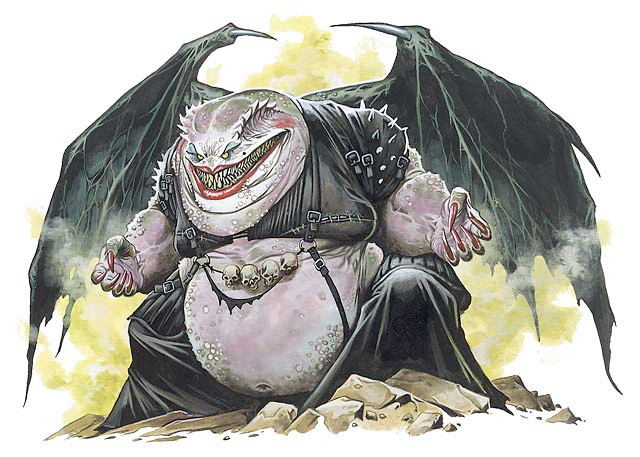
Gaspar Reclamations is a fairly young organization led by an immensely fat mage named Gaspar. It specializes in the
location and recovery of magical items and artifacts.
Symbol: The official symbol of Gaspar Reclamations is a staff and a dagger.
Headquarters: Gaspar Reclamations has a major outpost on the Rock of Bral. Its headquarters, and the home of Gaspar
himself, can be found in the Tears of Selune in Realmspace.
Purpose: Gaspar Reclamations specializes in magical items. The ships of this organization comb the Known Spheres for
news of unusual items, buying what they can. Their major customers are the various schools of magic, who wish to study the
items and pay the line a finder's fee.
Gaspar is a mage with an intense interest in magical items. Fifteen years ago, while trying to acquire a particularly
powerful artifact, Gaspar was struck with a powerful magical curse; he is now hungry all the
time. Despite all efforts by his magical allies, no one has been able to remove the curse.
Gaspar currently weighs well over 400 pounds. He is unable to walk without assistance and is gaining weight at the rate of
30 pounds per year. His body is not taking the strain well, and he is beginning to die.
The unfortunate mage started his company in hopes of finding an item that could be used to remove the curse. He has
given up, however; his initial good humor at the curse (the company's symbol was his idea) has turned to despair. This is
truly unfortunate, as Gaspar is a good and kind man who has shared the wealth his business has brought with his many
employees.
Gaspar has offered half his wealth to the person who cures him of the curse. While no one has collected, the sum has
attracted no lack of applicants. If Gaspar dies, his company will likely collapse with him.
Allies: Gaspar is allied with the various schools of magic, notably the school of Alteration, which he belongs to, and the
school of Enchantment/Charm, which has worked with him to find a cure for his curse. He has also worked closely with the
Seekers in hopes that their huge storehouse of knowledge would contain the answer to his problem.
As with the Smiths' Coster, the Celestians see Gas-par's ships as a prime opportunity to exert their wanderlust. Gaspar has
gone out of his way to make the Celestians welcome, although he draws the line where profit becomes loss.
Enemies: Gaspar distrusts the Tenth Pit but does not see himself or his organization as the logical group to stop them. He
has a friendly rivalry with the Sindiath Line, although the elves have many more ships than he does, as they both carry
passengers (the magical-item line is only marginally profitable unless you cover costs some other way).
The Shapers resent Caspar's support of the schools of Alteration and Enchantment/Charm (a sphere in which they have no
power). As a result, they shun his ships, and mages who work as helmsmen on ships of Gaspar's employ can count on extra
scrutiny in Shaper-controlled ports.
Joining: Joining Gaspar Reclamations is straightforward; just go see Gaspar. He is willing to accept anyone of good or
neutral alignment as a member of his company.
Benefits: Gaspar maintains a ready market for minor magical items and can also act as a sage with regard to magic, and
magical items. Ships of Gaspar Reclamations are known allies of the schools of magic and will not be trifled with where mages
are powerful.
Obligations: Gaspar has a standing offer to any one who wishes to join his organization. Each of his employees must agree
to send to Gaspar any magical item found. He will reimburse the employee for the cost of acquiring the item (plus profit) if he
finds a buyer for it among the schools of magic. If no suitable buyer can be found within a reasonable period of time, Gaspar
will either purchase the item himself (to be held in a warehouse until the market for such items is stronger), or he will return
it to the finder.
The Sindiath Line
The Sindiath Line is an elven trading group that specializes in transportation and boats for hire. Adventurers without a ship
may find the Sindiath Line useful, either as passengers or as crewmen.
Symbol: A gold S on a white field.
Headquarters: On one of the larger portions of the cluster-world of Greela in Greyspace.
Purpose: The Sindiath Line was established by one of the heroes of the first CInhuman War. Upon the defeat of the
goblinoid races, the elves policed the spacelanes for a time, and their huge fleets were among the most powerful in the
Known Spheres. However, the other spacefaring races, already sensitive to elvish haughtiness, soon chafed under elvish
control. At the same time, the elves were unwilling to abandon their huge fleets, perceiving them as necessary to the security
of the elven nations. Tensions increased, and a demihuman war pitting elves against men and dwarves loomed.
Sindiath, an admiral of the elven Fleet, proposed a compromise. He offered to retire from the Fleet and to take a large
portion of its ships into a private concern, the Sindiath Line, that would provide regular passenger service among the Known
Spheres. The Line would still be spread throughout the Known Spheres, under elven control, but it would be a commercial
presence, not a military one.
To the Council of Admirals, Sindiath pointed out the value of the Line for espionage. With ships in every sphere, the Line
would be able to inform the Council of any issue that could affect the Elven Nations. After the usual period of elven reflection,
the Council agreed.
The Sindiath Line now has over 300 men-o-war, supplemented with 115 hammerships and dozens of tradesmen. Few are
aware of how large the Sindiath Line's fleet really is, although its ships are ubiquitous throughout the Known Spheres. (By
comparison, it is estimated that 500 elven armadas and 2,000 men-o-war survived the second CInhuman War—the Sindiath
Line is roughly one-eighth the size of the elven Imperial Fleet.) Sindiath himself is still alive and oversees the growth of new
ships on Greela.
Sindiath vessels are invariably commanded by elves, although they often have human and hadozee crews. Passengers may
be of any race friendly to the elves (no neogi or beholders), and Sindiath vessels have a reputation for superior
accommodations—at a corresponding price.
Allies: The Sindiath Line's greatest ally is the el-ven Imperial Fleet itself. Every ship of the Line is actually part of the Fleet
and may be called back to duty on a moment's notice. However, since no Sindiath vessel has been recalled (except for the
occasional short-term emergency) since the Line was founded, most people don't worry about their ship being commandeered
in mid-voyage.
The alliance between the elven Fleet and the Sindiath Line is actually more powerful in reverse. Pirates who regularly prey
on Sindiath Line vessels may find themselves visited by an elven armada-ship or two, armed to the teeth on a pirate-hunting
mission.
Enemies: The enemies of the Sindiath Line tend to confine their opposition to occasional grumbling rather than directly
battling the powerful elven Imperial Fleet. The Trading Company dislikes the Line because it refuses to transport mercenary
companies (a regulation imposed by the Council of Admirals). The elves are bitterly opposed to slavers, so they aggressively
fight the Chainmen. Finally, the Xenos, as might well be expected, despise the powerful line because it insists on using inferior
elves for its commanders rather than obviously superior humans, while still employing humans in subservient roles.
Joining: To be a captain in the Sindiath Line, you must have been a commander in the elven Imperial Fleet (minimum 9th
level). For obvious reasons, this is restricted to elves only. Crewmen commonly include elves, humans and hadozee, but lizard
men, hurwaeti, centaurs, giff, grommams, and even gnomes (but not minoi) and halflings have been hired. Dwarves find the
gossamer ships of the elves too flimsy for comfort, and the elves will not tolerate minoi.
Benefits: The primary benefit of the Sindiath Line is its breadth. With ships and routes throughout the Known Spheres, a
Sindiath Line vessel can go anywhere, and its crew receives "working passage" with pay superior to that of most other lines.
Patient elven characters may foresee another benefit; the commanders of the era immediately following the first (Jnhuman
War are growing very old and are leaving their places in the leadership of the Line. In some cases, the Sindiath Line has
chosen to promote a loyal crewman to the captaincy rather than recruiting an officer from the Fleet, and this practice seems
to be on the increase.
Obligations: The primary obligations of a member of the Sindiath Line is to keep the elven Council of Admirals informed of
any activity that may be of interest to them. This is accomplished by exchanging dispatches with any Sindiath Line vessel
encountered, and by delivering all accumulated dispatches to the next Fleet ship found.
All Sindiath Line vessels are still subject to the command of the Council of Admirals. In time of war or in an emergency,
Fleet personnel can commandeer the ships and crews of the Sindiath Line into service. On a short mission, nonelves will be
pressed' into service; on longer missions or in time of war, they will be put ashore at the nearest convenient port. Only
hadozee may remain on board.
Chainmen
As the name indicates, the Chainmen is a human slaver's organization, operating among evil nations both on the ground
and in space. They are hated and feared in turn, but may still be found in many ports in space.
Symbol: Seven links of chain, looped into a circle.
Headquarters: The Chainmen are reputed to have bases in the Grinder in Greyspace, in Garden in Realmspace, and in
similar remote regions in many other spheres. There is no central headquarters.
Purpose: The Chainmen Traders are businessmen—they buy and sell other sentient beings. They specialize in
providing large groups of slaves from "far-off lands" who know nothing of the local terrain and are thus unlikely to escape.
If you want to "lose" a defeated enemy, you can sell him to the Chainmen. Within a month the victim will be toiling for
some foreign prince who asks no questions, or be on his way to a completely different world.
The Chainmen are not concerned with high-quality merchandise. They will often swoop down on unsuspecting groundlings,
capture the entire population of a village, and bring these unfortunates to their clients as slaves. The Chainmen do not support
the exotic trade—slaves with unusual talents and pleasure slaves—because they don't study their merchandise. Their motto is
quantity, not quality.
The Chainmen do not take slaves where they dock, however—the authorities would immediately stop them. They also avoid
taking their cargo off ship while in unfriendly ports so that it may not be confiscated. Because they are slavers, the Chainmen
refresh their atmospheres before visiting any port;
they do not wish to pay expensive air taxes for their large ship populations (including the cargo).
Allies: The Chainmen have a working agreement with the Tenth Pit. The Pit ignores Chainmen activities in return f6r a
portion of the profits collected in Pit-controlled territories. These two organizations distrust each other because they can never
be sure who's cheating who, not because of any opposition to the business at hand.
There are also rumors linking the Chainmen with the Xenos. This is partially supported by the fact that the Chainmen accept
only human recruits, but this may simply be because few demihumans wish to work as slavers. The Chainmen seem to have
no restrictions against selling human slaves, and their buyers include neogi and mind flayers.
Enemies: The Company of the Chalice hates the Chainmen only slightly less than it hates the neogi. The Pragmatic Order
of Thought sees slavery as an abomination and will fight slavers wherever they are found. The elven Imperial Fleet despises
the Chain-men's practices and will resist them at every turn. The Celestians, the other mercantile lines, and the Seekers also
object, but their resistance is more philosophical than practical.
Joining: Joining the Chainmen is easy— sometimes too easy. Recruits who are unskilled, lazy, or insubordinate are tossed
into the hold with the rest of the cargo.
Chainmen ships are always looking for new crew-members. The pay is fair but quick advancement is uncommon. Only
those who manage to purchase their own ships can become captains.
Chainmen prefer strong (but not particulary smart) crewmen. The majority are human, but there are lizard man,
hurwaet, hadozee, and rastipede Chainmen along with the occasional renegade dwarf or elf. However, these
nonhumans sometimes find themselves part of the cargo at the end of the jour ney, particularly if the captain has Xeno
affiliations. Potential crewmen should consider themselves warned.
Benefits: The Chainmen manage a distribution network for human misery. Those with slaves to sell can find a buyer
through the Chainmen Traders' information brokers. The coordinated efforts of the Chainmen to break open new markets has
brought them into contact with many of the powerful evil groundling societies, and these contacts can prove useful in other
ways.
Obligations: The Chainmen require all members to pay 30% of their profits toward maintaining the organization. This
charge is enforced through a combination of social pressure and the occasional slave raid against a recalcitrant ship.
Other Groups
The following groups do not fit into any other category, yet their influence pervades the Known Spheres. They do not appeal
to a particular character type, but instead operate on higher (or lower) ideals.
The Seekers
The Seekers are a group dedicated to knowledge. Their pursuit of knowledge brings them into contact with nearly every facet
of spacefaring life, and their activities are viewed with a combination of suspicion and appreciation.
Symbol: An eye with a sword behind it. In more feudal spheres, the Seekers are known as the Company of the Orb and
Sword.
Headquarters: Compendium, a planet or crystal sphere filled with the knowledge the Seekers have gathered. The Seekers
admit or deny the existence of Compendium depending upon the situation, but no non-Seeker has yet found it.
Purpose: The Seekers are dedicated to knowledge and try to stay on good terms with sages in space and on the ground.
They look for answers to questions such as what is the home planet of the giff, how the Arcane fill their orders so quickly, and
why crystal shells are spherical. Often, these arguments bog down for lack of evidence, but the Seekers look to adventurers
to gather interesting information, which they then make available to sages and seers seeking advice.
Thus, the Seekers are information brokers, but they do not deal in trivial gossip. A Seeker may be intrigued by the mystery
of a magical item or curse but will not be interested in the temporal rulers of his own sphere.
The Seekers deal with most sentient races, provided that these sentients deal with each other fairly. They have no dealing
with the neogi, for example, but will work with beholders, illithids, and humanoid races to gather information.
Allies: The Seekers have many acquaintances but few true allies. They deal often with the Sindiath Line, which transports
their members from sphere to sphere. The Seekers show a particular affinity for the Pragmatic Order of Thought, whose
ideals include the free exchange of information—a goal the Seekers approve of highly. The Seekers agree in principle with the
wandering exploration of the Celestians but view their individual explorations as less effective than a concentrated series of
research expeditions. Finally, the Seekers cooperate with the schools of magic, particularly (but not exclusively) the Shapers.
Enemies: The Seekers also have few enemies. The Xenos interfere with the Seekers (who employ creatures of all friendly
races) much the same as they harass other nonhuman organizations. The Arcane and the Seekers are in an uneasy truce, as
the Arcane do not like the Seekers' meddling in the history of their race.
Joining: The Seekers maintain a hierarchy of circles, with those in the higher circles knowing more about the overall goals
of the organization than those at lower levels. Becoming a first or second-circle member of the Seekers is fairly easy, but
there are few members in the higher circles that guide organizational policy. Moreover, the exact number of circles and the
names of the higher-level members are not revealed to outsiders or those of the lower circles.
Seeker membership is made up of a bewildering mixture of races from around the Known Spheres. All of the player-
character races (except the scro) can be found in Seeker ranks, although some are more helpful and forthright than others. In
addition, there are a number of minor races that have members among the Seekers. While promotion may be blocked by the
occasional racially biased superior, the organization as a whole is the most egalitarian in the Known Spheres.
Benefits: Low-circle members of the Seekers have access to the libraries at the various Seeker outposts. These compendia
of facts provide a valuable resource for those researching the history or properties of the Known Spheres. However, some of
the information in these libraries is incorrect or misleading, and there are disturbing gaps in coverage. Access to more
accurate and comprehensive tomes requires membership in a higher circle. Members may also propose questions to the
organization. Questions are reviewed by the higher circles, and if considered appropriate are added to a bulletin of interesting
topics that is distributed to all Seeker outposts. Thus, the combined knowledge of the entire membership can be focused on
one member's problem. Answers may take years or even centuries, however, so members are encouraged to continue their
own investigations.
Obligations: Members of the Seekers are required to tell their leaders of any unusual event or fact that might be of
interest to Seeker members.
The Xenos
The Xenos are an entirely human organization with a rabid hatred of the other races of space. Liberal Xenos believe that the
other races should be enslaved, while the more traditionalist members believe that complete eradication is called for.
Symbol: The Xenos use several symbols. They include a human ear, a field of white (to signify purity), and a black eagle.
Headquarters: The Xenos have no formal headquarters, although they may be found nearly anywhere. There are rumors
of an all-human enclave, called Purity, where the Xenos have established a base, but no one knows where it might be.
Purpose: The Xenos seek the complete subjugation or destruction of the nonhuman races. They act to sabotage and
destroy nonhuman works and ideals. This may range from demolishing the forge of a dwarven vessel to putting two warring
beholder factions on each other in hopes they wipe each other out.
To further their ends, they put out false, misleading, or slanted information, which is how they became the enemies of the
Seekers. The Xenos muddy the waters to the degree that no truth can be seen, and think nothing of destroying artifacts and
rewriting histories to fit their own purposes.
To a Xeno, the elves did not suddenly disappear from the Realms for a home in the west—they called down the gods in the
Time of Troubles and then got out when they realized they had endangered themselves. The elves did not show mercy to the
ores when they forbore from annihilating them at the end of the (-Inhuman War—they preserved them to use as a weapon
against groundling human nations. Such lies are at the heart of Xeno thought. If you lie loudly enough and often enough, it
will taint the truth.
Allies: The Xenos have few open allies, in part because they remain underground in quasi-humanoid societies. Their active
numbers are small, but they enjoy the tacit support of many humans who have had their fill of drunken dwarves, aloof elves,
and temperamental beholders. Finding an active Xeno is easy but imprisoning one is difficult; they have a habit of escaping
when under human guards.
In addition to grass-roots support, the Tenth Pit and the Chainmen are reputed to work with the Xenos.
Enemies: Most official organizations repudiate the Xenos, at least publicly. The human trading companies view the Xenos
as dangerous to the continuation of trade; the nonhumans consider them blood enemies.
Joining: To join the Xenos, you must be accepted by an active cell. These are easy to find if you're human; they can be
found anywhere ignorant people live.
Once you have found a cell, the members must invite you to join. If you accept, there is an involved but magically
meaningless induction ceremony involving oaths to the supremacy of humanity and the destruction of the nonhuman races.
This ritual is carried out with great solemnity and has a transforming effect on people who undergo it.
Benefits: Aside from the ability to socialize and discuss beliefs with other like-minded people, there are few benefits to
being a Xeno. Members help one another in times of trouble, but Xenos tend to have limited resources and personal power.
Obligations: Theoretically, each Xeno is supposed to be constantly working to frustrate and destroy nonhumans. In fact,
few Xenos will do this individually, except to occasionally snub or make disparaging remarks to a demihuman from a position
of safety. However, in groups these humans are capable of incredible viciousness and have been involved in murders,
beatings, acts of vandalism and sabotage, and other crimes throughout the Known Spheres. When group activities are
planned, members are more likely to become involved; refusal to do so can lead to ostracism or even violence against the of-
fender.
The Shapers
The Shapers are the spacefaring organization that represents the wizard school of invokers. Shapers promote their
specialty of magic through exchange of knowledge and organized support for one another throughout the Known Spheres.
Symbol: A clenched fist holding three lightning bolts.
Headquarters: The Shapers have no formal central headquarters. However, they have regular conclaves that are held in
space settlements all over the Known Spheres.
Purpose: The invokers of the Known Spheres are much more organized than mages of the other magical schools,
primarily as they have significant advantages over the other schools in space. First of all, since they are barred from using
spells of the school of conjuration/summoning in any case, their powers are not diminished in the phlogiston. Second, their
combat abilities (and the wide variety of combat spells available to them) make them highly prized in the rough-and-tumble
spelljamming life.
To most outsiders, the Shapers are a source of magical knowledge and assistance. They act as a guild, providing members
with referrals from people who need the assistance of wizards, offering training in the magical arts, and setting the standards
of excellence for magical practice in the civilized portions of the Known Spheres.
The other schools of magic, however, do not see the Shapers in the same way. The Shapers are known for acting to freeze
noninvokers out of any magical business, even to the point of enacting licensing laws for mages in some spaceports, so that
unlicensed mages are forbidden from practicing magic for fee. Since the Shapers issue the licenses, most of the business goes
to invokers.
The Shapers are also stingy with magical training. They hoard magical knowledge jealously, not even sharing spells with
other schools. A noninvoker who seeks training at a Shaper academy may be charged triple the tuition—or may simply be
refused.
Allies: The congenial face that the Shapers present to nonmages attracts many. Almost all the trading houses consider the
Shapers to be honest businessmen. Only Gaspar Reclamations, which is led by a member of the rival school of alteration
magic, holds any hostility to the Shaper organization. The mercenary companies have learned that they can count on the
competency of Shaper-trained mages, and prefer them to mages of other schools for combat support. (This only serves to
further inflame the other schools.)
The Xenos support the Shapers, as this magical specialty is restricted to humans only. However, the Shapers try to play
down this affiliation, as they do not want their good name associated with the hatemongering Xenos.
Enemies: The Temple of Ptah sees the Shapers as competitors for magical services in the Known Spheres and so attempts
to thwart the growth of this organization whenever possible. The Seekers dislike the Shapers because the latter behave as
information sinks: once the Shapers have a piece of information, no one else is allowed to get their hands on it.
Joining: To join the Shapers, one must first be an invoker (a specialty mage of the school of invocation/evocation). This
school's membership is restricted to humans. One must then apply for membership in the Shapers. This usually involves a
simple competency test in invocation/evocation magic and the payment of a 100-gp license fee.
Benefits: In many spaceports, Shapers have a monopoly on magic for hire. While noninvokers can work as spelljammer
pilots, they are not permitted to cast magical spells in the spaceport. This benefit alone has made the fortune of many
Shapers—and not a few conjurers and enchanters whose prices were able to rise to black-market levels because invokers are
unable to cast spells from these two schools.
Shapers may also receive magical training for level increases (if this option is used in your cam* paign; see the Dungeon
Master's Guide, Chapter 8) at any Shaper academy for normal costs (100 gp per level per week). Other mages must pay three
times normal costs.
Obligations: The Shapers wield considerable power and exact a fee for its use. Any Shaper mage must pay 10% of the
income from any magical endeavour to the Shapers as a tithe. This tithe is not to the overall parent organization (which is too
diffuse to manage such things effectively), but rather to the local chapterhouse and academy.
Moreover, a Shaper arriving at a new spaceport is expected to make a courtesy visit to the chapterhouse upon arrival.
There may be some local fees for acquiring a practicing license, and some chap-terhouses even charge a 5% tithe on all goods
for new members in addition to the license fees, on the assumption that some of this money was not properly tithed.
S PELLJAMMER® campaigns offer many challenges for players. The reach of infinite worlds and the freedom offered by a
spelljamming vessel provide opportunities for players beyond any they can find in a groundling AD&D® campaign.
These challenges pale, however, when compared to those faced by the DM. Where the players face an entirely new world,
the DM must create it. Where the players have freedom to go in any direction they choose, the DM must be prepared to go
with them.
As has been stated more than a few times, space is BIG. A single crystal sphere holds several planets, and a SPELLJAMMER
campaign may involve dozens of spheres. When the sheer magnitude of the SPELLJAMMER universe is considered, the idea of
running a campaign in that universe can be daunting.
This chapter discusses the fundamentals of developing a SPELLJAMMER campaign. It addresses the ideas that underlie all
SPELLJAMMER campaigns and discusses how a DM can make his own campaign unique.
Starting a SPELLJAMMER® Campaign
When you begin a SPELLJAMMER campaign, you face several fundamental choices. This section describes those choices and
offers several campaign styles for consideration.
Groundling or Spacefaring Characters?
There are two ways to start your SPELLJAMMER campaign. You can launch your group's existing groundling adventurers
into space, or you can generate new spacefaring characters.
Launching groundling characters into space makes the most sense if your players are not familiar with the SPELLJAMMER
setting. This approach preserves the wonder. Instead of seeing a giff with a pistol, the PCs see a huge, hippopotamus-headed
humanoid with an oddly shaped metal tube in his hands. The players can discover the fascinating nature of spelljamming
along with their characters and will enjoy the discovery all the more for having experienced it first hand.
Some aspects of spelljamming are so dangerous that totally inexperienced spacefarers can find themselves learning a fatal
lesson. Using a helm requires only a little practice, but the groundling characters will not know about neogi, illithids,
beholders, dwindling air supplies, and many other common problems of wildspace and the phlogiston. A menace that could be
avoided by an experienced crew might be fatal to a group of spacefaring groundlings.
A kind-hearted DM may wish to give the players some guidance. One solution is to provide an experienced F1PC who can
warn the PCs of the most severe dangers. This NPC should not become the party leader, however. The NPC must be unwilling
or unable to give the PCs any but the most essential help, or must be so untrustworthy that the PCs will not know when he is
telling the truth. When the characters have become experienced enough in the spell-jamming life that they no longer need
advice, the NPC should be removed. There's no need to kill him off, however. Such NPCs make useful campaign fixtures long
after their close association with the PCs has ended.
Many spacefaring proficiencies (such as the ones listed in this book) are unavailable to groundling characters, at least until
they earn the proficiency slots to buy them. Thus, groundling characters gain skill slowly in spelljamming, space navigation,
and other essential skills.
The other approach is to generate new spacefaring characters. This is preferred for players who already know a fair amount
about the SPELLJAMMER setting and who wish to establish a new campaign there. Here the sense of discovery is replaced by
greater competence. Instead of discovering the neogi for the first time, these characters have the skills needed to fight them
on equal terms. The spacefaring characters are more familiar with the politics of the Known Spheres and can more effectively
avoid or influence the power plays that divide and recombine the factions of space.
Generating new spacefaring characters is not without its problems, however. First of all, for players new to the
SPELLJAMMER setting, spacefaring characters are more difficult to generate and to play, as the players do not know the basic
features of the campaign. Telling them about the SPELLJAMMER universe is not as much fun as showing them.
Second, the SPELLJAMMER setting is more demanding than the typical beginning groundling campaign. Published
adventures for the setting involve characters of 6th level or above. A spelljamming vessel piloted by a low-level mage or
priest has all the speed and maneuverability of a barge. As slow ships are at a disadvantage in SPELLJAMMER campaign
combat, this can be a serious liability. Characters can be generated above 1st level, but this eliminates much of the fun of
developing the character from the beginning.
Finally, spacefaring characters tend to be less interested in activities in groundling nations. While this is appropriate in a
pure SPELUAMMER campaign, if interaction between the spacefaring and groundling cultures is planned, it may be difficult to
convince your players to take their spacefaring characters down to a planetary surface.
One Sphere or Many Spheres?
A second consideration when starting a SPELUAMMER® campaign is the physical extent of the campaign. Some campaigns
occur primarily within a single crystal sphere; others span sphere after sphere in the quest for adventure.
We recommend sticking with a single sphere at the beginning of a campaign. Space is so large that discovering the features
of just one sphere can consume several game sessions. Adventures can be found on any world, as well as in the wildspace be-
tween worlds.
If you start with a single-sphere campaign, the adventurers will eventually explore all the major features of the sphere.
While adventures within a single sphere can last for years of play (as witnessed by innumerable standard AD&D® campaigns),
the full potential of the SPELUAMMER setting is not used in a single-sphere campaign. The opportunities for creating new
systems and mind-boggling sphere-scale features are extremely limited within a single sphere. Only by traveling among the
spheres can the true immensity and diversity of space be experienced.
However, a campaign that spans several spheres also has drawbacks. It is more difficult to fjnd events that interest the
characters if they have all of space to explore. Travel time between spheres can slow the game to a crawl, and characters may
age two or even three years in a multi-sphere adventure. When you include travel time within the crystal shell, most spa-
cefaring trips between spheres take more than three months.
Moreover, while this time passes very slowly for the characters, it may occur in an instant for the players. ("You leave Toril
for Krynn. Six months later, you arrive.") You can try to make travel more interesting than the sound of rolling dice (if you
don't, your campaign is likely to suffer some problems), but journeys still occur quickly. This places the burden on you to
complete construction of the destination by the time the PCs arrive. Things as complex as a coherent sphere are difficult to
design, and can be used up amazingly fast in a multi-sphere SPELLJAMMER campaign.
Long-term or Short-term Campaigns?
Some campaigns start with a specific goal. When that goal is achieved, the campaign is over. If that goal is achievable
quickly ("Rescue the elven princess from the neogi," or "Deliver this message to the illithid envoy on the Rock of Bral"), you
have a short-term campaign. Further campaigns (sequels) may be run using the same characters, but there is usually a solid
span of time between such campaign segments.
Long-term campaigns either have no specific goals or have unachievable ones (at least in the short term) like "Prevent the
neogi from taking slaves" or "Return the hurwaeti to their lost glory." Such goals can provide structure to the campaign, even
though achievement of the goals will probably not be within the characters' lifetimes.
SPELLJAMMER campaigns can be either of these types. Short-term SPELLJAMMER campaigns, because of their temporary
nature and the size of space, tend to feel more isolated and less well integrated into the setting than such campaigns do in a
groundling setting. Long-term campaigns, on the other hand, allow the background to seep through the emptiness of space,
so that the players and their characters can view the SPELUAMMER setting as real as any groundling campaign.
Campaign Themes
Every campaign needs a theme. A campaign can change its theme, but while it lasts, the theme provides a general sense of
tructure and a ready source *
of roles for new characters.
Merchants. In a merchants campaign, the characters are crewmembers on a merchant vessel. At low level, they are likely
to serve under an NPC captain. When they reach higher levels, they will have a ship of their own.
The outward purpose of the characters' journeys is to make money through trade, by buying and selling goods. This
provides motivation for travel and an explanation of how the characters are supported.
Buying and selling should not, however, be the focus of play. Haggling over an occasional cargo or scouring a market for a
particularly good buy is can be interesting, but such activities should not consume more than their fair share of adventure
time. Avoid turning the campaign into a mercantile game. Many visits will consist of simply dropping off one cargo and picking
up another, with no more than a minute of real time spent on details. The focus should remain on the adventures that occur
while traveling the spaceways.
Explorers. In an explorers campaign, the characters seek new life and new civilizations, boldly going where no one has
gone before. They travel from sphere to sphere, learning about the places within each one. Some explorers wander the
fringes of the Known Spheres, looking for new worlds and recording their existence. Others travel within the Known Spheres,
examining the many wonders to be found there.
Exploration can become the focus of adventure. Exploring ancient ruins, discovering the secret of the constellations of
Krynnspace, or studying the walkers who endlessly circle the interior of Realmspace's crystal sphere can create fascinating
adventures. However, there is no reason that an explorer campaign cannot have adventures of all types.
The Resistance. The characters are members of a group opposed to the current ruling faction in a sphere. This faction
may be the Tenth Pit (see Lore-book of the Void, Chapter 3), or it may be some other imperial force. The characters seek to
overthrow this faction by battle, sabotage, or any other means.
The characters do not have to be evil, or even chaotic, to pursue this goal. If the current rulers took control by force, lawful
good characters could against tyranny regardless of the current "laws" such rulers have enacted.
Resistance activities tend to dominate in such a campaign. It is difficult for the characters to forget the grim task ahead of
them in order to pursue adventure of any other sort. Moreover, these campaigns take place in a single sphere, as multi-
sphere resistance efforts are beyond the abilities of any but the most powerful characters.
Mercenaries. The characters are mercenaries who fight for pay. This campaign is best suited to providing the characters with
interesting military and tactical situations.
The adventurers may be a crack team trained for special missions. They can rescue trapped innocents from capture and
slavery, acquire valuable artifacts, and foil nefarious plots—all for a fee.
Alternatively, the characters may be part of a larger military force involved in a long-standing war. Adventures in and out
of battle are based on the nature of the war effort and the characters' crucial role in its success.
Pirates. The characters are predators of the space-ways, attacking and capturing spelljamming vessels for the loot aboard.
They may be "good-guy" pirates who attack only the vessels of enemy ships (such as those of the neogi, beholders, or
another human nation), or "bad-guy" pirates who pursue anything with a helm.
Good-Guy Pirates: Good-guy pirates may have been framed for crimes they did not commit, and were forced to flee. (It's
hard to prove your innocence when you're in space). They may also be enemies of new rulers. If a wise ruler dies and is
replaced by an oppressive new ruler, that's ample justification to embark on a life of outlawry—at least in the game.
In such a campaign, the characters are wanted by the law, but the law is wrong. Innocent victims of good-guy pirates are
released unharmed (if a bit poorer), while true enemies suffer horribly. The campaign's goal is to restore the characters' good
names by proving their innocence.
Bad-Guy Pirates: Bad-guy pirate campaigns are suited to garners who want to play in a nasty fashion for a while. The
characters are unrepentant scum, and they like it that way.
This is a dangerous environment and campaign. Since the PCs are as bad (or worse) than their enemies, there won't be
any DM sympathy keeping them alive in bad situations. The PCs compete on equal terms with the nastiest of villains, and you
can expect a high body count among PCs and NPCs alike. This style is best handled as a short-term campaign.
The Law. Unlike the previous theme, the characters in this campaign are on the side of the law. It is their job to keep the
peace in the lawless realm of wildspace. They must do this with a combination of diplomacy and caution, as they cannot
outgun their opposition. A group of marauding beholders, for example, can challenge even the highest-level group.
The aim of this campaign is to make the characters' sphere a safe and secure place for their people. If there are multiple
factions within the sphere, the characters might be in conflict not only with true lawbreakers but also with powerful members
of opposing factions. Generally, this type of campaign is limited to a single sphere (or a portion of a sphere), but it can last a
long time.
AD&D® game Rules in Space
As stated in the Concordance of Arcane Space, the bulk of the AD&D® game rules are unchanged by the move into space.
However, the concepts of a spell-jamming campaign do affect how those rules are applied. In addition to the rules changes
listed in the Concordance, various other changes in focus or approach must be considered.
This section details the changes to the AD&D game rules when used in a SPELLJAMMER® setting environment. Most of
these are changes in emphasis rather than changes in the rules themselves. Nevertheless, DMs (and players, once they have
become familiar with the SPELLJAMMER setting) are encouraged to read through this section.
To make this section easier to understand and correlate to your AD&D 2nd Edition Player's Handbook and Dungeon
Master's Guide, we have adopted the same organization. Each section below corresponds to a chapter in these books. (If a
chapter required no additional material, it has been omitted from consideration here.)
Player Character Ability Scores
AD&D game ability scores are unaffected by play in space. A high Strength score means the same thing in space as it does
on the ground. However, there are some additional considerations that DMs and players should keep in mind. These consider-
ations affect the relative importance of the attributes and indicate how the attributes should be generated.
Strength is not as important to spacefarers as it is to groundlings. Ship-to-ship combat occurs at great distances, where
personal strength is not a factor, and the powerful blow of the strongest PC is insignificant in the face of a ballista bolt or
catapult stone.
Nevertheless, not all combat occurs between ships. Strong PCs have all the advantages they have in groundling campaigns
in a one-on-one fight.
Dexterity, in addition to its traditional groundling uses, is the basis for some spacefaring proficiencies, and the defensive
adjustment that a dexterous character receives improves armor class and saving throws, even against ship-to-ship weapons.
Constitution is also less important here than in a groundling campaign. It provides a hit-point bonus at high values,
governs the ability of a character to survive phlogiston stasis, and helps determine how long a character can last without food
and water—an important concern on long space voyages.
Intelligence is the governing characteristic of a number of important proficiencies, including the critical Spelljamming
proficiency that improves a spell-caster's performance in using a Spelljamming helm. Also, while the Intelligence of the
guiding spell-caster does not directly affect the SR of a ship with a Spelljamming helm, high Intelligence can indirectly boost
the pilot's SR in the long run, as it provides a 10% experience bonus to mage characters.
Wisdom. High Wisdom for priests, like high Intelli. gence for mages, provides an experience bonus that can boost the SR
that the priest can generate in a Spelljamming helm. Moreover, Wisdom governs the availability of priest spells, and magic
loses none of its importance in a spacefaring setting.
Charisma governs the interactions between characters. Much of the worth of a character in a space-faring setting is
measured in his ability to move among the various societies of the spheres and to command NPC shipmates. A character's
Charisma determines how successfully he can do this.
Character Creation Methods
As mentioned previously, SPELLJAMMER campaigns can be more challenging than many groundling campaigns. The DM
should carefully consider the various character creation methods listed in the Player's Handbook with this in mind. In most
SPELLJAMMER campaigns, methods III, IV, and V are preferred.
Character Background
In a spacefaring campaign, character backgrounds can be even more important than in a groundling campaign. The
essentially uniform mercantile culture of the SPELUAMMER® campaign universe makes individual differences between the
characters fade into the backdrop of the campaign. A vivid character history and origin can help keep a PC from becoming
just another crewmember.
Character background in a SPELUAMMER campaign should do more than define the character. It should make the character
distinct from the other members of the group, and in many ways must mark the character for heroism.
Any background should identify the sphere and world where the character was born, and his station in life before going into
space. A nobleman from Oerth, with the beginnings of magical training, will have a very different feel than an enslaved
peasant from the empire of Shou Lung on Toril. As more details of the character's former life are developed, the character will
feel more like a real person. (With the DM's permission, players may invent new worlds and spheres for their PCs' origins, and
these planets may become campaign fixtures.)
Groundling Characters. Groundling backgrounds for SPELLJAMMER campaign characters must explain how the character
got into space and why he can't or won't go home. Possibilities include:
• The character found a spelljamming helm that had fallen from a crashed ship. (If the crash was recent enough and not
overly destructive, the entire ship might be available.) Using the helm, the character (and perhaps some companions)
launched himself into space.
• The character was involved in an experiment with a flying machine. He may have been the machine's creator, a test pilot,
an unwilling guinea pig, a stowaway, or an innocent bystander accidentally carried along.
• The character was captured by slavers (neogi, humans, or some other race) and taken into space. The character's
background must explain how he escaped from his captors.
• The character was magically transported into space. This could happen through the misfiring of a powerful magical ritual,
the opening of a one-way gate from a secret temple, or the workings of a magical curse.
• The character was recruited by one of the factions of space—the neogi, perhaps. His public origin matches one of the
previous backgrounds, but he is secretly working for someone else. (Part of the campaign theme may involve the character's
freeing himself from the faction's influence by regaining control of whatever is being used as a hold on him.)
So-called "problem backgrounds" of nobility or wealth are easily handled in a spacefaring campaign. Prince Aldergon,
seventh in line to the throne of Vembia, might be a powerful person in his own country, but in space he's just the son of an
insignificant groundling chieftain, and all his family's wealth and power back home isn't much good when he's in a different
sphere. The DM can be tolerant of a player who wants a noble title for his character, so long as the nation ruled is far away
and has no bearing on play.
Spacefaring Characters. Well-detailed space-faring backgrounds can strengthen the campaign even more than groundling
backgrounds. Even though he, too, was most likely born on a planet, the spacefaring character has had more contact with the
SPELLJAMMER campaign universe than his groundling cousin. Thus, his background will weave more detail into the spacefaring
setting. Some background concepts include:
• The character's mother is an inhabitant of a spaceport. The father was an itinerant spelljamming captain who flew off one
day and never returned. Such a character is motivated to seek the father who abandoned him, with motives of curiosity,
concern, or revenge.
• The character was a member of a military force, either a large one like the elven Imperial Fleet or a smaller mercenary
force. The character has retired from life as a paid soldier.
• Many members of the character's family are spacefarers, as opposed to inhabitants of a spaceport. They may be
merchants, pirates, couriers, or explorers, but the character's reputation is colored by that of his family. The character may be
trying to overcome a bad reputation, clear the family's good name, or live up to everyone else's expectations.
• The character was born into slavery. He and his family escaped (although some of them may have died in the attempt),
but the character remains somewhat brutal and violent, especially when in the presence of slaves or slavers.
• The character was born hundreds or even thousands of years ago, but was lost in the phlogiston. He has only recently
been reanimated and is seeing the universe through millennia-old perceptions. There are huge gaps in his understanding
because he missed many events (like the CJnhuman Wars) that shaped the Known Spheres. Nothing is as it is supposed to be,
yet everything is almost familiar. The character may hold antiquated beliefs, like a hatred for the hadozee, and therefore be
difficult to deal with in the modern universe.
• The character is a member of a rare minor race (the DM and player must determine the characteristics of this race) or a
member of a primitive society. Everywhere the character goes, he is mistaken for an animal or is the subject of intense
curiosity.
Player Character Races
Much has been said about each of the spacefaring races, in Chapters 1 and 2 of this book and in the Concordance of Arcane
Space. Rather than detailing each race again in this section, we'll talk about how the AD&D® game rules for races should be
applied in a SPELUAMMER® campaign.
Class Restrictions and Level Limits. One component of a SPELLJAMMER campaign is diversity. With thousands of worlds
in hundreds of spheres, any type and level of adventurer can be found if you just look hard enough.
While this is indeed true in an idealized way, the same reasoning that recommends class restrictions and level limits in a
groundling campaign is appropriate in a spacefaring setting.
In the SPELUAMMER campaign universe, humans are not the dominant species, but they are the most abundant. If class
restrictions are eliminated or level limits are raised, humans may fall into disuse as PCs.
People want to play nonhuman PCs because they provide options unavailable to humans. Multi-classed characters represent
a long-term benefit;
special racial abilities are a source not only of power but also of interest for the character. Since the AD&D game is
intentionally humanocentric, there must be a counterbalance that keeps these more interesting races from dominating.
Creating New PC Races. Another component of diversity in a SPELLJAMMER campaign are the new races. While the
number of PC races in a groundling campaign is limited, in space there is the added charm of playing a totally alien species.
The rastipedes, for example, are more different from either humans or elves than the latter two are from each other.
The DM of a SPELLJAMMER campaign is encouraged to design new PC races using the rules in the Dungeon Master's Guide.
While caution is called for whenever introducing any new character race, the effect need not be as severe in a spacefaring
campaign as in a groundling one. If the first dracon PC seems to unbalance the campaign, don't let anyone else play one until
you have fixed the problem. This is easy to rationalize, as dracons should not be so common as to find two in one adventuring
party.
DMs are also encouraged to base SPELLJAMMER campaign races on those they find in science fiction and fantasy literature.
In space, weirder is better. A three-eyed, three-toed, giant yellow apple-eater is easier to explain in space than on the
ground.
Examine the races within this book and the other entries in the SPELLJAMMER campaign appendices for the Monstrous
Compendium. Use these as a guideline for developing your own character races.
Player Character Classes
The classes of the AD&D game are designed for a groundling environment. When transported to a spacefaring setting, these
classes need additional tuning in order to cover issues that arise in such a campaign. This section describes the special con-
cerns for each character class and explains how to resolve these problems in a SPELLJAMMER campaign setting.
Zero-Level Characters. In a groundling campaign, the great mass of humanity and demihumanity is made up of
nonadventurers (zero-level characters). These characters do not earn experience points and are not members of any
character class.
To a limited degree this is true in space as well. However, the rigors of space, combined with the adventurous lifestyle of
those who live there, produce a higher percentage of exceptional characters.
In a typical groundling campaign, perhaps 99 characters in 100 are zero level. The remaining character is the adventurer,
the hero (or villain), the one who stands out among the rest. In a spelljamming campaign, nine in 10 characters are zero
level. While zero-level characters still represent the vast majority of the population, there are more heroes.
This does not mean that there are armies of highlevel warriors, mages, priests, or rogues. The population of space is too
limited and too widely scattered for that. What it does mean, however, is that encountered characters are much more likely to
be on a par with the PCs themselves. Where a 5th-level groundling PC can throw his weight around safely in the local village,
he might be unpleasantly surprised at the reaction to the same behavior in a small spaceport.
Fighters. Most fighting abilities are unchanged in a spacefaring setting. Fighters are more likely to be proficient in the use
of large weapons, such as catapults and ballistae, but their abilities are relatively unchanged at low levels.
When a fighter attains 9th level (becomes a "Lord") in a groundling campaign, he may build a castle and attract followers.
In space, however, the way a character attracts followers and the types of followers he gets change substantially.
To attract followers, a spacefaring fighter must first construct a stronghold: an asteroid, abandoned dwarven citadel, or
other stationary platform from which the warrior forays on adventures. The stronghold must be at a generally known location
in the traveled reaches of space for the followers to find it. For more details on how to construct a stronghold, see Chapter 9.
Once the character has achieved 9th level and built a stronghold, followers will come. Of course, they are mercenaries and
must still be paid. The DM should determine the followers in accordance with the structure of the campaign and nearby
population centers, or the player may use Table 18 to determine the number and types of followers attracted.
Paladins. The special abilities of paladins are bestowed by deities of law and good. These abilities are unaffected in any
crystal sphere.
The only exception to this is the paladin's spell abilities. The paladin, like the priest, must contact a representative of his
deity in order to receive new spells above the second level. A paladin in a foreign sphere, where his deity is not reachable,
cannot regain spells above the second level unless magical means are used. Two such magical methods for regaining spells
are the contact home power spell (Concordance of Arcane Space, Chapter 2) or a priestly icon (see Chapter 6 of this book).
In the phlogiston, however, some paladin abilities are reduced or eliminated because they stem from the power of the
paladin's god, which cannot reach into the phlogiston. These are:
Detecting evil: Due to the disruptive effects of the phlogiston, this ability works only to a range of 30'.
Aura of protection: The anti-magical properties of the phlogiston reduce this protection to a 5'-radius.
Circle of power: While in the phlogiston, the circle of power projected by a paladin wielding a holy sword is reduced to 15'
in diameter.
Healing, curing diseases, calling for a war horse:
These abilities require the direct invocation of the power of the paladin's god and so cannot be performed in the phlogiston.
Saving-throw bonus, immunity to disease, turning undead: These abilities are unaffected by the phlogiston.
All of the strictures suffered by paladins apply regardless of the paladin's location.
Ranger abilities are generally unaffected by wild-space or the phlogiston. Like priests and paladins, rangers cannot recover
their clerical spells in the phlogiston, nor can they recover their third-level clerical spells in foreign spheres without magical
assistance, but all other ranger abilities act exactly as described in the Player's Handbook.
Mages operate identically in space as on the ground. The effects of some spells are modified in space; mages should see
Appendix I of the Concordance of Arcane Space and the Magic section that follows in this chapter to determine these effects.
Priests. The limitations on priests and their ability to regain spells are described in the Concordance of Arcane Space. The
restrictions that these limitations place on priest spell abilities in wildspace therefore need not be covered here.
However, clerics (and some specialty priests) also have the ability to found a place of worship and attract followers. In a
SPELUAMMER® campaign, a cleric's stronghold must meet certain specific criteria.
First, the stronghold must be able to support at least 200 persons, although not all of those may end up in service to the
temple. This may require access to ready supplies of food, water, and air, or the stronghold may be self-sustaining, with
green plants and a stable water supply. The larger the base, the more prominent the church may become.
Second, the stronghold must be stationary; a cleric, unlike a warrior, cannot use his ship as a stronghold. It can be on the
surface of a world, on an asteroid, or within an abandoned dwarven citadel, but the stronghold must be stable and easy to
find.
Third, most religions encourage clerics to establish their temples within new spheres, rather than creating multiple temples
in a sphere where the cleric's god is already worshipped. In this way, the power of the god is extended; the congregation
becomes the core of worshippers who establish the god's power permanently in the sphere.
Because building a stronghold costs a great deal, most clerics wait until they reach 9th level so that they may gain the
support of the church in this construction (see the Player's Handbook, Chapter 3).
Finally, in order to establish a congregation, the cleric must cast a fourth-level focus spell (as defined in the Tome of Magic)
to create a site focus in the new stronghold. After the focus is created, the congregation must exist for one year before the
priest's god is "recognized" in the sphere. During this initial year, the priest's duties to his new congregation prevent him from
leaving the stronghold except on rare occasions.
This does not mean the priest cannot experience adventure. Opponents of the god view this initial one-year period as their
opportunity to eliminate the congregation before the god gains a permanent foothold in the sphere. Thus, the stronghold will
be subject to much more pressure than it would in a normal groundling nation.
Once the first year is ended and the congregation is established, the god has contact with the sphere.
Other temples may be built, and priests of the god may regain spells normally. The founding priest is now free to leave for
short periods of time and will certainly wish to explore the worlds of the sphere, as these may offer numerous opportunities
for adventure.
Thief abilities are unrestricted in space, except by local authorities. However, the smaller population of wildspace makes
thieving activities somewhat less lucrative, and getting caught (particularly at a notable crime) rapidly spreads your name as a
thief throughout the sphere.
Bard abilities are also unchanged in space, as they are not related to any particular culture. Where a thief might have a
problem with the speed at which his reputation spreads, this is a benefit to the bard, whose talents are recognized quickly
throughout a wide region of space.
Table 18: FIGHTER'S FOLLOWERS
Roll percentile dice on each of the following tables. The number of ships received is determined by the number of troops (not
including the bodyguard or leader). As noted in the Player's Handbook, these followers are loyal as long as they are treated
well. They own their own ships; these ships are not available to the fighter for his own use, although they may be used in
defense of the stronghold.
Die Roll Leader and suggested magical items
01-40 5th-level fighter, plate mail, shield, battle axe +2
41-75 6th-level fighter, plate mail, shield + 1, spear + 1, dagger + 1
76-95 6th-level fighter, plate mail + 1, shield, spear + 1, dagger + 1; plus 3rd level fighter, splint mail, shield, crossbow of
distance
96-99 7th-level fighter, plate mail + 1, shield + 1, broad sword +2, winged boots 00
DM's Option
Die Roll Troops/Followers (all zero-level)
01-50 1 large-weapon expert with light weapon*, 80 infantry with scale mail, polearm*, club 51-75 20 infantry with
splint mail, morning star, light crossbow; 50 infantry with leather armor, pikes, short sword 76-90 40 infantry with chain
mail, heavy crossbow, short sword; 20 infantry with chain mail, light crossbow, military fork 91-99 10 infantry with
banded mail, shield, bastard sword, and heavy crossbow; 20 infantry with scale mail, shield, heavy
crossbow, long sword, mace; 40 skirmishers with studded leather armor, long bow, short sword 00
DM's Option (hadozee, grommam, etc.) * Player selects type.
Die Roll Elite Units
01-10 10 Ist-level elven fighter/mages with chain mail, long sword, long bow, dagger 11-25
15 wardens: Ist-level rangers with scale mail, shield, long sword, spear, long bow
26-40 20 berserkers: 2nd-level fighters with leather armor, shield, battle axe, broad sword, dagger (berserkers receive
+1 bonus to attack and damage rolls, or use the Berserker kit from The Complete Fighter's Handbook, if
available and using the kit optional rules)
41-65 20 expert archers: Ist-level fighters with studded leather armor, long bows or crossbows (+2 to hit, or bow special-
ization if using that optional rule)
30 infantry: Ist-level fighters with plate mail, body shield, spear, short sword DM's Option (hadozee, grommam,
etc.)
damage on wooden ships for every 10 levels of the caster. It has no effect on other types of ships. OA
Catapult: Missiles hurled by this spell cause no hull damage. FRA
Cloud ladder: The ladder formed by this spell dissipates in the Void or the phlogiston. It retains its shape in an air bubble,
however. OA
Conjure spell components: This spell cannot be cast in the phlogiston. ToM
Drowsy insects: This spell cannot be cast in the phlogiston. OA
Elemental burst: This spell cannot be cast in the phlogiston. OA
Fire burst: Because no flame can exist for long in the phlogiston without flaring out of existence, this spell is useless in the
Flow. If cast on a flame at the moment of ignition, this spell doubles the radius and effect of the resulting fireball. ToM
Fire truth: Because this spell requires a lit candle, it cannot be cast within the phlogiston. AQ
Fist of stone: A caster using a fist of stone can cause one hull point of damage per 10 hit points of damage inflicted. This
damage is cumulative. The 10 hit points need not be inflicted in one blow, so long as the caster is able to remain in the same
place and pound repeatedly against the hull. If the caster must move to a different part of the hull, all partial hull point
damage is lost and the caster must begin again. ToM
Ghost light: This spell cannot be cast in the phlogiston. OA
Hail of stone: This spell cannot be cast in the phlogiston. OA
Homung's guess: This spell cannot be cast across the boundary of a crystal sphere. ToM
Prestidigitation: This spell can be cast in the phlogiston to heighten manual dexterity, but the teleport-ing ability will not
function there. OA
Snilloc's snowball The missile created by this spell does no hull damage. FRA
Warp wood: This spell causes one point of hull damage to wooden ships per five levels of the caster. OA
Wind compass: This spell does not maintain its direction in the Void or the phlogiston. AQ
Second-Level Wizard Spells
Agannazar's scorcher: This spell cannot travel in vacuum. If used against a ship, each 10 hit points of damage done by the
spell inflicts one hull point of damage and sets flammable materials alight. In the phlogiston, casting this spell causes
immediate detonation on the user himself and all within 10' of him, causing 9d6 points of damage each round for two rounds.
FRA
Animate water: This spell cannot be cast in the phlogiston. OA
Drawmy's swift mount: This spell has no effect on spelljamming helms, although there are suspicions that it would work on
a ship powered by orbi. The beholders have never allowed any mages to conduct such an experiment. GA
Enchanted blade: If this spell is cast in the phlogiston, it inflicts ld6 points of damage on the recipient (and all within 5') and
loses one die of effectiveness each round as it reacts with the phlogiston. OA
Filter: This spell protects those within its area of effect from fouled or deadly air for the duration of the spell. CWH
Fire arrows: Because the fire arrows created by this spell are released from a campfire, this spell cannot be cast in the
phlogiston. AQ
Fire shuriken: This spell ignites the phlogiston near the caster, causing 3d8 points of damage per shuriken to the caster and
all within 5'. In all other ways the spell is ineffectual. OA
Flying fist: This spell causes no hull damage. FRA
Ice knife: This spell causes no damage to ships in SPELUAMMER® campaign combat. CWH, OA
Maximilian's earthen grasp: Because there is no turf in space from which the earthen grasp can be constructed, this spell is
useless in wildspace and the phlogiston. ToM
Nystul's crystal dagger: This spell cannot be cast in the phlogiston. GA
Otiluke's boiling oil bath: This spell cannot be cast in the phlogiston. GA
Otto's soothing vibrations: This spell has no effect
in areas without atmosphere. GA
Ride the wind: This spell does not allow characters drifting in the Void or the phlogiston to control direction of movement.
ToM
Smoky form: A character or creature under the effects of this spell takes ld6 points of damage per round of floating in the
Void. Characters in air bubbles are affected normally. OA
Snilloc's snowball swarm: The missiles created by this spell do no hull damage. FRA
Wind breath: The wind created by this spell causes any ship to be tossed in the wind. The helmsman of the affected vessel
must make a saving throw vs. death magic to avoid damage. If the saving throw fails, the ship must roll on the Critical Hit
table (Concordance of Arcane Space, Chapter 4). Note, however, that the effects of this spell will not cross the Void. OA
Third-Level Wizard Spells
Alamir's fundamental breakdown: This spell will not reveal how to construct any form of spelljam-ming helm. ToM
Alternate reality: Because this spell actually involves accessing parallel Prime Material planes, it does not function in the
phlogiston. ToM
Augmentation I: The additional damage inflicted by this spell is added to the base damage for the subject spell to
determine the number of hull points of damage inflicted. ToM
Bigby's pugnacious pugilist: The hands do no damage to ship hulls. GA
Commune with lesser spirit: This spell cannot be cast in the phlogiston or in the Void. OA
Fireflow: This spell does not allow the caster to control flames in the phlogiston. ToM
Fire rain: When cast within the phlogiston, this spell inflicts 3d8 hit points of damage for every two levels of the caster. OA
Fire wings: In the Flow, this spell inflicts ld6 points of damage each round to every character within 9' of the caster
(including the caster). OA
Icelance: The icelance may be fired across the void and causes one hull point of damage per 10 hit points of damage it
inflicts if used against a ship. It also causes a critical hit against a ship on a roll of 20. FRA
Maximilian's stony grasp: This spell does not require only natural stone. Thus, it can be cast within a dwarven citadel ship.
ToM
Nystul's crystal dirk: This spell cannot be cast in the phlogiston. GA
riystul's expeditious fire extinguisher: This spell cannot be cast in the phlogiston. GA
Otto's sure-footed shuffle: This spell has no effect
in areas without atmosphere. GA
Skull watch: The caster's mental signal that the spell was tripped will not cross the boundary of a crystal sphere, nor will it
travel more than a quarter-mile in the phlogiston. The skull's audible shriek cannot travel through the Void. FRA
Steam breath: This spell's effects will not cross the vacuum of wildspace. OA
Watery double: The spirit that animates the watery double cannot be summoned in the phlogiston. ToM
Wood shape: When cast against a wooden ship, this spell causes one point of hull damage per level of the caster. OA
Fourth-Level Wizard Spells
Bigby's battering gauntlet: This spell does no damage to ship hulls. GA
Bigby's construction crew: Each pair of hands acts as one trained worker for the purpose of forming ship repair crews. GA
Callgarde's claw: If set against a ship, this spell's damage accumulates until the spell's expiration. Each 10 hit points of
damage inflicted by the spell causes one hull point of damage to a ship. FRA
Conjure sand lion: This spell cannot be cast in the phlogiston. AQ
Divination enhancement: This spell does not permit any other spell's range to be extended beyond the edge of a crystal
sphere. ToM
Drawmij's handy timepiece: This spell does not function in the phlogiston. GA
Drawmij's instant exit: This spell does not function in the phlogiston. GA
Drawmij's protection from nonmagical gas: This spell will not refresh a ship's atmosphere. However, it protects those within
the area of effect from fouled or deadly air. GA
Drawmij's tool box: This spell does not function in the phlogiston. GA
Fire aura: In the phlogiston, this spell inflicts 6d4 points of damage on anyone who comes within 5' of the caster. The
caster is still not affected by the fire. CWH
Fire enchantment: Because of the absence of open flames, this spell cannot be cast in the phlogiston. OA
Fire gate: Because of both its teleporting component and the fire in the portal, this spell cannot be used in the phlogiston.
FRA
Ghost rigging: This spell cannot be cast in the phlogiston. In wildspace, however, this spell reverses the effects of a
Maneuverability Loss critical hit for the duration of the spell. AQ
Locate creature: This spell cannot penetrate a crystal sphere. Moreover, it cannot cross the Void in wild: Campaiqn uesiqn space,
although it extends its full range in the phlogiston. ToM
Melt metal: This spell inflicts ld6 points of damage per round to the caster when cast in the phlogiston, as it ignites the
phlogiston around the caster's hand. OA
Mordenkainen's faithful phantom shield-maidens:
This spell does not function in the phlogiston. GA
Nystul's blacklight burst: This spell cannot be cast in the phlogiston. GA
Nystul's grue conjuration: This spell cannot be cast in the phlogiston. GA
Otto's drums of despair: This spell has no effect in areas without atmosphere. GA
Phase trap: This spell has no effect in the phlogiston, as no extra-planar travel is possible while outside a crystal sphere in
any case. FRA
Reverse flow: This spell cannot be used to control the Flow. OA
Shatterhull: Since spelljamming vessels do not float in water when traveling, this spell has no effect in either wildspace or
the Flow. However, if a spell-jamming vessel has landed in water, this spell will cause a Hull Holed critical hit unless the
navigator makes a saving throw vs. death magic. If the ship has no navigator (for example, if there is no one aboard), the
Hull Holed critical is automatic. AQ
Spectral wings: The wings do not require air to move, and so will function in the Void or in the phlogiston. FRA
Summon lycanthrope: This spell has no effect in the phlogiston, nor can it penetrate a crystal sphere. ToM
Tenser's flaming blade: Using the flame version of this spell in the phlogiston causes the blade to detonate, causing 4d6
points of damage to everyone within 10'. GA
There/not there: This spell involves access to nearby parallel Prime Material planes and thus does not function in the
phlogiston. ToM
Thunderlance: If used against a ship, this weapon inflicts one hull point of damage per 10 hit points of damage. FRA
Turn pebble to boulder: If used against a ship, each boulder inflicts one hull point of damage per 10 hit
points of damage. "Leftover" hit points cannot be combined with damage from subsequent boulders to determine extra hull
point damage. A boulder causes a critical hit on a roll of 20. ToM
Vengeance: This spell cannot be cast in the phlogiston and is not effective if the character is killed in the phlogiston, even if
cast within a crystal sphere. OA
Wall of bones: This spell cannot be cast in the phlogiston. OA
Wind blade: This spell cannot be cast or sustained in the Void. AQ
Fifth-Level Wizard Spells
Bigby's fantastic fencers: If used against a ship, the fencers inflict one hull point of damage per 10 hit points of damage.
GA
Death smoke: The smoke cloud created by this spell will not cross the vacuum of wildspace. AQ
Dismissal: This spell cannot be cast in the phlogiston. OA
Drawmij's flying feat: This spell does not use air to travel and therefore can be used to cross the Void. . GA
Fire breath: If cast in the phlogiston, the caster and all within a cone of double width and half length take 2d6 points of
damage per level of the caster. OA
Fire track: The fire track created by this spell cannot cross the Void. If it enters the phlogiston, it vanishes in a small,
harmless explosion. AQ
Improved skull watch: Communication from the skull cannot enter or leave a crystal sphere, nor will it travel more than a
quarter-mile in the phlogiston. The skull's scream cannot be heard in the Void. FRA
Ironwood: This spell improves the armor class of a wooden ship by 1, if cast on the entire hull. OA
Khazid's procurement: This spell cannot be cast in the phlogiston. ToM
Mordenkainen's faithful phantom defenders: This spell does not function in the phlogiston. GA
Presper's moonbow: This spell cannot be cast in the phlogiston. If used against a ship, each 10 hit points of damage inflicts
one hull point of damage. FRA
Rary's telepathic bond: The bond will not penetrate a crystal sphere. CA
Servant horde: This spell cannot be cast in the phlogiston. OA
Shipshock: This spell works normally, but only when a spelljamming ship is floating (or submerged) in water. AQ
Shroud of flame: Casting this spell in the phlogiston causes immediate and continuous detonation on the target, inflicting
6d6 points of damage to the target and all within 10'. The flames will also shoot out additional bolts; all those within 10 yards
(including the caster, unless he has some magical protection from fire) take 3d4 points of damage each round. FRA
Snilloc's major missile: This spell cannot cause hull damage. FRA
Timeheal: This spell cannot be cast in the phlogiston. DLA
Vortex: This spell cannot be cast in the phlogiston. ToM
Wall of bones: This spell cannot be cast in the phlogiston. CWH
Wind carpet: Unlike other "wind" spells, this spell can cross the Void. AQ
Wood rot: If cast on a wooden-hulled ship, this spell causes one hull point of damage per hour to the ship until it is
completely rotted away. OA
Sixth-Level Wizard Spells
Augmentation II: The additional damage inflicted by this spell is added to the base damage for the subject spell to
determine the number of hull points of damage inflicted. ToM
Bigby's besieging bolt: The "trebuchet" available to mages of 16th level or higher described by this spell should be treated
as a large catapult. GA
Bloodstone's spectral steed: This spell cannot be cast in the phlogiston. In wildspace, the spectral steed needs no air to fly,
so it can travel through the Void. In spelljamming terms, it moves at SR 1, MC D. ToM
Flameproof: The subject of this spell is immune to heat damage from explosions in the phlogiston. AQ
Flame ofJustice: Since this spell requires a lit candle, it cannot be cast in the phlogiston. AQ
Forest's fiery constrictor: Because no flame can persist there, this spell cannot be cast in the phlogiston. ToM
Mordenkainen's faithful phantom guardian: This spell does not function in the phlogiston. GA
Teleport dead: This spell cannot penetrate a crystal sphere. FRA
Vessel: The vessel created by this spell is not granted any magical movement. This spell does not generally last long
enough to install a helm in the vessel. OA
Wildstrike: This spell cannot be cast in the phlogiston. ToM
Seventh-Level Wizard Spells
Acid storm: Within a ship's atmosphere, this spell functions normally and also causes 1-3 hull points of damage. In the
Void or in the phlogiston, however, it creates a cloud of acid droplets 40' in diameter for each round of its duration. This cloud
persists for three turns, after which it dissipates naturally. If a ship sails through the cloud, all exposed to the cloud suffer
damage as per the spell. ToM
Bloodstone's frightfuljoining: The link between the wizard's spirit and body cannot penetrate a crystal sphere. If the
possessed undead is carried through a port in a crystal sphere, the caster is immediately forced from the undead's body and
is required to make a system shock roll. Failure indicates that the caster takes 5d6 points of damage. ToM
Body outside body: This spell cannot be cast in the phlogiston. OA
Elemental servant: This spell cannot be cast in the phlogiston. OA
Gemjump: A gemjumping mage cannot enter or leave the phlogiston. FRA
fee blight: This spell cannot be cast in the phlogiston. OA
Intensify summoning: As conjuration/summoning spells cannot be cast within the phlogiston, this spell is useless there.
ToM
Malek-Keth's flame fist: If cast in the phlogiston, this spell immediately inflicts 3d6 points of damage on the caster from
the sudden fireball, and then expires. ToM
Mordenkainen's penultimate cogitation: This spell will not penetrate a crystal sphere to reach the wizard's spell books. GA
Otiluke's fire and ice: When this spell is cast in the phlogiston, the fireball inflicts 12d4 points of fire damage to all within
90' of the target. Also, the combination of the sudden hot and cold causes one hull point of damage per five hit points of
damage inflicted by each spell. GA
Otiluke's siege sphere: In the phlogiston, the liquid fire variant of this spell inflicts 6d4 hit points of damage for 2-12
rounds. All variants of this spell may be fired through the Void. GA
Spelltrap: If this spell expires while still containing spell energy, the energy cannot be dissipated into the phlogiston; all of
the spells in the trap are released to affect random targets. FRA
Tool: This spell cannot be cast in the phlogiston. OA
Eighth-Level Wizard Spells
Airboat: This spell cannot be cast in the Void or the phlogiston, as there are no clouds in either place. ToM
Call: This spell cannot be cast in the phlogiston. OA
Cloud trapeze: The cloud trapeze .created by this spell cannot cross the vacuum of wildspace. OA
Gateway: The gateway cannot be created in or into the phlogiston. FRA
Great shout: The effects of this spell cannot penetrate the Void, and so will not leave an air envelope. FRA
Hornung's random dispatcher: This spell cannot be cast in the phlogiston. ToM
Shadow form: The chilling touch of this spell is not ^effective in the phlogiston. CWH
Summoning wind: The effects of this spell cannot cross the vacuum of wildspace. OA
Unleash monolith: This spell cannot be cast in the phlogiston. Wind and flame monoliths will not leave an air bubble,
although sand and sea monoliths will. AQ
Whirlwind: This spell cannot be cast in the phlogiston. The whirlwind created by this spell cannot form in or move through
vacuum. OA
Wildzone: If cast in the phlogiston, this spell will not duplicate any spell effects that cannot occur there. ToM
Ninth-Level Wizard Spells
Elminster's effulgent epuration: If cast in the phlogiston, the spheres do not fade away upon absorbing a spell. Instead
they explode, inflicting 1-8 points of damage on anyone within 5' of the sphere. FRA
Estate transference: This spell cannot be cast in the phlogiston. It can, however, be cast in wildspace, particularly if the
boundaries are marked out on an asteroid or other small body. TbM
Elminster's evasion: If the conditions set to trigger this spell occur in the phlogiston, the spell fires with no effect. FRA
Internal fire: In the phlogiston, victims of this spell explode, doing 8d6 points of damage to all within 5'. OA
Maelstrom: This spell cannot be cast in the phlogiston. AQ
Planar call: This spell cannot be cast in the phlogiston. OA
Timereauer: This spell can be cast only in Krynn-space. DLA
Wail of the banshee: This spell will not cross the vacuum of wildspace. ToM
Wildwind: This spell cannot be cast in the phlogiston. ToM
Windtomb: This spell cannot be cast in vacuum. The windtomb must be wholly encompassed in an air bubble. AQ
Worldwalk: This spell cannot be cast in the phlogiston. FRA
First-Level Priest Spells
Call upon faith: This spell cannot be cast in the phlogiston. ToM
Log of euerburning: This spell causes a fire that explodes in the phlogiston to inflict triple normal damage. ToM
Omen: This spell cannot be cast in the phlogiston. OA
Sacred guardian: The notification of danger to the target of this spell will not cross the boundary of a crystal sphere, nor will
it travel more than a quarter mile through the phlogiston. ToM
Speak with astral traveler: Since there is no connection between the Astral Plane and the phlogiston, this spell cannot be
cast in the Flow. ToM
Weapon bless: This spell cannot be cast in the phlogiston. OA
Second-Level Priest Spells
Commune with lesser spirit: This spell cannot be cast in the phlogiston or in wildspace. It can only be cast on a planet or
other natural site. OA
Create holy symbol: This spell cannot be cast in the phlogiston. ToM
Draw upon holy might: This spell cannot be cast in the phlogiston. ToM
Dream sight: This spell cannot be cast in the phlogiston. OA
Music of the spheres: The beautiful tones created by this spell will not cross the vacuum of wildspace. They are effective
only within an air envelope. ToM
Sanctify: This spell cannot be cast in the phlogiston. ToM
Stalk: This spell's benefits can be acquired when on the surface of any earthworld (including most asteroids). However, the
dweomer will not conceal creatures on other types of worlds, nor on the decks of spelljamming vessels. GA
Third-Level Priest Spells
Astral window: This spell cannot be cast in the phlogiston. ToM
Choose future: The foresight provided by this spell requires contact with the powers of the Outer Planes. Therefore, it
cannot be cast in the phlogiston. TbM
Create campsite: This spell is useless in the phlogiston. ToM
Dream vision: The dreams sent by this spell cannot enter or leave a crystal sphere. OA
Extradimensional detection: Since no extradimen-sional space can be maintained in the phlogiston, this spell is useless
there. ToM
Flame walk:'The target of this spell takes half damage from phlogiston fires. OA
Helping hand: The hand will not cross the boundary of a crystal sphere. ToM
Telepathy: The link provided by this spell will not cross the boundary of a crystal sphere. ToM
Telethaumaturgy: The numerological link provided by this spell does not allow spells to be cast across the boundary of a
crystal sphere. ToM
Unearthly choir: The mystical note generated by this spell will not cross a vacuum. The effects extend only within a single
air envelope. The choir variant of this spell inflicts 2d2 points of hull damage on any ship within its area of effect. ToM
Zone of sweet air: This spell protects all within the area of effect from the effects of foul or deadly air, if there is fresh air in
the area at the time the spell is cast. ToM
Fourth-Level Priest Spells
Body clock: This spell can be used to preserve the life of a person on a ship with deadly air. ToM
Dimensional folding: This spell cannot be cast in the phlogiston. ToM
Fire purge: This spell is considered to be very valuable by spelljammers entering the phlogiston. ToM
Focus: This spell cannot be cast in the phlogiston. It is used to establish a foothold for a religion in a new crystal sphere.
ToM
Footsore: This spell will not affect a spelljamming vessel. As it is difficult to take a three-mile walk in wildspace or the
phlogiston, this spell is not very useful there. GA
Jof'n with astral traveler: This spell cannot be cast in the phlogiston. ToM
Reward: This spell cannot be cast in the phlogiston. OA
Uplift: As this spell bestows new priest spells on the target, it cannot be cast in the phlogiston. ToM
Weather stasis: As there is no weather in the Void or the phlogiston, this spell is possible but meaningless there. ToM
Fifth-Level Priest Spells
Cloud of purification: This spell will not cross the Void. It is effective only inside an air envelope. ToM
Easy march: As there is nowhere to march in the phlogiston or wildspace, this spell is not useful in either place. ToM
Ebony tendrils: This spell cannot be cast in the phlogiston. GA
Elemental forbiddance: Since elementals cannot be summoned in the phlogiston, this spell is meaningless there. ToM
Extradimensional manipulation: Since extradimen-sional spaces cannot be formed or maintained in the phlogiston, this
spell cannot be cast there. ToM
Extradimensional pocket: This spell cannot be cast in the phlogiston. ToM
Meld: The link between the caster and the host cannot be maintained across the boundary of a crystal sphere. ToM
Thoughtwave: This spell will not cross the boundary of a crystal sphere, nor can it be cast farther than 100 miles in the
phlogiston. ToM
Time pool: This spell cannot be cast in the phlogiston. ToM
Sixth-Level Priest Spells
Erimeshment: This spell cannot be cast in the phlogiston. GA
Gravity variation: If cast aboard a spelljamming vessel, this powerful spell reorients the entire gravity plane of the ship.
The ship itself does not shift, and it will not fall back onto the newly shifted gravity plane. This is true only of normal-sized
ships. This spell does not affect ships larger than 500 tons (such as the Spelljammer). ToM
The great circle: This spell requires contact with the Positive Material plane and thus cannot be cast in the phlogiston. ToM
Land of stability: In general, this spell has no effect in space, because none of the disasters it prevents occur there. ToM
Physical mirror: This spell cannot be cast in the phlogiston. ToM
Reverse time: This spell, unlike the wizard spell time stop, cannot be cast in the phlogiston. ToM
Seclusion: This spell cannot be cast in the phlogiston. ToM
Skip day: This spell cannot be cast in the phlogiston. ToM
Sol's searing orb: The stone enchanted by this spell inflicts 18d6 hit points of damage in a 20' radius when hurled in the
phlogiston. Regardless of where it is hurled, it inflicts one hull point of damage per 10 hit points of damage. ToM
Spiritual wrath: If cast against a ship, this spell inflicts 1-2 hull points of damage per priest casting the spell. ToM
Seventh-Level Priest Spells
Ancient curse: This spell cannot be cast in the phlogiston. OA
Divine inspiration: This spell requires contact with the priest's deity and therefore cannot be cast in the phlogiston. ToM
Divine wind: This spell cannot be cast in the phlogiston. In wildspace, the navigator of each vessel within the area of effect
must make a saving throw vs. death magic each round to avoid a critical hit. OA
Hovering road: This spell can be used to cross from one ship to another in the Void. It does not automatically gain an
atmosphere, however. TbM
Mi'nd tracker: This spell cannot be cast in the phlogiston. ToM
Spacewarp: This spell cannot be cast within the phlogiston. If cast on a spelljamming vessel, the vessel suffers a Ship
Shaken critical hit in addition to any other effect. ToM
Spirit of power: This spell cannot be cast in the phlogiston. ToM
Uncontrolled weather: The weather effects created by this spell cannot form in the contained atmospheres of ships. TbM
Priest Quest Spells
As discussed in the Tome of Magic, quest spells are intended for only the most extraordinary circumstances that threaten
the very essence of the Power the priest serves. DMs should be aware of the significance of quest spells and should ration
them accordingly.
Abundance: This spell is inappropriate in a SPELLJAMMER® campaign setting, as such settings do not include woodlands
and fields in the magnitude affected by this spell.
Anfma/ horde: The animals of space are spread much more thinly than those on planets. Thus, this spell summons only
three hit dice of animals per level of the priest in wildspace or the phlogiston. Of course, only creatures native to the
appropriate region of space may be summoned.
Elemental swarm: Even this powerful enchantment will not allow a caster to open a portal from the phlogiston to an
elemental plane.
Etherwalk: Even this powerful spell will not provide access to the Ethereal plane from the phlogiston.
Highway: When used in space, the highway travels
at SR 2.
Imago interrogation: The image conveyed by this spell may not enter or leave the phlogiston. It may not travel between
the planes nor through time in the phlogiston.
Planar quest: The beings conveyed by this spell cannot enter or leave the phlogiston.
Shooting stars: The shooting stars inflict ld6 hull points of damage on ships, or 2d6 hull points of damage in the phlogiston.
In the phlogiston, the spell inflicts 18dl0 points of damage on all within the area of effect.
Stalker: This spell cannot be cast in the phlogiston.
Transformation: This spell cannot be cast in the phlogiston.
Ward matrix: Wards for this spell cannot be cast in the phlogiston.
Wolf spirits: This spell cannot be cast in the phlogiston.
Sha'ir Abilities
Spelljamming captains visiting the world of Toril have occasionally encountered the sha'ir of the land of Zakhara. These
wizards perform their magic through the agency of genies, elemental powers that the sha'ir magically summon and bind.
While few sha'ir have left Toril, a handful have traveled among the Known Spheres. This section describes the few facts that
have been discovered about the interaction between the mystic sha'ir and the magics of wild-space and the Flow.
The abilities of sha'ir are divided into three basic groups. The first group are the summoning abilities:
summoning a gen, calling upon a powerful genie, entering the elemental planes, and receiving an audience with a great ruler
of the genies. These abilities require that the sha'ir (or a genie) penetrate the barriers between the Prime Material plane and
the elemental plane of the genie. These abilities are thus impossible in the phlogiston but are otherwise unaffected by travel in
wildspace.
The second class of abilities are innate to the sha'ir: the ability to recognize the works of ge-niekind, protection against
elemental attack, the ability to bind a true genie, and the ability to create a prison to entrap a genie. These abilities are part
of the character and do not depend on any extraplanar connection. They are totally unaffected by travel anywhere in
wildspace or the phlogiston.
The sha'ir ability to call upon the jann for aid is based on the unique features of the Land of Fate. Since the jann reside on
the Prime Material plane, this call does not require crossing planar boundaries. However, the success of calling a jann
depends strongly on the likelihood of a jann being nearby. Obviously, jann, like all other creatures, have a lesser or greater
chance of being in a given area depending upon the habitat it provides.
The Arabian Adventures text gives a base 5% chance per level of the sha'ir that a jann is within a 10 mile radius. This
chance is halved on otherwise uninhabited worlds or those without deserts or oases. It is extremely unlikely that a jann would
be traveling through wildspace or the phlogiston.
For example, Essafah ibn Akbar, a lOth-Ievel sha'ir, calls for a jann in the Land of Fate. There is a 50% chance a jann is
nearby. If Essafah travels to Toril's moon Selune, the chance of finding a jann drops to 25%. If he seeks a jann in wildspace
or the phlogiston, there would be no chance of success.
Experience
The experience point rules defined in Chapter 8 of the Dungeon Master's Guide are completely appropriate to a
Spelljamming environment. Characters in a SPELLJAMMER® campaign have much the same goals and aspirations as their
groundling counterparts. Even though the underlying challenge of the' SPELLJAMMER campaign setting is high, the DM should
not give in to the temptation to give unbalancing experience awards.
The optional rules for training require additional thought before inserting them into a SPELLJAMMER campaign. The
spacefaring community does not have the large body of experienced people required to provide a pool of trainers for PCs.
Even though there are more adventuring individuals per capita, there are still so few spacefarers that the chance of finding a
tutor is low. When this is coupled with the enormous travel times involved in inter-sphere journeys, it becomes clear that it is
impractical for adventurers to run back to the Rock of Bral every time one of them goes up a level.
If PCs are required to undergo training before increasing in level, it is the DM's responsibility to ensure that trainers are
available. This does not mean that he must set up formal academies, or even make it easy for the characters to train.
However, a lack of qualified trainers should not cause the campaign to stagnate.
Combat
As stated in the Concordance of Arcane Space, AD&D® game combat is not changed in space. All of the standard AD&D
game rules apply.
However, the Concordance also provides a collection of ship-to-ship combat rules. This section explains when each should
be used.
The ship-to-ship combat rules are more of a tactical exercise than a role-playing game. Moving ships on a hex grid makes it
difficult for some players to see the battle through their characters' eyes. For some groups, ship-to-ship combat is a welcome
change that adds some tactical challenge to combat. For others, it is an unwelcome interference in the role-playing
experience.
The DM should consider the players' interests. If several of the players would enjoy a war-gamelike battle in the
SPELLJAMMER® campaign universe, go ahead and use the ship-to-ship combat rules. To make it fun, involve lots of ships in
the battle and give everyone a ship or two to play. Some players might even enjoy playing the villains; if you let them, they
will surprise you with how aggressive they will be.
If most of your players do not enjoy these kinds of games, just describe the battle as the characters see it. Give them a
description of the huge ships moving silently through space, describe the wiggling tentacles of the attacking nautiloid, and use
a few simple die rolls to resolve any attacks. When the individual characters can effectively act, use standard AD&D® game
combat. The DM should not need to pull out a hex sheet every time two ships fight.
Nonplayer Characters
When PCs interact with NPCs in a spacefaring environment, there are subtle differences from interactions performed in a
groundling campaign.
Although the spacefaring peoples consider themselves cosmopolitan, in many ways they are less worldly and more
provincial than people on the ground. If there are 100 ships in a crystal sphere, and each makes one trip per week carrying
50 people to and from the surface of a world, less than 300,000 people could take one space trip per year.
Most "spacefarers," therefore, spend their lives on their own little worlds, leading sheltered lives not much different from
that of groundlings. Of course, they live near and around ship crews that travel the spaceways, they know about
spelljamming, and they dream of taking a long spelljamming cruise, but most of them are not likely to do so.
The typical spacefaring population of a crystal sphere is comparable to that of a small nation. Perhaps 10% of these
spacefarers are from another sphere or have traveled between spheres. The number of extra-sphere foreigners in a crystal
sphere is smaller than the population of Waterdeep, Greyhawk, or Palanthus.
Nevertheless, most spacefarers consider groundlings to be inferior. They are haughty and prideful when they meet those
who were born on a world, and they perceive themselves as being part of the great community of the Known Spheres—even
if this sphere is the only one they will ever see.
This limited population means that expert hirelings, sages, and other useful resources are much more limited in space.
Where an adventurer might have a choice of sages in a great city such as Water-deep, in most spheres he will be limited to
one or two spacefaring savants—and they will be scattered across the sphere.
The DM should reinforce this paradox. The NPCs of space should act as if they are part of a huge civilization, but they
should have resources like a small, isolated town. If pressed for something that he does not have, an NPC may irritably point
out that the object or information can be had on the surface. Groundling characters who properly perceive the real population
of space may eventually recognize that despite all of a spacer's protestations, the groundlings are not so backward after all.
haracters in groundling campaigns have the rules in the Castle Guide to help them construct their castles. This chapter
Ccontains supplementary information for those who wish to apply the castle construction system found there to a stronghold
built in a space environment.
The Production Modifiers listed for climate, geography, resources, etc. in this chapter work with the castle construction rules
in the Castle Guide. Their exact use (and the remainder of the castle construction system) may be found there.
The Construction Site and the Work Force
The cost and speed of stronghold construction is affected by many things. Some of them are under the designer's control;
others are not. Many of the Production Modifiers listed in Chapter 5 of the Castle Guide will apply to construction in space.
However, there are a number of additional possibilities achievable only in wildspace.
Each of the sections below includes a Production Modifier (RM). This number rates the difficulty associated with castle
construction in that environment or under those conditions. These individual factors are multiplied together to give the overall
Production Modifier for the circumstances that apply to a specific castle. Each PM should be recorded separately, so that if
conditions change it is easy to te-compute the new Production Modifier. When you record a PM, remember that a low number
indicates better conditions, while a high number indicates more time and expense.
Climate Type
Space bases have climates much different from those found on the surface of a world. The additional climate types available
in space are:
Atmosphere (1.00). The site has a breathable atmosphere but no weather to speak of. This climate type includes any large
ship or asteroid with its own air bubble. Since there is no weather, the conditions do not hinder construction.
Fire Zone (1.50). The base lies in a fire zone: the outermost heated area near a fire world. It has an atmosphere, but
temperatures rarely dip below those found in tropical zones on earth worlds.
While this climate modifier does not place the stringent constraints on construction that actually building on a fire world
does (see the section on "Geography"), it does create problems. Temperatures are high, and creatures preferring cold or
subtropical conditions will be unable to live or work there. Living ships (such as those used by elves) will not approach the
stronghold without resistance; halve their SR when they maneuver near the stronghold.
Void (2.50). The site has no atmosphere. This allows easy access for spacefaring vessels but makes it
difficult for work crews, who must either use special equipment or return to a fresh air bubble frequently. To use this site,
either an atmosphere must be created or the inhabitants must be creatures who do not need to breathe.
Dust Cloud (1.50). If it applies, this modifier should be multiplied by one of the first three modifiers above (or by any other
climate modifier selected from the Castle Guide). The site lies within a dust cloud, making it difficult to locate for those who do
not know its location, and slowing spelljamming vessels to normal speed. The site is in darkness at all times, and any use of
light causes the entire dust cloud to glow.
Sargasso (2.00). If it applies, this modifier should be multiplied by one of the first three modifiers above (or by any other
climate modifier selected from the Castle Guide). The base lies in a Sargasso, an area of space where spelljamming helms and
magical spells do not function. This prevents the use of any spell or magical item. In addition, it makes bringing building
materials to the site difficult, as spelljamming vessels are unable to make a powered approach. Building a stronghold in a
sargasso has its advantages, however, as it is difficult for intruders to approach undetected.
Geography
Geography modifiers relate to the underlying terrain. As with climate, the kinds of terrain available in space are different
from those on the ground.
Asteroid Cluster (3.00). The stronghold is constructed in an asteroid cluster. If there is no single asteroid large enough to
be the foundation for the stronghold, the builder can bind together a number of smaller asteroids to form the base.
Dwarven Citadel (1.25). Dwarven citadels are sometimes abandoned after centuries of operation, when every feature of
the asteroid from which they were constructed has been transformed into a work of art. Such citadels are ideal strongholds,
as they are worked with useful tunnels, galleries, and many other pleasant features. No character may make an operating
dwarven citadel his home; the dwarves guard their magical forges much too highly for that.
Earth World (as per Castle Guide). The stronghold is constructed on the surface of an earth-type world. Use all of the
modifiers directly as specified in the Castle Guide.
Fire World (5.00). The stronghold is constructed on an earth island in the molten sea of a fire world. Wooden construction
is not permitted, and only creatures who are resistant to great heat may survive there. Strongholds built on fire worlds should
be treated as if they are built on barren ground (see the Castle Guide). Building a stronghold on a fireworld does not
guarantee that the stronghold is inhabitable by the designer.
Liveworld (0.66). The stronghold is constructed on a liveworld, often a collection of earth bodies linked together by the
roots of an enormous plant (see the description of Garden in Realmspace, Lore-book of the Void). Such a setting provides
many advantages to the castle designer, as there are ready supplies available and the liveworld provides many nooks and
crannies where a stronghold can be easily interwoven into the natural structure. The plants continually renew the atmosphere
so that it never becomes stale. Strongholds built on liveworlds should be treated as if they are in a ground cover of light forest
(see the Castle Guide). Elves are particularly fond of strongholds built on liveworlds.
Planetoid (2.00). The stronghold is constructed on a single large planetoid. While this worldlet is of sufficiently size to
support a large stronghold, it is nowhere as large as a planet and is likely uninhabited. The stronghold will occupy a sizable
portion of the planetoid's surface.
Space Leviathan (2.50). These enormous ships of a bygone age have many advantages and drawbacks as bases. On the
positive size, they are quite large and provide a maze of tunnels and passageways. On the negative side, they are
unmodifiable; no race in the Known Spheres (except perhaps the Arcane) knows how to work the metal from which these an-
cient vessels are constructed. Moreover, space leviathans are extremely rare and are prized by many
creatures as bases. (See Lost Ships for more information on space leviathans.)
Stoneship (1.50). Stoneships are vessels that are created and sailed by the xorn, who use them on missions of unknown
purpose. Occasionally an abandoned stoneship is discovered drifting in wildspace with no xorn aboard. No one (except the
xorn) understands the magic that the xorn use to move these 300-ton vessels through wildspace, so an abandoned stoneship
is effectively stationary. The interior of such a ship is riddled with passages that can be extended by stonemasons, unlike the
tunnels in the metallic space leviathans. (See Lost Ships for more information on stoneships.)
Water World (1.50). The stronghold is constructed on a small floating island on a water world. Building materials
(including stone) must be shipped in from off world, and the island must provide a place for ships to land. The island also
wanders slightly, making it more difficult for long-term spelljamming trips to find the same island twice unless some magical
means is used. Strongholds on water worlds use the climate modifiers from the Castle Guide to specify the local weather.
Ground Cover
Ground cover modifiers relate both to the kind of vegetation that covers the ground and to the type of ground itself. There
are additional types of ground cover in wildspace.
Virgin Stone (2.00). The stone is unworked and unmarred by an atmosphere. No wind or rain has ever broken the face of
the rock. It will be difficult for builders to work this stone, as nature provides them with no help.
Worked Stone (1.75). As with virgin stone, this stone is unmarred by nature. However, a previous inhabitant has carved
galleries or tunnels into the earth, preparing the site for further habitation.
Resource Availability
Resource availability refers to how far away the builder must go to find the material, manpower, and expertise needed to
construct the stronghold. In space, these distances can be very great. In addition to those modifiers listed in the Cast/e Guide,
characters constructing wildspace strongholds may need the following modifiers:
Another Sphere (4.00). The only available resources for construction require a journey through the Flow. There are not
sufficient resources within the sphere where the stronghold is being constructed. (Since a journey through the Flow is required
anyway, it's presumed that the designer will select a source of good quality materials and labor.)
Very Distant and Poor (3.50). A spelljamming journey of several days is required to get the resources. This channels the
resources needed through the narrow bottleneck of spelljamming ships that can be devoted to hauling cargo. Even then, the
resources that are gathered are scarce and of poor quality.
Very Distant and Good (3.00). As above, a spell-jamming journey of several days is required to get resources. However,
at the other end of the supply line is a source of quality building materials.
Local Social Structure
In space, this refers to the social structure in the area where the character will get his supplies and la-borers. In addition to
the social structures listed in the Castle Guide, the following structures may prevail in a spacefaring campaign:
Uncivilized (3.00). There is no social organization in wildspace. The population is so thin that there has been no need for
anything more than frontier justice. Each encounter with a stranger is a process of negotiation, as each tries to decide what
contact, if any, he should have with the other.
Controlled (1.25). The social structure of the region is dominated by one major organization or political group. The people
are well organized and supplies are well managed, but the character may have to deal with convoluted bureaucratic proce-
dures ("red tape") to accomplish anything.
Fragmented (1.50). The society is divided into a number of hostile factions. Each faction controls some of the resources
while being short of others. Trade between factions is limited, and the character must deal with each faction in turn to get all
needed resources. Moreover, the character may be called on to arbitrate between feuding factions and will have to keep all
sides happy to continue.
Well-Traveled (1.00). The social structure of the region is heavily influenced by other spelljammers. There is thriving multi-
sphere trade, and people come and go freely and often.
Worker Skill and Worker Morale. These factors are no different in wildspace than they are on the ground. For these
factors, use the modifiers provided in the Castle Guide.
Castle Design
Chapter 5 of the Castle Guide lists a number of modules that can be combined to custom-design a castle. Not all of these
modules are appropriate features of a space stronghold, however. Ditches, moats, and palisades are not useful in space, be-
cause enemies are not limited to attacking across a flat surface. Troops can be landed near the castle walls, with little terrain
to cross. Because drawbridges are used only in connection with ditches and moats, they are uncommon in space except as
land-scaping features.
There are additional modules that are more common in a space stronghold. The data for these items are listed in the
following table.
Table 19: SPACE STRONGHOLD MODULES
Module Type Tech Time Gold
Dock 1 15 60
Dock, Retractable 2 30 100
Roof, Stone 6 20 650
Roof, Stone Dome 7 40 1,500
7 50 2,000
Roof 1,000
25 800
25 800
15
3 30
4 40
2 10
3 20
2 10
5 30
2 10
1 40
Roof, Stone & Riddled Roof, Stone & Surbateries Roof, Stone & Oubliette Roof, Wood Roof, Wood Dome Roof, Wood Dome,
Riddled Roof, Wood & Riddled Roof, Wood & Surbateries Roof, Wood & Oubliette Sloped Stone Roof Bracing Sloped Wood Roof
Bracing Rubble Field
Tech level is as specified in the Castle Guide. Time is in man/weeks, and Gold is the base cost in gold pieces.
A dock is a 20' by 50' rectangular wooden platform that extends from the end of the stronghold, parallel with the gravity
plane and several feet above it. The dock is a convenient mooring point for space-faring vessels and includes mooring pilings
and cleats (mounting posts and hooks where ropes can be tied) and a gangway (a movable walkway that can be run from the
dock to the gunwale of a spelljam-ming vessel).
Docks come in two basic forms: standard and retractable. A retractable dock looks like a standard dock but may be quickly
removed in time of battle— and quickly set up again afterward.
A roof is a barrier placed over the open top of a castle. Spaceborne attackers can easily assault a traditional castle from
above, as any ship that can travel to the base can fly above it. A roof provides protection from that assault.
As a rule, a single roof module covers a 10' by 10' area. Wooden roofs are 3" thick; stone roofs are 2' thick. The roof is
presumed to extend over the entire open area of the castle. Towers, barbicans, buildings, and gatekeeps are presumed to
already have roofs of their own.
It is common to divide the interior of the castle into sections, each with its own roof, so that a breach in the roof does not
give an attacker access to the entire castle. Each roof must be supported by walls that
run completely around its edge.
While roofs protect the interior of the castle, they also provide an ideal landing site for assault troops: a large, flat expanse
within the walls of the castle. Variant roof styles have evolved to resist these attacks.
Riddling is the practice of mounting long (3'), sharp spines in an irregular, closely set pattern over the surface of the roof.
It is possible to walk between the riddling spines with difficulty, but a landing on such a roof is perilous, as descending troops
must avoid being impaled on the spines.
Another defense engineers collapse points into the structure of the roof. Specific sections of roof are designed to collapse
when weight is placed on them. These sections are usually made of thin wood painted to resemble the surrounding surface.
Collapse points are of two types: surbateries, a pattern of small, narrow holes lined with spines, so that a creature stepping
on the hole is lamed; and oubliettes, larger pits that cause creatures to plummet into the interior of the castle. (Castle
designers should note that oubliettes also provide an attacker access to the interior of the castle.)
As an alternative to these constructions, the sloped roof provides some protection. This construction is the same as a
normal roof, but it rises steeply to a point at the center. The slope makes maneuvering across the roof more like climbing than
walking. (Treat a sloped roof as a dry sloping wall for climbing check purposes;
see the Player's Handbook, Chapter 14.) Additional bracing must be provided to support the higher sections, but such a roof
removes many of the advantages of a skyborne attack.
The cost of a sloped roof is determined by its area (purchased as standard roof modules) and its height (purchased as
sloped roof bracing). Each bracing module adds 5' to the height of the roof at the center. The height of the roof must be at
least half that of the width of its longest side for it to be considered sloping. Some particularly crafty castle designers combine
sloped roofs with riddling (aimed toward the peak of the roof), so that a climber who slips is impaled on the spikes. Sloped
roofs are particularly popular with characters from Oriental cultures.
The most expensive and flamboyant solution is the dome, a rounded, steeply sloped roof that provides almost no purchase
for an attacker. Such domes are polished to a glowing sheen and are sloped so steeply that only skilled climbers can keep
their balance. (Treat a dome as a slippery sloped wall for climbing check purposes.) Like a sloped roof, the cost of a dome is
based on the dome's expanse and height, and the dome must be at least half as high as it is wide.
A rubble field is not part of a stronghold structure, but it is an integral part of a space stronghold's defense. Basically, a
rubble field is a zone of space that is filled with rocks and other debris. This zone is outside the air envelope of the stronghold,
so that the rocks drift above and around the stronghold, preventing rapid approach and sneak attack by spell-jamming
vessels.
Spelljamming vessels approaching a stronghold surrounded by a rubble field are forced to slow to normal (500 yards per
SR) speed by the presence of the rubble. Moreover, those ships must slow even further to avoid taking damage from collisions
with the rubble. Ships moving through a rubble field are treated as a ship moving through debris as described in the
Concordance of Arcane Space, Chapter 4.
A single rubble field module scatters stones in an area 10' by 10'. Generally, rubble fields are placed to float above the
citadel, except for a narrow ap-proachway used by legitimate incoming vessels.
Special Features
The following section discusses certain specific problems and options for designers of space-based strongholds,
considerations that are not shared by their groundling cousins. While these features do not in themselves cost anything, they
should be taken into account in any reasonable design.
Logistics. Any space-based stronghold occupied by humans or demihumans needs an air envelope, a water supply, and a
food supply.
As a rule of thumb, a stronghold's atmosphere will last one year without being refreshed if the stronghold is fully
populated. This length of time can be doubled by halving the number of people in the stronghold; no further extension of the
air freshness is possible unless the stronghold is abandoned.
There are several methods for refreshing air envelopes discussed in Chapter 6 of this book. Of these, the use of green
plants as a continuous air refresher is the most practical for a stationary stronghold. Towing the stronghold into an
atmosphere is prohibitively expensive, and few characters will want to employ the number of hurwaeti or mages necessary to
refresh the air envelope.
A minimum 20% of the surface of any stronghold should be covered with green plants to refresh the atmosphere. As
mentioned in Chapter 6, these can also be used as a food source.
Unlike air, it is possible (but expensive) to import food and water to a stronghold. Reliance on imported provisions makes
the stronghold extremely vulnerable to sieges, however, as there is no internally renewing resource that the inhabitants can
depend on. Spells such as purify food and drink, create water, create food and drink, and even heroes' feast can be used in an
emergency, but few spell-casters can create or purify enough food and water to feed all the inhabitants of a stronghold. Purify
food and drink is available as a focus spell, if the stronghold has a religious base, but few nonpriests have such power (and so
many devoted worshippers) available to them.
As mentioned above, green plants grown to preserve the air may also provide food. Various vegetables, fruit trees, and
grains are used. Fruit trees are especially prized as a secondary source of water.
Magical items such as a decanter of endless water are highly prized in space strongholds. Even lesser items such as a
Murlynd's spoon are valued, as they can provide some sustenance in the face of siege or loss of supplies.
Anchorage. Most strongholds will want to allow spacefaring visitors to land, even if docking is limited to the lord's own
troops. A stronghold designer should ensure that sufficient room has been left—in the form of an anchorage, landing zone, or
docks— to allow for normal levels of traffic to and from the stronghold.
Building on both sides. Unlike building on a planet, there is no natural protection for a stronghold attacked from below.
Most strongholds have constructs on both sides of the gravity plane, as both sides are useful.
Travel from one side of the stronghold to the other requires special care, as travelers must negotiate the gravity plane.
Several constructs are used:
• Rotating ladders: These constructs are ladders laid on pivoting platforms. The character begins by climbing "down" the
ladder to the gravity plane. When he reaches the plane, he pulls a ratchet on the pivoting ladder, which rotates one half-turn
in response to the character's weight. The rotation is then stopped by the ratchet, and the character has been carried across
the gravity plane. He may now climb back "up" the ladder on the other side.
• Transition boxes: These wooden boxes are roughly coffin-shaped and lie near the gravity plane. A character wishing to
cross the gravity plane gets into the box and is hauled across the plane by someone on the other side.
Monthly Events
As specified in Chapter 5 of the Castle Guide, building a castle involves more than simply spending money and hiring
laborers. Innumerable minor problems arise along the way, and major problems could always crop up.
Each month, the DM should roll Id 100 and check the following table for unplanned events that may affect the construction
of the stronghold. The DM is encouraged to include new and interesting events from the ongoing campaign.
Table 20: MONTHLY EVENTS Monster attack 81-85 Pirates 86-87 Infestation
Id 100 Event
01-75 No unusual event 76-80
88-89 Labor dispute
90-91 Raid
92-93 Shipwreck
94-95 Space missile
96-97 Drifting
98-99 Bad omens
00 Natural disaster
No Unusual Event. Nothing unusual occurs this month. Construction proceeds as normal with no additional penalties.
Monster Attack. A creature of wildspace wanders into the construction area. Its attack may be sudden and violent, or it
may subtly prey on the construction crew for a time before it is noticed. The crew loses 2-20 laborers to the creature. These
laborers must be provided funerals (at 100 gp each). The player characters must then track down and slay the beast or it
returns each month thereafter. The DM is encouraged to make dealing with the creature an adventure.
For each month that the creature is not slain or driven off, 2-20 laborers are lost. Particularly subtle creatures, especially
those with concealment abilities, could plague a construction site for months.
Creatures that might plague construction of a space stronghold include albari, allura, argos, asteroid spiders,
astrosphinxes, blazozoids, bloodsacs, colossi, dreamslayers, grell, mercurial slime, moon dragons, q'nidar, spaceworms,
spiritjams, spirit warriors, stargazers, stellar undead, witchlight marauders, and yitsan.
Pirates. Pirates are raiding the supply ships that bring construction materials to the site. These pirates may be humans,
demihumans, beholders, neogi, scro, pirates of Gith, or some other race. Their interference has slowed work to half speed
(that is, one week of work is done every two weeks). The characters must deal with the pirates, either buying them off or
eliminating them, before work can proceed at a normal pace. As with the previous entry, the DM is encouraged to resolve this
problem through an adventure.
Infestation. The construction site is infested with a space parasite. (Good choices are elmarin, feesu, flow barnacles,
gullions, infinity vine, krajen spores, mortiss, scavvers, or shadowsponge.) The infestation is slowing work by one quarter (so
three weeks work is done for every four weeks that pass). In some cases (krajen spores, for example), allowing the parasite
to go unchecked could lead to a monster attack (see above).
Labor Dispute. The laborers are unhappy with working conditions. Perhaps they feel they are not being paid well enough,
or they may believe that player-character management is interfering in their trades. In any case, their pay must be increased
or they will quit. If the laborers quit, all work stops for 3-18 (3d6) weeks while new workers are recruited.
In order to avoid a shutdown, each laborer must receive an additional 5 gp per week for the rest of the construction period.
For instance, a 1,500-man labor pool with 12 weeks to go on a project requires an additional 90,000 gp in compensation.
This money may be paid in weekly installments, if the stronghold builder has cash-flow problems. However, bookkeeping is
much simplified if the entire amount is paid immediately.
Raid. One of the predators of space makes a direct raid on the construction site. This may be a rival attempting to halt
progress, a neogi slave-raid, beholders trying to drive humans from the sphere, or merely very bold pirates out for what they
can get.
If the raiders are human, demihuman, or human-oid, their number will be equal to the number of laborers. If the raiders
are nonhuman, the DM must adjust their numbers to provide a fair fight.
We recommend using the BATTLESYSTEM™ miniatures rules to resolve a raid. Alternatively, the ship-to-ship combat rules
in the Concordance of Arcane Space can be adapted, if the battle occurs primarily in space. At least a portion of the major
battle should be role-played, so the PCs can enjoy the raid as an adventure rather than a tactical exercise.
Raiders commonly soften up the stationary castle site with large weapons, then land to finish the assault. The exact tactics
used will depend on circumstances, but the raiders will certainly have the
advantage of maneuverability unless the player characters have spelljamming vessels of their own.
If a quick resolution is desired, the DM can simply rule that 33%-90% (30+3d20) of the laborers are killed in the battle
before the raiders are driven off. Each laborer killed is entitled to a funeral and pension for his family in honor of his valiant
defense of the stronghold. (This is handled by paying the remaining wages due the laborer until the end of the project as a
lump sum.) New laborers must be hired to replace those slain, at a cost of 10 gp per week. This amount can also be paid as a
lump sum, to avoid further bookkeeping.
Shipwreck. A shipwreck occurs near the site. Roll ld6. On a roll of 1-4, the wrecked ship was carrying materials for the
stronghold's construction. The characters will be sure something is wrong when the ship is 1-4 weeks overdue, and can then
begin searching for the ship. Construction is delayed by half the number of weeks the ship is overdue, plus the number of
weeks spent searching for and rescuing the ship. Laborer salaries must be paid during this time, however.
On a roll of 5-6, the shipwreck is not directly related to the stronghold's construction. However, the characters will be asked
by the local authorities to participate in the search and rescue. Participating removes the characters from the site until the
ship is found and rescued, so that their special abilities cannot be applied to construction, but has no other direct effect on the
construction of the stronghold. If the PC decline to participate in the search, however, the local authorities become angry.
From then on, the distance the characters must travel to get supplies is increased by one increment (Near to Distant, Distant
to Very Distant) to simulate the difficulty of getting supplies from an angered populace. Modify the Production Modifier
appropriately for the remainder of the construction.
Each searching spelljamming captain has a 25% chance per week to find the missing ship.
The DM must determine the cause of the shipwreck. Possible causes include the death or injury of the spelljamming
helmsman, entering a sargasso, collision with an asteroid, infinity vine or spaceworm infestation, mutiny, or attack by
monsters or pirates. In any case, the DM should make determining the cause of the shipwreck and saving the ship a role-
playing adventure.
Space Missile. The construction site is struck by a space missile: a powered, fast-moving object flying uncontrolled
through space. These are generally errant spelljamming furnaces or artifurnaces that have torn loose from a ship while still
operating. They shoot through space at high speed, freed from having to haul the tonnage of a ship, and travel in a straight
line (see Lost Ships, under "Flotsam of Space").
Because of their small size and high speed, such space missiles give little warning they are in the vicinity. The best that
can be hoped for is 1-6 minutes' warning before the crash. Even if a space missile is sighted, it is impossible to determine
whether it will hit the fortress or merely pass dangerously close (50% chance for either to occur). No one has yet found a way
to stop such a missile, but in theory it should be possible to deflect one, given enough warning (the DM should evaluate all
such attempts individually). Regardless of any other actions^ the PCs should take precautions to save lives within the few
minutes remaining before impact.
Collision damage to the physical structure will set construction back 2-12 weeks. To keep things simple, just add the 2-12
weeks to the number of weeks of work remaining.
In addition, 6-36 (6d6) laborers will perish in the disaster. Casualties are reduced by one die for each minute of warning
that the site receives, so that with four minutes' warning, only 2-12 (2d6) laborers are lost. Funerals, pensions, and replacing
deceased workers are handled as detailed for the casualties of a raid.
Even a near miss isn't cause for celebration, however. The event scares the wits out of the laborers, making them nervous
and jumpy and delaying construction by one week.
The DM is encouraged to allow the characters to further reduce casualties through role-playing
action. Heroic efforts to save workers, particularly if valuable magical items are expended, may improve overall worker morale
(at the DM's discretion).
Drifting. The stronghold is drifting. While the movement began slowly enough to be beneath notice, it has gradually moved
the stronghold into a dangerous region. This region could be a sargasso, a dust cloud, the outer heat zone of a fire world, or
even near the mouth of a portal through the crystal sphere. (If the stronghold was intentionally built in a sargasso or dust
cloud, this result may cause it to drift out of those conditions.)
The characters may choose to live with the change, recomputing the Production Modifier for the remainder of the
construction, paying the additional costs, and extending the schedule by the added number of weeks. The new conditions, in
addition to costing more time and money, may make the stronghold less habitable.
The alternative is to tow the stronghold out of the zone. As can easily be seen by examining the capacity of the
spelljamming engines listed in Chapter 3 of the Concordance of Arcane Space, no single engine can move something the size
of a stronghold.
As a rule of thumb, the actual towing capacity of a spelljamming helm is the maximum tonnage it can move times its SR,
minus the actual tonnage of the ship in which the helm is installed. (This is an amplification of the towing rule in Chapter 4 of
the Concordance 0/ Arcane Space.) There are also rumors of spelljamming druids using kindori or other large space animals to
help move a stronghold. Such creatures have a pushing capacity (they push, rather than tow) of their own body weight. The
characters must locate enough spelljamming vessels and creatures to encompass the tonnage of the stronghold in order to
move it to a more desirable location.
The tonnage encompassed by each castle construction module is shown in the following table:
Table 21: CASTLE TONNAGE
Module Type Tonnage
Barbican, Small 47
Barbican, Medium Barbican, Large 65 Building, Small Stone Building, Medium Stone Building, Large Stone Building,
Great Stone Building, Grand Stone Building, Small Wooden Building, Medium Wooden Building, Large Wooden
Building, Great Wooden Building, 74 Grand Wooden Gatekeep, Lesser Gatekeep, Greater Gatekeep, Grand Tower,
Small Round Tower, Medium Round 3 Tower, Large Round Tower, Small Square Tower, Medium Square Tower, Large
Square Wall, Stone (all) 6 an insignificant amount of tonnage and can be ignored.
sum of the tonnages of all the modules plus the tonnage of the underlying
12 tonnage are listed in the following table:
Building features not listed occupy 24
The tonnage of the stronghold is the 57
base. Stronghold platforms and their 1
3
Table 22: PLATFORM TONNAGE 10
Platform Type Tonnage 20 Dwarven Citadel 300 Planetoid 500-1000 Space
Asteroid Cluster 250 53 300
Leviathan 400 Stoneship 49
132
Platforms larger than those listed 236 above may not be towed.
The characters must pay 10 gp to 22 the towing vessels for each ton of the stronghold, and must wait 2-8 weeks
until all of the spelljamming vessels 31 needed
56
28
40
71
.5
^ean gather at the site. (The gold-piece cost and the ^duration of the wait should be multiplied by the Pro-^Sduction
Modifier for the local social structure.) The IJilafaorers must spend the time until the ships arrive fstcpstvng anchor points
for the ships to attach their |fin6sto.
” When the appropriate capacity of ships has arrived, stowing can begin. Changing the direction of an object , as large as a
stronghold takes one week; during this ttone, no work can be done on the stronghold.
Once the towing'is complete, it will take another ^peek'to detach and dismantle the anchorage equip-{<|B|8Rt, after
which construction can continue.
.siKHe .'actual duration of this problem may extend Heyeral months. The DM should roll for events ”g this period, so that the
characters can experi-dealing with other problems under adverse conns. (Imagine, for example, dealing with a ^shipwreck
or monster attack in a sargasso, where ittagic and magical items do not function.)
Bad Omens. The laborers (and perhaps the PCs) believe that certain omens show that it would be bad to continue work at
this time. Such omens may come from true magic (an augury spell, for example) Or from the warnings of an Aperusa
fortuneteller. For t^whatever reason, the PCs are advised to stop work jIlEM' 1-6 weeks.
tegff work continues, the PCs must roll on the events each week rather than each month for the dura-of the bad omens,
and any roll of 10 or less is llxerolled. Additional bad omens (another roll of this liwent) increase the duration of the
portents by 1-6 ^weeks and increase the reroll percentage by an additional 10% (so that after two occurrences of "bad
omens," the character must reroll on rolls of 1-20). Negative effects (rolls over 75) are never rerolled. y Natural Disaster.
Absolute disaster is imminent. the stronghold may have drifted so that it is falling jiBto .the atmosphere of a world, or a
huge meteor is Ulan 9 collision course to smash the stronghold to flin-EUtSl's* In any case, the stronghold will be
completely llBlttBed, and all work and funds invested will be lost. il^tlecause this event spells total destruction for the
|i|(§BStle, the DM is encouraged to provide the player characters with opportunities to avert disaster. This may involve
great heroic effort or personal sacrifice, but it should be possible for the characters to mitigate the effects of the disaster, if
not avert it totally.
Warfare!
The assault and siege rules provided in the Castle Guide can be used for most battles over space strongholds. The effects
of investment and assault are identical in space as they are on the ground. Some new tactics are available to spaceborne
besiegers, however, and a few approaches are ineffectual against strongholds that float in the Void (or the phlogiston). This
section discusses the differences and provides the DM with additional guidance in handling the special conditions found in
space.
Battles Involving Fortifications
This section discusses new options available to the attacker in a space-based siege, and new problems that the attacker
must face in a three-dimensional environment.
Throughout these rules, it is assumed that the BATTLESYSTEM™ rules for siege warfare are being used in combination
with the rules found in the Castle Guide. In those rules, damage is expressed in BATTLESYSTEM rules hits. For simplicity,
one BATTLESYSTEM rules hit is deemed equivalent to one SPELUAMMER® campaign hull point of damage.
Bombing. An obvious method of attacking a space-based stronghold is to drop heavy objects on it. Given the availability
of large rocks in space, finding materials for bombing is not difficult.
A ship can launch a rock of up to half its tonnage at a stronghold. To do this, it must tow the rock into the air envelope of
the stronghold and remain stationary for one full SPELLJAMMER® campaign turn to aim and drop the stone. The stone falls
at the end of the turn. The helmsman of the dropping ship must make an attack roll against AC 6. If the hit is successful,
the stone does three BATTLESYSTEM™ rules hits of damage for each 10 tons it weighs. (This is equivalent to the stone
traveling at SR 3.)
Stones can also be hurtled at higher speed. In general, a ship can tow a stone one-quarter of its own tonnage at its full
spelljamming movement rate. The stone can be launched in a bombing pass, where the ship flies straight toward the
stronghold for one full SPELUAMMER® campaign turn, releases the stone, and then veers off. If the stone hits (vs. AC 2), it
does one hull point of damage for every 10 tons of the stone times the launching SR.
Stones hurled at walls inflict damage in accordance with the BATTLESYSTEM™ rules. Stones hurled at roofs inflict 30
points of structural damage (for stone roofs) or 10 points of damage (for wooden roofs), with the remaining damage being
inflicted on whatever lies below the damaged roof.
It is up to the DM to decide the availability of rocks for bombing runs. It takes one spelljamming turn to pick up a stone
of the correct size.
Ramming. Ships can also be rammed directly into strongholds. While this is a desperation measure, it can be quite
effective.
A ship ramming attack against a stronghold is treated as a crash. The stronghold takes damage equal to the crashing
ship's current SR plus the ship's current hull point total; the ship is presumed destroyed. (For more information, see
Chapter 4 in either the Concordance of Arcane Space or the War Captain's Companion: Book 3.)
Mining. One of the methods of attacking a groundling castle is mining: digging tunnels under the walls to collapse them.
Such attacks on space-based strongholds are very difficult, as the area of ground from which a mine might be started are
usually within view of the walls and subject to direct attack.
One exception to this, however, is the stronghold that is built on one side of a planetoid. The opposite side, if left
unguarded, is an ideal site for starting a mine. While it may be necessary to dig through the gravity plane to reach the
walls, this technique is just as effective as on the surface of a world.
Using Large Weapons. As with planet-bound siege warfare, large weapons are generally effective engines of
destruction against fortifications. The effects of catapults and ballistae on fortifications are described in the BATTLESYSTEM
rules. The effects of rams are described under Ramming, above. Bombards inflict as many BATTLESYSTEM rules hits against
fortifications as they inflict hull points of damage against ships. Greek fire projectors are effective against wooden forti-
fications only, but they inflict as many hull points as hit points damage against these. Jettisons inflict no damage against
fortifications.
Critical hits against fortifications are suffered as described in the Concordance of Arcane Space, except that Ship Shaken,
Loss of SR, Maneuverability Loss, and Spelljammer Shock! critical hits are inapplicable to large, stationary strongholds. If
any of these are rolled, move to the next entry on the list.
Of course, fortifications can also mount large weapons of their own. A small tower can support a greek fire projector or a
light catapult, ballista, or jettison. Medium towers can support medium weapons, and large towers can support large
weapons and bombards. A large tower can also support two small weapons. Turrets may be mounted on any size tower.
Attacking the Plants. Space strongholds are as vulnerable to the effects of bad air as any ship. On most strongholds,
green plants refresh the air envelope continuously. One way to ensure the eventual collapse of a stronghold is to destroy
its plants.
As mentioned previously, the atmosphere of a stronghold will normally last a year without needing to be refreshed. Thus,
destroying the plants is a very slow way of capturing a stronghold. It is, however, inexorable. Once the air envelope begins
to deteriorate, there is little that can be done (short of bringing in more plants) to stop it.
One problem with this technique is that if the besieged hold out until the air is deadly, the stronghold becomes useless to
the attackers. It would take special equipment and a large supply of green plants to even begin the task of restoring the
atmosphere, and such work would take years.
Each BATTLESYSTEM rules hit directed at plants destroys one 10' x 10' area of plant life, regardless of type.
Ability scores, 15, 100 AD&D® rules in space, 100 Alignment, 105
Ambidexterity proficiency, 62 Anchor, 72 Anchor hoists, 73 Animal lore proficiency, 5 Aperusa, 51
Appraising proficiency, 5 Arcanist, 37 Astrologer, 45 Astronomer, 39
Blacksmithing proficiency, 5 Blind-fighting proficiency, 6 Body manipulation proficiency, 25 Bowyer/fletcher proficiency, 6
Campaign themes, 98 Carefree wanderer, 59 Cargo hoist, 72 Carpentry proficiency, 6 Cartography proficiency, 63 Changing
personalities, 61 Character creation methods, 100 Classes, PC, 102 Cold light, 75 Combat, 113 Compromiser, 59 Cooking
proficiency, 7 Corsair, 30 Courier, 52 Critical hits, 72 Crusader, 31 Customs inspection, 77
D
Diplomat, 45
Direction sense proficiency, 7 Disguise proficiency, 7 Docking and berthing fees, 78 Dracons, 16
E
Engineering proficiency, 7 Equipment tether, 75 Etiquette proficiency, 7 Evangelist, 46 Experience, 113
Faiths of space, 79
Celestians, 82
The Path and the Way, 81
Temple of Ptah, 80 Fast-talking proficiency, 63 Fighter's followers, 104 Fortune telling proficiency, 63 Frontiersman, 33
H
Hadozee, 19 Harlequin, 53 Healing proficiency, 7 Heraldry (space) proficiency, 64 Hurwaeti, 20
Icons, 75,76 Imposter, 41
J
Jumping proficiency, 7
Large weapons proficiency, 62 Lizard men, 21 Looting proficiency, 64
M
Magic, 105
Marine, 35
Medicus, 48
Merchant, 36
Military botherhoods, 84
Company of the Chalice, 85 Elven Imperial Fleet, 84 Pragmatic Order of Thought, 86 Tenth Pit, 87 Trading Company, the,
88
Missionary, 49
Money and equipment, 105
Navigation (phlogiston), 64 Navigation (wildspace), 64 New equipment, 72 Nonplayer characters, 102 Nonweapon
proficiencies, 5, 105
0
Observation proficiency, 65
Personalities, 59 Planetology proficiency, 65 Player character classes, 102 Priest icon, 5, 75, 76 Priest kits, 45
Astrologer, 45
Diplomat, 45
Evangelist, 46
Medicus, 48
Missionary, 49 Privateer, 54
Proficiencies, nonweapon, 5, 63, 105 Proficiencies, weapon, 5, 62
Q
Quest spells, 112
Aperusa, 51 Courier, 52 Harlequin, 53 Privateer, 54 Salvager, 55 Rope use proficiency, 8
S
Salvager, 55 Scro, 23
Secondary skills, 5 Seekers, 93 Sha'ir abilities, 113 Shapers, 95
Ship maintenance, 70 Ship's launch, 73 Ship's locker, 72 Shipwright proficiency, 65 Signaling kit, 75 Signaling proficiency,
65 Sleeping compartments, 74 Slow respiration proficiency, 65 Spacemanship proficiency, 66 Spelljamming proficiency, 66
Stonemasonry proficiency, 8 Stow nets and pods, 74
Trading companies, 88 Chainmen, 91
Caspar Reclamations, 89 Sindiath Line, 90 Smith's Coster, 88
V
Vigilante, 60
W
War mage, 44 Warrior kits, 30
Corsair, 30
Crusader, 31
Frontiersman, 33
Marine, 35
Merchant, 36 Weapon proficiencies, 5, 62 Weaponsmithing proficiency, 8 Wizard kits, 37
Arcanist, 37
Astronomer, 39
Geomancer, 40
Imposter, 41
War mage, 44
X
Xenophobe,60 Xenos, 95 Xixchil, 24
Races, new PC, 102
Rastipedes, 22 Reaction
adjustments, 29 Riding
(airborne) proficiency, 8
Rogue kits, 51
The words you are searching are inside this book. To get more targeted content, please make full-text search by clicking here.
Spelljammer - The Complete Spacefarer's Handbook
Discover the best professional documents and content resources in AnyFlip Document Base.
Search