co-founder of a San Francisco company called And that was before the COVID-19 pandemic.
Built Robotics, clomped across the coarse dirt, Suddenly, replacing people with robots—an idea
climbed onto the excavator, and lifted the lid of a majorities of people around the world dislike,
fancy luggage carrier on the roof. Inside was his according to polls—looks medically wise, if
company’s product—a 200-pound device that not essential.
does work that once required a human being.
Robots now deliver food in Milton Keynes,
“This is where the AI runs,” he said, pointing England, tote supplies in a Dallas hospital, dis-
into the collection of circuit boards,
wires, and metal boxes that made up Robots take
the machine: Sensors to tell it where it inventory
is, cameras to let it see, controllers to
send its commands to the excavator, and clean at big stores. They
communication devices that allow patrol borders, perform
humans to monitor it, and the pro- religious ceremonies,
cessor where its artificial intelligence,
or AI, makes the decisions a human AND help
driver would. “These control signals autistic
get passed down to the computers that children.
usually respond to the joysticks and
pedals in the cab.” infect patients’ rooms in China and Europe, and
wander parks in Singapore, nagging pedestrians
When I was a child in the 20th cen- to maintain social distance.
tury, hoping to encounter a robot
when I grew up, I expected it would This past spring, in the middle of a global eco-
look and act human, like C-3PO from nomic collapse, the robotmakers I’d contacted in
Star Wars. Instead, the real robots 2019, when I started working on this article, said
that were being set up in factories they were getting more, not fewer, inquiries from
were very different. Today millions potential customers. The pandemic has made
of these industrial machines bolt, more people realize that “automation is going
weld, paint, and do other repetitive, to be a part of work,” Ready-Campbell told me
assembly-line tasks. Often fenced off in May. “The driver of that had been efficiency
to keep the remaining human workers and productivity, but now there’s this other layer
safe, they are what roboticist Andrea Thomaz to it, which is health and safety.”
at the University of Texas has called “mute and
brute” behemoths. Even before the COVID crisis added its impe-
tus, technological trends were accelerating the
Ready-Campbell’s device isn’t like that creation of robots that could fan out into our
(although the Cat did have the words “CAUTION lives. Mechanical parts got lighter, cheaper, and
Robotic Equipment Moves Without Warning” sturdier. Electronics packed more computing
stamped on its side). And of course it isn’t like power into smaller packages. Breakthroughs let
C-3PO, either. It is, instead, a new kind of robot, engineers put powerful data-crunching tools
far from human but still smart, adept, and into robot bodies. Better digital communications
mobile. Once rare, these devices—designed to let them keep some robot “brains” in a computer
“live” and work with people who have never met
a robot—are migrating steadily into daily life.
Already, in 2020, robots take inventory and
clean floors in Walmart. They shelve goods and
fetch them for mailing in warehouses. They cut
lettuce and pick apples and even raspberries.
They help autistic children socialize and stroke
victims regain the use of their limbs. They patrol
borders and, in the case of Israel’s Harop drone,
attack targets they deem hostile. Robots arrange
flowers, perform religious ceremonies, do
stand-up comedy, and serve as sexual partners.
52 N AT I O N A L G E O G R A P H I C
elsewhere—or connect a simple robot to hun- off a lettuce head every time its sensor detects
dreds of others, letting them share a collective one. The cut lettuce falls onto a sloped conveyor
intelligence, like a beehive’s. belt that carries it up to the harvester’s plat-
form, where a team of about 20 workers sorts
The workplace of the near future “will be it into bins.
an ecosystem of humans and robots working
together to maximize efficiency,” said Ahti I met Pérez early one morning in June 2019,
Heinla, co-founder of the Skype internet-call as he took a break from working a 22-acre field
platform, now co-founder and chief technol- of romaine destined for Taylor’s fast-food and
ogy officer of Starship Technologies, whose six- grocery store customers. A couple hundred yards
wheeled, self-driving delivery robots are rolling away, another crew of lettuce cutters hunched
around Milton Keynes and other cities in Europe over the plants, knives flashing as they worked
and the United States. in the old pre-robot style.
“We’ve gotten used to having machine intel- “This is better, because you get a lot more
ligence that we can carry around with us,” said tired cutting lettuce with a knife than with this
Manuela Veloso, an AI roboticist at Carnegie machine,” Pérez said. Riding on the robot, he
Mellon University in Pittsburgh. She held up rotates bins on the conveyor belt. Not all the work-
her smartphone. “Now we’re going to have to get ers prefer the new system, he said. “Some people
used to intelligence that has a body and moves want to stay with what they know. And some get
around without us.” bored with standing on the machine, since they’re
used to moving all the time through a field.”
Outside her office, her team’s “cobots”—
collaborative robots—roam the halls, guiding Taylor Farms is one of the first major Califor-
visitors and delivering paperwork. They look like nia agricultural companies to invest in robotic
iPads on wheeled display stands. But they move farming. “We’re going through a generational
about on their own, even taking elevators when change … in agriculture,” Taylor Farms Cali-
they need to (they beep and flash a polite request fornia president Mark Borman told me while
to nearby humans to push the buttons for them). we drove from the field in his pickup. As older
workers leave, younger people aren’t choosing
“It’s an inevitable fact that we are going to to fill the backbreaking jobs. A worldwide turn
have machines, artificial creatures, that will be toward restrictions on cross-border migration,
a part of our daily life,” Veloso said. “When you accelerated by COVID fears, hasn’t helped either.
start accepting robots around you, like a third Farming around the world is being roboticized,
species, along with pets and humans, you want Borman said. “We’re growing, our workforce
to relate to them.” is shrinking, so robots present an opportunity
that’s good for both of us.”
We’re all going to have to figure out how. “People
have to understand that this isn’t science fiction; It was a refrain I heard often last year from
it’s not something that’s going to happen 20 years employers in farming and construction, manu-
from now,” Veloso said. “It’s started to happen.” facturing and health care: We’re giving tasks to
robots because we can’t find people to do them.
V IDAL PÉREZ LIKES his new co-
worker. At the wind farm site in Colorado, executives
For seven years, working for Tay- from the Mortenson Company, a Minneapolis-
lor Farms in Salinas, California, based construction firm that has hired Built’s
the 34-year-old used a seven-inch robots since 2018, told me about a dire shortage
knife to cut lettuce. Bending at the of skilled workers in their industry. Built robots
waist, over and over, he would slice off a head of dug 21 foundations at the wind farm.
romaine or iceberg, shear off imperfect leaves,
and toss it into a bin. “Operators will say things like, Oh, hey, here
come the job killers,” said Derek Smith, lean
Since 2016, though, a robot has done the slic- innovation manager for Mortenson. “But after
ing. It’s a 28-foot-long, tractorlike harvester that they see that the robot takes away a lot of repet-
moves steadily down the rows in a cloud of mist itive work and they still have plenty to do, that
from the high-pressure water jet it uses to cut shifts pretty quickly.”
Once the robot excavator finished the dig we’d
watched, a human on a bulldozer smoothed out
the work and made ramps. “On this job, we have
T H E R O B O T S A R E H E R E 53
Designers shape each robot according to its duties—and the needs of people it works with. The five-
foot-nine-inch, 222-pound HRP-5P (left), developed at Japan’s National Institute of Advanced Industrial
Science and Technology, has arms, legs, and a head and handles heavy loads in places such as
construction sites and shipyards. In contrast, SQ-2, a security robot (right), is limbless and quietly
unassuming at slightly more than four feet tall and 143 pounds. Its shape accommodates a 360-degree
camera, a laser mapping system, and a computer that allows the robot to patrol on its own.
Pound, a robot made
by Kawada Robotics,
helps assemble change
dispensers at a Glory
factory in Kazo, Japan.
Each robot is part of
a human-robot team
that works together
to build the product.
Robot partners come in many forms. At Fluidics Instruments in Eindhoven, Netherlands (left), an
employee works with seven robot arms to assemble parts for oil and gas burners. Like traditional factory
robots, these cobots are efficient and precise—able to produce a thousand nozzles an hour. But unlike
older machines, they adapt quickly to changed specs or a new task. At Medical City Heart Hospital in
Dallas (right), nurses work with Moxi, a robot built to learn and then perform tasks that take nurses away
from patients, such as fetching supplies, delivering lab samples, and removing bags of soiled linens.
229 foundations, and every one is basically the respond in a way that makes a human feel like
same spec,” Smith said. “We want to take away the machine is empathizing. I asked Matarić if
tasks that are repetitive. Then our operators people ever got creeped out at the thought of a
concentrate on the tasks that involve more art.” machine watching over Grandpa.
The pandemic’s tsunami of job losses hasn’t “We’re not replacing caregivers,” she said.
changed this outlook, robotmakers and users told “We’re filling a gap. Grown-up children can’t
me. “Even with a very high unemployment rate, be there with elderly parents. And the people
you can’t just snap your fingers and fill jobs that who take care of other people in this country
need highly specialized skills, because we don’t are underpaid and underappreciated. Until that
have the people that have the training,” said Ben changes, using robots is what we’ll have to do.”
Wolff, chairman and CEO of Sarcos Robotics.
The Utah-based firm makes wearable robots
called exoskeletons, which add the strength and
precision of a machine to a worker’s movements.
Delta Air Lines had just begun to test a Sarcos AY S A F T E R I V I S I T E D Matarić’s lab,
device with aircraft mechanics when the pan- in a different world 20 miles due
demic decimated air travel. south of the university, hundreds
of longshoremen were marching
DWhen I reached Wolff last spring, he was
upbeat. “There is a short-term slowdown, but against robots. This was in the San
long term we expect more business,” he said. Pedro section of Los Angeles, where
Most employers are now looking to reduce container cranes tower over a landscape of
contact among employees, and a device that warehouses and docks and modest residential
lets one do the work of two might help. Since streets. Generations of people in this tight-knit
the pandemic began, Wolff told me, Sarcos has community have worked as longshoremen on
seen a jump in inquiries, some from compa- the docks. The current generation didn’t like a
nies he didn’t expect—for example, a major plan to bring robot cargo handlers to the port’s
electronics firm, a pharmaceutical company, a largest terminal, even though such machines
meat-packer. The electronics- and pillmakers already are common in ports worldwide, includ-
wanted to move heavy supplies with fewer peo- ing others in the Los Angeles area.
ple. The meat-packer was interested in spread- The dockworkers don’t expect the world to
ing out its crowded workers. stop changing, said Joe Buscaino, who rep-
In a world that now fears human contact, it resents San Pedro on the Los Angeles City
won’t be easy to fill jobs caring for children or Council. San Pedro has gone through economic
the elderly. Maja Matarić, a computer scientist upheavals before, as fishing, canning, and ship-
and roboticist at the University of Southern Cal- building boomed and busted. The problem with
ifornia, develops “socially assistive robots”— robots, Buscaino told me, is the speed with which
machines that do social support rather than employers are dropping them into workers’ lives.
physical labor. One of her lab’s projects, for “Years ago my dad saw that fishing was com-
example, is a robot coach that leads an elderly ing to an end, so he got a job in a bakery,” he said.
user through an exercise routine, then encour- “He was able to transition. But automation has
ages the human to go outside and walk. the ability to take jobs overnight.”
“It says, ‘I can’t go outside, but why don’t you Economists disagree a great deal about how
take a walk and tell me about it?’ ” Matarić told much and how soon robots will affect future
me. The robot is a white plastic head, torso, and jobs. But many experts do agree on one thing:
arms that sits atop a rolling metal stand. But its Some workers will have a much harder time
sensors and software allow it to do some of what adapting to robots.
a human coach would do—for example, saying, “The evidence is fairly clear that we have
“Bend your left forearm inward a little,” during many, many fewer blue-collar production jobs,
exercise, or “Nice job!” afterward. assembly jobs, in industries that are adopting
We walked around her lab—a warren of young robots,” said Daron Acemoglu, an economist at
people in cubicles, working on the technologies MIT who has studied the effects of robots and
that might let a robot help keep the conversa- other automation. “That doesn’t mean that
tion going in a support group, for example, or future technology cannot create jobs. But the
60 N AT I O N A L G E O G R A P H I C
notion that we’re going to adopt automation to its website. This is because there are more
technologies left, right, and center and also cre- robots in more places with each passing year,
ate lots of jobs is a purposefully misleading and but also because robots are working in new set-
incorrect fantasy.” tings—where they meet people who don’t know
what to expect and situations that their design-
For all the optimism of investors, researchers, ers didn’t necessarily anticipate.
and entrepreneurs at start-ups, many people,
such as Buscaino, worry about a future full of In San Pedro, after Buscaino won a city coun-
cil vote to block the automation plan,
‘This ISN’t the International Longshore and
SCIENCE Warehouse Union negotiated what the
FICTION. union’s local chapter president called
a “bittersweet” deal with Maersk, the
It’s not something that’s going Danish conglomerate that operates the
to happen 20 years from now. container terminal. The dockworkers
agreed to end the fight against robots
It’s started.’ in exchange for 450 mechanics get-
ting “upskilled”: trained to work on
—Manuela Veloso, Carnegie Mellon AI roboticist the robots. Another 450 workers will
be “reskilled”: trained to work at new,
robots. They fear robots won’t take over just tech-friendly jobs.
grunt work but the whole job, or at least the parts How effective all that retraining will
of it that are challenging, honorable—and well be, especially for middle-aged work-
paid. (The latter process is prevalent enough that ers, remains to be seen, Buscaino said.
economists have a name for it: “de-skilling.”) A friend of his is a mechanic, whose
People also fear robots will make work more background with cars and trucks
stressful, perhaps even more dangerous. leaves him well positioned to add
robot maintenance to his skills. On the
Beth Gutelius, an urban planner and econ- other hand, “my brother-in-law Domi-
omist at the University of Illinois at Chicago
who has researched the warehouse industry, nic, who is a longshoreman today, he has no clue
told me about one warehouse she visited after how to work on these robots. And he’s 56.”
it introduced robots. The robots were quickly
delivering goods to humans for packing, and T HE WORD “ROBOT” IS PRECISELY 100
this was saving the workers a lot of walking back years old this year. It was coined by
and forth. It also made them feel rushed and the Czech writer Karel Čapek, in a play
eliminated their chance to speak to one another. that set the template for a century’s
machine dreams and nightmares. The
Employers should consider that this kind robots in that play, R.U.R., look and
of stress on employees “is not healthy, and it’s act like people, do all the work of humans—and
real, and it has impacts on the well-being of the wipe out the human race before the curtain falls.
workers,” said Dawn Castillo, an epidemiologist
who manages occupational robot research at the Ever since, imaginary robots from the Termina-
National Institute for Occupational Safety and tor to Japan’s Astro Boy to those Star Wars droids
Health at the CDC. The Center for Occupational have had a huge influence on the plans of robot-
Robotics Research actually expects robot-related makers. They also have shaped the public’s expec-
deaths “will likely increase over time,” according tations of what robots are and what they can do.
Tensho Goto is a monk in the Rinzai school
of Japanese Zen Buddhism. A vigorous, sturdy
man with a cheerful manner, Goto met me in a
spare, elegant room at Kodai-ji, the 17th-century
temple in Kyoto where he is the chief steward.
He seemed the picture of tradition. Yet he has
T H E R O B O T S A R E H E R E 61
A harvesting robot
developed by
Abundant Robotics
uses suction to pick
apples off trees in an
orchard in Grandview,
Washington. Robots
increasingly are able
to do agricultural tasks
that once required the
dexterity and precision
of human hands. That’s
a boon for farms coping
with a shortage of
human labor.
Every hour at Nursery Waalzicht in Poederoijen, Netherlands (left), three robots made by ISO Group
plant 18,000 flower plugs—seedlings that have just begun to grow—supervised by a single human
worker. At Henri Willig farm in Katwoude, Netherlands (right), a cow decides to enter a Lely Astronaut
A4 robot. When the animal walks up, the robot scans her collar and gives her a treat if she’s right about
needing to be milked (if she’s not, she gets no treat and walks on). The machine does the milking auto-
matically. Farmers monitor production and give the robot instructions via a touchpad.
been dreaming of robots for many years. It something—but it isn’t her intelligence. There
began decades ago, when he read about artificial is no AI in Mindar. Goto hopes that will change
minds and thought about reproducing the Bud- over time, and that his moving statue will
dha himself in silicone, plastic, and metal. With become capable of holding conversations with
android versions of the sages, he said, Buddhists people and answering their religious questions.
could “hear their words directly.”
Across the Pacific, in a nondescript house in a
Once he began collaborating with roboticists quiet suburb of San Diego, I met a man who seeks
at Osaka University, though, robot reality damp- to provide a different kind of intimate experience
ened the robot dream. He learned that “as AI with robots. Artist Matt McMullen is CEO of a
technology exists today, it is impossible to create company called Abyss Creations, which makes
human intelligence, let alone the personages of realistic, life-size sex dolls. McMullen leads a
those who have attained enlightenment.” But team of programmers, robotics specialists, spe-
like many roboticists, he didn’t give up, instead cial-effects experts, engineers, and artists who
settling for what is possible today. create robot companions that can appeal to
hearts and minds as well as sex organs.
It stands at one end of a white-walled room on
the temple grounds: a metal and silicone incar- The company has made silicone-skin,
nation of Kannon, the deity who in Japanese steel-skeleton RealDolls for more than a decade.
Buddhism embodies compassion and mercy. They go for about $4,000. But these days, for an
For centuries, temples and shrines have used additional $8,000, a customer receives a robotic
statues to attract people and get them to focus head packed with electronics that power facial
on Buddhist tenets. “Now, for the first time, a expressions, a voice, and an artificial intelligence
statue moves,” Goto said. that can be programmed via a smartphone app.
Mindar, as the robot is called, delivers prere- Like Siri or Alexa, the doll’s AI gets to know
corded sermons in a forceful, not-quite-human the user via the commands and questions he or
female voice, gently gesticulating with her arms she gives it. Below the neck, for now, the robot
and turning her head from side to side to survey is still a doll—its arms and legs move only when
the audience. When her eyes fall on you, you feel the user manipulates them.
Getting NUCLEAR MOBILE
Smarter The nuclear industry was The space race led to the rise
a major impetus for robot of artificial intelligence. NASA
Some of the earliest development. Tele-operated introduced mobile robots
robots of the mid- arms were used to work with (rovers) that could explore
20th century were dangerous nuclear materials. planets and gather data.
devices mostly
controlled by 1960 1970
nearby humans or
were simple tools 1950 Unimate Shakey
able to perform First AI robot to
limited tasks. Waldo First industrial sense objects and
Human-controlled robot veer around them
Robot autonomy robot arms, to manipu-
late nuclear material Lightning Bug
Remotely operated Carried imaging sensors
Automated Firebee for surveillance during
Artificial Intelligence the Vietnam War
Still the most widely
Year marks date of commer- used military target
cialization or extensive use. drones ever built
Illustrations are not to scale.
“We don’t today have a real artificial intelli- a well-defined task—dig a foundation, harvest
gence that resembles a human mind,” McMullen lettuce—better or at least more consistently than
acknowledges. “But I think we will. I think that is humans can. But none can equal the human
inevitable.” He has no doubt the market is there. mind’s ability to do a lot of different tasks, espe-
“I think there are people who can greatly benefit cially unexpected ones. None has yet mastered
from robots that look like people,” he said. common sense.
W E ARE GETTING ATTACHED Today’s robots can’t match human hands
already to ones that don’t look either, said Chico Marks, a manufacturing
much like us at all. engineering manager at Subaru’s auto plant in
Military units have held Lafayette, Indiana. The plant, like those of all
funerals for bomb-clearing carmakers, has used standard industrial robots
robots blown up in action. for decades. It’s now gradually adding new types,
Nurses in hospitals tease their robot colleagues. for tasks such as moving self-guided carts that
People in experiments have declined to rat out take parts around the plant. Marks showed me a
their robot teammates. As robots get more life- combination of wires that would snake through
like, people probably will invest them with even a curving section near a future car’s rear door.
more affection and trust—too much, perhaps.
The influence of fantasy robots leads people to “Routing a wiring harness into a vehicle is not
think that today’s real machines are far more something that lends itself well to automation,”
capable than they really are. Adapting well to Marks said. “It requires a human brain and
their presence among us, experts told me, must tactile feedback to know it’s in the right place
start with realistic expectations. and connected.”
Robots can be programmed or trained to do Robot legs aren’t any better. In 1996 Veloso,
the Carnegie Mellon AI roboticist, was part of a
challenge to create robots that would play soccer
better than humans by 2050. She was one of a
group of researchers that year who created the
RoboCup tournament to spur progress. Today
INDUSTRIAL DRONES
Industrial engineers auto- Drones were first used in
mated assembly lines with WWII as moving practice
programmed robots to speed targets. Today they have
repetitive tasks and facilitate military, commercial, and
mass production. recreational applications.
1980 1990 2000 2010 2020
SCARA Mars rover Roomba Amazon Robotics
Fast robotic arm
for commercial Sojourner, the first The first commer- Company begins to
assembly rover to explore Mars, cialized AI robot: mass-produce robots
in September 1997 a vacuum cleaner for work in warehouses
Predator Quadcopters
Remotely piloted aircraft Inexpensive drones with
with live video feed that was consumer, public safety,
weaponized for the Iraq War and industrial uses
MONICA SERRANO, NGM STAFF; KELSEY NOWAKOWSKI. ART: MATTHEW TWOMBLY. SOURCE: ROBIN MURPHY, TEXAS A&M
ANYmal, a robot that
can climb stairs, step
delicately over debris,
or crawl through tight
spaces, strolls on a
street near the offices
of its maker, ANYbotics,
in Zurich, Switzerland.
Unlike wheeled robots,
legged devices such as
ANYmal can go almost
anywhere people can—
and places where they
can’t, like areas contam-
inated by radioactive
or chemical wastes.
Mindar—a robotic
incarnation of Kannon,
the deity of mercy and
compassion in Japanese
Buddhism—faces
Tensho Goto, a monk
at the Kodai-ji temple
in Kyoto, Japan. Mindar,
created by a team
led by roboticist Hiroshi
Ishiguro of Osaka
University, can recite
Buddhist teachings.
RoboCup is a well-loved tradition for engineers But for now, robotmakers and ordinary people
on several continents, but no one, including are feeling their way there.
Veloso, expects robots to play soccer better than
humans anytime soon. Outside Tokyo, at the factory of Glory, a maker
of money-handling devices, I stopped at a work-
“It’s crazy how sophisticated our bodies are as station where a nine-member team was assem-
machines,” she said. “We’re very good at handling bling a coin-change machine. A plastic-sheathed
gravity, dealing with forces as we walk, being sheet of paper displayed photos and names of
pushed and keeping our balance. It’s
going to be many years before a bipedal Robots can
robot can walk as well as a person.” do well-
defined
Robots are not going to be artificial tasks,
people. We need to adapt to them, as
Veloso said, as to a different species— but none has mastered humans’
and most robotmakers are working ability to multitask or use
hard to engineer robots that make
allowances for our human feelings. common
At the wind farm site, I learned that sense.
“bouncing” the toothed bucket of a big
excavator against the ground is a sign of three women, two men, and four robots.
inexperience in a human operator. (The The gleaming white, two-armed robots, which
resulting jolt can actually injure the per-
son in the cab.) To a robot excavator, the looked a little like the offspring of a refrigerator
bounce makes little difference. Yet Built and WALL·E, were named after currencies. As
Robotics changed its robot’s algorithms I watched the team swiftly add parts to a coin
to avoid bounce, because it looks bad to changer, a robot named Dollar needed help a
human professionals, and Mortenson couple of times—once when it couldn’t peel the
wants workers of all species to get along. backing off a sticker. A red light near its station
went on, and a human quickly left his own spot
It’s not just people who change as on the line to fix the problem.
robots come on line. Taylor Farms,
Borman told me, is working on a new Dollar has cameras on its “wrists,” but it also
light bulb–shaped lettuce with a lon- has a head with two camera eyes. “Conceptually it
ger stalk. It won’t taste or feel differ- is meant to be a human-shaped robot,” explained
ent; that shape is just easier for a robot to cut. manager Toshifumi Kobayashi. “So it has a head.”
Bossa Nova Robotics makes a robot that roams That little accommodation didn’t immediately
thousands of stores in North America, including convince the real humans, said Shota Akasaka,
500 Walmarts, scanning shelves to track inven- 32, a boyish and smiling team leader. “I was
tory. The firm’s engineers asked themselves how really not sure that it would be able to do human
friendly and approachable their robot should work, that it would be able to screw in a screw,”
look. In the end it looks like a portable air condi- he said. “When I saw the screw go in perfectly, I
tioner with a six-and-a-half-foot-high periscope realized we were at the dawn of a new era.”
attached—no face or eyes.
“It’s a tool,” explained Sarjoun Skaff, Bossa
Nova’s co-founder and chief technology officer.
He and the other engineers wanted shop-
pers and workers to like the machine, but not
too much. Too industrial or too strange, and
shoppers would flee. Too friendly, and people
would chat and play with it and slow down its
work. In the long run, Skaff told me, robots and
people will settle on “a common set of human-
robot interaction conventions” that will enable
humans to know “how to interpret what the
robot is doing and how to behave around it.”
72 N AT I O N A L G E O G R A P H I C
N A CONFERENCE RO OM northeast of Tokyo, of, “You don’t need them. They make mistakes.
I learned what it’s like to work with a robot They make demands. Let’s go for automation.”
in the closest way: by wearing it.
I The exoskeleton, manufactured by a
Japanese firm called Cyberdyne, consisted
of two connected white tubes that curved
Aacross my back, a belt at my waist, and two FTER NOAH READY- CAMPBELL
straps on my thighs. It felt like being strapped decided to go into construction robots,
into a parachute or an amusement park ride. I his father, Scott Campbell, spent more
bent at the waist to lift a 40-pound container than three hours on a car ride gently
of water, which should have hurt my lower asking him if this was really such a
back. Instead, a computer in the tubes used the good idea. The elder Campbell, who
change in position to deduce that I was lifting used to work in construction himself, now rep-
an object, and motors kicked in to assist me. resents the town of St. Johnsbury in Vermont’s
(More advanced users would have worn elec- general assembly. He quickly came to believe in
trodes so the device could read the signals their his son’s work, but his constituents worry about
brain was sending to their muscles.) robots, he told me, and it’s not all about econom-
The robot was designed to assist only my back ics. Perhaps it will be possible to give all our work
muscles; when I squatted and put the effort into to robots someday—even the work of religious
my legs, as you’re supposed to, the device didn’t ministry, even “sex work.” But Campbell’s con-
help much. Still, when it worked, it seemed like stituents want to keep something for humanity:
a magic trick—I felt the weight, then I didn’t. the work that makes humans feel valued.
Cyberdyne sees a large market in medical “What is important about work is not what you
rehabilitation; it also makes a lower-limb exo- get for it but what you become by doing it,” Camp-
skeleton that is being used to help people regain bell said. “I feel like it’s profoundly true. That’s
the use of their own legs. For many of its prod- the most important thing about doing a job.”
ucts, “another market will be for workers, so they A century after they were first dreamed up for
can work longer and without risking injuries,” the stage, real robots are making life easier and
Cyberdyne spokesman Yudai Katami said. safer for some people. They’re also making it a
Sarcos Robotics, the other maker of exoskele- bit more robot-like. For many companies, that’s
tons, is thinking along similar lines. One purpose part of the attraction.
of his devices, said CEO Wolff, was “allowing “Right now every construction site is differ-
humans to be more productive so they can keep ent, and every operator is an artist,” said Gaurav
up with the machines that enable automation.” Kikani, Built Robotics’ vice president for strat-
Will we adapt to the machines more than they egy, operations, and finance. Operators like the
adapt to us? We might be asked to. Roboticists variety; employers not so much. They save time
dream of machines that make life better, but and money when they know that a task is done
companies sometimes have incentives to install the same way every time and doesn’t depend on
robots that don’t. Robots, after all, don’t need an individual’s decisions. Though construction
paid vacations or medical insurance. Beyond sites will always need human adaptability and
that, many nations get a lot of tax revenue from ingenuity for some tasks, “with robots we see an
labor, while encouraging automation with tax opportunity to standardize practices and create
breaks and other incentives. Companies thus save efficiencies for the tasks where robots are appro-
money by cutting employees and adding robots. priate,” Kikani said.
“You get a lot of subsidies for installing equip- In the moments when someone has to decide
ment, especially digital equipment and robots,” whose preferences ought to prevail, technology
Acemoglu said. “So that encourages firms to itself has no answers. However far they advance,
go for machines rather than humans, even if there’s one task that robots won’t help us solve:
machines are no better.” Robots also are just Deciding how, when, and where to use them. j
more exciting than mere humans. David Berreby’s feature “The Things That Divide
There is “a particular zeitgeist among many Us” appeared in the special Race Issue, April 2018.
Photographer Spencer Lowell documented the
technologists and managers that humans are construction of the Mars Curiosity rover for NASA.
troublesome,” Acemoglu said. There’s this feeling
T H E R O B O T S A R E H E R E 73
BY ALEJANDRA BORUNDA
PHOTOGRAPHS BY AMY SACKA
A FUTURE LESS FROZEN
THE GREAT LAKES REGION’S CULTURE AND ECONOMY
ARE SHAPED BY ICY WINTERS. BUT AS WARMING TURNS TRADITIONS TO SLUSH,
THERE’S A GROWING SENSE OF LOSS.
JANUARY 8, 2020
LAKE ERIE
With its iceless
water stretching into
the distance on a
January day, Lake Erie’s
Presque Isle State
Park exemplifies
the region’s
warming winters.
75
Last
winter,
ice covered
only 19.5
percent
of the
Great Lakes’
surfaces,
nearly a
record
low.
FEBRUARY 8, 2020
LAKE HURON
In Oscoda, Michigan,
Elena Mackenzie
studies Lake Huron
from one of her vaca-
tion rental cottages.
Thick slabs of ice
around the lake usually
protect the shore from
storms. But last winter
was warm, and waves
eroded the coastal
property, causing
thousands of dollars
in damage.
FREEZING-DEGREE DAYS
93 64
DAYS DAYS
Average Winter
1973-2019 2019-2020
FOR ICE TO FORM, LAKE WATER MUST
DROP BELOW 32°F—AND THE AIR MUST
BE EVEN COLDER. THE AIR ABSORBS
HEAT FROM THE WATER, CHILLING IT
ENOUGH TO FREEZE. IT TAKES AN
ACCUMULATION OF FREEZING-
DEGREE DAYS (FDDS) FOR THIS TO
HAPPEN. TOO FEW FDDS AND A LAKE
WON’T FREEZE OR STAY FROZEN.
76
If the water
doesn’t cool
enough in the
winter, it will
warm faster
in the spring
and summer.
JANUARY 7, 2020
LAKE ERIE
At a relatively
shallow 210 feet at its
deepest, Lake Erie
cools quickly once the
cold sets in. This year,
though, Erie barely
froze. When this couple
walked their dog in a
Geneva, Ohio, park, the
lake had very little ice
on it—and it essentially
stayed that way for the
rest of the winter.
FREEZING-DEGREE DAYS
58 18
DAYS DAYS
Average Winter
1973-2019 2019-2020
The Great
Lakes’ ice
seasons are
shortening by
an average of
about half a
day per year.
JANUARY 26, 2020
LAKE ONTARIO
Alex Whitlock heads
out to surf on Lake
Ontario. Usually by this
date, about 13 percent
of the lake is covered
in ice. But this year
only 2 percent was
frozen. Ontario is
losing its consistent
ice along the shore,
and its water tempera-
tures in the summer
are creeping up.
FREEZING-DEGREE DAYS
75 61
DAYS DAYS
Average Winter
1973-2019 2019-2020
81
t’s still dark and well below freezing when ice anglers slogged through slush in T-shirts.
Kristie Leavitt pulls to a stop and turns off One overly warm season isn’t necessarily a
the ATV’s rumbling motor. For a moment,
there’s no sound but the faint whisper of harbinger of the inevitable. But increasingly, sci-
wind sweeping over the ice. The navy blue entists can pick out patterns in the scattershot
records of change from across the Great Lakes,
Isky begins to lighten. The cold air burns in and those patterns are pointing toward a sobering
her lungs. conclusion: The 2019-2020 winter, with its faint
Bundled in a hot-pink coat that matches her traces of ice, is likely just a taste of the future.
fishing hut and gear, Leavitt hops down from the
driver’s seat onto the 18-inch-thick ice that covers A history defined by the climate
this corner of Munuscong Lake, on Michigan’s
Upper Peninsula. Her boots crunch into a thin T H E G R E AT L A K E S account for about 20 percent
layer of snow as she begins the ritual of preparing of the freshwater on Earth’s surface. For perspec-
for one of her favorite activities: ice fishing. tive: That amount could cover the entire con-
tiguous United States in nearly 10 feet of water.
Leavitt is among the nearly two million ice
anglers in the United States who look forward all The lakes’ geographical footprint is also hard
year to the chill of winter. Like many others in to fathom. Their combined surfaces span more
the Great Lakes region, she also relies on the cold than 94,000 square miles, about the size of the
for a living. She helps manage her family’s tour- United Kingdom. The combined measurement
ist cabins and bait shop on the edge of the lake, of the coasts of the five lakes is thousands of
and the businesses make most of their money miles longer than either the Pacific or Atlantic
during the ice fishing and snowmobiling season. coastline of the contiguous U.S.
But what Leavitt was doing that February The presence of all that water was shaped by
day was a rare occurrence last winter across natural changes in Earth’s climate through time.
the Great Lakes. The long-term average for ice But the lakes now face unprecedented change—
coverage on all five lakes—Superior, Michigan, and this time, humans are behind it.
Erie, Huron, and Ontario—is 54 percent. Last
winter, ice covered only 19.5 percent of the lakes’ The planet has warmed by an average of
surfaces—a near-record low. nearly two degrees Fahrenheit (one degree Cel-
sius) since the 1880s. The Great Lakes region is
Some lakes in the region didn’t freeze at on a par with this global trend: Within the basin,
all. Others saw only faint traces of ice around air temperatures have risen by an average of 1.6
their edges, or froze briefly. The weekend degrees Fahrenheit compared with the first 60
before Leavitt’s outing, temperatures in the years of the 1900s. And much of that warming
region shot up to 40 degrees Fahrenheit, and has been concentrated in the winter months,
DECEMBER 28, 2019
LAKE SUPERIOR
Part of Michigan’s
Upper Peninsula had
more freezing days
than usual in 2019-2020,
but there still wasn’t
much ice on the lake.
Some areas can have
normal-feeling winters
even as the surround-
ing region does not.
FREEZING-DEGREE DAYS
106 130
DAYS DAYS
Average Winter
1973-2019 2019-2020
JANUARY 6, 2020
LAKE ERIE
Near Cleveland, Ohio,
Gracie Ezell, 13, walks
along the banks of
Lake Erie—in shorts.
She says it’s not nearly
cold enough to put on
long pants. Within her
lifetime, warmer win-
ters will likely be more
common. Scientists
predict that by 2050,
the minimum tempera-
ture will stay above
freezing for 21 to 25
more days a year in
the Great Lakes basin.
FREEZING-DEGREE DAYS
58 18
DAYS DAYS
Average Winter
1973-2019 2019-2020
O N TA R I O CANADA
AREA
Thunder Bay ENLARGED
CANADA ice U.S. ATLANTIC
UNITED STATES Isle Royale OCEAN
M I N N E S O TA Lake PACIFIC
OCEAN
Wawa
clouds
Superior
ice
Duluth
Marquette Whitefish
Bay
MICHIGAN
Sault Ste. Marie
Ice cover (percent) 60 Average daily
ice
40 2020 max maximum ice cover
ice cover 1973-2019
20 23%
0 2020 daily Shoreline
Nov. max ice cover
Jan. Feb. 17 May
Lake Superior ice
Depth: average 489 ft; maximum 1,333 ft Bay
Maximum ice cover last season: 23% n
Average maximum ice cover, 1973-2019: 62%
Year of highest maximum ice cover: 1996 (100%)
Year of lowest maximum ice cover: 2012 (8%)
Gree
Green Bay Michigan
WISCONSIN
Lake Michigan Milwaukee Lake MICHIGAN
279 ft; 923 ft 17% Lansing
Feb. 21 South Haven
Max 2020: 17%
Average max: 40% INDIANA
High: 1977, 2014 (93%)
Low: 2002 (12%)
I O WA ILLINOIS
Chicago
MARTIN GAMACHE, NGM STAFF Gary
SOURCES: JAMES KESSLER AND LACEY MASON, NOAA
GREAT LAKES ENVIRONMENTAL RESEARCH LABORATORY
Great Loss 94,058 94,250
square square
Climate change has shortened the ice season considerably on the miles miles
Great Lakes. A complicated combination of factors—the El Niño phe-
nomenon, for one—influences the weather in any given year. So some 200 mi Great
winters are still cold and icy, but warmer, shorter seasons are becom- Lakes
ing more common over the long term. In this rare, nearly cloud-free U.K. 200 km
satellite image taken February 23, 2020, all five of the lakes are mostly
ice free. Even the shallowest, Lake Erie, barely shows any ice. Size comparison of
the United Kingdom
100 1979 and the Great Lakes
94.7%
80
Ice cover (percent)
60 1973-2019
ICE OVER TIMEAverage 54%
40 Trend The long-term
maximum average ice
20 1980 1985 1990 1995 2002 2010 2015 2020 cover on the lakes is
11.8% 19.5% 54 percent. Last winter,
0 2000 2005 2020 ice—at its maximum
1973 1975 extent—covered just
19.5 percent of the
lakes’ surfaces.
North
Channel
clouds
Lake Georgian Lake Ontario O N TA R I O
Bay
Huron 283 ft; 802 ft 11% Kingston
Lake Huron Feb. 11
Max 2020: 11%
195 ft; 750 ft Average max: 30%
Max 2020: 32% High: 1979 (86%)
Average max: 65% Low: 2012 (2%)
High: 1996 (98%)
Oscoda Low: 2012 (23%) Cobourg
ice 32% Toronto L a k e O n t a r i o clouds
Saginaw Caseville
Bay
Mar. 1 Rochester
Hamilton Niaga Niagara Falls NEW YORK
Sarnia Port Dover ra Buffalo Lake Erie
U.S. O N TA R I O clouds 16% 62 ft; 210 ft
CANADA Feb. 29 Max 2020: 16%
Average max: 83%
L. Saint High: 1978, ’79, ’96 (100%)
Clair Low: 2012 (14%)
Detroit PRESQUE ISLE
Windsor E r i e STATE PARK Erie
Amherstburg Lake Geneva P E N N S Y LVA N I A
Toledo Cleveland 50 mi
50 km
OHIO
Water levels
in the lakes
hit record
highs this
year as
precipitation
increased.
JANUARY 9, 2020
LAKE ERIE
Calvin Knechtel of Port
Dover, Ontario, stands
in front of his family’s
restaurant near Lake
Erie. Sandbags were
piled up to protect the
building from flooding.
After this photo was
taken, the lake broke
its February high-water
record, set in 1987.
FREEZING-DEGREE DAYS
70 58
DAYS DAYS
Average Winter
1973-2019 2019-2020
87
nudging the ice ever closer to its tipping point.
“Lake ice is an amazing indicator of climate,”
says Sapna Sharma, a lake ecologist at York Uni-
versity in Toronto. It’s “a clear indication of cli-
mate change—and people have recorded it, in
some cases, for centuries.”
In Japan, priests at a Shinto temple have kept
an almost 600-year record of when their lake
freezes all the way across. Natural climate cycles
emerge from that record—dwarfed in recent
decades by the human-caused warming that
has gripped the planet. Merchants who used
Finland’s Tornio River for trade tracked the date
the ice broke up each year from 1693 onward.
In Lake Superior, shipping companies have
kept records of ice formation and breakup since
1857. The records show cold years with long
stretches of early ice, warm years with less. But
overall they are a clear signal of human-caused
warming since the industrial revolution.
“What’s happening in the Great Lakes region
is a small part of a bigger story,” says Lesley
Knoll. A lake expert at the University of Min-
nesota’s Itasca Biological Station, she studies
people’s cultural relationships with frozen lakes.
A threat to idyllic winter rituals colors below her feet, the wind swishing past—
got locked into her brain as the essence of winter.
F O R L E AV I T T, 3 8 , the ice has always been a place
to bring her life into focus. Leavitt isn’t alone. Ice provides crucial things
to everyone who goes out on it. Respite for
When her family would drive from downstate some, dearly held recreation for others, food,
Michigan to visit her grandparents, who owned and much more. Snow and ice also are critical
the lakeside camp at the time, Leavitt would layer components of local U.S. economies across the
on warm clothes, collect a cooler of minnows region: Winter skiing and snowmobiling account
from the bait shop, and walk out onto the ice as for some $3.5 billion, a recent estimate said. A
far as she could. She’d crank her hand-powered single ice fishing tournament can inject hun-
auger, cut a channel through the thick ice, and dreds of thousands of dollars into communities.
open a portal to the quiet underwater world.
But in parts of Lake Superior, the ice season
The old-timer at the bait shop had handed her has been shrinking by an average of almost a day
a rod—a scant three feet long, designed for ice each year for the past few decades. That means
fishing—off the wall the first time she’d gone in the year Leavitt was born, a winter on Superior
there. He showed her how to tie a lure, and how would have included more than a month more
to tip the rod up and down to make the lure and ice cover than it does today. Superior also is
minnow glitter in the water’s depths. That first warming faster than every other large lake on
rod hangs on the wall of her shanty to this day. Earth, except Lake Fräcksjön in Sweden.
Back then, when she was just a kid, it was a The other Great Lakes’ ice seasons are shrink-
simple affair. She’d bring what little equipment ing as well, by an average of about half a day
she had out to the ice, perch on an overturned per year. That may sound small and benign, but
five-gallon bucket, and sit there for hours, tipping it masks much more critical change in a place
the nose of the rod up and down like a conduc- where the line between ice and no ice, snow and
tor’s baton, calling to the symphony of fish below. rain, can be razor thin.
She didn’t catch much. But the feel of it—the
clouds skidding overhead, the water changing
88 N AT I O N A L G E O G R A P H I C
LEFT AND BELOW
JANUARY 10, 2020
LAKE ERIE
From left: Kirk Williams,
Cole Williams, Lee
Spitzke, and Mel Lyall
hunt ducks near
Amherstburg, Ontario.
They had hoped to make
the seasonal switch from
hunting to snowmobiling,
but it didn’t get cold
enough. “Everybody used
to snowmobile here,” Kirk
Williams says. “We used
to have a lot of snow.
But now it’s here for only
a short period of time.
Winters are gone.”
FREEZING-DEGREE DAYS
68 47
DAYS DAYS
Average Winter
1973-2019 2019-2020
A F U T U R E L E S S F R O Z E N 89
In the most
dire warming
scenarios,
more than
200,000 lakes
in the Northern
Hemisphere
could have more
ice-free years.
JANUARY 29, 2020
LAKE ONTARIO
Ice fishing has been
the norm in winter,
but these anglers need
boats on the Niagara
River, which flows into
Lake Ontario. Waters
are warming faster than
the air, and air tem-
peratures have risen
at least 1.6 degrees
Fahrenheit since 1900.
FREEZING-DEGREE DAYS
70 58
DAYS DAYS
Average Winter
1973-2019 2019-2020
91
Winter
recreation
feeds millions
of dollars
into the local
economies
along the
lakes’ shores.
DAYS
FEBRUARY 15, 2020
LAKE HURON
In Caseville, Michigan,
a participant in the
polar bear plunge
braves the icy Lake
Huron waters during
the town’s 28th annual
Shanty Days festival.
The event once took
place on the ice. Now
most activities are on
the shore because the
lake ice is not reliably
thick enough.
FREEZING-DEGREE DAYS
93 64
DAYS DAYS
Average Winter
1973-2019 2019-2020
93
MARCH 1, 2020
LAKE MICHIGAN
A woman and her dog
walk the muddy beach
along unfrozen Lake
Michigan, where the
2019-2020 winter ice
cover never topped
20 percent.
FREEZING-DEGREE DAYS
80 53
DAYS DAYS
Average Winter
1973-2019 2019-2020
It’s difficult to see the change clearly, in some growth of lake ice each winter create a compli-
cases, because there’s huge year-to-year varia- cated sequence of events.
tion, says Jia Wang, a climatologist at NOAA who
focuses on ice cover in the Great Lakes region. Maybe it gets cold enough for ice to form
Though they’re hundreds of miles from the early in the winter—but if a stretch of bitter
oceans, the lakes feel weather influences from wind keeps the water’s surface churning, ice
both the Pacific and the Atlantic, and incorpo- will form later. Maybe the summer before was
rate those weather patterns into their own. extra warm, zapping enough extra heat into the
water that it takes it extra long to cool off and get
So, although one year may be warmer than to the point when it can start to freeze. Maybe a
the one before, some recent winters were icy bunch of snow falls early in the season, insulat-
cold. In 2013-14, the polar vortex carried frigid ing the ice from the top and, counterintuitively,
air from the Arctic into the continental U.S., and keeping it from growing quickly through the
the cold stretched well south of the Great Lakes. cold temperatures.
Total ice cover on the Great Lakes spanned
more than 90 percent, growing so thick in some Some factors aren’t so complicated. The air
places that the augers ice anglers used couldn’t is getting warmer. So is the water, in many
reach the water. places faster than the air. In the Northern Hemi-
sphere, nearly 15,000 lakes that used to freeze
The extra-tricky part is that the presence and consistently now ice over intermittently, if at all.
94 N A T I O N A L G E O G R A P H I C
‘It feels like something’s wrong’ the water, forced in during long, hot summers.
However, some scientists predict that by the
W I N T E R I S I N T E G R A L TO the culture of the Great
Lakes region. Warm mid-February days draw end of the 2030s, there will be 15 to 16 fewer days
Michiganders outside, but they’re uneasy. with the minimum temperature below freezing
in the Great Lakes basin, and by the 2050s a few
“We like it when it’s nice like this, but it’s not more. By the end of the century, depending
real winter unless it’s, like, minus 40,” says Kasey on the strength and aggressiveness of climate
Spencer, a lifelong Upper Peninsula resident. actions taken, 27 to 42 fewer days each year could
“When it’s cold, we’re miserable—but we’re also be below freezing, scientists say.
really happy, you know? If we have a really warm
winter, it feels like something’s wrong.” In the 2015 Paris climate accord, 195 signatories
agreed to try to limit planetary warming from
What the future holds is both more and less. surpassing 3.6 degrees Fahrenheit (two degrees
There’s more heat in the air, trapped by the Celsius) beyond preindustrial levels. Sharma
greenhouse gases humans continue to pump estimates that even if those goals are met, more
into the atmosphere. Climate experts forecast than 35,000 Northern Hemisphere lakes could
air temperatures in the Great Lakes basin to rise lose their consistent winter ice. Under the most
by another degree or so by 2045, and roughly six dire warming scenarios, more than 200,000 lakes
to 10 degrees by 2100. There’s also more heat in could have more ice-free years.
“Things like ice and water have a long mem-
ory,” says Richard Rood, of the University of
Michigan, who studies the ways climate change
is playing out across the Great Lakes region.
“What we’re seeing is some systematic increases
in temperature over the long run, putting you
closer to the freeze-thaw cycle of water. And
you’re seeing winters getting warmer, shorter—
so you just don’t have the amount of time you
used to for thermodynamics to do their thing.”
If the water doesn’t cool down enough during
the winter, it gets warmer, faster, in the spring
and summer. Over time, and especially as the
climate keeps up its inexorable warming, the
system could wind itself up more and more—a
self-reinforcing loop.
“At some point these areas that maybe some-
times get ice and sometimes don’t, they’re
going to transition to never getting ice,” Knoll
says. “How are people going to interact with
those water bodies when they never get ice at
all? How are they going to adjust? How are their
lives going to change?”
Leavitt hesitates when she starts to talk about
the future. The world as she sees it is still ice
covered; each year is another opportunity for
cold. But occasionally, the concerns bubble up.
“Sometimes I just don’t know,” she says as she
sets up to fish, strands of hair wisping around
her intent face. “Will all this still be around
when I’m 70?” j
Staff writer Alejandra Borunda covers the envi-
ronment. Amy Sacka is a documentary photogra-
pher based in Detroit who focuses on the people,
culture, and environments of the Great Lakes.
A F U T U R E L E S S F R O Z E N 95
BY RICHARD CONNIFF
PHOTOGRAPHS BY KLAUS NIGGE
Nobody’s
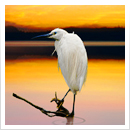
FORGET THE DIM-WITTED
STEREOTYPE: THE OSTRICH IS A
FoolSHREWD SURVIVOR IN
A W O R L D O F P R E D AT O R S.
96
Standing tall at the
southern tip of Africa,
a male ostrich surveys
the shore near the
Cape of Good Hope.
Growing up to nine feet
tall and 300 pounds,
Earth’s biggest bird has
no shortage of gangly,
comic appeal—but this
bird is no easy mark
for its enemies.
Three female ostriches
(brown feathers), three
males (black feathers),
and 42 chicks keep
watch for jackals and
other predators in
Tanzania’s Tarangire
National Park. Chicks
hatched in commu-
nal nests may stay
together as long as
a year or two.
Most of us happily get by
on a single cartoonish
idea about ostriches:
They’re the big birds that
bury their heads in the sand in
times of crisis, supposedly thinking
that if they can’t
see danger,
danger can’t
see them.
In our ragbag of stereotypes, ostriches have The world’s fastest
thus become the quintessential dim-witted ani- animal on two legs,
mals. Even the Bible says they’re dumb, and bad ostriches have been
parents too. clocked sprinting at
more than 40 miles an
The head-in-sand idea is a threadbare, 2,000- hour, and they can run
year-old hand-me-down from the Roman natu- long distances at about
ralist Pliny, who sometimes passed on tall tales. 30 miles an hour. The
Think about it. Ostriches have long, bony legs, a secret of their speed?
torso held aloft like a great floating raft of flesh Massive thigh muscles,
and feathers, and a neck like a periscope, topped long lean legs, elastic
by a wedge-shaped head with eyes bigger than tendons, and an extra-
an elephant’s, at a height of up to nine feet. It is large claw on each
an unlikely design for head-burying. foot for traction.
Ostriches do in fact often hold their heads low
to the ground—not under it—to feed on plants or
to tend their nests. But their necks are light and
flexible, with 17 cervical vertebrae to our seven,
and easily move up and down, side to side, and
front to back. And their giant eyes help them
keep close watch on the world around them.
They have reason to stay alert. For starters,
100 N AT I O N A L G E O G R A P H I C
The words you are searching are inside this book. To get more targeted content, please make full-text search by clicking here.
2020-09-01 National Geographic UK
Discover the best professional documents and content resources in AnyFlip Document Base.
Search