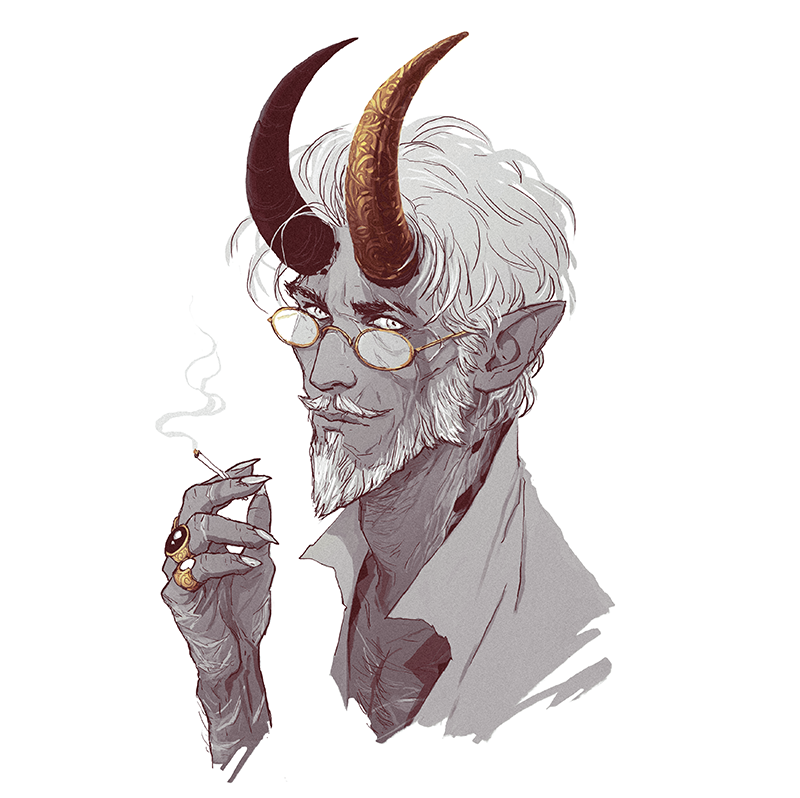
marauding adventurers that shows up. Maybe if you make this place too dangerous for them, they’ll stop trying to break in. And if they don’t . . . Maybe those adventurers are onto something. Maybe the power in your home shouldn’t be left unused. Maybe if you took it for yourself, you could finally make your people safe. But only if you beat the adventurers to it. 2. Do you like the idea of potentially brokering peace? This hook puts the characters in a situation where diplomacy might be as important as combat. But if that fails, there’s always a chance that a “monster invasion” could take over the land... Until recently, your people lived in the wilderness, and you were relatively happy. Sure, life there was hard, and there were border conflicts with the neighboring “civilized” peoples, but on the whole, they had their place and you had yours. That came to an end when a natural disaster overwhelmed your home, making it uninhabitable for your people. You’ve been forced to flee into a nearby region . . . and the people there are not about to welcome you in. Because to them, this looks a lot like an invasion. Some of your people are more than ready to make that happen. They say this could be a good home—better than the one you left behind. But you’re afraid that if you wipe out the local populace to make room for your own people, later on someone will retaliate in kind. On the other hand, your traditional enemies are willing to wipe you out instead. Is co-existence possible? And if so, how can you achieve it when everyone looks at the other side and sees only monsters? 100 Micro-Settings
3. Groups interested in playing a mixed party of standard Adventurers and “monsters” can do so with this hook, in which survival requires traditional enemies to work together against a greater threat. It’s an ordinary day in the dungeon. Some adventurers have broken in, seeking treasure and glory, and you and your people are fighting them off as usual. And then something else shows up. Adventurers call your people monsters, but you’re nothing compared to this beast. It is pure, malicious destruction, and it doesn’t care what labels anyone puts on the creatures in its path. Its minions tear through your home and threaten to flood into the world beyond, and all that stands in its path... is you. You, and the enemies you were fighting just a moment before. On your own, none of you have a hope of surviving, much less defeating this creature. But if you band together, you might just stand a chance. That is, if you can refrain from killing each other first... 101 Micro-Settings
Raptorland By Elizabeth Chaipraditkul Introduction When the realms were young, dinosaurs wandered the lands. They built great palaces of song and scent, shaping the land with tooth, claw, and feather. Within the realm they lived in perfect harmony—hunter, prey, and all the great many things in between. Then, a terrible disaster happened—the Calamity—and the realm was forever changed. Fey, dwarves, and humans crawled from the earth. They quickly covered the surface like a violent spew of magma and darkened the skies of song with their noise. The velociraptors led all dino-kind away to a new realm, a place where they could rebuild, a place safe from the ‘skinmen.’ Using dark rites of the hunt and blood, the velociraptors closed the gates between their new realm and the one dinokind left behind. Here the dinos would start anew, build a world that could withstand an onslaught from the skinmen if they ever dared enter the dino’s new realm. Thus, Raptorland was created. Now, the gates to Raptorland are open, enter if you dare. 102 Micro-Settings
Much Ado About Dinos Dinosuars, shortened to dinos in Raptorland, are ancient sentient creatures. They have the ability to speak the common tongue, but prefer not to as it is a clumsy way of communicating. Instead, the prefer to communicate with body language, scent, and song. That is the only way to truly understand another dino. The dinos are great builders, while some of their building is physical—spiraling stone structures that stab high into the sky and delve to the deepest depth underground—many of their monuments are invisible to the naked eye. Locations of great importance are marked with a scent, which conveys a feeling. Every dino who experienced the event leaves a different scent conveying their emotions at the time it occurs. Any dino who encounters the location experiences what happened as if they were there—they see, and more importantly, understand what happened there. Non-dino creatures have never been seen in Raptorland, and they would likely cause distress if ever seen. Every hatchling grows up learning of the skinmen and what they did to dino-kind. They learn of the dinosaur hunts and how their kind were forced to leave a land they very much loved. Once a dino understood they were seeing a skinman, they would likely attack or try to capture them, dependent on their temperament. Dino society is based around packs and herds. There is no hierarchy in the kingdom save for the Council of Velociraptors who are tasked with keeping the realm safe. Laws do not exist, because every dinosaur follows ‘the natural order’ of predator and prey. A tyrannosaur who kills for his dinner is no more evil than the triceratops who kills to protect her hatchlings. Thus is the way of things. 103 Micro-Settings
The Understanding Entering Raptorland carries with it a curse, placed on the gates of Raptorland when they first shut after the Calamity. The curse is called the Understanding and was meant to make sure no skinmen ever survive in Raptorland. The longer a nondino creature spends in Raptorland, assuming they survive, the more they become like the inhabitants. They grow larger, sprout feathers, and their nails transform into claws. The first stage of the curse is objectively beneficial and occurs within days of entering Raptorland. A person may become stronger, or their eyesight keener; there are no outward signs they’ve changed and perhaps the person will not notice it themselves. In the second stage of the curse, a person begins to forget who they are: sometimes they forget the name of their friends, their loved ones, or even the current day. The third stage of the curse inflicts physical changes on the person: they double in size or their skin begins to turn to scales. Between the third and final stage of the curse, a person goes through a brutal transformation—slowly turning into a dinosaur. As their muscles, skin, and bones stretch, the process is excruciatingly painful. The final stage of the curse is permanent— the person turns into a dinosaur and forgets their past life. The only way for a person to remove the Understanding curse is to go through three trials set out by the Council of Velociraptors. The person must prove they are true of heart and understand why the dinos originally fled their home. 104 Micro-Settings
Dino-kind The Council of Velociraptors The Council of Velociraptors is comprised of four immortal velociraptors led by the raptor known as Longhook. She has magnificent turquoise feathers covering her body and the claw on her left arm, with a glint of obsidian and a crackle of magic, is much longer than the right. She was one of the first to tell the other dinosaurs they must flee the mortal realm. Longhook taught any dino who would listen to her the magic of song, how it could heal the most grievous wounds and even halt aging itself. The Council knows that the gates to Raptorland are open but have not spread the news to avoid mass panic. Longhook suspects someone on the Council opened the gates, perhaps to undermine her position if the news ever broke—but who would be so foolish to make a decision that could endanger all of dinokind? Could it be the stoic Brokentooh? Fieldrunner the Quiet? Surely not her loyal friend Softfern? If she doesn’t get to the bottom of this soon, her entire realm could be in danger. Emperor Hus’ Landlands Emperor Hus is a giant sarcosuchus who capitalized on the dinokind way. He controls a great swath of land filled with shallow, warm lakes, rivers, and streams. Where most predators only take what is needed and feed when they are hungry, Hus has grown gigantic and fat in his greed. Pushing 20 meters in length, he co-opts other, smaller, sarososchus’ to do his bidding and bring him more food. 105 Micro-Settings
If a dino wishes not to be his prey, they must bring him offerings— smaller animals or even their own eggs. The Council has caught wind of Emperor Hus’ nefarious deals, but is uncertain on what to do. They were not created to rule dino kind, only protect it from skinmen. Councilmember Softfern has often spoken out against Hus and secretly works to bring down his reign of tyranny. The Grasswind Herd The Grasswind Herd is a group of herbivore dinos who live in the Grasswind Plains. Comprised mostly of diplodocuses, the herd travels with one another for protection. While the herd is a suitably impressive size, they are always heard before they are seen. A beautiful complex song reaches every corner of the Grasswind Plains, comprised of the voice of every member of the herd from youngest to eldest. When the herd sleeps, those left awake continue the song, and when everyone awakes the plains burst into a new refrain of melody. 106 Micro-Settings
Heard from far off the song echoes a welcome to all peaceful creatures. It also acts as protection for the herd, warding off predators and letting them know: we are strong, you cannot defeat us. The closer a dino is to the herd, the more complex their song becomes. Hundreds of voices speak to one another, share thoughts of their day, private conversations, deep emotions. Every voice adds to the message which covers the entire plain. Recently, the Grasswind Herd has had issues with members of their herd going missing. Members of the herd seem to fall asleep at the same time, meaning their song isn’t protecting the borders of their land, and when the herd awakes at least one dino is missing. Whatever is doing this to them must be magical, but the matriarchs of the herd have yet to get to the bottom of the mystery. Maybe Council member Fieldrunner, who has been spending some time with them, can help them to get to the bottom of it. Mount Thero When dino-kind first came to Raptorland the compsognathuses (known by dinos a ‘compies’) broke away from dinosaur society and ensconced themselves in Mount Thero. They refused to follow Longhook’s teachings and instead dutifully worshiped one of their kind known as Harbinger. Though the compie messiah passed away many years ago, the compies still worship him like a deity. They’ve created a persona cult around his teachings, which they squeak and sing any chance they get: Small is superior. No give, only take. Compies always win. Compies are small, vicious, and fairly unintelligent, which is always a dangerous combination. Luckily, they stick to the winding hallways they’ve carved out of Mount Thero. They only leave the mountain when they need to hunt, spewing forth from the thousands of tiny holes in the mountain like ants pouring from a nest. On a hunt compies first eat their fill and then abduct live prey to bring back to the mountain. This prey serves as food for the coming months so they don’t have to interact with other dinos too much. As Harbringer said, “Outsiders are stupid!” 107 Micro-Settings
Spirit World By Gregory Israel Overview Spirits surround us, unseen, but not unfelt. Their benevolence powers the magical abilities of Shamans and Shamanic Warriors, —but some people choose to tap into more potent, less benevolent magic, even if doing so comes at a cost. Is the risk worth the reward? Spirit Magic is common. Most people give daily offerings to Spirits and receive temporary magical Boons in return. Some have participated in or witnessed an Incantation. A select few have learned to channel the power of Spirits as a Shaman or Shamanic Warrior. A minority believes Spirits should be left alone out of reverence, or out of fear. Most who practice Spirit Magic choose to ask Spirits for their assistance respectfully, but others see Spirits as a resource to be exploited and controlled, to do one’s bidding even though doing so is risky. Spirits are also the lifeblood of Spirit Eaters—eusocial insects which that feed exclusively on Spirits. Clashes between Spirit Eaters and inhabited areas are frequent, and bards often tell the tales of the Invasion of the Four Cities and the Fallen City of Aclaraan. New Rules Spirit Offerings Most people give daily offerings to Spirits, placing their small gifts in bowls, which vary from plain to ornate. Doing so may result in a receiving a temporary Boon. Offerings are made at night, and 108 Micro-Settings
Boons are received upon waking the next morning. Adventurers who leave Spirit Offerings make a Test 2d6. If successful, they roll another 2d6 to determine their Boon. Unless otherwise noted, Boons last until midnight. Spirit Offering Boons: 1 2 3 4 5 6 1 First attack that should hit you misses Bump the value of one die up one pip Immunity to fire Advantage with light melee Speak with objects Ignored by specific type of monster unless provoked* 2 First time you should be surprised, you’re not 1 day of food** Immunity to cold Advantage with unarmed attacks Speak with the dead Force shield that absorbs 1d6 damage (dissipates when all HP are used) 3 First successful attack does 2 HP damage 1 day of water** Immunity to electricity Advantage on Save or Die Tests Temporary Trait* Walk on water 1d6 turns*** 4 First miss becomes a hit 1 gold coin** Immunity to poison Advantage versus specific type of monster* Advantage on Spirit Magic Pass through 1d6 walls*** 5 First Save Test succeeds 1 useful item appears*/** Speak with animals Advantage with ranged attacks Mastery in a weapon* Fly for 1d6 turns*** 6 Re-roll one roll Animal attribute* (wings, claws, gills, etc.) Speak with plants Advantage with heavy melee Levitate items weighing 1 pound or less Invisible for 1d6 turns*** *GM’s choice **Does not disappear at midnight. ***Turns can be used anytime until midnight. Familiar, Healer, Spell Reader, and Spell-Touched are not available in Spirit World. They are replaced with the new Spirit Magic rules. 109 Micro-Settings
Spirit Magic Adventurers attempting to create magical effects with the Shaman Trait, Shamanic Warrior Trait, and through Incantations must decide if they are asking Spirits for assistance or if they are forcing Spirits to do their bidding. Adventures make this decision each time they attempt Spirit Magic. If asking, Adventurers make a standard Test. If forcing, Adventurers Test and are successful on a roll of 3, 4, 5, or 6 and may suffer a Backlash if a 1 is rolled on any die. A Test can be successful and trigger a Backlash simultaneously. Backlash Whenever Adventures roll a 1 on any die when forcing the Spirits to do their bidding, they risk suffering a Backlash. Adventurers get a Save Test at Disadvantage to avoid a Backlash. If the Save Test is unsuccessful, roll 2d6 to determine the Backlash. Declare which die is “short,” (representing the lines) before rolling to avoid confusion. 1 2 3 4 5 6 1-2 Stunned for 1d6 turns Mute for 1d6 turns Deaf for 1d6 turns Blind for 1d6 turns Nauseated for 1d6 turns Lose one Action per turn for 1d6 turns 3-4 Unable to be healed for 1d6 turns Confuse friends and foes for 1d6 turns Knocked unconscious for 1d6 turns Disadvantage on all Tests for 1d6 turns Disadvantage on Spirit Magic for 1d6 turns Unable to attempt Spirit Magic for 1d6 turns 5-6 Disappear into pocket dimension for 1d6 turns Drop what you’re holding Trip and fall Thrown backwards Teleport to random location within 10’ radius Take 1 HP damage • Shaman: Magic is the essence of Spirits. You can Test to use any of the abilities of the Familiar, Healer, and SpellTouched Traits. Shaman counts as two Traits. 110 Micro-Settings
• Shamanic Warrior: Spirits protect my body and guide my blade. You can Test to gain the help of Spirits in combat. If successful, you sacrifice 1 HP to the Spirits and roll 1d6 to randomly determine a Boon. If you sacrifice 2 HP, you can select a specific Boon. All Boons last for 6 turns. Shamanic Warrior Boons: 1. Advantage: You gain Advantage for all attacks. 2. Armor: You are protected by Spirit Armor, which provides 4 HP of protection. The armor dissipates once the 4 HP are gone, or if 6 turns have passed. 3. Deadly: You deal 2 HP of damage with each successful attack. 4. Haste: You gain an additional Action each turn. 5. Luck: You can make one re-roll each turn. 6. Spirit Bolt: You can fire a bolt of Spirit energy that always hits its target. Using a Spirit Bolt requires two Actions. Incantations Incantations are rituals that allow characters to produce powerful magic effects (like scrolls in the standard rules). All adventurers can attempt an Incantation if they know the ritual. Discovering the ritual for an Incantation can be the basis for an entire adventure. Each Incantation has a magic number set by the GM, based on what the Incantation does—the more powerful the effect, the higher the magic number. The caster(s) must reach the magic number of successful Tests before reaching the magic number of failed attempts. Each additional caster in the ritual raises the magic number for failure by one. If there are multiple casters, they take turns making Tests until the Incantation succeeds or fails (or they quit the attempt). For example, a group of four Adventurers wants to teleport to their favorite tavern. The GM sets the magic number at 10, which means they need to roll 10 successful Tests before they roll 13 failed Tests (10 + 1 for each additional caster). 111 Micro-Settings
New Creatures Spirit Eaters Spirit Eaters are intelligent anthropomorphic insects that feed upon Spirits. With a social structure similar to ants or bees, each caste performs a different role in the survival of the clan. Worker HP: 1 (Fodder) Attack: Melee Movement: 30 Description: Workers are the primary labor and fighting force, overwhelming their enemies with superior numbers. Workers spend much of their time searching for Spirits to consume. When a Worker feeds on a Spirit, it divides into two full Workers. Other castes eat Workers, which can be placed into stasis for future consumption. Traits: • Eat Spirit: You can Test to eat a Spirit. If successful, you divide into two complete Workers. • Stasis: You can enter a prolonged state of inactivity. • Swarm: You gain Advantage when attacking an enemy that has more than one Spirit Eater adjacent to it. Soldier HP: 7 (High) Attack: Melee and Ranged Movement: 25 Description: These ferocious combatants are responsible for defending their clan and are usually found leading groups of Workers. Traits: • Defender: When you defend an area by sacrificing offensive attacks, you get a melee attack on all opponents who come within your reach. • Diehard • Hardened Exoskeleton (Shield Bearer) • Opportunist • Shamanic Warrior 112 Micro-Settings
Administrator HP: 5 (Medium) Attack: Melee and Ranged Movement: 25 Description: Administrators are the intelligentsia of a clan, fulfilling various roles, including resource managers, Shamans, strategists, etc. Traits: Administrators have 3–4 Traits tailored to their specific role, such as Alchemist, Charismatic, Educated, Insightful, or Shaman. Queen HP: 15+ (Solo) Attack: Melee and Ranged Movement: 25 Description: The Queen is responsible for the wellbeing of the clan. She telepathically receives information from all members of her clan and uses this knowledge to guide her Administrators to do what is needed. The Queen lays eggs that become Administrators, Soldiers, and Queens (which start new clans). Traits: • Eidetic Memory • Hive Mind: You telepathically receive information from all members of your clan. You know what they know. • Perceptive • Shaman 113 Micro-Settings
Adventure Hooks • People are working with Spirit Eaters to eliminate all Spirits in town. Some say the local magistrate is involved. • A cult is using an artifact to collect Spirits, but no one knows why. • The Fallen City of Aclaraan has been found. It lies submerged in Cawold Swamp, overgrown with a thick layer of trees and vines. It appears untouched since the Invasion of the Four Cities. • An alchemist claims to have created new elixirs—one that attracts Spirits and one that repels them. • A local farmer claims to hear and understand the voices of Spirits. • Nomads tell of a mountain without Spirits. • Legend has it that there is a woodland glade in which Spirits become visible during the full moon. • A small hamlet has outlawed all forms of Spirit Magic after a Shaman was killed by Backlash. • Scholars speak of Greater Spirits. What powers do they wield? Can Spirit Eaters consume them, and what happens if they do? • Some say a magic item is created when Spirits are bound to an object. How does it work? Does releasing Spirits render the item non-magical? Do Spirits volunteer to be bound? Are they trapped? Are those who release a magic item’s Spirits rewarded? 114 Micro-Settings
Looking Over The Wall By John D. Kennedy Possible Themes: New Chances, World In Disarray, Outsiders Coming In Inspired By: Grimm’s Fairy Tales, Irish folk lore, King Arthur and the Knights of the Round Table The Concept: Since time immemorial, the Realm has endured. It withstood the Callic invasions, it rode out the uncertainty of the Imperial Civil War, and it survived the Long Storm brought by the gods fighting with each other by proxy, through their worshippers. Though the world seemed to be on teetering on the edge of the abyss, it stood. The lords and ladies of the land sat in their high castles while their armies kept the peace, and the people of the land lived out their lives as peacefully as they could. That changed one cool spring morning. Some remember hearing the howls of strange beasts in the hills the night before, while others claim they saw the massive form of a shadowy giant lit against the moonlit sky. No one can agree on what happened save for one thing: when the Realm woke the next morning, half of the population of the Five Kingdoms had disappeared. Husbands woke to beds devoid of their wives, and soldiers discovered that entire garrisons had disappeared. There were no tracks, no clues as to where they had gone. Now the Realm needs new heroes to save it from itself. Opportunities abound for those seeking to make a name or fortune for themselves, and those once thought lowly have a chance to rise up and fulfill potential unknown even to themselves. The world is getting stranger each day, and there is no time to wait for heroes to save the world. Now is the time for new heroes—and villains—to be made. 115 Micro-Settings
Stranger still are the marks and totems discovered in the woods and glens of the Realm. Strange creatures come out of the shadows to harass and kill as they see fit. Outside the Great Keep of Sutherland, once the pinnacle of law across the land, a crown belonging to the old king was twisted around a cow’s heart and mounted on a pole for all to see. Though the sign attached to the pole is in a strange tongue, everyone could understand its meaning: “We have come for what is ours in fulfillment of your bargain.” Setting Fluff: Eldrid the Midwife kept her name, though she never found much time to tend to the needs of the pregnant women of her village anymore. The villagers would still cry out for the Midwife to come to their aid, but they needed her skill with the blade more than her knowledge of medicine these days. Today one of the Strangers was spotted in the fields near the old Katchuk farm. The farmers think it was one of their scouts taking stock of who all remained in the village of Tanberie, but no one knew for sure. Eldrid had hastily donned her chain hauberk, which she had scavenged from her brother’s chest after he was lost in the Vanishing, and gathered Heinrich and Theo to accompany her. The two humans and the bear crawled through the unkempt wheat fields to the bluff overlooking the farm. The scout was standing there, its shark-like head focused on a book floating in front of it as it scribbled something on its pages. By its side was a massive halberd tipped in wicked barbs that leaned into its shoulder as casually as one might hold a rake. As menacing as the scout appeared, it did not seem concerned about its surroundings. Eldrid signaled to Heinrich, whose toes flexed in the mud while he readied his charge. Theo stood back with their crossbow aimed at the scout. Before giving the cry to charge, Eldrid’s memory flashed back to every child she had helped usher into this world, including the ones that had disappeared in the Vanishing. In their name, she gave the order to charge. 116 Micro-Settings
The Realm and Queen Over the Wall The Realm is, for many, the only country they have ever known. Though the people of the Realm know of foreign lands through lessons learned from teachers and by traveling dignitaries from far-off nations, the Realm represents Five Kingdoms that have existed since the shattering of a great empire centuries ago. Though feuds would occur between the differing nations, peace was kept through the ever-shifting alliances between them. The chaos of the Vanishing, as the mysterious event that took half the population of each of the Five Kingdoms, has left the remaining leaders of the Realm in disarray and the people in desperate need of answers. The gods have remained silent on what caused the Vanishing and no power, mystical or mundane, has taken credit for it. There was little rhyme or reason for why those who disappeared in the Vanishing were taken; the criminal, the pious, the heroic and the truly vile were all taken in seeming equal measure. Though the land is in crisis and the people praying for answers, new figures are coming to power in the ever-changing landscape of the Realm. Towns bereft of their defenders see a new generation rise to protect them. Cities previously dependent on the support of the local nobility find new leaders aiming to protect them. Though bands of marauding criminals roam the countryside, and several cities have fallen into chaotic states of anarchy, the people of the Realm are focusing on ways to survive. There is a greater threat looming on the horizon, one that is unexplainable but no less menacing to those trying to make sense of the Vanishing. A mysterious figure calling herself the Queen Over the Wall has made her presence known. Strange creatures lurk at the edges of civilization, and cults dedicated to their worship are becoming more prominent every day. The Queen’s envoys have not explained who she is or if she is responsible for the Vanishing. They explain, through human lips over vicious fangs, that they represent their Queen, and that she has come in fulfillment of a bargain that the Realm made with her centuries 117 Micro-Settings
ago. So far, few people have managed to get more answers from them on what that means, though adventurers of all stripes delve into strange burrows and mansions made of mysterious materials in the hopes they can find not only a link between the Queen and the Vanishing, but some hope of bringing the lost people back. The Strangers There are two important things to keep in mind regarding the Strangers. The first is that what they say about returning to fulfill an ancient contract are true. The second is that despite their interest in humanity, they are not the ones responsible for the Vanishing. Known in their tongue as the drach’marii, the Strangers are an ancient people who once crossed beyond the threshold between the Realm and their world centuries ago. They fought a war with the powers of the ancient world, who defeated the drach’marii defeated and bound them by an oath. The drach’marii swore to never again threaten or harass the Realm so long as the number of the people of the Realm was greater than theirs. The pact sealed in blood; the drach’marii were unable to increase their own numbers and it was believed they would never again be a threat. The knowledge of this pact was kept hidden by an ancient order of scholars known as the Teachers, who kept their knowledge hidden in deep places where only those with the blood of the Teachers in their veins could gain entry. The Vanishing is every bit a mystery to the drach’marii, but it is a mystery they will exploit all the same. With the pact fulfilled, the drach’marii have returned to reave the land and take what they consider theirs. Fearing that mankind will once again outnumber them, they have begun to ritualistically cull the numbers of humanity and keep careful track of births and deaths across the land. The drach’marii are careful in their actions, and know that if the Realm were to rise in force against them they might lose another war. To this end, they act covertly when possible and help spread chaos across the nations of the land. 118 Micro-Settings
The Queen Over the Wall is an ancient being whose knowledge of the Realm comes firsthand. She of all her people was able to watch the events in the Realm by sending an avatar into the world. Everything the avatar saw was transmitted back to her, and through this knowledge she has become as much an expert of the Realm as the greatest of the Teachers. It is said that she has given her avatar their own free will to do as they please, and that they may not even know who they really are, though the Teachers know what mark would indicate the avatar’s identity. 119 Micro-Settings
Sample Adventure Hooks: Each one of these hooks have the same goals. The primary goal is to make the player characters central to the unfolding story, to create a vehicle for interpersonal drama and mystery, and to reinforce the themes of the setting, be they adventure, horror, politics, or a mix of the three. The secondary goal is to challenge the players to make difficult choices. I. Dozens of people showed up one morning, wearing strange clothes and claiming to be people who disappeared in the Vanishing. They claim they were taken from across the Realm and have horrifying memories of being held in a distant land. They ask the people of the town to give them shelter for the night. Little do the adventurers know that the refugees are the members of the Black Dagger Crew, a notorious bandit group that has been robbing villages across the Realm. Did you hear the news? Over a score of people showed up at the town gate this morning, each one looking cold, hungry, and desperate for a place to stay. They say they were taken in the Vanishing, but some of them are carrying bundles of goods with them and refuse to let people check them. The way they have been eyeing the place has me uneasy, so if you could find out who they are and how they were taken, I’d really appreciate it. It might mean people could find out what happened to their loved ones. 120 Micro-Settings
II. Though the Strangers seem to attack randomly and behave bizarrely compared to the people of the Realm, they appear to be hunting down one of their own. The drach’marii in question looks old even among their kind, and refuses to speak to anyone despite the horrible wounds inflicted on him. He is sworn to serve those carrying the bloodline of the Teachers, and if he encounters one he will swear to protect them for as long as he lives, though he will not speak much of why he must do so, or who the Queen is. Better get your gear together. The reports coming from Braunwald forest are true: several Strangers are roaming the woods in force and they’ve got a couple of their strange devil dogs acting like a hunting party. The last report we got from our scouts is confusing. We can’t tell if they’re being led by one of their knights, or if they’re chasing after one of them. What does that mean, anyway? III. The city of Branchswei, which was reportedly burned to the ground during the confusion of the early days after the Vanishing, has reappeared, with not a stone out of place save for the complete absence of people. The few who have gone there trying to figure out what has happened have disappeared, as the city is a recreation thanks to the magic of the drach’marii seeking to capture more humans. Finding this portal and closing it will help keep Strangers out of the nearby area. It’s a miracle—but if it is it may be a dark one—that Branchswei has returned to us. The city looks like it did before the Vanishing, with the great clocktower’s bells chiming with the passing of time. My twin sons have disappeared trying to explore the city, and we fear more fools may disappear there, too, if the mystery is not solved soon. 121 Micro-Settings
Courtesy of Goblins By Melanie R. Meadors Possible Themes: Lost Civilization, Stranger in a Strange Land, Friends Among Enemies, Alliances for the Moment, Underdog, Revolution Inspired By: Labyrinth, Lost City of Z, The Wizard of Oz, Watership Down, and bees! Goblins Are People, Too! Most dumb humans don’t know this, but goblins aren’t as stupid as they smell! So why do humans think this? Probably because they insist on taking the lowest of the low in goblin hierarchy, separating them from their brethren, and then humiliating them for not living up to some weird human expectations. Silly other races think goblins are just like them—but they aren’t! Of course goblins look stupid when they are out of their element. Humans look pretty dumb, too, wandering around in the forest, not able to see things that are right in front of their big noses. ared. There were no tracks, no clues as to where they had gone. About Goblins Goblins exist in communities called hordes. If you’ve ever seen a hive-like community of creatures, such as bees, ants, or termites, then you already have an idea of how a horde works. 122 Micro-Settings
Like their insect counterparts, goblin society is divided into three distinct classes: 1. The Queen. The Queen is the top of goblin society. She is in charge of the well-being of the entire horde, making sure all roles are filled and the horde runs efficiently. A Queen can be a benevolent dictator, an evil overlord, or she can be a figurehead who listens to the opinions of the rest of the horde and tries to be as democratic as possible. Some Queens have advisory boards that consist of members of the Fancy class (see below). Every horde runs differently, but without a Queen, horde society falls apart. She keeps everyone organized and makes sure things get done without everything falling into chaos. The Queen is the only member of goblin society who can lay eggs and produce offspring. She lays two eggs per lunar cycle, and these eggs are then carried and cared for by the Fancies who father them until they hatch. If the Queen is overly stressed, she can’t lay eggs, so it’s important to the horde that she is obeyed and protected. A balance of power is maintained in a healthy horde so the Queen feels confident in her power. She takes care to keep her underlings satisfied so they care for her, and in turn, the underlings keep her happy so the population increases to keep them secure and so there are enough Scouts to find food for the entire horde. There can be more than one female goblin in the horde, all of which belong to the Fancy class, but only one is worthy of being Queen. If a female goblin becomes ambitious enough to challenge the Queen’s power, the horde is divided into sides and a battle occurs. The winning side stays in that horde’s home, and the losing side is exiled and must find a new home, either by fighting another horde or discovering an unsettled place in which to start anew. 123 Micro-Settings
2. Fancies. Fancies are a class of goblins consisting of both males and females. They are the goblin elite, who form the support structure of the horde. Fancies are more intelligent than their Scout brethren and are the commanders and advisers. They make the plans that Scouts carry out. They are tall and thin in stature, and have pointed ears and tails with tufts of fur on the end of them to match the hair on their heads, which varies in color from pastels to gem tones. Male fancies father the eggs the Queen lays, and compete with each other for her attention. This is where the term “Fancies” come from. The males are far vainer than the females, and fashion is extremely important. Yet fashion differs from horde to horde. Some forest-based hordes who don’t have a lot of interaction with other races of beings might prefer clothing and styles that are more primitive compared to those who live in closer proximity to human cities, and so forth. When the Queen chooses a Fancy as a mate, after she lays her egg, that Fancy carries the egg, keeping it warm and secure until it hatches. Female Fancies are responsible for leading Scout expeditions to find food, defend the horde, or invade other hordes or settlements of other races. They also make sure the Queen’s orders are being carried out. Females need to be competent but not overly ambitious. If the Queen feels there is competition for her throne, she can order a female Fancy to be put to death. Females are expressly forbidden from procreating, and indeed, cannot lay eggs until they go through a secret ritual to become Queen. 3. Scouts. Scouts make up the majority of the horde, and are indeed what most people think of when they think of goblins. They are considered unintelligent, though this is partially because they are very much hive-minded creatures. They rely on strength in numbers versus strategy. Under strong leadership, the Scouts can be quite powerful. But without a leader, things rapidly fall into chaos, and it’s every goblin for himself. 124 Micro-Settings
Scouts are short in stature, pointy-eared, tailless, and are gender-neutral. They are incapable of reproducing, and unlike Fancies, can never attain that ability. They are messy and scattered, and are responsible for tasks such as gathering (stealing) food, going on raids, and performing whatever menial labor needs to be done. They are not treated particularly well within the horde, despite their numbers, but seem to be too ignorant to notice. Fancies regularly abuse them, yet also suck up to them in order to command their loyalty. On their own, they can be easily tricked, and other races might persuade them to follow their wishes by bribing them with shiny things. The Setting This particular horde of goblins exists in a network of tunnels and caves in a forest just south of a fortified human city with a castle at its center. The leader of these humans is the corrupt King Leonigel, who is paranoid someone is trying to take his throne—with good reason. His subjects are hungry, he is forever on the brink of war with neighboring kingdoms, and he sees his role as the collector of taxes more than protector of his realm. To the west of the goblin settlement is a human village that is barely scraping by. They do have livestock and some crops, however, which are very tempting to goblin Scouts who dare not return to the horde empty-handed. 125 Micro-Settings
The goblin settlement itself has a main entrance in a crop of giant boulders about a hundred feet from the main road going through the forest. From the entrance, a large, main tunnel leads down through a hill, with branches into various chambers and tunnels. There are openings to these tunnels near groups of trees, in the sides of hills, and hidden in river banks. These openings are either well-guarded or have traps in place. Among the chambers include nurseries for goblin younglings, salons for the Fancies, sleeping quarters, mess halls, and of course, the Queen’s chambers, which are kept secret from most of the horde. Goblins have trained different creatures to guard certain sections of their settlements, especially those where secrets and treasures are hidden. Sample Adventure Hooks: In Tiny Dungeon 2e, players can not only interact with and fight goblins, they can be goblins, too! That means this micro-setting can be approached from several angles. Here are just a few possible scenarios that can bring player characters to the center of this horde of goblins. 1. Escape: You’ve barely escaped with your lives (and limbs, possibly, but let’s not make any assumptions) after being captives of King Leonigel. Starving and exhausted, you are so intent on watching your back that you don’t notice what’s in front of you—four drooling goblin scouts! Do you fight? Flee? Ask them for help? 126 Micro-Settings
2. Recon: You have been charged with a mission to figure out who or what is killing and stealing livestock from a small village in a forest clearing. You discover a horde of goblins living nearby, but are they the culprits? Or is there a common enemy? 3. Rebellion: Goblin Scouts are sick of getting kicked around by Fancies. After all, aren’t there more of them than any other class in the horde? The Scouts can rally together among themselves in an all-Scout coup, or perhaps seek aid from other races by posting a notice in a nearby tavern that adventurers can come across. In order to overthrow the Fancies, Scouts will have to infiltrate their section of the horde, where they are explicitly forbidden. What lies within this mysterious place, the goblin equivalent of a man-cave? What protections do they have in place? What secrets or treasures are hidden there? 4. Investigation: A band of warriors finds evidence of a goblin settlement nearby, and so plan an invasion, as seems logical. When they launch their attack, however, they notice how thin and frail the goblins look. It’s hardly a fair fight. Why are these goblins so hungry and sick? 127 Micro-Settings
The Great Indoors By Mari Murdock Foolish readers, The cautionary words of an old elf may seem silly in the face of your quest, but my age and the ursataur teeth studding this volume must count for something. I was a young scout when the Tangle emerged from the earth, its black walls newly crowned with the uprooted forests and displaced mountains of Damdurran. No one knew its true origin, though many the memory of dragon historians recalled whispers of a cursed labyrinth in myths so faded they seemed like dreams. A foolhardy orc warlord made the first attempt to explore the maze, but he and his band never returned. For decades, the people of Damdurrun made numerous other expeditions. Dwarves, gnomes, centaurs, sylphs, even the merfolk entered the portion of the Tangle that rose from the inland sea, but not one search party reemerged. Over time, kings and queens forbade their citizens from entering the Tangle, and we all lived in fear at the outskirts of this vast death trap. Nearly a hundred years after the Tangle arose, my comrades and I discovered the first ursataur while hunting near one of the entrances. Its coarse black fur, fangs, and dagger-sharp horns and hooves (so dreadful to me now) taunted us with exotic danger, and we undertook the challenge to slay this curious beast. I lost a foot in that fight, along with half my hunting party, but we conquered the great minotaur-bear. We paraded the carcass around, making our conquest an instant sensation. However, it was what we found inside the beast that ignited the greed of Damdurrun. Inside its belly, we found treasure: an enchanted ivory drinking horn, a solid gold diadem studded with moonstones, a masterwork dagger with adamantine inlay, and fistfuls of gems. Within a fortnight, every nation poured into the Tangle in search of its wealth. 128 Micro-Settings
It has been another hundred years, readers, and still, no one who has entered the Tangle has ever returned. Except me. But I wandered the labyrinth for nearly seventy-five years before the Tangle, in its cruel mercy, spat me back out. I have begged numerous expeditionary parties to abandon their quests, but I can never kill the draw of treasure or glory. Instead, I write this guide to help you brave the wilderness within those walls, lending you my wisdom as you set out to survive in the great indoors. Heed my counsel, and you too may return to the world where there is sky… or perhaps discover more than you bargained for in the depths of the labyrinth. Fiurendor Ilnon, Last of the Kegdallon Rangers Only known survivor of the Tangle, at present. Dangers and Decisions Being a ranger for centuries prepared me, but the world of the Tangle kills all its explorers for three reasons: exposure to magical elements, running out of provisions, and the ursataurs. I survived in my own fashion, but you may not be inclined to share the darkness of my deeds. Your morals are up to you… or the version of you that reveals itself when faced with extinction. You must decide how you will overcome the three dangers of the Tangle. • Weather: Strange enchantments have conjured wind, rain, lightning, and blizzards inside the Tangle, in addition to mana squalls that suck the life energy from men’s bones and firestorms that melt stone. Who knew they would need to pack for weather inside of a dungeon, let alone magical storms? Shields, armor, and magic cloaks work to some extent, along with protection spells and even ursataur hide tents. However, more often than not, these tempests kill. Sometimes, they occur in close proximity to treasure or secret doors, as though the Tangle were protecting its mysteries with these weather traps. Stepping over frozen corpses or watching a gale drain the life from your comrade’s body may mean you are about to discover what you are looking for. 129 Micro-Settings
• Provisions: If you are not a ranger, your survival skills may be a constant worry. Bread and ale doesn’t grow from dungeon slime. I’ve seen bands starve, trade priceless gear for scraps, turn to theft and brigandry, and even experiment with cannibalism. Would you eat a goblin? A human? An elf, if driven to it? I once met a crazed troll who carried around a baby hydra as a limitless food source, but I am certain he didn’t realize that hydras get bigger as they grow up. Some flora and fauna of Damdurran have managed to creep within the walls of the Tangle. Beyond your common rats and bats, I’ve seen trees, flowers, mushrooms, gorgons, unicorns, faeries, and more, all adapted to the darkness and magic of the labyrinth in frightening ways. The demands of the Tangle’s food chain looms over all, and you must decide where you belong in it. • Ursataurs: Standing nearly ten feet tall, this apex predator hunts through its labyrinthine habitat by smell rather than sight, drawn especially to the scent of blood. Hide, fight, or flee because reasoning is not an option. They eat everything, and their hunger never abates. No matter the reason which impels you to enter the Tangle, you will need to brave the three harsh realities of this indoor environment. Why are you trying to brave the dangers and what makes you so certain you aren’t going to die? 130 Micro-Settings
Sample Adventure Hooks I. Bounties: Are you and your party treasure seekers? Does the promise of enchanted weapons, magical artifacts, coin beyond your wildest dreams stir your blood? It stirs Damdurrun too. Kings, queens, warlords, guild masters, and even the occasional robber baron have posted immense bounties on the wealth of the Tangle over the last one hundred years. They offer titles, land, favors, magic, and knowledge, all the glory of the land in exchange. Some of these may strike your fancy: • Queen Vanya Scepterian XXII, the last ruler of a bankrupt human dynasty, has offered a litter of exceptionally rare fortunetelling sphinxes in exchange for enough gold and jewels to fill a giant’s shoe. Considering that these beasts have long been considered extinct, this is indeed a one-of-a-kind deal. • The high necromancer Modred Kythaliess of the dark elves has seen visions of an immortality chalice ironically carved from the skull of the first elf, which he believes to be in the Tangle’s deepest dungeon. He promises to share his secret wisdom of resurrection and reanimation should you bring him what he desires. • Orc warlord Zygrim Ogzah Firemaw, great great great grandson of the original orc who first ventured into the Tangle, has promised his orcish daughter as a prize to any creature who can give him evidence that reveals the fate of his ancestor. Zygrim Ogzah’s daughter Rugpugnugla, considered a great beauty among orcish kind (having perfectly snaggled teeth and the most charming wart hairs) also comes with a dowry of half her father’s vast wasteland and the promise of the orcish tribal throne. Entering the Tangle thus far has meant certain death to all treasure seekers, so what price would entice you to enter? What cost would you pay in body, mind, or soul to get at the treasure? And should you be lucky enough to bring it out of the Tangle, would you keep it? Even if it were cursed? 131 Micro-Settings
II. Discovery: Perhaps the mystery entices you more than the glory or gold. Why did the Tangle rise from the earth? Why did it let me go and no one else? What are the ursataurs? I will reveal some pieces of the puzzle that may entice you to investigate: • Once, I was stuck within a single series of hallways for a month. While there, a fox spirit appeared and ran through the wall close by. I determined to dig up his secret, so I carved out the bricks one by one. The hole revealed a mechanical lever. With great difficulty, I pulled it only to hear an ominous groaning of enormous machinery deep beneath my feet. The walls fell into the floor or rose into the ceiling. Some even opened new doors, completely reconfiguring my prison. Through one of these new doorways, I spied the fox spirit 132 Micro-Settings
leap into the arms of a ghostly warlock with towering horns. He and I locked eyes, and he murmured with raspy breath, “Fleshed one, come see the great vault the labyrinth’s lock seals.” Ghosts are often bad fortune, so I ran the opposite way, but I often wonder what vault he spoke of. • For several weeks near my fifty-year mark, I shared the company of a halfling who had been blessed by his badger deity Tallyloose Tubergnaw with the gift of tongues. He boasted to me that he could understand the ursataur language. Though primitive and barbaric, he said they hinted at a master who conjured them to gather the souls of Damdurrun found within the living blood of its creatures, a sacrifice of such magnitude that could then awaken an ancient evil from deep within the earth. This halfling was probably a teller of tales, but one looks at the seemingly motiveless hunger of these ursataur creatures and wonders. • Before finally escaping the Tangle, I came across a series of runes carved into the black stones. These magical cyphers suggested a rhyme or reason to the madness of the maze in their reoccurring patterns of moon cycles, constellations, and the sun, a strange sight in a world with no sky. A figure appeared in the runes as well: a tall woman with no eyes who pointed in various directions with a long wand. Fangs were an unwelcome addition to her portrait, so I ignored whichever direction she indicated. Perhaps that is why I got lucky enough to find my way out, but I am still curious as to where she wanted to lead me… 133 Micro-Settings
The Savage Seas of Zankhara By Darren W. Pearce “The Black Sea: I have heard tell of it but I have never sailed there myself. There is one who has. Her name is Captain Zanzanir, and she is said to be the daughter of Ashala Kora—the Sea goddess herself.” ~Captain Salik Amra of the Black Lion Introduction Imagine a world of swords and piracy, of swashbuckling tales on the high seas. Not a Renaissance world though, no. Zankhara is a relatively young kingdom, fueled by the power of ambition and born from the ashes of an older civilization. The cold steel of reckless pirate captains and vicious marauders has forged a new way of life. Zankhara is the Savage World of Conan meets the Golden Age of Piracy meets Prince of Persia. Zankhara today Ancient Sorcerer Kings and Necromancer Lords hide away on their island fortresses, hoarding secrets from a Forgotten Age. Mysterious serpent people lurk in the shadows of giant stepped pyramids and deep jungles, while jaguar headed humanoids look to unlock the power of a ten-thousand year old hidden city. Magic comes with a heavy cost, twisting the caster until they are no longer human. You can walk this path, but the taint of sorcery weighs heavily on your soul if you do. You will command the very essence of life itself, tearing the still-beating heart from your enemies with clawed fingers. Beware the ancient ones: the being 134 Micro-Settings
they call the Formless, the sinister Yal-Horoth, and Shal Bora who devours below the waves, beings from beyond the stars who gift you this magic. They desire your soul as their final payment, and it is all too easy to lose it to their machinations and plots. Perhaps the taint of magic isn’t what you’re looking for. Do you desire treasure? Then sail the seas from the Golden Coast of Tal Bakir to the frozen North of the ice-dwelling barbarians of Kaldwyn. Beware the pirates who ply these waters, or become one yourself and join the Iron Brotherhood—a ruthless band of corsairs and cutthroats carving this new kingdom from the blood and loot of their enemies. Hunt for clues and find untold riches in the Seven Sisters of Fate—a mysterious archipelago of islands that only appear once every seven years. Face down the mighty galleons of the seagoing Korsur, the old giants who command floating warshipdungeons several miles long and hundreds of feet deep. Whatever you do, do it with fire in your heart, steel in your hand, and a song on your lips. That is the Zankharan way. 135 Micro-Settings
The Heart of Zankhara Non-human races make up a small portion of the Zankharan Kingdoms, however the prevalent species here is human, and these are further sub-divided by their geographical location into several key cultures. The Bakiri: Natives of the Golden Coast and the fire-desert of Tal Bakir, the Bakiri are a proud and somewhat arrogant people. They make amazing sailors and incredible treasure hunters; their insatiable thirst for adventure is only matched by their love of magic and trinkets. A typical Bakiri woman is just as good as a man and for every male ruler, there is often a female counterpart either pulling the strings or—in the case of Azir Al Korassa, the City of Ivory—a female ruler in direct power. The Bakiri are a slim and dusky skinned people with dark hair and dark eyes. The Kaldwynar: The colder climes of the far north, across the Sea of Tears, prove a harsh land for anyone who was not born there. The Northerners of this landscape are a hardy people, tough and suspicious of outsiders. They don’t give their fealty or their friendship lightly, and, like the Bakiri, they make excellent sailors. War is something they are drawn to and many of them are reckless and brutal warriors. Power is split equally among the sexes, and many of the greatest warriors are women. They are a hard-looking people, blonde of hair and blue eyed. They have ruddy skin and often muscular builds due to their harsh life in the cold north. The Umalau: Uma is a verdant land that lies on the Sea of Tears. It is in many ways the natural barrier between the untamed sea-going cultures of Zankhara and the civilized timid nations of the west. Uma is home to the Umalau tribes who are warriors, scholars, and great magicians. The west often thinks them savages, but the east knows better. They are highly prized aboard any sailing vessel as excellent cartographers, navigators, and, in many cases, ship’s surgeons or healers. The Uma have a higher level of technology than many of the people of Zankhara, 136 Micro-Settings
and they guard it well. They are ebony skinned, often dark haired and slim built. Men and women fill roles in their society from researchers to war leaders in equal measure. The Zankhar: Fierce and warlike, nomadic and brutal—these are all words used to describe the Zankhar by their enemies. They are a wandering tribe of horsemen and warriors who delight in larceny, violent conflict, and one-sided trade. They are the merchants who will sell you a broken ship and claim it has only recently been built. The Zankhar are about as trustworthy as a storm at sea. They are often dark haired with elongated features, shifty eyes, and snide expressions. The men are the schemers and the women are twice as bad. The Omari: Civilized traders, merchants, and star gazers, the Omari are not natural sailors or ship captains, but they understand numbers and mathematics beyond the ken of mortal men. They are rumored to have mastered a unique layer of magic which defies sorcery and relies on breaking down the fundamental laws of the universe into a mathematical code. Their vast city of Oban Mhass is a wonder to behold, with observatories galore and golden rooftops. It is said that their star-gazing has attracted the attention of beings far more intelligent than they and far more devious. Omari people are prized as merchants on trading ships and know a great deal when they see one. They are lightly tanned, and some of them are quite pale, since they have spent their time under the moon and stars. Society is equal for the Omari; men and women are treated as both sides of the same coin. The Shih: Off to the far east of the Sea of Tears are the mysterious and beautiful lands of Chan Sen. These are the home of the Shih, an intelligent culture of inventors and tinkerers. They crew elongated, beautiful red and gold ships, armed to the teeth with fire-spewing cannons and explosive devices. These people are also great merchants and excellent scholars; they have refined the art of war into something close to that of a dance. They are incredible ranged warriors and have a superb understanding of mounted and ship-board combat. Their women are often in a position of high 137 Micro-Settings
power and influence while the men aim to conduct wars, though there are legends of famous female pirate captains and generals throughout the lands of Chan Sen. The Shih are short people with dark hair and eyes, they have slightly pale skin. The Tharsen: Natives of the cold steppes and plains of Tharokka, the Tharsen have carved an empire out of the bones, blood, and fear of their enemies for centuries. While not as focused on sailing as many of the other cultures, they make incredible warriors and are brutal to their foes. They know the mystery of how to work with purer metals and guard their secret well. They are a warrior culture, and both their swordsmen and their shieldmaidens are respected and feared. The Tharsen are dark haired, ruddy skinned, and dark eyed with muscular builds. Non-Humans The Sylthik: Deep in the Abarran Jungle and other jungles of the world, there dwell an old people who have seen the rise and fall of nations. They are reclusive and clever, serpent humanoids with bipedal legs and humanoid torsos. The Kumar: Leagues inland and close to a barren desert devoid of all life, lies the Maze City of Kanahoten. Here are the jaguar-headed humanoids known as the Kumar. The Kumar are engaged in a constant study of Kanahoten, and after their homeland was devastated by a sorcerous army hundreds of years ago, they came to the Maze City and decided to make their new home within its incredible structure. The Sauryns: Long ago as the ancient waves washed upon the shores of the untouched golden sands, the beaches along the Golden Coast, there dwelt beneath the ocean the mighty Sauryn, lizard-like creatures who developed a complex society built upon law and order, understanding and democracy. These aquatic people created the City of Abyssyian far down in the very trenches where the pressure for a normal human is too great. 138 Micro-Settings
The Land of Roses and Thorns By Ryan Schoon The King is Dead. Long Live the King. Land of Roses and Thorns is a micro-setting inspired by Game of Thrones. Collectively create a noble house and fight for its place in the Kingdom. If you’re crafty, capable, and dedicated, you just might place the head of your house on the Kingdom’s throne. The Kingdom of Rosalind was founded by Brenton the Black, a powerful warlord who united the many disparate factions of the continent and rallied them under one banner. Brenton’s house, House Pollox, would go on to rule Rosalind for ages. But now, the head of house Pollox, ruler of the Kingdom of Rosalind, has fallen, and left no heir to take his place. His siblings have begun to fight amongst themselves, and that infighting has spread to the noble houses far and wide. With no king to rule it, Rosalind has been shattered apart by war. There is no longer a royal army to keep the peace, and so the noble houses have turned on each other, engaging in political intrigue and open warfare in order to gain power and, ultimately, place themselves as the ruling house. 139 Micro-Settings
The characters serve at the honor of their house, carrying out missions for the head of their house and working to remove threats against their family. This may mean facing opposing champions in duels, working undercover to sabotage an alliance, or performing intrigue in the shadows. The biggest threat in The Land of Roses and Thorns are the opposing houses that act against you. The GM will create these houses to act as the player’s adversary. These Houses must be brought to heel—either by forging alliances or by reducing the house to ashes—before you’ll have your chance to claim the throne. This setting adds a few new mechanics, such as Scale, Influence, and Large Scale Combat that can be applied to any Tiny Dungeons setting and act as new optional rules for the game. Creating Your House Each character will be part of the same house, co-operating to place their house leader on the Kingdom’s throne. Creating a house is similar to creating a character, but the players work together to design it. You have 6 points to spend between Scale and Influence, but must put at least one point in each. Then, choose one trait to add to your house. Scale is used when comparing the size of your house to another, and helps larger armies deal more damage in combat. Influence is used for Social Obstacles and acts as a form of Hit Points. When a character fails a roll in social situations acting on behalf of their house, the house loses a point of Influence. When a house loses all its influence, it can no longer act in political Tests or forge alliances. 140 Micro-Settings
House Name: The family name of your house. House Motto: A few words your house lives by. House Colors: Recognizable colors of your house. Head of House: The name of your house leader. House Trait: Choose a trait from the trait list below. House Greywind “We are One with the Wind” Grey and Blue Lady Isabella Greywind Scientific These traits are situational, but can be used by any member of the house. Scale: Used to signify the size of your house and its assets: used to gain benefits in political and military conquests. Influence: Can be spent during Political Tests to sway political events in your favor. House Traits: • Wealthy: +1 Scale when overcoming Political Obstacles • Militant: +1 Scale when overcoming Military Obstacles • Ancient: Advantage when overcoming Political Obstacles • Well-Equipped: All attacks by Military Forces gain +1 damage • Scientific: When a character gifts XP to their house, the house gains 1 bonus XP • Stoic: Opponents gain Disadvantage on Political tests against you • Armada: +1 Scale when fighting battles at sea • Weapons Trainer: Chose a weapon. All house characters have Weapon Mastery with that weapon • Resourceful: Do not suffer Disadvantage when under a Siege • Political: +1 Influence when forging alliances • Spy Network: Any attempt to assassinate a member of the house is at Disadvantage 141 Micro-Settings
New Obstacles The Land of Roses and Thrones adds two new types of Obstacles to Tiny Dungeon 2e: Political and Military. These new obstacles are carried out by enemy houses to affect not just the characters, but also the houses they represent. These obstacles both target the stability of your house by trying to bring down its Scale. When a House reaches a Scale of 0 it is considered to be disbanded. Political Obstacles Assassination: While heads of house may not strike each other down openly, they employ the use of assassins to carry out their misdeeds. If an important member of the house is assassinated, the house loses 1 Influence. Alliances: If you have a larger Scale than another house, they may be convinced to join in an alliance with you. An alliance can take the form of a political marriage, a treaty, or any such agreement. When trying to secure an alliance, you can spend 1 Influence to temporarily gain +1 Scale for the duration of the negotiation. Military Obstacles Siege: When a city is sieged, its resources become limited. Every character who calls that city their home has Disadvantage to all Tests within the city until the siege is lifted. For every session the city remains sieged, its controlling house loses 1 Scale. Declaration of War: By declaring war on a house, you are calling your allies into battle. Battles can be handled however the GM wishes, though optional rules for Large Scale Combat are presented below. The loser of a battle loses 1 Scale. When the house who called for war is reduced to 0 scale, the war ends. The winner of the war gains 1 Influence. 142 Micro-Settings
Optional Combat Rules: Large Scale Combat Sometimes, fighting honor duels and performing intrigue behind the scenes aren’t enough to win a war—sometimes, you must call your house’s army to fight for you in Large Scale Combat. Large scale combat works similarly to regular combat, where each player that has a character involved in leading the battle will take turns, in initiative order. In large scale combat, the combat actions change, as the actions aren’t being carried out personally, but rather by a large unit of soldiers. These new actions are called Army Commands. If a character wishes to join the battle (for example, to rescue a friend or challenge the enemy commander) then they can perform their normal combat action. If they chose to do so, they will not be able to issue an Army Command, and their units will continue to carry out the last given command. Each character brings a Unit into battle starting with the same HP as their character. Army Commands use a new concept called Scale, which is generated during House Creation. Scale abstractly represents the size of your house’s assets and its army. An army of a larger Scale gains a bonus against an army of a smaller Scale. This is called the Scale Bonus. You gain a Scale bonus, only if your Scale is larger, by subtracting the enemy army’s Scale from your own. 143 Micro-Settings
Army Commands: Volley: Attack from a distance with bows or other ranged weapons. On a successful attack, deal 1 damage + Scale Bonus. Defend: To defend, gather up your army behind their shields and make a Skill Test when attacked. If successful, negate all damage dealt to this unit from this attack. Charge: On a successful attack, remove an enemy army’s Defend status, allowing the next attack to deal damage to them. Press: When you press forward, you make an attack against the enemy. If your attack is successful, deal 2 damage + Scale Bonus. However, if unsuccessful, the enemy army makes a free attack against you. Retreat: When signaling retreat, make a Test. If successful, your army retreats, and is removed safely from combat. If unsuccessful, the enemy makes a free attack against you. Optional Experience Rule: Improving Your House When characters would gain experience, they now have the option of gifting that experience to their House as an offering. Whenever experience is gifted this way, the character can split any amount of XP between themselves and their house. When leveling up their characters, players can also spend their house’s XP to gain benefit. Some players might wish to keep track of the amount of XP they have gifted to their house over a campaign, as a friendly competition to see which character has best supported the house. • 10 xp: Gain a new House Trait • 12 xp: Increase House Scale or Influence by +1 144 Micro-Settings
The Wuxia Warriors of Wing By Ben Woerner “In his final moments, Steel Tiger handed me his secret scroll, the one containing his powerful technique. I unfurled it and it simply read, ‘Our Land in Peace.’ I then knew what drove Steel Tiger to fight the corrupt Guan Lords, to drive out the insidious invaders, and punish the bandits that plague our land: a dream. A dream that Wing might one day live in Peace.” ~Black Fire Snake, speaking to the assembled Youxia before the battle of Diving Dragon Bay Introduction Wing was once the shining beacon of wisdom, knowledge, and justice in the known world. Scholars, merchants, artists, and leaders flocked to the cities of Wing so they might partake in the glories of the Central Empire. The Emperors and Empresses were raised to be just rulers; their Guan governors, the Emperors’ right-hand men, trained to be wise; and the knowledge of the arts and sciences flourished throughout the empire, benefiting all from the poorest beggar to the illustrious Ruler themselves. But the dream could not survive. The Uhluan, a nomadic and warlike Tiwu folk comprised of horses, ox, goat, and men saw the wealth of Wing and their own poverty and decided that they would destroy any who were richer than they. They would take Wing for themselves and tear down the great walls, palaces, and gardens built for the people of Wing, just to see them burn. Massive invasions of the Uhluan roared over the Northern and Western territories, where the 145 Micro-Settings
Guan Lords of the Marches pleaded with the capitol to send more troops, supplies, and money. What little help came from the capital was just barely enough, for a dark root had found home in the other Guan Lords. Pride in the accomplishments of others blossomed in the core of the Emperors and Guan Lords. Massive parades, gaudy displays of wealth, and peacocks throughout the courts and the capital became the norm. Shoudu, the capital, was safe, despite the ravages to the North and Western parts of Wing; that was all that mattered to those living in the green pastures and gilded courts of the South and East. The Emperor would not see his own peacock feathers dim, so he ordered heavier taxes on the Guan Lords to finance the embattled March Lords yet keep most of the wealth in his court. This caused a ripple, for no Guan Lord would see their own luster dull, and so they drove their peasants to the limits. Limits that broke many peasants. Limits that drove many from their homes and into the marshes and mountains where they were no longer beholden or within the order of heaven. Limits that drove the people to become bandits, outlaws, devils who prey upon the people they once were themselves. Greed had come into their hearts. The order of heaven was in disarray. But all hope was not lost. Paladins of justice. Warriors who gave up the life of soldiers, bodyguards, scholars, or even bandits roam Wing. They are the youxia, the wandering honorbound. They seek to bring justice to the peasants where none is found. They seek to correct the prideful Guan lords who take more than they give. And they strive to push back the Uhluan invaders and secure Wing once again as the Central Empire, even if they die trying. You are these youxia, and this is your Wuxia. 146 Micro-Settings
Peoples of Wing There are many people within and around the Empire of Wing. The Peacock Emperors rule all, and are part of the Niao, bird folk, just like the Guan lords themselves take their name from the storks and cranes that mostly fill their ranks. Yuan—Primates, humans, and monkey folk hail from the Yuan people. They are dexterous, charismatic, and adaptable. While you will find them virtually everywhere, from the Emperor’s court to the bandit marshes and on the backs of horses of the Uhluan, they are not as numerous as many of the other folk who comprise the citizens of Wing. Karhu—Bears, dogs, canines, and giant panda folk comprise the Karhu. They are tough and can endure the worst climates more than others. Many of the March Lords and their soldiers are from traditionally Karhu peoples. Mao—Felines, cats, leopards, and tigers are some of the fiercest warriors in all of Wing. Even the smallest of the cat folk are given a wide berth by most when in a foul mood. Many seek warlike careers and many Mao can be found on both sides of a battle. Mao bandit leaders are not uncommon, nor are Youxia Mao seeking perfection in their chosen path. Long—Snakes, lizards, dragon, and tortoise folk claim to have many heritages. The snake folk prefer to class themselves alongside the nearly mythical dragon folk, once emperors themselves of Wing. The dragons are almost extinct, with few scattered villages or monasteries 147 Micro-Settings
deep in the mountains of Southwestern Wing. Known for their wisdom, all the peoples of the Long have sought scholarship and esoteric matters—and the power that comes with it. Niao—Crane, roosters, geese, and more than can be counted proliferate amongst the Niao folk. The second most common type of people in Wing—and as they all claim, the source of the Empire’s name, for who else has Wings?—they are mostly gregarious folks, but tend towards frailty because of their hollow bones. Their ability to fly has lifted them high above all others. Tiwu—Horse, Ox, Pig, Goat, the Tiwu are a people from Western Wing who were conquered by the Fourth Dragon Emperor, and no one ever lets them forget. They share marked similarities with the hated Uhluan, and many Wing blame Tiwu wherever they can find them. Tiwu, however, are durable, and do not tire out like others. Their diligence keeps them plodding ever forward. = Wuxia Action Gaming The Wuxia Warriors of Wing is all about high flying martial action. That also includes rogues, wizards, clerics, and simple warriors. Thus, in this game setting every character starts with one free Martial Art. All other rules for gaining more Martial Arts or activating an ability apply as written in the core rules. Nong—Vermin, rats, rabbits, red pandas, and more are classified by the Guan Lords as the Nong Folk. They have gathered the fruit and hunted the forests since before the first emperor. Along with the Tiwu, Nong are seen as the lowest of society. While the Tiwu plow, the Nong plant; the Tiwu build and the Nong hunt; and as the Tiwu Uhluan ravage the North, the Nong bandits raid the South. The red panda have long appealed for membership within the Karhu, but their pleas to the Emperor have fallen on deaf ears. 148 Micro-Settings
Enemies of Wing Guan Lords The rulers of Wing have forgotten about the common folk. They live in their opulent palaces, wearing the fruits of the common folks’ labor, and drinking the wine from the harvests of the common folks’ fields. The courts rule in the favor of the wealthy, and taxes only increase with no improvements to the roads, villages, or even cities. The Guan Lords are the greatest internal threat to Wing, for their corruption weakens the entire nation and puts the lives of the citizens at risk via bandits and invaders. However, they are the most dangerous to face. They have countless soldiers to do their bidding, and mighty fortresses to hide behind, and it is whispered that many practice dark magical arts. Uhluan Invaders The bloodthirsty Uhluan are the finest mounted archers and lancers the world has ever seen. Only the crumbling walls and barely fortified towers along the Northern and Western borders of Wing have kept the Uhluan from flooding the country and overrunning the capital of Shoudu. While large forces find it difficult to break through the border forts, and the few uncorrupt March Lords stay vigilant for such invasions, small groups sneak through every month to raid and pillage the soft underbelly of the Empire. Bandits The fallen and desperate folk too poor and broken by the system to live within it have taken to the margins of society. They live in the mountains, hills, and swamps, from where they sally forth to waylay innocent travelers and attack humble villages. Some were once youxia and have forgotten the way of honor, but others never knew that path and have no desire to follow it. Some might be recruited for your cause, but most will run screaming onto your spear before they ever consider the Path of Peace. 149 Micro-Settings