Chapter II: Loc ations Sanctum of the Vampire This lair houses the coven of Cazador Szarr, vampire lord of Baldur’s Gate and master to Astarion. On its surface, it is simply an opulent mansion, adorned with rich decorations, gothic furnishings, and suggestive sculptures. But pull back the thick drapery that blocks out the sun and you’ll soon find yourself somewhere far more sinister: a place of vampire crypts and rooms dedicated to draining victims of their blood. Cazador’s Lair Cazador’s Throne Cazador Concept Vampire Concepts 101
Chapter II: Loc ations A Lair Beneath the Waves When we first began designing the Iron Throne, we had an image in mind of a dilapidated fortress with fallen walls and visible structure underneath, decayed and barely standing. Our visual references evolved as our story did, and we eventually settled on submarines, underwater cities, and vintage copper diving helmets as a point of reference to tell the story of its submersion into Grey Harbour. Iron Throne Iron Throne Concepts 102
103
Chapter II: Loc ations Bloody Shrine of the God of Murder Hidden within the Undercity is the Temple of Bhaal, the cultic headquarters of those who follow the god of murder. Using mould growth as a visual reference point, we devised a backdrop fit for a death cult. Its walls are rotten with brightly coloured mildew and its baseboards spattered with blood. Temple of Bhaal Bhaal Cultist Concepts Symbol of Bhaal 104
105
Chapter II: Loc ations Nature 106
107
Fearsome Fauna and Malevolent Factions Before we begin designing a creature, we start by considering its fundamental nature. We refer to this as its anima – its essence, which represents a universal understanding of its emotions and drive. Looking at the ways in which they behave in combat and the behaviours they might show during peaceful moments, we condense each individual creature into a set of key adjectives that forms the silhouette of their personality. Chapter III Monsters & Creatures
Chapter III: Monsters & Creatures From the Depths of Avernus The design of each devil is shaped by the role they play within their hellish caste system. Lowly imps have a slight physique – their skittish behaviour inspired by the movement of mosquitoes – while archdevils, the sovereigns of the Hells, feature a classic visual motif of red skin, Baphomet-like horns, and the intimidating gaze of an infernal bureaucrat. Devils Male Head Concepts Imp Concept Female Armour Concepts 110
Female Head Concepts 111
Chapter III: Monsters & Creatures Male Armour Concepts Female Clothing Concepts 112
Chapter III: Monsters & Creatures Female Body Concepts Female Head Concepts Male Head Concepts 113
Chapter III: Monsters & Creatures Gnolls Gnoll Fighter Flesh Gnawer Gnoll Head Concepts Gnoll Concepts 114
Chapter III: Monsters & Creatures Raiders and Thieves For these fearsome scavengers of Faerûn, we intentionally designed armour that appears thrown together – a hodgepodge of bones, feathers, stitched leather, and hammered metal sourced from the corpses of those who found themselves on the wrong side of the Risen Road. Gnoll Hunter Gnoll Headpieces Hyena Concepts 115
Chapter III: Monsters & Creatures A Most Brutal Soldier Born and bred for combat, hobgoblins are skilled warriors who value physical strength above all else. Because they hail from a militaristic society, we wanted these creatures to have a more commanding presence than their smaller goblin cousins. In their idling state, the way they stand, lean, and hold their guard instantly speaks to their role in this society. Hobgoblins Hobgoblin Concepts 116
Chapter III: Monsters & Creatures Feral and Feared Bugbears are tall, aggressive goblinoids who subsist on a diet of bloody raids, ambushes, and hunts. The sourcebook describes them as a hairier, more feral variation of the common goblin. Examples of our exploration of these two descriptors can be seen in the artwork above. Bugbears Bugbear Pose Bugbear Head Concepts Bugbear Maces 117
Chapter III: Monsters & Creatures Fruit of an Unholy Union The offspring of mortal humans and devils, cambions are gruffer in appearance than their hellish forefathers. For their armour, we explored a dirtier dieselpunk aesthetic, designing gear that appears forged by hand or modified with the addition of melted steel – visual nods to the kind of resourcefulness that is required to survive as the forsaken of two races. Cambions Male Head Concepts 118
Chapter III: Monsters & Creatures Female Cambion Concepts Male Armour Concepts 119
Chapter III: Monsters & Creatures Goblins Goblin Child Concepts Early Goblin Concepts 120
Chapter III: Monsters & Creatures Strength in Numbers The goblin camp was an opportunity for us to look at different facets of their broader culture. Here you can see some of our experiments with goblin attire, alongside sketches exploring the physical characteristics of goblins across different ages and genders. Goblin Concepts Goblin Face Concepts 121
Chapter III: Monsters & Creatures Spirits of the Wood Fey-maidens and protectors of the woods and trees, dryads are covered in thick foliage, flowers, and tree bark – organic materials that are grown from their hair and skin rather than fitted like traditional armour. Dryads Winter Dryad Summer Dryad 122
Chapter III: Monsters & Creatures Kobolds Worgs Worg Concepts Canine Draconis A kobold’s ancestry places them firmly in the genealogical pool of dragons, but their visual design and animation was inspired by dogs. Short, lithe, and as skittish as terriers, kobolds have nervous and shifty mannerisms that may look familiar to anyone who has ever had a small dog sneak around their kitchen looking for morsels of fallen leftovers. Dogs of War Our goal for worgs was to capture the essence of their combat style in their visual design. Worgs are quick yet forceful in combat: their primary attack is a lunging bite that can knock their target flat. With this in mind, we gave them a physique that balances muscular power with agile movement, and a hulking posture that ensures they appear threatening in and out of combat – even in their idle state they are a threatening sight, ready to burst with rage at any moment. 123
Chapter III: Monsters & Creatures Redcaps Harvesters of Blood Driven by an insatiable desire to commit murderous deeds, redcaps trick then slaughter those who come their way. They are known for their iron boots, rusted scythes, and pointed elfin hats soaked through in fresh blood. Redcap Clothing Concepts 124
Chapter III: Monsters & Creatures Automatons Ogres Giants with Short Fuses Ogres are one of the largest creatures in the game and their size even influenced the architecture in Baldur’s Gate 3 – streets and doorways were always tested before we implemented them to ensure they could handle an ogre’s scale. Ogre Concept Ogre Horn Ogre Clubs Automaton Concepts Synthetic Sentinels Not blood and bone but gears and cogs, automatons are constructs built from metal and magic to be servants and protectors. 125
Chapter III: Monsters & Creatures Cultists of Shar Acolytes of the Lady of Loss Followers of Shar are often viewed with suspicion, a sensible reaction when considering the ruthless doctrines they follow. Those who serve her are creatures of secrecy encouraged to attain their goals by any means necessary, whether through covert acts of manipulation or even murder. Cultists of Shar Concepts 126
Chapter III: Monsters & Creatures Cultists of Shar Concepts 127
Chapter III: Monsters & Creatures Pawn Takes King Cultists of the Absolute are compelled by the strange and persuasive voice of their god, an unknown power who has built an army of believers across the Western Heartlands of Faerûn. Its servants are branded with the symbol of the Absolute to prove their faith and allegiance to their god’s commands, while chosen True Souls use divinely inspired telepathy to lead them to the frontlines of battle. Cultists of the Absolute Symbol of the Absolute Concepts Cultists of the Absolute Concepts 128
Chapter III: Monsters & Creatures Scriveners of Doom Crawl deep enough through the underground tunnel of a stone mausoleum and you may find the cultists of Jergal, a deity known as the final scribe. His clergy is, likewise, an order of scribes – skeletal undead who have been entombed within these ancient crypts, and tasked with recording the fate of the living. Church of Jergal Cultists of Jergal Concepts 129
Chapter III: Monsters & Creatures Necromancers and Death-Worshippers I n the cult of the Lord of Bones, you will find a most feared contingent of dark wizards, Myrkulyte clerics, and undead creatures who seek to gain the favour of the deity they serve. Myrkul is the god of death, revered by those who desire power over the dead and death itself, and his secretive clergy are masters of the necromantic arts. Cultists of Myrkul Cultists of Myrkul Concepts 130
Chapter III: Monsters & Creatures Cultists of Bane Masters of Oppression The god of tyranny and despotism, Bane inspires those who worship him to usurp power from the powerful through underhanded means. Followers of Bane attain positions of influence within society through deception and force, with the purpose of establishing their god’s domination over all. Cultists of Bane Concepts 131
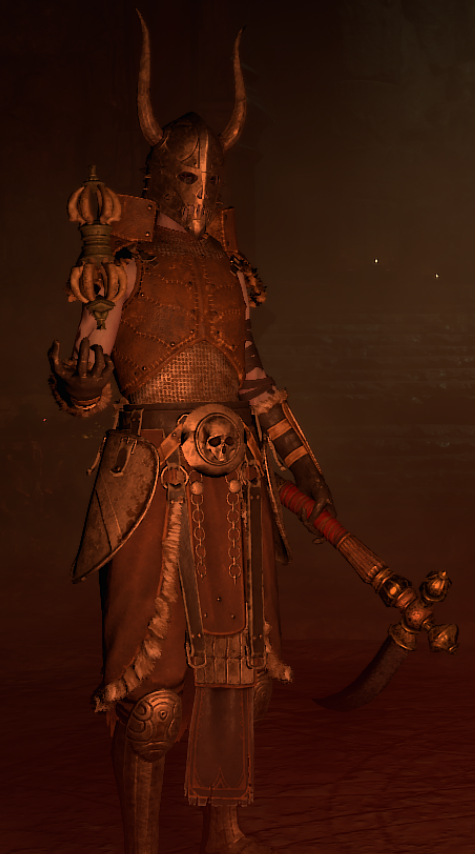
Chapter III: Monsters & Creatures Church of Bhaal Assassins and Murderers The Lord of Murder is patron to each assassin and common murderer throughout the Forgotten Realms, who in turn use the worship of Bhaal to justify their bloodshed. Bhaalists embrace murder as both a pastime and a religious duty, as they seek to resurrect their deity through bloody sacrifices and dark pacts. Bhaal Concept Cultists of Bhaal Concepts 132
Chapter III: Monsters & Creatures Slayer Slayer Concept The Metamorphosis The slayer is a visual embodiment of murder. It is an unnatural beast who attacks quickly and without warning, tearing the flesh from its victims with its many raptor-like claws. But look closer and you might sense something very familiar lurking beneath its skin. 133
Chapter III: Monsters & Creatures Beyond the Grave Reanimated through necromantic magic or a nefarious curse, the dead can be raised and transformed into mindless servants with the right incantation. Undead Skeleton Concepts 134
Chapter III: Monsters & Creatures Zombie Concepts Tadpoled Skeleton Concepts 135
Chapter III: Monsters & Creatures Ghouls A Gnawing Hunger It’s been said that ghouls were once humans who had fed on the flesh of their own kind. True or not, these hideous creatures are consumed by an undying hunger for the living. With the face of a peeled vampire bat, ghouls have razorsharp fangs, long ears, and slender claws. Some, like our homebrew species the Winged Horror, hunt by air – swooping down upon their target on torn, sinewy wings. Winged Horror Ghoul 136
Chapter III: Monsters & Creatures Living Statues Hidden among masonry and ruins is the gargoyle – a winged creature, as malevolent as it is grotesque – sitting as motionless as a statue, its skin rough and marbled. With the patience of stone, gargoyles can lie in wait for years, relishing the moment they finally strike by inflicting a slow and painful death upon their unsuspecting prey. Gargoyles 137
Chapter III: Monsters & Creatures Servants Flesh Golems A Tapestry of Skin Pulled from the rulebook’s pages, flesh golems are one of the heaviest monsters in the game. Weighing over 200kg, their body is a mass of over-engorged muscle that moves with the heavy shuffle of an angry gorilla. Earlier sketches leaned into this, presenting silhouettes based on silverbacks and hands drawn like large primate fists. But eventually we settled on a design that emphasises the grotesque. Now instead of primate fists, each forearm has been amputated and replaced with a fetid implant: a spiked mace and a pickaxe that is wielded like a steel claw. On the Re-Animation of Flesh Born from the unnatural magic of necromancy – a dark art that can turn corpses into mindless thralls – these undead servants are a macabre lot who exist simply to carry out the will of their creator. Their character design reflects this, each one taking the appearance of an unholy experiment that’s been stitched together by the hand of their master. Flesh Golem Concept Servant Variations 138
Chapter III: Monsters & Creatures Kuo-Toa Concepts Kuo-Toa The Depths of the Devout This tribal and amphibious race calls the Underdark its home. Kuo-toa live in highly devout communities and seek sacrificial offerings in the name of their gods. We’ve built on the foundation of their existing character art, recreating their piranha-like teeth, webbed digits, and hunched frame while pushing the designs of their tribal garb even further. Kuo-toa make their tools and armour from items found in bodies of water: puffer fish are fashioned into spiked helmets, staves are topped with crab claws, and heavy armour materials have been replaced by clam shells and barnacles. 139
Chapter III: Monsters & Creatures Mimics Spectators The Deadly Aberration You may come across one of these aberrations in the shadows of the Underdark, its single cyclops eye and satellite of eye stalks trained on your every movement as it prepares to strike. Given their anatomy, spectators can see in every direction at once, and are often used by underground factions as guards for this reason. The Shape of Deception Iconic D&D monsters, mimics are shapeshifters capable of transforming into inanimate objects. They often take the form of a chest, laying in wait for an unlucky soul out in search of treasure. But hidden beneath this façade is its nightmarish true form, complete with toothy maw, rubbery hide, and long, tongue-like tendril. Spectator Concepts Mimic Concepts 140
Chapter III: Monsters & Creatures Cloakers Displacer Beasts A Most Elusive Hunter Displacer beasts are predatory creatures of the feline persuasion. Panther-like yet alien in shape, they feature six legs and tentacles that sprout over one metre in height from their shoulders. Cloaked in Darkness Named for their cloak-like appearance, cloakers float like a stingray – their meaty, wing-like fins rippling constantly as they move through the air. These magical aberrations hunt straggling prey, using their barbed tail to strike like a whip. Cloaker Concepts Displacer Concepts 141
Chapter III: Monsters & Creatures Monstrosities of the Underdark Cursed for failing the trials of Lolth, driders are drow who have been transformed into a hideous spider form. But despite their large arachnid legs and sickly pallor, driders are not completely spider-like in their mannerisms. Driders retain full awareness of who they were before they were cursed, and still think and act similarly to their drow kin. They will appear brooding, scheming, and they will never miss an opportunity to show their disdain for the surface world or any lesser creature of the Underdark. Driders Drider Concepts 142
Chapter III: Monsters & Creatures Spinners of Nightmares A face only a mother could love. Ettercaps are grotesque aberrations found throughout Faerûn, with bellies swollen and distended like a spider’s abdomen. Their faces feature multiple eyes and a set of large piercing mandibles from which they can inject their prey with a paralytic venom. And they’re capable of taking down someone of, oh, just about your size. Ettercaps Ettercap Concepts 143
Chapter III: Monsters & Creatures Spiders Phase Spider Spider Queen Giant Spider Spider Giant Wolf Spiders 144
Chapter III: Monsters & Creatures Harpies Dragons Winged Beasts of Faerûn Dragons are described as ‘feline’ in D&D lore and this was a quality that we wanted to capture. Despite their hulking size, dragons in Baldur’s Gate 3 move gracefully and exhibit a poise in flight that is reminiscent of a cat’s agile movements. Fury from the Skies A harpy’s mannerisms are derived from the behaviour of birds of prey. Like a vulture, she studies her environment from afar, tilting her head with bird-like agitation as she reads the landscape, her shoulders hunching forward under the weight of powerful, wide wings. Harpy Concept Dragon Concept 145
Chapter III: Monsters & Creatures The Divine Shield Conjured by clerics with powerful divine magic, Guardians of Faith are formidable spectral defenders that protect their summoners from hostile foes in battle. Each Guardian’s divine symbol, which represents the cleric’s chosen deity, is displayed prominently on its shield. Guardians of Faith Guardians of Faith Concepts Divine Symbols 146
Chapter III: Monsters & Creatures Djinn Masters of the Air Hailing from the elemental planes, the djinn were once imprisoned in common objects as punishment by the gods of Faerûn. While some designs have emphasised their humanoid characteristics, we wanted to highlight their more otherworldly features – tracing their violet skin with delicate arcane linework beneath the swell of billowing smoke. Djinn Face Concepts Djinn Body Concepts Djinn Concepts 147
Chapter III: Monsters & Creatures Forces of Nature Earth elementals are immovable rock behemoths – mountainous quadrupeds who will only break their silent guard upon sensing the tremor of nearing footsteps. But their cousins, fire, water, and air, come from very different elemental stock. These elements are in constant motion, moving violently and suddenly as the building blocks of storms and infernos. Their elemental manifestations were designed with these characteristics in mind. In the heat of combat, the body of a fire elemental becomes volatile, leaping with the violent flames of a solar flare. Water and air elementals look comparatively calmer when idling, their bodies surrounded by tranquil tidal patterns or gently shifting clouds, respectively. But when angered, each is transformed into a living tempest. Elementals Earth Elemental Concepts Water, Air, & Fire Elemental Concepts 148
Chapter III: Monsters & Creatures Fury of the Elements Stripped of their free will, myrmidons are elementals sealed within a magical harness and compelled to obey the commands of their captor. What little remains of that natural force is visible just underneath these trappings: a wild storm of wind, roots, fire, and rolling, coiling water, each ready to burst from its makeshift prison. Myrmidons Air Myrmidon Concept Earth Myrmidon Concept 149
Chapter III: Monsters & Creatures Crabs (left) Clawed Companions Despite their small size, crabs are no pushovers. Along with their eight legs and pincers, their wide stance makes them a very grounded opponent. But should you have second thoughts about your choice of creature, remember: rejected crab familiars can also make for a very tasty meal when served with a twist of lemon! Frogs (right) Amphibious Allies From their sickly pale skin – the shade of a creature one might summon beneath the light of the moon – frog familiars secrete a poisonous mucus that they spread to enemies with one strike of their whip-like tongue. For this reason, we recommend you avoid licking them. Quasits (left) Binding the Infernal Large black eyes peer back at you nervously, inspired by the compound eyes of moths. This is the quasit, a pint-sized demon who sports a permanent expression of nervous regret. The skittish nature of quasits is inspired by the body language of capuchin monkeys and squirrels. Familiars 150