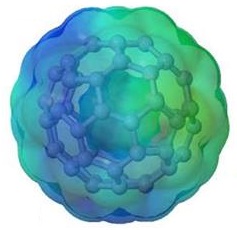
A NON-EQUILIBRIUM CHEMICAL AFFINITY-BASED HYDRATE GROWTH MODEL INGRID AZEVEDO DE OLIVEIRA YOUNG Professor / E-mail: [email protected] Gas hydrates are crystalline solids formed by water and light gases at low temperatures and high pressures. The formation of those in offshore production can lead to blockages; thermodynamic hydrate inhibitors (THI) can minimize that. Besides, the capacity of these structures to enclose gases made it a solidified natural gas technology helped by hydrate promoters. Because of that, the understanding of the growth phenomena with additives allows development in both areas. So, we develop a new hydrate growth kinetics model with a driving force that includes the thermodynamic factor. Temporal profile of methane hydrate growth for different ethanol concentrations. With this contribution, the influence of additives, such as those from thermodynamic inhibitors, on hydrate growth kinetics was observed. The calculation showed that ethanol, a thermodynamic inhibitor, has the capacity, up to a certain concentration, to act not only as a THI, changing the equilibrium condition but also as a kinetic inhibitor, delaying the beginning of the hydrate-particle growth. 1
APPLICATION OF MELT-STATE FOAMING TECHNIQUE USING SUPERCRITICAL CO2 FOR THE MANUFACTURING OF POLYGLOBALIDE SCAFFOLDS AS A 3D CELL CULTURE SUPPORT CAMILA GUINDANI Postdoctoral Researcher / E-mail: [email protected] One of the main applications of polymers in biomedicine is tissue engineering. A polymeric support (scaffold) serves as a structural template for the reconstruction of damaged tissue. Polyglobalide (PGl) is a biocompatible polymer that can be functionalized by thiol-ene reactions due to the double bonds. By applying supercritical CO2 (scCO2 ) melt-state foaming technique, we obtained PGl scaffolds with porosities around 76% and pore diameters ranging from 10 to 1000 m. The scaffolds were crosslinked and then functionalized with the peptide RGD. Thermal analysis, FTIR, and RAMAN evidenced the success of the reactions. (A) PGl scaffolds; (B) FTIR spectra; (C) Confocal and (D) Electron microscopy showing cell growth. RGD is an important domain for cell adhesion, due its connection with cell membrane receptors. Scanning electron microscopy revealed that placenta-derived mesechymal stromal cells were firmly attached to the scaffold surface when analyzed by optical and could be maintained for at least 15 days in culture. showing high proliferative capacity when analyzed by flow cytometry. 2
THERMODYNAMICS AND STRUCTURAL PROPERTIES OF FLUIDS USING PERTURBATIVE DENSITY FUNCTIONAL THEORY ELVIS DO AMARAL SOARES Postdoctoral Researcher / E-mail: [email protected] The classical Density Functional Theory (DFT) can simultaneously express the thermodynamic properties and microscopic structure of fluids. The recent formulations of the classical DFT are constructed from an excess Helmholtz free-energy functional written as the sum of a repulsive hard-core parcel and an attractive parcel. The repulsive contribution is well described by the fundamental measure theory. However, the attractive contribution can be described by a density expansion or a perturbation theory. A schematic ilustration of the Self-Consistent Perturbation Theory. Now, we present a selfconsistent thermodynamic perturbation theory for the excess Helmholtz free-energy from the DFT applied to hard-core fluids. This new perturbation theory is solved selfconsistently without solving the Ornstein–Zernike equation. When compared to the well-known second-order BarkerHenderson perturbation theory, our second-order self-consistent perturbation theory performs better for hard-core Yukawa fluids, square-well fluids, Lennard-Jones fluids, and other simple fluids. 3
DENSITY FUNCTIONAL THEORY OF ELECTROLYTE SOLUTIONS ELVIS DO AMARAL SOARES Postdoctoral Researcher / E-mail: [email protected] The classical Density functional theory (DFT) has been a useful tool to describe the microscopic structure of electrolyte solutions because it includes ion-ion correlations and volume exclusion effects. The modified fundamental measure theory describes the hard-spheres volume exclusion effect. However, the electrostatic correlations can be described by different flavors of excess free-energy functionals as the bulkfluid (BFD) or the functionalized mean spherical approximation (fMSA). Profiles of ionic densities, electrostatic potential and electrostatic correlation of a 2:2 electrolyte. The BFD functional expands the electrostatic free energy around the bulk density value using a secondorder functional Taylor expansion, making use of the first- and second-order direct correlation functions MSA theory. The fMSA consists to average the density profiles over spherical shells of charge capacitance radius and using them in the MSA formula for the free-energy density. Our interest is to use these DFT flavors to describe systems with large diameters and/or charge asymmetries among the ionic species. 4
CHROMATOGRAPHIC SEPARATION OF PRAZIQUANTEL RACEMATE USING SIMULATED MOVING BED: UNIT DESIGN, UPGRADE AND DYNAMIC STUDIES WITH ONLINE MEASUREMENTS FELIPE COELHO CUNHA Postdoctoral Researcher / E-mail: [email protected] Many active ingredients in medicines are chiral molecules. Praziquantel (PZQ) racemate has been used to fight against schistosomiasis. ATOMS has a laboratory equipped with a built-in-house Simulated Moving Bed (SMB) unit that has superior performance compared to literature concerning to PZQ separation. Five of the eight performance parameters were superior, and its dynamics were ten times faster than those in the literature. Schematic representation of an SMB with six chromatography columns. Experimental open loop studies were performed thanks to a chiral detector equipment coupled to the SMB outlet streams. Nowadays, the SMB unit has been upgraded to operate in the ModiCon mode, what can increase even more the unit’s performance parameters, as computational studies made by our group showed. Besides that, extra solenoid valves are about to be installed to permit the chiral detector to be used in both outlet stream (i.e., extract and raffinate) alternately. 5
THEORETICAL AND EXPERIMENTAL STUDIES FOR NATURAL GAS DEHYDRATION USING THERMAL SWING ADSORPTION PROCESS. FELIPE COELHO CUNHA, DAVID DOS SANTOS PEREIRA Postdoctoral Researcher, Technical Researcher and Undergraduate Student / E-mail: [email protected] Thermal swing adsorption (TSA) processes are gaining much interest for the dehydration of natural gas because these processes have higher performance. The ATOMS Lab recently built an infrastructure for different adsorption studies, including natural gas dehydration. The TSA coupled monitoring system has a robust analytical structure involving equipment such as: Tunable Diode Laser Absorption Spectroscopy (TDLAS); Quartz Crystal Microbalance (QCM) for moisture quantification and a gas chromatograph for gas composition. MSB and TSA This pilot unit, together with equipment for characterizing porous materials, allows the laboratory to (1) carry out studies to characterize the physicochemical properties of adsorbents; (2) standardize and calibrate wet streams with high CO2 content; select, qualify and study novel adsorbent materials; and study and design efficient and optimal temperature swing adsorption processes. 6
EXPERIMENTAL DETERMINATION OF THERMAL DIFFUSION COEFFICIENTS IN MIXTURES GISELE WESTPHALEN, EDUARDO FRAGOSO CRESPO Postdoctoral Researcher, Undergraduate Student / E-mail: [email protected] In petroleum reservoirs, geothermal gradients induce compositional gradients that alter the reservoir behavior expected by gravitational segregation. This phenomenon occurs due to the thermodiffusion, or Soret effect, whose modeling is based on non-equilibrium thermodynamics. Our objective is to obtain reliable experimental data on thermal diffusion coefficients in hydrocarbon mixtures by optical beam deflection technique. Obtaining these thermal coefficients is essential for predicting, explaining, and controlling oil production. Additionally, it is useful for predicting how the geothermal gradient affects the composition distribution in reservoirs flooded with carbon dioxide, either for its storage or reservoir future exploration purposes. Experimental unit for the study of diffusion coefficients. 7
THERMODYNAMIC MODELING COMPRESSIBLE CLATHRATES IURI SOTER VIANA SEGTOVICH Postdoctoral Researcher / E-mail: [email protected] Hydrates are solid mixtures of water and nonpolar species that may form at low temperatures or high pressures. They are not only of interest to the oil/gas industry due to flow assurance issues but also for processes of gas purification, desalination, natural gas storage, and methane production associated with carbon capture. In many cases, the accuracy of the standard van der Waals and Platteeuw model is not satisfactory due to compressibility and distortion of cages. Furthermore, the deformation of porous matrix by adsorption is an important phenomenon in other materials such as metal-organic frameworks and biopolymers. In this research project, we are developing a thermodynamic model for compressible clathrates, which can represent the matrix swelling phenomena induced by the guests. The model presented here belongs to a broader class of models that describe the pressure and volume interplay in a given matrix due to adsorption. Schematic representation of the pressure shift model 8
EFFECT OF AL/NA+ CONTENT ON THE WATER/CO2 ADSORPTION IN CHABAZITE JÉSSICA CAROLINE DA SILVA LINHARES MACIEL Postdoctoral Researcher / E-mail: [email protected] Natural gas is an alternative to reduce environmental issues and petroleum requirements. It is known that natural gas has a certain concentration of impurities that are needed to be removed. Among these impurities, we focus on CO2 and water adsorption. Together, they can form corrosive acids and hydrate. Pure silica chabazite structure. In this work, we performed Monte Carlo simulations in the grand canonical ensemble to investigate the competitive adsorption between CO2 and water in chabazite, varying its Al/Na+ content. The simulations were performed using the RASPA software. We simulated pure CO2 and water isotherms and CO2/water mixtures at different mole fractions at 298 K in structures with varying Si/Al ratios. From the obtained isotherms, we analyzed the performance of the materials. Similar projects are carried out with other adsorbents. 9
NATURAL GAS ADSORPTION ON FUNCTIONALIZED PAF-1 JÉSSICA CAROLINE DA SILVA LINHARES MACIEL Postdoctoral Researcher / E-mail: [email protected] Natural gas is composed mainly of methane and contaminants, such as water, light paraffin, carbon dioxide, nitrogen, and sulfur compounds in varying amounts from one well to another. These contaminants must be removed as they reduce the heat capacity and may compromise equipment and pipelines. Many adsorbents have been investigated for these separations. The porous amorphous frameworks (PAFs) emerge as a recent material with an excellent adsorbent potential. Schematic representation of the selected gases adsorption in PAF-1. These materials drew attention due to their strong stability, high surface area, low density, and tunable framework. Thereby, this work investigates PAF-1 and derived structures for the adsorption of selected natural gas impurities by Monte Carlo molecular simulations performed in the Grand Canonical Monte Carlo. We computed adsorption isotherms of pure CO2 , CH4 , N2 , and water, as well as their binary and ternary mixtures. Besides, we investigate the adsorption on functionalized PAF-1 structures with the addition of different functional groups. 10
A DEEP NEURAL NETWORK AS A TOOL TO DESCRIBE ADSORPTION COLUMNS FOR PROTEIN SEPARATION USING A MULTISCALE APPROACH MARLON DE SOUZA GAMA Postdoctoral Researcher / E-mail: [email protected] The modified Poisson-Boltzmann Equation (PBEm) is a valuable tool for determining affinity between protein-adsorbent interactions. The electrostatic potential generated by PBEm, considering the protein and adsorbent’s surface charge, allows the calculation of adsorption parameters. In a case study, we predict the binding affinity of different monoclonal antibodies, showing excellent agreement with experimental data. Accurate descriptions of adsorption isotherms models are useful in separation processes, such as fixed bed columns. However, it is challenging to simultaneously model the column dynamics with a robust isotherm model from the PBEm solution. Methodology applied to link a model at the process level and another at statistical mechanics level. In this project, we also develop a Deep Neural Network (DNN) as a substitute model for PBEm, as a function of solution properties: pH, ionic strength, ion type, and temperature. We simulate a multicomponent scenario with 6 mAbs variants, demonstrating how ionic strength and salt type choice can impact the elution of each mAb. 11
PVT ANALYSIS SIMULATOR USING EQUATIONS OF STATE FOR ASSOCIATIVE FLUIDS OMAR ALBERTO ROLDAN GARCIA, IURI SOTER VIANA SEGTOVICH Postdoctoral Researcher / E-mail: [email protected] In CO2 -rich reservoir fluids, predicting asphaltene precipitation is challenging, and it can result in pipeline blockages and significant economic impacts. The PVT-ATOMS simulator uses the Cubic Plus Association (CPA) equation of state to predict asphaltene precipitation and PVT properties of reservoir fluids accurately. The simulator is used in oil characterization, estimating CPA parameters for pseudo components like asphaltenes and resins through stochastic and deterministic optimization methods. We’re fully rewriting the simulator’s algorithms in C++ to enhance its performance and modularity. CPA EOS fit for PVT data and liquid-liquid upper/lower onset asphaltene pressure data. The new PVTATOMS employs automatic differentiation. This minimizes manual coding for most derivatives, optimizing the development process. Only the residual Helmholtz energy function needs to be manually coded. With these improvements, our simulator can offer precise and high-performance calculations for PVT data and viscosity for an extensive range of temperatures and pressures. 12
UNCERTAINTY ASSESSMENT ON ADSORPTION ISOTHERMS: APPLICATIONS FOR FOOD AND PHARMA-GRADE MICROMOLECULES RAFAEL CAVALCANTE DOS SANTOS Postdoctoral Researcher / E-mail: [email protected] The design, simulation, optimization, performance, and even economic evaluation of chemical processes need adequate model selection and experimental information. Uncertainties on models and experimental data affect the process design or any decision-making process requiring accurate estimation of relevant properties and adequate quantification of inherent uncertainties. This study intends to model the adsorption of fine chemicals (organic acids-OAc and Praziquantel-PZQ) and evaluat the uncertainties propagation by means of Fisherian and Bayesian approaches. Uncertainty modelling for adsorption isotherms. The previously mentioned chemicals exhibit Langmuirian-like adsorption behaviour in cellulose-based chiral adsorbent (PZQ) and octadecylsilane solid phase (OAc). The bayesian approach allowed for conservative inference over the adsorption parameters and even on experimental variances. The results are valuable for the design and optimization of continuous chromatographic operations as the simulated moving bed. 13
EXERGY ANALYSIS OF THE CARBON CAPTURE PROCESS VÍTOR DE MORAIS SERMOUD Postdoctoral Researcher / E-mail: [email protected] Carbon capture and storage (CCS) is widely recognized for its key role in mitigating climate change, offering solutions for low-carbon heat and power production, industrial decarbonization, and the potential for net removal of CO2 from the atmosphere. To develop and optimize a sustainable process, we can investigate the distribution of exergy loss throughout the process, allowing to identify where and how to allocate engineering effort and resources. The exergy loss occurs due to the entropy generation of a process operating in a non-reversible way. We apply these concepts to a CO2 capture with MEA absorption. CO2 capture process by absorption with MEA, and the respective Grassmann diagram. Figure shows the simplified process and the Grasmann diagram, indicating the overall exergy balance. Here, the methodology evaluates the physical and chemical exergy of the streams in engineering software and calculates the units’ irreversibility and efficiency while minimizing exergetic losses, which minimizes the waste of material inputs and useful energy streams. 14
HYDRATE AGGLOMERATION FROM HIGH SALINITY BRINES ADRIANA TEIXEIRA Ph.D. Researcher / E-mail: [email protected] Gas hydrates are inclusion compounds formed when water and specific molecules are exposed to high pressures and low temperatures. In the petroleum industry they represent a problem as they can block the flow of fluids. Chemicals like alcohols and salts may change the hydrate formation equilibrium conditions to lower temperatures and/or higher pressures. Relative viscosity versus hydrate volume fraction for several salt concentrations. And some information from literature indicate that these substances may have influence on the agglomeration process of the hydrate blockage. The aim of this study is the evaluation of the effect of NaCl on gas hydrate formation and agglomeration process. The initial results showed that, at same P and T conditions, the hydrate slurry formed from emulsions that have higher salt concentrations in the water has lower viscosities at same hydrate volume fraction. 15
WETTABILITY EVALUATION VIA GONIOMETRY AND POISSON-BOLTZMANN EQUATION-BASED MODEL AMANDA VILELA FONSECA Ph.D. Researcher / E-mail: [email protected] Wetting phenomena arise from intermolecular interactions present in solid-fluid-fluid systems. In the enhanced oil recovery field, wettability change is acknowledged as one of the mechanisms by which oil production can be optimized. Contact angle (CA), a parameter often used to represent wettability, can be altered in different ways, such as smart waterflooding. Effect of salinity on the quartz/brine/decane contact angle. Non-electrostatic potentials and polarization effects greatly influence rock-brineoil systems, which increases complexity in smart water engineering. Combining thermodynamic modeling and Goniometry, it is possible to investigate forces acting in reservoirs to engineer fluids with specific ionic compositions and evaluate model consistency. In this work, a disjoining pressure method based on the Poisson-Boltzmann Equation (PBE) accurately represented the CA for an extensive range of salinities. This combined PBE and Goniometry experimental method also revealed the substantial impact of van der Waals and solvation forces within the brine film. 16
HIGH PRESSURE PHASE EQUILIBRIA AND BAROTROPIC INVERSION IN CO2 AND HYDROCARBONS SYSTEM: EXPERIMENTAL STUDY ARTHUR JESSE OLIVEIRA BRAGA Ph.D. Researcher / E-mail: [email protected] This study presents phase transitions and barotropic inversion at high pressure for systems containing carbon dioxide and hydrocarbons obtained by a new design of an equilibrium cell designed and commissioned by the ATOMS group at the Federal University of Rio de Janeiro. For the CO2 + n-hexadecane system, experimental data of phase transition and barotropic inversion were obtained, with temperatures ranging between 280.75 to 363.25 K and pressure up and 388.2 bar. P-T diagram and images of the phases transitions for the CO2 + n-hexadecane system. The experimental data include liquidliquid (LL), liquidliquidvapor (LLV), solid-liquid (SL), solidliquidliquid (SLL) equilibria. Figure 1 shows the phase transition pressure for the fixed temperature and CO2 mole fraction. At these compositions, transitions observed are liquid to liquid-liquid (L → LL), liquid-liquid to liquidliquid-vapor (LL → LLV), liquid to solid-liquid (L → SL), liquid-liquid to solid-liquid-liquid (LL → SLL), besides liquidCO2 -liquidC16 to liquidC16-liquidCO2 barotropic inversion. 17
SURFACTANTS AT WATER/OIL INTERFACES THROUGH COARSE-GRAINED MOLECULAR DYNAMICS SIMULATIONS ARTHUR MUSSI LUZ Ph.D. Researcher / E-mail: [email protected] Interfacial systems play a key role in several chemical-related processes, especially for petroleum recovery from deposits. Low interfacial tensions contribute to emulsion formation, which enables a higher efficiency in the recovery process. Surfactants are major components to enable the "mixing" of water and oil, acting as stabilizers for the droplets formed in the continuous phase. Their behavior is essential to develop more efficient techniques and formulations for both emulsion formation and breaking. Free energy calculation of relative solubility for surfactants. Here, a molecular scale model is used to provide insight into key properties such as interfacial tension, molecular orientation, micelle, and emulsion formations. This is done through coarsegrained molecular simulations using the MARTINI force field, which allows for the study of more complex surfactants and for access to higher time and length scales. Several surfactants of different types are evaluated, along with the impact of their molecular structure on interfacial properties. 18
EVALUATION OF PHASE BEHAVIOR FOR ENZYMATIC TRANSESTERIFICATION, AND ESTERIFICATION, OF VEGETABLE OILS USING CO2 AND PROPANE BRUNO MIRANDA NOGUEIRA Ph.D. Researcher / E-mail: [email protected] Enzymatic transesterification is the most suitable route for raw materials with a high acidity content (used oils). When triglycerides are presents, a two-step process (hydrolysis followed by esterification) is carried out, using the Eversa Transform 2.0, a free enzyme, commercialized from Novozymes. The major obstacle in this process is the total time spent (more than 10h), for the total process (reaction and separation). Hydrolysis and esterification with free enzyme (Eversa Transform 2.0). In order to optimize this process, this work aims to investigate the use of pressurized such CO2 and propane as cosolvent for the process intensification. Then, the results will be modeled using PC-SAFT Equation State. New experimental planning will be carried out, fixing the composition of CO2 and/or Propane and changing the reaction conditions. The project intends to provide a kinetic model consistent with different phase conditions. 19
EXPERIMENTAL STUDY AND MODELING OF PHASE SEPARATION IN THE FORMATION OF SOLIDS IN SOLUTIONS CAIO RODRIGUES SOARES Ph.D. Researcher / E-mail: [email protected] The nucleation of crystals in liquids has numerous practical consequences in science and technology, present in the chemical, pharmaceutical, and food industries, making nucleation a decisive factor in the size distribution and crystal structure of the solids in the solution. Despite observing the early stages of the crystallization process, understanding the mechanisms that govern the nucleation process is still far from complete. The study’s objective is to integrate an experimental system that reproduces the first steps in the phase separation process in forming solids in electrolytic solutions formulating a mathematical model that describes this process. Where mi and ai are the mass and the acceleration of the particle i. ⃗F R i is the random Langevin force, ⃗F D i is the viscous drag force acting on i and ⃗Fij is the interaction force between i and the particles j, deriving from DLVO potential. 20
DETERMINATION OF THE ELECTRICAL CONDUCTIVITY OF OILS AND EMULSIONS, AIMING THE APPLICATION IN INDUSTRIAL ELECTROCOALESCER OPERATIONS AND PROJECTS CAMILA FREITAS SANTANA GONÇALVES Ph.D. Researcher / E-mail: [email protected] In the oil sector, a large part of the oil produced is recovered in emulsified form. The stability of these emulsions makes them an obstacle to the industry. Therefore, the separation of water and oil is essential. Electrocoalescence is an attractive method to perform this separation for economic and environmental reasons. Thus, the oil conductivity measurement has direct applicability. Phase transitions in dispersed systems such as emulsions and colloids (Anderson VJ, Lekkerkerker HN. Nature. 2002; 416(6883): 811-5). This research explores how conductivity evolves when oils and oil-water emulsions are subjected to various temperature, pressure, and composition levels to develop a model that describes and correlates these data. For this, the electrical conductivity will be linked with other physicochemical properties, verifying the relationship between impedance spectroscopy, rheology, and electrocoalescence of oils. The data obtained should be used to improve the prediction of emulsion stability, including in the presence of an electric field. This model is intended to test the feasibility of industrial electrocoalescence projects. 21
EXPERIMENTAL DATA AND THERMODYNAMIC MODELLING OF SYSTEMS WITH CO2 + CH4 + HEXADECANE AT HIGH PRESSURES CLIFF IURI DE SOUZA GONÇALVES Ph.D. Researcher / E-mail: [email protected] Fossil fuels (oil, gas, and coal) correspond to approximately 80% of worldwide consumption, with oil being the primary energy source. Due to its importance, the issues related to flow assurance in the oil industry have been addressed more frequently to avoid, for instance, wax and asphaltene precipitation. Therefore, this research aims to provide experimental data of phase equilibria and physical properties (viscosity and density) for n-alkanes mixed with high gas content (CO2 and CH4 ). Second, the focus relies on accurately describing these experimental data. Experimental data and Helmholtz Scaling for viscosity of several hydrocarbons . The PCP-SAFT Equation of State (EoS) is applied to calculate phase transitions and densities at different conditions. For viscosity, both Entropy and Helmholtz Scaling correlations are used to foresee viscosity at different conditions, including high pressure and several compositions. The modeling part is essential to predict other conditions not covered by experimental data since the literature lacks information. 22