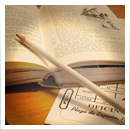
C. Imagine you are visiting a library. You have to follow various
rules there. Can you think of some rules at a library? Talk to
your friends.
Reading I
a. Have you ever been to a zoo?
b. What can you do there?
Rules and Safety Guidelines at Central Zoo
Please abide by the rules and safety guidelines.
• Visitors must stay in line at the ticket counter.
• Visitors are obliged to show the ticket to the zoo officials when
asked.
• Visitors must not make loud noise. It disturbs the animals and other
visitors.
• Plastic or plastic products are not allowed in the zoo premises.
• Pets like cats or dogs should not be brought inside.
• Alcohol and smoking are not allowed in the zoo premises. If
anyone is found doing so will be punished.
• No one is allowed to tease, poke or feed animals.
• Plucking of buds, flowers and tearing the leaves are punishable.
English Grade 6 95
• The litter should be kept in the bins.
• Selling of goods of any types by the visitors in the zoo premises is
prohibited.
Zoo is a public place. It is our duty as well as responsibility to keep it
clean and safe. Thank you.
Central Zoo
Jawalakhel, Lalitpur
Nepal
A. Find the words from the text as indicated in brackets.
a. sound (synonym) b. rewardable (antonym)
c. dirt (synonym) d. allowed (antonym)
B. Write True or False against the following statements.
a. Zoo officials can check tickets.
b. The visitors can bring polythene bags in the zoo.
c. People can take pets to the zoo.
d. Smoking is allowed in the zoo.
e. Visitors must keep the dirt in the bins.
f. People can do business in the zoo.
C. Take help from your teacher or collect the information from
other sources about the Central Zoo. Then, write a paragraph
about it.
D. Which rules of the zoo do you like most? Why? Explain with
reasons.
96 English Grade 6
Speaking
A. Read and act out the conversation in pair.
Wow! So Yes, I think there
many books! are hundreds of
Look! It’s the books.
silent zone. You
should keep quiet. I see. We are
allowed to read,
Let’s be silent and but not allowed
read the books.
to talk.
B. Work in pairs. Talk to each other in the following situations
using the structures given below.
a. In a garden b. In a park
c. In a school hostel d. In a zoo
e. In a museum f. In a library
Structures:
You should You shouldn’t
You are allowed to You aren’t allowed to
You can You can’t
English Grade 6 97
Listening
A. Look at the picture and answer the questions.
a. What is the boy doing?
b. Have you ever done this?
c. Does it help to reduce pollution?
B. Listen to the recording and tick the correct answer.
a. Who is going to learn cycling?
i. Rehan ii. Sonam iii. Rehan’s guardian
b. What day of September does the class start?
i. 15th ii. 16th iii. 17th
c. What time is the class starting?
i. 7:00 am ii. 6:55 am iii. 7:30 am
C. Listen to the recording again and write answers.
a. When did Rehan do cycling before?
b. Who should sign in the form?
D. What do you do when you like to learn something?
Grammar
A. Look at the pictures and read these sentences.
Let’s run. We should help him
immediately.
98 English Grade 6
Dear students, you have to be
disciplined at all times. Is it okay?
You are not allowed to go out of
school compound without permission.
B. Make as many sentences as possible from the table.
throw the waste materials in the dustbin.
We make noise in the class.
You should
They
play carefully in the ground.
shouldn’t
do all classwork in time.
have to
fight each other.
are allowed to
clean the classroom daily.
aren’t allowed to
eat balance diet.
must
write on the wall.
mustn’t
go to washroom with teacher’s permission.
play in the classroom.
C. Choose the correct form, have to, don’t have to, mustn’t, to
complete the sentences below.
a. You apologise; it isn’t necessary.
b. You tell the boss what happened, or he’ll fire you.
c. I leave early because I am not feeling well.
d. I wear a tie; I do it because I like wearing ties.
English Grade 6 99
e. You smoke in here; smoking is not allowed.
f. I don’t like these clothes, but I wear them at work.
g. I late. It’s the most important meeting of the year.
h. You go now; you can stay a bit longer.
i. Visitors to the zoo feed the animals.
j. You drive so fast; we have a lot of time.
k. We more; there’s enough food.
l. You salt in her food; the doctor said she can’t eat salt.
D. Look at the following sentences and see how ‘and’, ‘but’ and
‘because’ are used.
I bought a book yesterday. I bought a pen yesterday.
I bought a book and a pen yesterday.
He is tall. She is short.
He is tall but she is short.
I didn’t come to school yesterday. I was ill.
I didn’t come to school yesterday because I was ill.
E. Choose the correct word from the brackets to complete the
sentences.
a. She was absent yesterday she was not feeling well.
(and/because/but)
b. She went to the coffee shop had a black coffee.
(and/because/but)
c. He was poor generous. (and/because/but)
d. Many of us were out of classroom it was tiffin time.
(and/because/but)
100 English Grade 6
e. The teacher came into the classroom started
teaching. (and/because/but)
Reading II
a. What are these children doing?
b. Should we follow some rules at public places? Why?
Rules at Museum
Amit : Hi Eshika, let’s visit
the museum this
Saturday if you are
free.
Eshika : Wow! good idea. But
does the museum open
on Saturdays?
Amit : Yes, it opens on holidays and remains closed on Tuesday
instead.
Eshika : Then, I am ready to go. I am excited to take photos with the
antiques on my hand.
Amit : No, no. You are not allowed to touch any items in the
museum. You should keep distance and just observe them.
Eshika : Oh! So sad. Why is that?
Amit : Those antique items are really rare ones. If we touch them,
they may be ruined.
Eshika : Oh, I see. In order to save those items from being ruined,
we must keep distance from them, right?
Amit : Yes! We have to follow certain rules while visiting there.
Eshika : Could you please tell me what we should do and what we
English Grade 6 101
Amit should not do there?
: Sure. We have to maintain silence while visiting. Similarly,
we can take photos of some items that are allowed to. We
should not eat anything there.
Eshika : Thank you so much, Amit.
Amit : Ok. Then, be ready to go on coming Saturday.
Eshika : Sure.
A. Look at the clues given below and solve the puzzle.
1.R 2. A
3.H 4.D
5.A
6.M
7.R
8.M
Across Down
1. Not common 2. Give permission
3. No office day 4. Length of space between two points
6. To keep in good condition 5. Very old
8. The place where historic items are kept 7. Destroy
102 English Grade 6
B. Answer the following questions.
a. When are Eshika and Amit going to visit the museum?
b. How can you say that the zoo remains open for six days a
week?
c. Why does Amit tell Eshika the rules?
C. Read the conversation once again and complete the table
below.
Things allowed to do Things not allowed to do
Writing
Write a set of classroom rules and regulations with the help of your
teacher.
Project work
Work in groups. Prepare a list of rules and regulations to be followed
at school on a chart paper.
Extra bit: have to/must/should
A. We use have to/must/should + infinitive to talk about obligation,
things that are necessary to do or to give advice about things
that are a good idea to do.
Examples:
I must go now.
I have to finish my homework by today evening.
You should go to a doctor.
B. Study the examples and learn their meanings.
I must remember to buy a gift for my son. (my opinion)
English Grade 6 103
You have to look after your wounds regularly. (doctors says so)
Do you have to wear a tie for school? (asking about school rules)
You mustn’t forget to bring your book. (don’t forget - you have no
choice)
If you don’t like him, you don’t have to see him again. (there is no
obligation to see him again, but you have a choice)
In a non-smoking area you mustn’t smoke, but in a smoking area
you don’t have to smoke but you can if you want to.
C. Have changes in the third person singular (he/she/it has); but
must doesn’t change.
Examples:
She has to help her children.
She must fasten her seat-belt.
D. Study these pairs of sentences.
You can smoke here. You are allowed to smoke here.
You mustn’t speak loudly. You are not allowed to speak loudly.
E. Put the words in the correct order to make sentences.
a. anyone You ! tell mustn’t
b. have early there to be we .
c. Dad must to . I call remember
d. You . don’t have pay to
e. fruit this You try salad should !
f. class You . late mustn’t for be
104 English Grade 6
Unit
11
Getting started
A. Look at the pictures and discuss the answers to these questions
in groups.
a. Who/what are they?
b. What benefits do we get from them?
B. Listen and sing. 105
I saw the people gathered in a crowd.
“My job is better” shouting all aloud.
Some wore apron, some carried auto lens.
Some showed devices, controlling distance.
I saw the lawn with people and steps around.
Only few were at center with a cheering sound.
A huge display was blinking time and again.
Either to show the point or the result then.
English Grade 6
C. What electronic gadget do you like most? What features of the
gadget attract you? Tell your friends.
Reading I
a. What is the girl doing in the first picture?
b. Have you ever used a mobile phone?
Mobile Phones: Uses and Abuses
Most of us nowadays carry the world in our
pocket! It is amazing but true. A mobile phone
can make us connected to the rest of the world
within a second. Today, mothers do not have
to remain in tension if their sons or daughters
are late. Businessmen do not have to queue up
before a telephone booth to make an important
call. Apart from making calls and sending SMS,
the mobile phone is used as a multipurpose gadget. It is a calculator,
timepiece, calendar, voice recorder, media player, camera, gaming
device, net browser and what not. Though the mobile phone is a giant step
of technological advancement, its abuses cannot at all be overlooked.
Talking or texting while driving may lead to accidents. Students misuse
this tool in various ways and give way to social pollution. The invention
of mobiles phones is a great achievement and plays an important part
in our daily life. Its many aspects are beneficial but some are negative
effects as well.
Its development brought convenience and advantages to the world.
Communication between people has become quite easy and very fast.
We can keep in contact with others from any place on the bus, in a
street or in a meeting by sending a message for less than the price of a
call. The Internet can be accessed through it and it is also used to click
106 English Grade 6
photos and shoot videos.
At the same time, parents can control their children and it is essential
during emergencies. Business deals can be done on a single call through
cell phone outside the office, in a park or in any shopping center. This
invention gets the world closer to a single point. The Internet is also
available on the cell phone.
The radiations of mobile phones may be dangerous to health and may
cause a headache, earache and blurring vision. These invisible radiations
destroy the cells located in ear and head which can cause damage to the
brain and nephrons in the head region. Its use in certain places causes
disturbance sometimes, such as in a classroom etc. Mobile phones with
camera are causing —privacy problems such as using it as a hidden
camera to take pictures and making videos.
A. Find words from the passage which mean the same as.
a. having many uses
b. very big
c. very important
d. that cannot be seen
B. Complete the following sentences appropriately.
a. A mobile phone is like a world in our pockets as
b. The mobile phone can be used for many different purposes so
it’s a equipment.
c. Using mobile phones during driving can cause
d. The price of a call is more expensive than sending a
e. The invention of mobile phones has brought us
to a single point.
English Grade 6 107
C. Complete the following table.
Benefits of mobile phones Negative effects of mobile phones
Speaking
A. Act out the following conversations.
Purnima : Look! Who are they?
Surya : They are small children.
They are dancing.
Purnima : Yes, you are right.
Sujan : Who are they?
Sony : They are farmers.
Sujan : Yes, They are digging in the
field.
B. Present continuous or present simple?
I get up every morning at 7:00. (NOT I am getting up every
morning at 7:00.)
She is reading a book now. (NOT She reads a book now.)
They aren’t reading a book now. (NOT They don’t read a book
now.)
108 English Grade 6
Now, use present simple or present continuous to complete the
sentences. Work in pairs and take turns to ask and answer.
a. (you/come) tonight?
b. (he/eat) rice every day?
c. I (work) at the moment.
d. (he/come) to Kathmandu often?
e. He (play) tennis now.
f. They (not/come) to the party tomorrow.
g. He (not/play) golf now.
h. They (go) to a restaurant every Saturday.
C. Work in pairs. Take turns to ask and answer questions about
the pictures.
English Grade 6 109
D. Look out of the classroom. See what is happening. Say at least
five things to your friends.
Listening
A. Answer these questions.
a. Who do you think these people
are?
b. Can you name any famous person
from Nepal?
c. Why is he/she famous?
B. Listen to the recording and match the dates with the events.
a. 427 BC i. Closing of Academy
b. 385 BC ii. Plato’s birth
c. 347 BC iii. Establishment of Academy
d. 529 CE iv. Plato’s death
C. Listen to the recording again and complete the sentences.
a. Plato was once sold as a .
b. Plato opened a in Athens.
c. The academy was the place of .
d. Before the death, Plato passed the responsibility of the
Academy to his sister’s .
D. Do you know a famous person in your locality? Talk about his/
her life and contributions.
110 English Grade 6
Grammar
A. Look at the sentences below and study the use of ‘is, am, are’
and ‘-ing’.
a. He is dancing.
b. They are playing basketball.
c. I am singing now.
B. Rewrite the sentences. Use is, am or are and -ing.
a. She is busy. She (talk) on the phone.
b. I (work) on a computer now.
c. The man (play) the Madal and the girls are dancing.
d. They (run) fast to win the race.
e. The boy (stand) in a queue for an hour to pay the bill.
f. All the students (do) their classwork.
g. The green light is on now. Many people (cross) the road.
h. The man seems strong. He (carry) a heavy load.
i. My daughter is busy now. She (draw) a picture.
C. Look at the pictures and read the sentences.
I am eating I am eating I have a
an apple. a mango. mobile phone.
English Grade 6 111
The sun rises in the east. Manish is the tallest
student of our class.
D. Complete the sentences with a, an or the.
a. I have got cap. It’s beautiful.
b. My little sister eats banana everyday.
c. Would you give me orange please?
d. Mt. Everest is highest mountain in the world.
e. Prime Minister is addressing the nation today.
f. There is tall tree near my house.
g. I need bottle of water.
h. Karnali River is in Nepal.
i. How far is sun from the earth?
j. Look! There is cat on top of your house.
k. I saw accident on the way to my school yesterday.
l. I drank only cup of tea this morning.
112 English Grade 6
Reading II
a. What facts do you know about mobile phones?
b. Do you know what the fear of being without a phone is called?
The first “smartphone” Mobile phone The first camera phone
was called SIMON. It throwing is an was released in Japan
supported the calendar official sport in 2000.
app, address book, in Finland.
world clock, calculator,
notepad, e-mail, fax and Modern smartphones are
games. It came with a more powerful than the
touchscreen keyboard equipment used in the
and cost around $1000. Apollo 11 moon landing
and they are nowadays
The average person used as cheap satellites.
unlocks their The first commercial
phone weighed around 2.5
smartphone at least pounds; the average weight
of smartphones today is
110 times every day. around 250 gram.
The first phone call People can suffer from
was made in April, “ringxiety” when they hear
1973, while the (or feel) their mobile phone
first text message ringing when it’s not.
was sent out in
December, 1992.
The fear of being Scientists have One ton of mobile phone
without a mobile developed a way waste contains 60 times
phone or losing to charge mobile more gold than one ton of
signal is called phones using gold ore.
“nomophobia.” urine.
English Grade 6 113
A. Complete the sentences with correct words from the box.
official keyboard signal powerful suffer
a. Public opinion is a force.
b. Her cell phone had no so she couldn’t call you
yesterday.
c. Farmers when they do not have reliable markets for
their goods.
d. My is not working. I can’t type on the computer.
e. The Nepali prime minister’s residence lies in
Baluwatar, Kathmandu.
B. Answer the following questions.
f. What was the price of the first smartphone ‘SIMON’?
g. When was the first phone call made?
h. Which are lighter: smartphones or old phones?
i. What interesting technology have the scientists developed to
charge mobile phones?
j. Where do most adults keep their smartphones?
k. How many people own mobile phones?
C. Work in two groups. Make questions based on the above
infographics and organize a quiz.
114 English Grade 6
Writing
A. Rewrite the given paragraph correcting the errors.
in 1862 he built a small factory to manufacture Nitroglycerin in 1863 he
invented a practical detonator later he invented an improved detonator
called blasting cap in 1865 he became very famous for this invention
similarly in the year 1870-80 alfred built a network of factories
throughout europe to manufacture dynamite called blasting gelatin
which he patented
B. Look at the picture and write what is happening there.
Example: People are walking around the park.
C. Write a short description of your mobile phone/radio/television.
Project work
Draw a picture of your village/town. Describe it to your friends.
English Grade 6 115
Extra bit: Word class I
A determiner is a word that comes before a noun or noun phrase and
determines whether it is general or specific, its quantity, who it belongs
to and more.
Example: The teacher asked me a question.
This is a story book.
There are some biscuits for you.
Do you have enough flour to make the bread?
A pronoun is a word that replaces a noun.
Example: Ramesh is very helpful. He is helping us not you.
Sarah said she is almost finished with the application.
A preposition is a word that shows relationships of a noun/pronoun to
other words.
Example: The book is on the table.
My house is infront of the temple.
My father is in the kitchen. He is cooking food.
A conjunction is a word that connects two words, phrases and clauses.
Example: He went home and had his meal.
Before he leaves, make sure his room is clean.
I drank a glass of water because I was thirsty.
An interjection is a word or expression that conveys a strong emotion,
such as surprise, grief or joy. It usually appears in dialogues. Interjections
are usually used with an exclamation point (!) or set off with comma.
Example: Wow! What a game!
116 English Grade 6
Unit
12
Getting started
A. Look at the pictures and say what they might be saying.
B. Listen and sing.
Sorry my friend if I hurt you
My parents and the teachers too
I am sorry for all my ignorance
Known, unknown I did hence.
Forgive me earth if I exploit a lot
If not satisfied still what I have got
I promise not to hurt you any more
And stand here to thank you therefore.
C. How do you say sorry when you make mistakes? Do you remember
an event when you said sorry recently? Talk to your friends.
English Grade 6 117
Reading I
a. Where are the people in the first picture going to?
b. Who is different in the first picture? Who is he?
c. Is the woman in the third picture the same as in the second picture?
Forgiveness of the King
Once upon a time, there was
a king. One day, he was on
a tour with his ministers,
including his royal security
and courtiers.
He was taking a rest under
the shade of a mango tree
in a mango garden. Suddenly, a stone hit him on his forehead. It started
bleeding immediately.
The king had no idea who threw the stone at him. He was experiencing
an intolerable pain. The security left to find the person who threw the
stone. After a long search, they found only an old lady there. They asked
if she had thrown any stone recently.
“Yes,” she replied. “I threw a
stone at the mango tree.”
They asked her, “Did you throw
any stone at the king?” The
woman didn't answer but turned
pale. The woman was arrested and presented before the king.
She trembled with immense fear and prayed that they would not kill
her. She saw the blood flowing down the king’s face. After seeing this,
118 English Grade 6
she became more upset and felt hopeless. “What will happen to me?”
she thought.
The king, very calmly asked
her, “Did you throw the stone at
me?”
She replied, “Your Majesty, I
threw the stone at the mango
tree.”
“Why?” the king asked.
She explained in fear, “Your Majesty, my child has been starving for
two days. I was collecting food for him but could not find any. I hoped
if I threw the stone at the mango tree, a mango would fall and I could
feed my son. Your majesty, the stone hit you by mistake.”
The woman bowed down before the king begging an excuse for her
mistake. The king was kind-hearted, so he understood the situation very
well. He forgave her mistake and ordered his security personnel not to
punish her. Instead, he ordered them to give her some money and food.
A. Rewrite the following sentences in the correct order.
a. The securities went to find the person throwing the stone.
b. The king took a rest under the shade of a mango tree.
c. The woman bowed down before the king begging pardon for
her mistake.
d. They found an old lady nearby.
e. The king ordered his staff to give her money and food.
f. Suddenly, the king got hit on his forehead.
English Grade 6 119
B. Read the story again and write True or False.
a. The king was out for hunting with his security personnel.
b. The old woman was working in the field.
c. The king’s guards told her that she would be punished.
d. The security personnel brought her son in the palace.
e. The woman’s son was very hungry.
f. At the end, the old woman was beaten badly by the guards.
C. Answer the following questions.
a. Where did the king have a rest?
b. Where exactly did he get hit by a stone?
c. Why was the old woman afraid of the king?
d. How can you say that the woman was honest?
D. What would you do if you were the king? Would you punish
the woman or let her go? Explain with your opinion.
Speaking
A. Act out the following conversations.
Nurse : Excuse me!
Boy : Yes, please!
Nurse : This is the silent zone. Will
you please be quiet?
Boy : Oh, I am sorry. I didn’t see
any sign here.
120 English Grade 6
Srijana : Excuse me!
Bikas : Yes, please!
Srijana : Will you please read
silently? I am doing
my classwork.
Bikas : I am extremely sorry.
I didn’t realize that.
B. How do you say sorry in the following situations?
You kept someone You are phoning You have You need
who is phoning someone again arrived late at a someone to
you on hold for a to ask another restaurant. move so you
long time. question. can get of the
bus. waiter
You have spilt You spilled your A customer has A
someone’s drink. drink on your just shown you brought you the
own clothes. a dirty spoon. wrong food.
Now, look at the apologies. Match them with the situations.
I’m sorry, but I’m sorry, but Whoops. I’m terribly
this isn’t what this isn’t what I sorry. Let me
I ordered. ordered. buy you another
one.
Excuse me, Sorry I’m late. Sorry to bother you Sorry to keep
can I just... Have you been again, but there’s you waiting.
waiting long? one more thing I
don’t understand.
English Grade 6 121
C. Work in pairs. Take turns to talk to each other in the following
situations.
Listening
A. Look at the picture and answer these questions.
a. What are the people doing in the
picture?
b. Do you say sorry when you
make any mistake?
c. What phrases do you use when
you say sorry?
122 English Grade 6
B. Listen to the recording and answer the questions.
a. What was the party for?
b. What had happened to the speaker’s dad?
c. What did the speaker invite Nirmala for?
d. Where is the restaurant?
e. Who will go to the restaurant besides the speaker and Nirmala?
C. Write as many words/phrases as you remember from the
recording that the speaker has used for saying sorry. Compare
your answer with others.
Grammar
A. Study the following pairs of sentences.
a. I have an extra pencil.
I don’t/do not have an extra pencil.
b. I have completed it.
I haven’t/have not completed it.
c. She saw me at the cinema.
She didn’t/did not see me at the cinema.
d. She spends a lot of money.
She doesn’t/does not spend a lot of money.
B. Change the following sentences into negative.
a. He seems very happy.
b. She was present at the party.
c. We have talked about it.
d. They are playing cricket.
English Grade 6 123
e. My mother helped me in the kitchen yesterday.
f. The teacher is teaching grammar.
g. I can finish the work in time.
h. I am prepared to do this task.
i. We have seen him there.
j. My sister bought a car last week.
k. They sent him to the market to buy fruits.
Reading II
a. What is the following text?
b. Who has written this to whom?
March 18th.
19 Burns Avanue, Peebles, Scotland.
Dear Ms. Shaw,
Thank you for your letter. I’m sorry to hear you’re having problems
with the flat. I can’t solve them all. But I’ll try to be helpful.
1. Furniture You liked it when you moved in! You told me so! But
now you’ve changed your mind. Well, I’m sorry I can’t help you
there.
2. Heating I agree the flat can be cold in winter. I lived there myself
for twenty years, so I know! But I always used electric fires and
I’m afraid you must do the same. But get someone to look at the
windows, by all means.
3. Kitchen Yes, it probably does need painting. Your idea is a good
one. Please buy the paint and send me the bill. But make sure you
choose a suitable colour (nothing too ‘modern’ please). And why
not do the bathroom at the same time!
124 English Grade 6
I’m sorry I can’t come to inspect the flat personally, but I do live rather
a long way off, you know.
Yours sincerely,
Janet MacDonald
A. Find these words from the letter for these meanings.
a. find the answer to
b. right for
c. look at carefully
B. Answer the following questions.
a. Is Mrs. MacDonald going to help with the furniture?
b. How long did she live in the flat?
c. What suggestion has she given to Ms. Shaw to keep the flat
warm?
d. Who is going to pay for the painting?
e. Is Mrs. MacDonald coming to London to see the flat?
C. Complete these sentences, using the words in the box.
central heating electric modern problems suitable
replacing work
condition mind prepared
a. That fire is no use. It doesn’t
properly.
b. That isn’t really for this old flat.
c. The is a bit of a problem. It’s in such bad
.
d. You offered to help me solve some of these .
Why did you change your ?
English Grade 6 125
e. The whole house needs painting and most of the furniture
needs . Are you to pay for it?
Writing
Write an apology letter/email to your friend for misbehaving him/
her at school. Assure him/her that you will not repeat it again.
Project work
Go to the computer lab. Get help from the teacher and write an
email to your teacher expressing apology for not being able to
attend his class the previous day.
Extra bit: Word class II
A Noun is a word that names a person (teacher), thing (pencil), animal
(cat), place (Kathmandu) or abstract idea (love). Anything in the
universe has a name, and as there are many things in the universe,
nouns comprise the largest group of words in English.
Example: Mohan has a pen.
A verb is a word that expresses an action (to run), occurrence (to
happen), or state of being (to appear). Verbs comprise the third largest
group of words in English and appear in any sentence as a major
part. Verbs also indicate time (past, present, future) and are used with
many verb tenses.
Example: She wrote a letter.
126 English Grade 6
An adjective is a word that modifies (describes) a noun or pronoun.
Adjectives comprise the second largest group of words in English.
Adjectives inform about the qualities and features of people, things or
concepts (big, strong, beautiful).
Example: She is a good girl.
An adverb is a type of word that has many uses in English. It can
modify (describe) a verb, an adjective, another adverb, or a whole
sentence.
Example: He was badly hurt in the accident.
English Grade 6 127
Unit
13
Getting started
A. Look at the pictures and answer the questions.
a. What are they doing?
b. Can you do these activities?
c. Do you need other's help to do so?
B. Listen and sing.
A hen can lay a big brown egg.
A hen can stand on just one leg.
A hen can run, a hen can walk.
A hen can say, “Bawk, bawk, bawk”.
But do you know what a hen can’t do?
A hen can’t read and write like you.
C. Tell your friends what you can and can not do.
128 English Grade 6
Reading I
a. What is happening in the second picture?
b. How does it affect the bird?
The Baby Quail
Once upon a time, the Enlightened Being was born as a tiny quail.
Although he had little feet and wings, he could not yet walk or fly. His
parents worked hard for feeding him.
One day, there occurred a big forest fire. All
the birds who were able, flew away at the
first sign of smoke. As the fire spread, and got
closer and closer to the nest of the baby quail,
his parents remained with him. Finally, the fire
got so close that they too had to fly away to
save their lives.
All the trees, big and small, were burning and crackling with a loud
noise. The little quail saw that everything was being destroyed by the
fire. He could do nothing to save himself. At that moment, it seemed
that he was helpless.
Then, the thoughts came to his
mind, “My parents loved me
very much. Unselfishly, they
built a nest for me, and then fed
me without greed. When the fire
came, they remained with me
until the last moment. All the
other birds had already flown
away a long time before.”
English Grade 6 129
“My parents’ kindness was so great. They
stayed and risked their lives but still they
were helpless to save me. Since they could
not carry me, they were forced to fly away
alone. Wherever they are, I thank them
for loving me so much. I hope with all my
heart, they will be safe, well and happy.”
“Now, I am all alone. There is no one I can go for help. I have wings,
but I can not fly away. I have feet, but I can not run away. But I can still
think. All I have left to use is my mind. The only beings I have known in
my short life were my parents.”
Then, the bird felt an amazing
miracle within his little body.
The Enlightened Being within
the bird became active and the
bird felt powerful. It got the
godly power of wish.
So, the little bird wished, “May this land exist with the power of truth.
May all birds and other beings, who are still trapped by the fire, be
saved. And may this spot be safe from fire for a million years!”
And so happened what the bird wished.
A. Complete the following sentences with the words from the text
which have similar meanings to the words in brackets.
a. The fire got so (nearer) that the parent birds had to
fly away too.
b. All the trees were burning and crackling with a loud
(sound).
130 English Grade 6
c. The quail's parents risked their lives to save him, but they
were (powerless)
d. The quail felt (surprising) change in his body.
e. The tiny quail wished for the spot to be (out of danger)
from fire forever.
B. Answer the following questions.
a. Who was born as a tiny quail?
b. Why did all the birds fly away from the forest?
c. Why did the bird's parents have to fly away without the little
bird?
d. What was the amazing miracle?
e. Was the little bird’s wish fulfilled?
f. How do you feel about the little bird’s parents?
C. Have you ever seen a forest fire? How do you feel about it?
Share your feelings.
Speaking
A. Act out in pairs. Take turns to ask and answer.
Can you climb No, I can’t.
up a tree? Yes, I can.
No, I can’t.
Can you play
badminton? Yes, I can.
Can you cross
the river?
Can you run?
English Grade 6 131
B. What can they do? Ask and answer.
Now, work in pairs. Take turns to ask and answer as in the example.
A: Can you play football?
B: Yes, I can./No, I can’t.
C. Observe the table below. Say what they can and can’t do.
play table tennis Madan Ashim Aarim Nima
ride a bike
type fast √ √ × √
speak Newari √ × √ ×
√ √ √ ×
× × × √
D. Work in pairs. Think of four questions to ask your friends to
find out what he/she can do. Ask them and find out what they
can do. Then, tell the class what they can do.
132 English Grade 6
Listening
A. Look at the picture and answer these questions.
a. What do you see
in the picture?
b. What are the
people talking
about?
c. What do you do
to meet a doctor?
B. Listen to the recording and write ‘True’ or ‘False’.
a. Pemba and Phurba are talking in the morning.
b. Pemba wants to see a doctor.
c. Raghu Yadav is a doctor.
d. The doctor is available on Tuesday morning.
C. Listen to the recording again and complete the sentences.
a. Phurba works in a/an .
b. The best time for Phurba is .
c. Pemba wants to Phurba’s name.
D. Have you ever been to a hospital? Share your experience with
your friends.
English Grade 6 133
Grammar
A. Study the following sentences.
He was absent yesterday in the class because he was sick. (The
reason is not known to the listener and is to be emphasized.)
As we lost the quarterfinal game, we could not qualify for the
semi-final. (The reason is not new to the listener and focus is more
on result than the reason.)
Amar is awarded because of his honesty.
Since I was hungry, I wanted to eat something first.
As he wasn’t ready, we went without him.
B. Complete the following sentences using the words given in the box.
because since because of as
a. I could not come to office in time the traffic jam.
b. We spoke quietly we didn’t want Raju to hear.
c. He got success his hard work.
d. there was a rumor of public holiday, many students
are absent today.
e. I was away from home the whole day, the water is
less consumed.
f. He could not finish the work he was busy in other work.
g. everyone already knows each other, there is no
need for introduction.
C. Join the following pairs of sentences using the words from the
brackets.
a. You don’t see the vehicles on the road. There is a strike.
(because of)
134 English Grade 6
b. All the staff respect him. He is honest. (because)
c. She behaves well. Everyone wants to meet her. (since)
d. It was a beautiful day. We decided to have a picnic. (as)
e. All the seats on the train were taken. We had to stand. (since)
Writing
A. Rewrite the following sentences in correct order to make an
interesting story. Give it a suitable title too.
a. The lion became angry and jumped to kill it.
b. The rabbit reached late.
c. The lion was killed.
d. A lion was the king of that forest.
e. There came the turn of a rabbit.
f. The rabbit told the lion that there was another king in the
forest.
g. All animals became happy.
h. The rabbit took the lion to a deep well and showed the lion’s
own image into the water.
i. Once upon a time, there was a dense forest.
j. The lion ordered the animals to come in front of it turn by
turn so that it would eat them.
B. Write a paragraph about an interesting event of your life.
English Grade 6 135
Reading II
a. When and why do you feel sorrow?
On Another’s Sorrow
Can I see another’s woe,
And not be in sorrow too?
Can I see another’s grief,
And not seek for kind relief?
Can I see a falling tear,
And not feel my sorrow’s share?
Can a father see his child
Weep, nor be with sorrow filled?
Can a mother sit and hear
An infant groan, an infant fear?
No, no! Never can it be!
Never, never can it be!
And can he who smiles on all
Hear the wren with sorrows small,
Hear the small bird’s grief and care,
Hear the woes that infants bear.
And not sit beside the nest,
Pouring pity in their breast,
And not sit the cradle near,
Weeping tear on infant’s tear?
And not sit both night and day, -William Blake
Wiping all our tears away?
O no! Never can it be!
Never, never can it be!
136 English Grade 6
A. Complete the table with the rhyming words from the poem.
Words Rhyming words from the poem
hear
rest
hay
tall
leaf
B. Answer the following questions.
a. What can a father and a mother not do?
b. How does a bird show pity on its baby?
Project work
Work in groups. Draw a set of pictures for the story given in ‘A’ in
the writing section above. Display it in the class.
Extra bit: Verb forms in different tenses
Present simple I work hard.
Present continuous I am writing a poem.
Present perfect I have painted a picture.
Present perfect continuous I have been living here for seven years.
Past simple I went to the zoo yesterday.
Past continuous I was dancing at this time yesterday.
Past perfect I had slept when she arrived.
Past perfect continuous I had been singing for an hour when he left.
Future simple I will work hard next year.
Future continuous I will be taking an exam at this time tomorrow.
Future perfect I will have completed the poem by 10 am
tomorrow.
Future perfect continuous I will have been working on this book for
three months by tomorrow.
English Grade 6 137
Unit
14
Getting started
A. Look at the pictures and say what units they indicate.
B. Listen and sing.
“Come, little leaves”, said the wind one day,
“Come to the meadows with me and play;
Put on your dresses of red and gold,
For summer is past, and the days grow cold.”
Soon as the leaves heard the wind’s loud call,
Down they came fluttering one and all;
Over the meadows they danced and flew,
All singing the soft little songs they knew.
-George Cooper
138 English Grade 6
C. Look around your class for a minute. What objects do you see?
Talk about their uses too.
Reading I
a. Have you ever seen a chart like the following?
b. Where do you see this?
All in One Store
Price List
S.N. Items Price/kg. NRs.
Rice Items
80
1 Pokhreli Rice 80
2 Jira Masino Rice 100
3 Indian Basmati Rice 65
4 Mansuli Rice 60
5 Sona Mansuli Rice 120
6 Taichin Beaten Rice 70
7 Normal Beaten Rice
160
Daal Items 150
8 Big Black Gram (Big Mas) 160
9 Small Black Gram (Small Mas) 130
10 Big Green Gram (Big Moong) 120
11 Red Lentil (Musuro) No. 1 180
12 Red Lentil (Musuro) No. 2 160
13 Split Red Gram (Rahar)
14 Split Bengal Gram (Chana Daal)
English Grade 6 139
A. Write True or False.
a. Pokhreli Rice is the most expensive rice item.
b. Mansuli Rice is cheaper than Sona Mansuli Rice.
c. Normal Beaten Rice is cheaper than Taichin Beaten Rice.
d. Red Lentil No.1 is less expensive than Red Lentil No.2.
e. Split Red Gram is the most expensive Daal item.
B. Answer the following questions.
a. Which shop does the price chart belong to?
b. Which beaten rice will you buy if you have only 100 rupees?
c. Which Daal items have equal price?
d. How many Daal items are available in the shop?
C. Ask your parents about the price of food items at your home
and make a price chart.
Speaking
A. Look at the pictures and fill in with‘How much’ or ‘How many’
to complete the questions below. Then, answer the questions
with true information about yourself.
Example: How many pens do you have? English Grade 6
a. can you eat?
b. are there in your pocket?
140
c. do you listen to?
d. did it fall in the morning?
e. are you wearing?
f. do you have?
g. do you drink a day?
Now, ask and answer questions with your partner.
Work in pairs. Ask and answer the questions with ‘How much.... ?’
or ‘How many ....?’ based on the pictures given below.
Example:
A: How many computers do you have?
B: I have only one computer.
B. Work in pairs. Ask and answer questions about different things
you have. Use ‘How many...?’ or ‘How much...?’
English Grade 6 141
Listening
A. Look at the picture and answer the questions.
a. What are the people doing there?
b. Is there any place like this in your locality?
c. What do you do there?
B. Listen to the recording and complete the table.
Vegetable item Price (Rs./kg)
Cabbage
30
Broccoli
50
Cauliflower
Lady's finger
65
C. What stationery items do you have? Prepare a price list of the
items.
142 English Grade 6
Grammar
A. Study the following sentences.
I saw many wild animals when I visited Chitwan National Park.
There is not much water in the bucket.
Is there any delicious food? I am feeling hungry.
I have no time to cook.
Last night, I read a few pages.
B. Choose the correct options from the brackets to complete the
paragraph.
I’m not a very good cook because I don’t have (much/many)
time. During the week, I don’t make (any/no) meals except
breakfast. I usually have (a/some) toast and a (few/
little orange juice). At the weekend, I sometimes help to make lunch;
but I don’t know (much/many) good recipe. So, I just follow
my sister’s instructions. She is a great cook and makes (many/a
lot of) really nice food.
C. Complete the sentence using appropriate phrases from the box
to indicate the quantity.
few people many good friends three big rivers
many metropolitan cities any outdoor game three birds
many colourful butterflies many countries
a. Do you know how are there in Nepal?
b. I often visit the garden to see .
c. Don’t you want to play ?
d. Although the song was beautiful, only a were
listening to it.
e. How are there in South Asia?
f. Can you name any of Nepal?
English Grade 6 143
g. There are flying in the sky.
h. I am proud of having .
Writing
A. Read the report based on the given information in the table.
S.N. Items Price/kg NRs.
1 Pokhreli Rice 80
2 Jira Masino Rice 80
3 Indian Basmati Rice 100
4 Mansuli Rice 65
5 Sona Mansuli Rice 60
6 Taichin Beaten Rice 120
7 Normal Beaten Rice 70
The table gives information about the price of rice items. The price
of Pokhreli Rice and Jira Masino Rice is equal. It’s NRs 80 per kg.
Indian Basmati Rice costs NRs 100 per kg whereas Mansuli Rice costs
NRs 65 per kg. Sona Mansuli Rice costs NRs 60 per kg. The price of
Taichin Beaten Rice and Normal Beaten Rice is NRs 120 and NRs 70,
respectively.
Different items of rice have different prices. Indian Basmati is costlier
than Pokhreli and Jira Masino. Sona Mansuli is cheaper than Mansuli.
Taichin Beaten Rice has higher price than that of Normal Beaten Rice.
Taichin Beaten Rice is the most expensive item and Sona Mansuli is the
cheapest one.
144 English Grade 6
The words you are searching are inside this book. To get more targeted content, please make full-text search by clicking here.
Textbook by CDC Sanothimi, Bhaktapur, Nepal
Discover the best professional documents and content resources in AnyFlip Document Base.
Search